

Best Electrolyte Powder for Athletes: 2026 Guide
TL;DR:
- Electrolyte products should be chosen based on sodium content that matches sweat losses during endurance training. Powders and sachets usually deliver more sodium per serving than tablets, making them better for long, heavy-sweat sessions. Use a target of 300 to 600 mg of sodium per hour, as recommended by the American College of Sports Medicine.
For endurance athletes and heavy sweaters, the HIGH5 ZERO+ Multivitamins/Ultra Electrolytes 16 Sachets is the top pick for convenience and controlled dosing, while the HIGH5 750ml Bottle With 10 Zero Hydration Tablets leads for portability. The single most important spec to check on any electrolyte product is sodium mg per serving — it determines whether a product actually matches your sweat losses or just adds flavor to your water.
Here is a quick shortlist to match your situation:
- HIGH5 ZERO+ Sachets — best for athletes who want pre-portioned, travel-ready electrolyte packets with vitamins
- HIGH5 Hydration Tablets + Bottle — best for runners and cyclists who prefer fizzy, drop-in convenience on the go
- GU Energy Gel (24-pack) — best for race day when you need carbohydrate fuel plus a small electrolyte top-up simultaneously
- MyProtein EAA Powder — best for athletes combining amino-acid recovery with post-workout hydration
- GU Energy Gel Single Pack — best for trialing flavors before committing to a bulk order
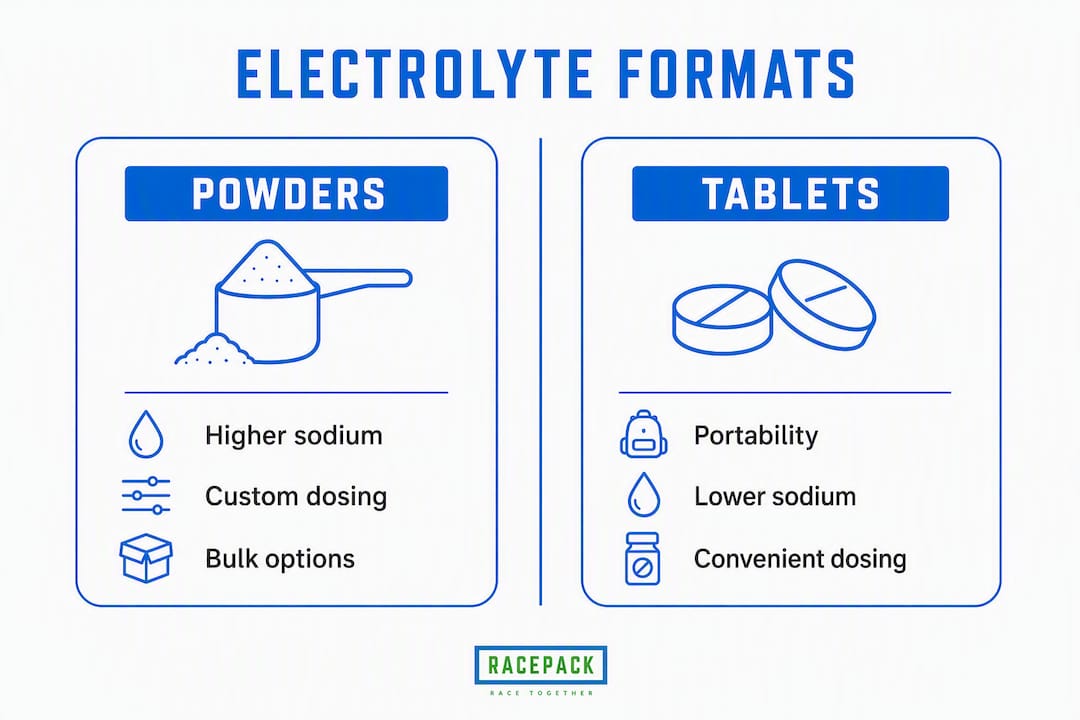
Pro Tip: Powders and sachets typically deliver 300–1,000 mg of sodium per serving, while effervescent tablets usually land at 200–300 mg. If you sweat heavily or train beyond 90 minutes, a powder or sachet format will cover your sodium needs more reliably than a tablet alone.
Table of Contents
- What Is the Best Electrolyte Powder for Your Training?
- Quick profiles: what each Racepack.sg pick contains and why it made the list
- How do you pick the right electrolyte powder for your situation?
- When should you use electrolyte powders, and what are the safety limits?
- What is the environmental footprint of popular electrolyte products?
- Key Takeaways
- RacepackSingapore has the electrolyte products your training actually needs
- FAQ
What Is the Best Electrolyte Powder for Your Training?
The American College of Sports Medicine (ACSM) recommends a target sodium intake per hour for athletes engaged in high-endurance efforts with significant fluid loss. That recommendation should anchor every buying decision you make.
Statistic callout: ACSM guidance targets 300–600 mg sodium per hour for endurance athletes — a range most effervescent tablets cannot meet in a single serving.
| Product | Best For | Sodium/Serving | Format | Certifications | Servings/Container |
|---|---|---|---|---|---|
| HIGH5 ZERO+ Multivitamins/Ultra Electrolytes 16 Sachets | Controlled dosing, travel, vitamins | Check label | Sachet/powder | Check label | 16 |
| HIGH5 750ml Bottle With 10 Zero Hydration Tablets | Portability, fizzy hydration | ~200–300 mg | Effervescent tablet | Check label | 10 |
| GU Energy Gel 1 box of 24 gels | Race-day carb + electrolyte top-up | Small (check label) | Gel | Check label | 24 |
| GU Energy Gel 6/12/24 Pack | Bulk race fuel, flavor variety | Small (check label) | Gel | Check label | 6, 12, or 24 |
| GU Energy Gel Single Pack (Min. Order 8 Pack) | Flavor trialing, short events | Small (check label) | Gel | Check label | 8 min. |
| MyProtein EAA Powder 360g 30 Servings | Amino-acid recovery + hydration | Check label | Powder | Check label | 30 |
| MyProtein Pea Protein Isolate 2.5kg | Plant-protein recovery + hydration | Check label | Powder | Check label | Multiple |
| MyProtein Supplement Storage Box | Organizing tablets/sachets for travel | N/A (accessory) | Accessory | N/A | N/A |
| Garmin Forerunner 165 | Tracking distance/intensity for sodium planning | N/A (device) | GPS watch | N/A | N/A |
| Garmin Forerunner 165 GPS Smartwatch 2 Years Warranty | Extended warranty + accessories bundle | N/A (device) | GPS watch | N/A | N/A |
| GU Energy Gel 24 Gels | Consistent race-day carb delivery | Small (check label) | Gel | Check label | 24 |
How to read this table: Sodium per serving is the column that drives the decision. Sachets and powders typically deliver more sodium per serving than tablets, making them better suited for sessions over 90 minutes or conditions involving heavy sweat. For electrolyte powder vs tablets comparisons, powders generally land in the 500–1,000 mg sodium range per serving, while tablets sit closer to 200–300 mg. Price per serving on RacepackSingapore product pages is the most accurate source for current Singapore retail pricing — check each product page directly for the latest figures.
Quick profiles: what each Racepack.sg pick contains and why it made the list
HIGH5 ZERO+ Multivitamins/Ultra Electrolytes 16 Sachets
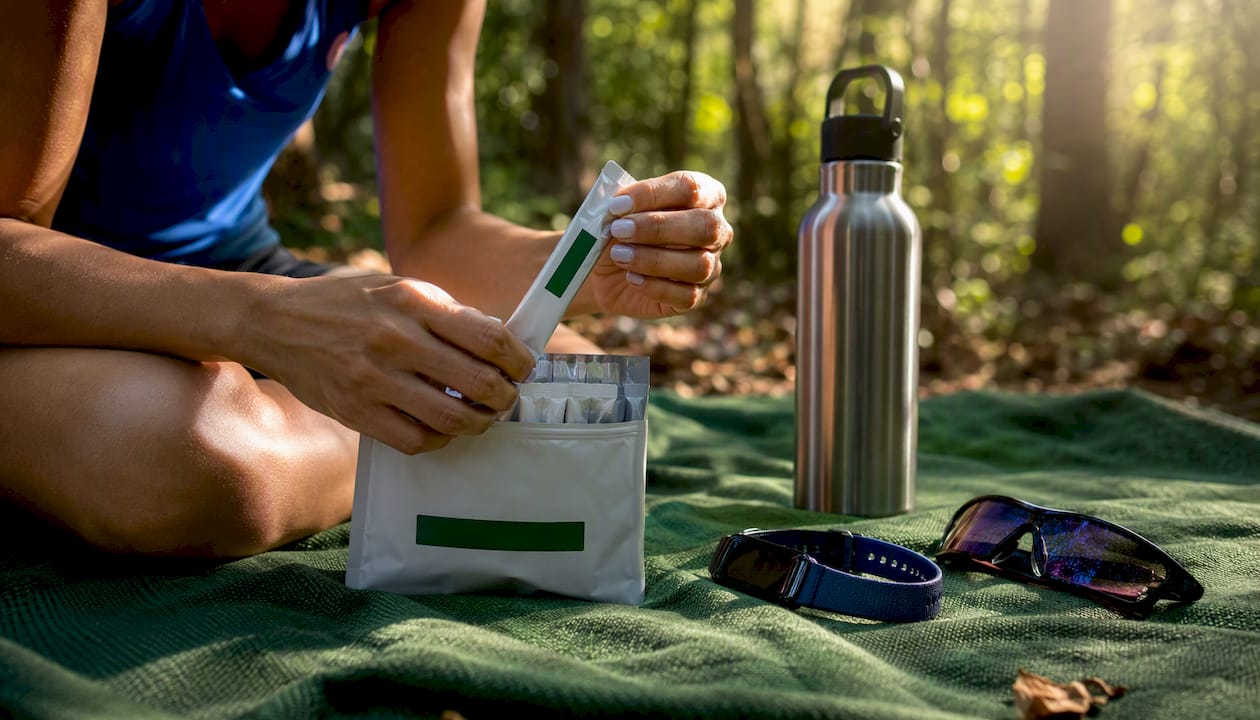
Pre-portioned sachets remove the guesswork from dosing. Each sachet delivers a consistent electrolyte blend with added multivitamins, making it a strong choice for athletes who want to cover both hydration and micronutrient needs in one product. Check the label for the exact sodium figure, then compare it against your hourly sweat-loss estimate. These sachets work well for travel days, race mornings, or any session where you want zero measuring.
HIGH5 750ml Bottle With 10 Zero Hydration Tablets
The tablet-plus-bottle bundle is purpose-built for portability. Drop a tablet into the included 750ml bottle, wait for it to dissolve, and you have a fizzy electrolyte drink ready in under two minutes. Effervescent tablets require carbonation agents and binders to hold their shape and fizz, which means the ingredient list is slightly longer than a pure powder. The trade-off is real convenience: no scoops, no spills, and a dedicated bottle that fits most race-belt holders.
Pro Tip: If you carry this tablet bundle on race day, pair it with a GU Energy Gel for carbohydrate support. The tablet handles hydration; the gel handles fuel.
GU Energy Gel options (24-pack, 6/12/24 Pack, Single Pack, 24 Gels)
GU gels are primarily a carbohydrate delivery tool with a modest electrolyte contribution — not a standalone electrolyte replacement. Their value in a hydration strategy is as a simultaneous fuel-and-small-sodium top-up during long efforts. The 24-pack box is the best value for athletes who have already settled on a flavor. The 6/12/24 multi-pack lets you mix flavors across a training block. The single pack (minimum order 8) suits athletes who want to trial a new flavor before buying in bulk. Check the GU label for sodium per gel; it is lower than a dedicated electrolyte powder, so plan accordingly.
MyProtein EAA Powder 360g (30 Servings)
Essential amino acids and electrolytes serve different functions, but they pair naturally in a post-workout recovery window. The EAA Powder covers muscle-repair signaling while you rehydrate, making it a practical two-in-one for athletes who train hard and recover harder. At 30 servings per container, it offers solid value for a daily recovery routine. Mix it with water and a dedicated electrolyte sachet if your session ran long and your sodium losses were high.
MyProtein Pea Protein Isolate 2.5kg with Shaker and Creatine Sachet
This bundle suits plant-based athletes who want to consolidate their post-workout stack. The included shaker makes mixing straightforward, and the creatine sachet adds a recovery bonus. Pair it with an electrolyte sachet or tablet in the same shaker for a complete post-training drink. It is not an electrolyte product on its own, but it fits naturally into a hydration-and-recovery strategy.
MyProtein Supplement Storage Box
A small accessory that solves a real problem: keeping tablets, sachets, and capsules organized during travel or multi-day events. If you carry HIGH5 tablets or GU gels across multiple training days, this box prevents the loose-packet chaos that derails race-morning prep.
Garmin Forerunner 165 and Garmin Forerunner 165 GPS Smartwatch (2 Years Warranty)
Sodium needs scale with intensity and duration, and the Forerunner 165 gives you the distance and pace data to estimate both. Runners who track their sessions with a GPS watch can use that data to calculate approximate sweat rates and adjust their electrolyte intake accordingly. The extended-warranty bundle adds screen protection and a free gift, making it a practical long-term investment for athletes who train year-round.

How do you pick the right electrolyte powder for your situation?
Start with sodium. Every other decision flows from that number.
The ACSM’s 300–600 mg sodium per hour guidance gives you a target. Match the product’s sodium per serving to that range, then decide how many servings you need per hour based on your sweat rate and session length. Athletes who run hot or train in humid conditions often need to sit at the higher end of that range.
Label checklist — check every product for these before buying:
- Sodium (mg per serving) — the primary metric
- Potassium (mg per serving) — supports fluid balance and muscle function
- Magnesium — relevant for cramp-prone athletes
- Sugar and total carbohydrates — zero-sugar options suit daily sipping; carb-containing options suit long efforts
- Calories per serving — matters if you are managing energy intake
- Serving size (grams or ml) — affects how you scale scoops
- Third-party testing (NSF Certified for Sport, Informed-Sport) — critical for competitive athletes subject to drug testing
Decision flow by use case:
- Short workouts under 60 minutes: Plain water is usually sufficient. Electrolyte supplements are not a daily requirement for light activity.
- Sessions of 60–90 minutes with moderate sweat: One serving of a low-sugar electrolyte sachet or tablet covers most needs.
- Endurance sessions over 90 minutes: Use a powder or sachet with sodium in the 300–600 mg range per serving, and dose hourly.
- Race day: Combine a dedicated electrolyte product with carbohydrate fuel (like a GU gel) for simultaneous sodium and energy delivery.
- Travel or illness: Tablets or sachets win on portability. A sugar free electrolyte powder sachet in a carry-on bag is lighter and less messy than a tub.
Format trade-offs at a glance: Powders and sachets offer more sodium per serving and better dosing control. Tablets offer portability and zero-mess convenience but typically deliver less sodium. Powders generally cost less per serving than tablets, making them the better value for high-volume training.
Pro Tip: To reduce flavor intensity without cutting electrolytes, mix your powder or sachet into a larger volume of water instead of a standard serving volume. The sodium content stays the same; the taste becomes milder. Useful for athletes who find concentrated electrolyte drinks hard to stomach mid-race.
When should you use electrolyte powders, and what are the safety limits?
Electrolyte supplements support hydration during heavy fluid losses — they are not a universal daily requirement. The clearest cases for use are endurance exercise, heavy sweating, illness with vomiting or diarrhea, and recovery from significant dehydration.
Dosing by intensity and duration:
- Under 60 minutes, low intensity: No supplementation needed for most athletes. Water covers it.
- 60 to 90 minutes, moderate intensity: One serving of a low-sodium electrolyte product is reasonable.
- Over 90 minutes or high intensity: Athletes should scale servings to meet sodium needs estimated from sweat losses and session demands.
- Hot or humid conditions: Increase sodium intake and fluid volume as needed to compensate for heavier sweating.
- Illness or travel: Use a low-sugar sachet or tablet to replace losses without adding unnecessary calories.
Statistic callout: ACSM recommends 300–600 mg of sodium per hour for athletes in prolonged, high-intensity endurance efforts — a target that most effervescent tablets cannot reach in a single serving.
Safety considerations:
- Athletes with hypertension or kidney disease should consult a clinician before using high-sodium electrolyte products.
- Diuretics, lithium, and some blood-pressure medications interact with sodium and potassium levels. If you take any of these, get medical clearance before adding electrolyte supplements.
- Dietitians caution that daily, unnecessary use of electrolyte powders adds sodium, sugars, and calories that most sedentary or lightly active people do not need.
- Pregnant or breastfeeding athletes should seek personalized guidance from a healthcare provider.
This article provides general information, not medical advice. Confirm your specific needs with a registered dietitian or physician.
Pro Tip: If you are unsure of your sweat rate, weigh yourself before and after a one-hour run without drinking. Every pound lost approximates 16 oz of fluid. That gives you a concrete starting point for matching sodium to actual losses.
How these recommendations were chosen
The shortlist prioritizes products available on RacepackSingapore with transparent labeling, clear sodium profiles, and practical form factors for endurance athletes.
Selection criteria used:
- Sodium per serving as the primary filter — products with no disclosed sodium figure were excluded
- Ingredient transparency — full electrolyte panel visible on the label or product page
- Form factor suitability — sachets, tablets, powders, and gels evaluated for their intended use case
- Third-party testing signals — NSF Certified for Sport and Informed-Sport status noted where available
- Price-per-serving value — assessed using RacepackSingapore product page pricing
- Racepack.sg product availability confirmed at time of publication
What disqualified a product:
- Hidden sugars or undisclosed sodium content
- No serving-size information on the label
- Ingredient lists dominated by fillers with no meaningful electrolyte contribution
- Products not available through RacepackSingapore
Pro Tip: Always cross-check the sodium figure on the physical label against the product page listing. Formulas do change, and the label is the legal document.
The recommendations reflect expert-reviewed sodium guidance from ACSM and clinical sources, combined with RacepackSingapore’s product catalog as of 2026.
What is the environmental footprint of popular electrolyte products?
Format matters for sustainability, not just portability. Single-serve sachets and individual gel wrappers generate more packaging waste per serving than a bulk powder tub. A 30-serving tub of electrolyte powder uses one container; 30 individual sachets use 30 wrappers, most of which are multi-layer plastic that cannot be recycled through standard curbside programs.
Effervescent tablets in a resealable tube sit between the two. The tube is reusable, and the tablets themselves are compact, which reduces shipping weight and the associated carbon cost per serving.
Athletes who train at high volume can meaningfully reduce their packaging footprint by buying bulk powder tubs and decanting into a reusable bottle, then reserving sachets and tablets for race days and travel. The MyProtein Supplement Storage Box supports exactly this approach: pre-portion tablets or sachets into the box for events, and use bulk powder at home.
Some brands are moving toward compostable or plant-based sachet materials, but third-party certification for these claims remains inconsistent. When sustainability is a priority, check whether the brand publishes a packaging sustainability report before buying.
Key Takeaways
The single most important rule for choosing an electrolyte product is this: match sodium mg per serving to your actual sweat rate and session length, not to the format or flavor you prefer.
| Point | Details |
|---|---|
| Sodium first | Target 300–600 mg sodium per hour for endurance sessions, per ACSM guidance. |
| Format trade-offs | Powders and sachets deliver more sodium per serving; tablets win on portability and convenience. |
| Timing by duration | Skip supplements for sessions under 60 minutes; dose hourly for efforts over 90 minutes. |
| Safety check | Athletes with hypertension, kidney disease, or on diuretics/lithium should consult a clinician first. |
| RacepackSingapore picks | HIGH5 ZERO+ Sachets and HIGH5 Hydration Tablets are the top convenience picks available at RacepackSingapore for endurance athletes. |
Pro Tip: Athletes often carry tablets for on-the-go top-ups and use bulk powder at home for cost-effective, customizable dosing. Mixing formats gives you the best of both worlds.
The sodium-first rule is the one most athletes ignore
The conventional wisdom around electrolyte powders focuses heavily on flavor, brand loyalty, and marketing claims about “complete hydration.” What actually determines whether a product works for you is simpler and less glamorous: the sodium number on the label.
Most athletes I see reach for a tablet or sachet because it tastes good or because a training partner recommended it, without ever checking whether the sodium content matches their sweat rate. A product delivering 150 mg of sodium per serving is not wrong — it is just designed for a different use case than a three-hour marathon effort in July.
The format debate (powder vs. tablet vs. sachet) is real but secondary. Pick the format that fits your logistics, then filter by sodium. If you train at high intensity for more than 90 minutes, a sachet or powder with 300 mg or more of sodium per serving is the practical floor. Tablets are excellent for travel and short efforts. Bulk powders are the value play for daily training.
One practical note: the Garmin Forerunner 165 gives you the session data to estimate sweat rate over time, which makes sodium planning far more precise than guessing. Pair that data with a consistent electrolyte product and you have a genuinely personalized hydration strategy, not just a supplement habit.
Sources and further reading
| Source | Relevance |
|---|---|
| American College of Sports Medicine (ACSM) | Sodium per hour guidance for endurance athletes (300–600 mg) |
| UH Hospitals / UChicago Medicine — Electrolyte Supplements | Clinical guidance on when electrolytes are and are not necessary |
| Useful Vitamins — Tablets vs. Powder Sodium Comparison | Sodium range data: tablets ~200–300 mg; powders ~500–1,000 mg |
| Verywell Fit — Best Form of Electrolytes | Dietitian caution on unnecessary daily use; safety context |
| NutritionGeeks — Electrolyte Tablets vs. Powder | Cost-per-serving comparison and dissolution/palatability notes |
| Noordcode — Powder vs. Tablet Electrolytes | Label-first approach: match sodium per serving to sweat loss |
| Nuun Hydration — Tablets and Powders | Ingredient transparency and format trade-offs |
| Racepack.sg — Electrolytes for Endurance | Internal product reference and availability confirmation |
Statistic callout: ACSM’s 300–600 mg sodium per hour target is the most widely cited clinical benchmark for endurance hydration planning — and the most consistently overlooked by recreational athletes buying on taste alone.
RacepackSingapore has the electrolyte products your training actually needs
If you have been buying electrolyte products based on flavor or habit, RacepackSingapore gives you a better starting point: a curated catalog of proven endurance nutrition from brands like HIGH5, GU, and MyProtein, with guaranteed product authenticity and next-day delivery in Singapore.
The HIGH5 ZERO+ Multivitamins/Ultra Electrolytes 16 Sachets and the HIGH5 750ml Bottle With 10 Zero Hydration Tablets are both stocked and ready to ship. For race-day fuel, the GU Energy Gel 24-pack pairs directly with your hydration strategy. Every product page lists ingredients and serving details so you can check sodium before you buy.
Browse the full range and place your order at RacepackSingapore today.
FAQ
Are electrolyte powders actually effective?
Yes, when matched to genuine fluid and sodium losses. Clinical guidance confirms that electrolytes support hydration during heavy sweat, long exercise, or illness — but they are not a universal daily requirement for light activity.
What is the best electrolyte powder for endurance athletes?
For endurance athletes, the best option is a powder or sachet delivering 300–600 mg of sodium per serving, aligned with ACSM’s hourly sodium guidance. The HIGH5 ZERO+ Sachets available at RacepackSingapore are a strong starting point.
How does electrolyte powder compare to tablets?
Powders typically deliver 500–1,000 mg of sodium per serving; tablets usually deliver 200–300 mg. Powders win on sodium density and value; tablets win on portability and convenience.
Do I need a sugar free electrolyte powder?
Only if you are managing calorie intake or using electrolytes outside of long training sessions. For efforts over 90 minutes, some carbohydrates alongside electrolytes can support performance.
When should I take an electrolyte supplement?
Skip it for sessions under 60 minutes. For sessions of 60–90 minutes with moderate sweat, one serving is reasonable. For efforts over 90 minutes, dose hourly at 300–600 mg sodium per hour.
Can electrolyte powders interact with medications?
Yes. Diuretics, lithium, and some blood-pressure medications interact with sodium and potassium levels. Consult a clinician before adding electrolyte supplements if you take any of these.
What ingredients should I check on an electrolyte label?
Check sodium (mg), potassium (mg), magnesium, sugar, total carbohydrates, calories, and serving size. For competitive athletes, look for NSF Certified for Sport or Informed-Sport certification.
Is it safe to use electrolyte powders every day?
Dietitians caution against unnecessary daily use because of added sodium, sugars, and calories. Reserve them for training days with significant sweat losses or illness recovery.
How do I know how much sodium I need per hour?
The ACSM recommends 300–600 mg of sodium per hour for endurance efforts. A practical self-test: weigh yourself before and after a one-hour run to estimate fluid loss, then scale sodium accordingly.
What is the difference between electrolyte powder and an energy gel?
Energy gels like GU are primarily carbohydrate delivery tools with modest sodium content. Electrolyte powders and sachets are designed specifically for sodium and mineral replacement. Use both together for long efforts requiring fuel and hydration.
Can I use the Garmin Forerunner 165 to plan my electrolyte intake?
Yes. The Garmin Forerunner 165 tracks distance, pace, and session duration, giving you the data to estimate sweat rate and calibrate your hourly sodium target more precisely.