

How to Avoid Hitting the Wall in a Marathon
To avoid hitting the wall in a marathon, follow this single-sentence action plan: carb-load for several days before the race, start fueling early, around mile 3 to 4, pace the first 10 miles a little slower than your goal pace, and build your training around long runs with practiced fueling and two weekly strength sessions.
Race-week and race-day checklist:
- Increase carbohydrate intake 2–3 days out, focusing on low-fiber starches (white rice, pasta, bread)
- Eat your last big meal 2–3 hours before the start; keep it familiar and low-fiber
- Take your first gel or chew by mile 3–4 (roughly 30–45 minutes in)
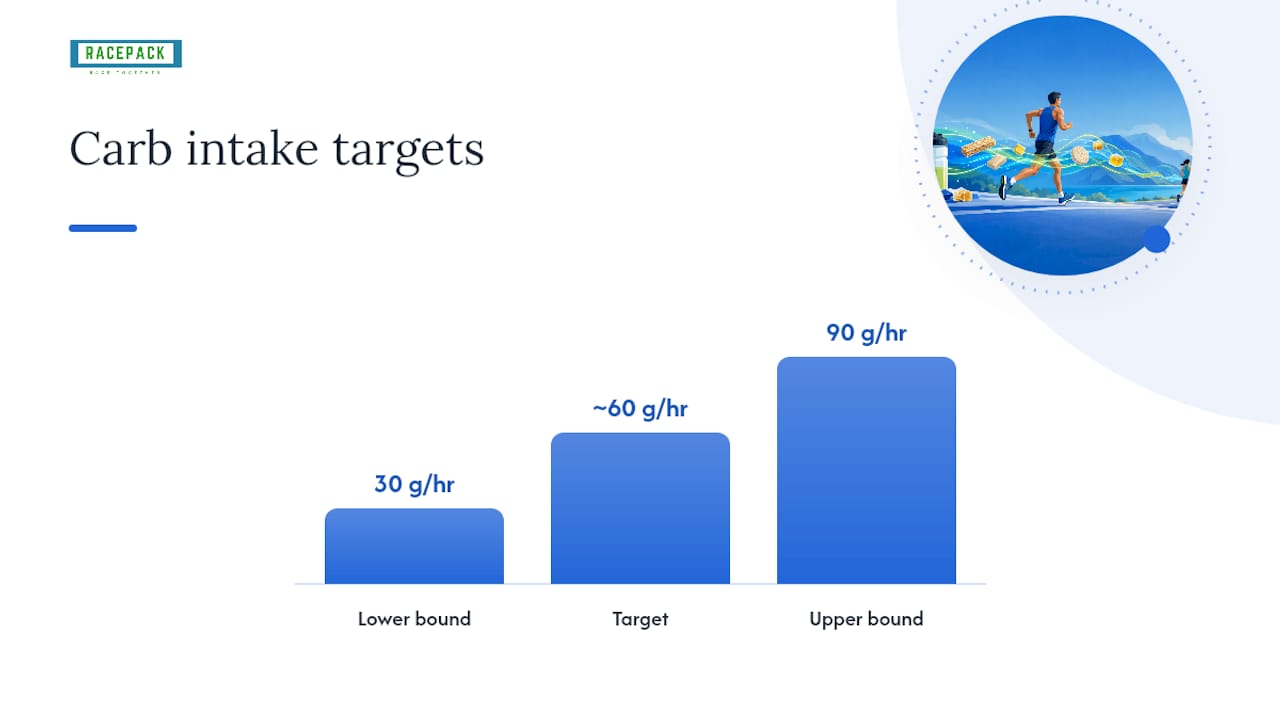
- Target a moderate amount of carbohydrate per hour throughout the race
- Pair every gel with water, not a sports drink
- Sip electrolytes at every aid station; don’t wait until you feel thirsty
- Hold back in the first 10 miles even when you feel strong
Pro Tip: Set a fueling alarm on your GPS watch every 20 minutes. You will not feel hungry when you need fuel most, and that alarm is the only reminder that works when your brain is running on fumes.
Key Takeaways
Avoiding the wall comes down to three non-negotiable habits: carb-load before the race, fuel early and consistently during it, and pace the first half conservatively.
| Point | Details |
|---|---|
| Start fueling at mile 3–4 | Take your first gel by 30–45 minutes in; small, frequent doses prevent late-race glycogen failure. |
| Target ~60 g carbs/hour | Individualized range is 30–90 g/hr; pair every gel with water, not a sports drink. |
| Pace the first 10 miles conservatively | Run 10–15 seconds per mile slower than goal pace to protect glycogen stores through mile 20. |
| Train with fuel and strength work | Long runs over 90 minutes with practiced fueling plus two eccentric strength sessions weekly for 8–12 weeks pre-race build the durability you need. |
| RacepackSingapore for race-day prep | GU Energy Gels, HIGH5 electrolytes, and the Garmin Forerunner 165 are the products this guide recommends for training and race day. |
This article is general information, not a substitute for advice from a qualified doctor. Consult a qualified healthcare professional about your own circumstances before acting on anything here.
Table of Contents
- Why do runners hit the wall, and when does it happen?
- How should you fuel in the days before the race?
- What is the right on-course fueling plan to prevent fatigue?
- How do you pace a marathon to avoid an early glycogen crash?
- What training reduces your risk of hitting the wall?
- What should you do if you hit the wall mid-race?
- Research-backed rules every marathon runner should follow
- Does your age, experience, or fitness level change your fueling needs?
- How do mental strategies help you avoid or survive the wall?
- What the data actually tells us about finishing strong
- Stock your race-day kit with the right products
- Sources
- FAQ
Why do runners hit the wall, and when does it happen?
“Hitting the wall” is the popular term for glycogen depletion, the point where your muscles and liver run critically low on stored carbohydrate and your body can no longer sustain marathon pace. Coaches also call it “bonking.” The result is not just slowing down. It is a sudden, often dramatic loss of pace, cognitive fog, and the sensation of running through wet concrete.
Your body stores roughly 90–120 minutes’ worth of glycogen at marathon intensity. The faster you run relative to your aerobic threshold, the faster those stores burn. Heat and humidity accelerate depletion further by increasing the metabolic cost of cooling your body, leaving less fuel for forward movement.
Common signs you are approaching the wall:
- Sudden, unexpected loss of pace despite normal effort
- Heavy or “dead” legs that no longer respond to your commands
- Mental fog, difficulty doing simple math or remembering your pace target
- Irritability or a strong urge to stop
- Shakiness or light-headedness in severe cases
According to a computational study reviewed by Runners Connect, roughly 40% of marathon runners report hitting the wall, and glycogen depletion most commonly occurs near mile 21 for runners working at 80–95% VO2max. That is not a coincidence. It is the predictable endpoint of a 26.2-mile glycogen burn that starts the moment the gun fires. Understanding this timing is what makes every tactic in this guide worth following. You are not fighting bad luck; you are managing a fuel equation with a known answer.
How should you fuel in the days before the race?
The goal of race-week nutrition is to arrive at the start line with glycogen stores as full as possible. That means a deliberate carbohydrate increase starting 2–3 days before race morning, not just the night before.
Practical carb-loading guidance:
- Aim for 8–12 g of carbohydrate per kilogram of body weight per day during the loading window
- Choose low-fiber, easily digestible starches: white rice, white pasta, white bread, bananas, and sports drinks
- Reduce high-fiber vegetables, legumes, and heavy proteins during this window to lower GI stress
- Avoid introducing any new foods; stick to what your gut already knows
Your last substantial meal should land 2–3 hours before the start and stay small, familiar, and carbohydrate-forward. A bowl of oatmeal with honey or white toast with peanut butter works for most runners. Runner’s World’s marathon nutrition guide confirms that pairing this 2–3 day carb-load with consistent intra-race fueling gives you the best chance of avoiding the wall. For a deeper look at meal timing and food examples, the Racepack is a practical next read.
Hydration and sodium in the 72-hour window: Increase water intake gradually and add a small sodium source (an electrolyte tablet in your water, or slightly saltier meals) to help your body retain the extra fluid your glycogen stores need. Every gram of stored glycogen holds roughly 3 g of water, so proper hydration is part of the loading process.

Gut prep: Cut high-fiber foods 24–72 hours before the race. Test every food you plan to eat race morning on your long runs first. Give yourself enough time on race morning for a bathroom stop before the start.
Pro Tip: If you are traveling to a race, pack your own race-morning foods. Expo food courts and hotel breakfasts rarely match what your gut has been trained on. One unfamiliar meal the morning of a marathon is a GI risk you do not need.
What is the right on-course fueling plan to prevent fatigue?
Start fueling by mile 3–4, which is approximately 30–45 minutes into your race. This is earlier than most first-time marathoners expect, and it is the single most important timing rule in marathon nutrition. Runners Connect’s glycogen research shows that beginning carbohydrate intake at this point and continuing with small, frequent doses prevents the late-race crash that catches so many runners near mile 20.

Target ~60 g of carbohydrate per hour as your practical middle-ground. Depending on your pace, body size, and gut tolerance, your personal range may sit anywhere from 30–90 g/hr. Faster runners and larger athletes generally need the higher end. Start conservatively in training and build up.
Sample fueling schedule (3:30–4:45 finish range)
Fuel format and absorption tips:
- Gels are the most portable and predictable format; chews work well for runners who prefer solid texture
- Always pair a concentrated gel with water, not a sports drink. Mixing two concentrated carbohydrate sources raises gut osmolality and slows absorption, increasing GI distress risk. Runners Connect’s long-run guide flags this as one of the most common fueling mistakes
- Gut-train progressively: practice your exact race-day fueling on every long run over 90 minutes, increasing your hourly carb target by 5–10 g every 2–3 weeks until you reach your race target
- For more on how gels absorb and why osmolality matters, the Racepack covers the mechanics clearly
Pro Tip: If the race’s aid stations carry a different gel brand than you trained with, carry your own supply. Switching gels mid-race to an unfamiliar formula is a common cause of late-race GI trouble.
How do you pace a marathon to avoid an early glycogen crash?
Run your first 10 miles 10–15 seconds per mile slower than your goal pace. That is the single most reliable pacing rule for marathon energy management. It feels too easy in the first hour. That feeling is exactly right.
Pacing methods that work:
- Even split: Hold the same pace from mile 1 to mile 26. Requires strong discipline at the start when the crowd pulls you faster.
- Negative split: Run the second half slightly faster than the first. Statistically, negative-split marathons produce more personal bests than any other pacing strategy.
- 10-10-10 method: Miles 1–10 at easy-to-comfortable effort, miles 11–20 at goal marathon effort, final 10K at whatever you have left. This structure naturally protects glycogen in the first third.
Position yourself in a corral that matches your realistic finish time, not your optimistic one. Crowd adrenaline at the start is one of the most consistent causes of early glycogen burn. Use perceived effort as your primary guide for the first 5 miles, then shift to watch-based pace once the crowd thins. Conservative pacing combined with early fueling is the coach-recommended combination that most reliably prevents late-race performance collapse.
Pro Tip: The Garmin Forerunner 165 lets you set pace alerts that vibrate when you drift above your target. Use that feature in the first 10 miles. It is far more reliable than willpower when 10,000 runners are surging past you at the start.
What training reduces your risk of hitting the wall?
The three training priorities that most directly reduce wall risk are: long runs with practiced fueling, fast-finish long runs, and two weekly eccentric-focused strength sessions for 8–12 weeks pre-race.
Sample workouts:
- Long run with fueling practice: Every run over 90 minutes, fuel exactly as you plan to on race day. Start at 30 g/hr and build to your race target over 8–10 weeks. Runners Connect’s long-run guide recommends practicing your exact gel brand, water volume, and timing on these runs. The Racepack has a practical progression schedule.
- Fast-finish long run: Structure the final quarter of your long run at goal marathon effort. This teaches your neuromuscular system to hold form and pace when glycogen is already partially depleted, which is exactly the condition you face at mile 20.
- Strength session (twice weekly): Back squats, Bulgarian split squats, and slow step-downs with a 3–4 second lowering phase. Research reviewed by Runners Connect shows that two eccentric-focused sessions per week for 8–12 weeks pre-race reduce quad fatigue and improve late-race durability. Eccentric strength also increases muscle glycogen storage capacity.
Long runs of at least 90 minutes and higher weekly mileage improve running-economy durability compared with shorter routines. Schedule strength sessions on easy run days or after short runs, never the day before a key quality session or your long run.
Pro Tip: Increase your hourly carb target by 5–10 g every 2–3 weeks during training. By race week, your gut should be fully adapted to your race-day dose. Runners who skip this step and take their first high-dose gel on race morning are the ones who stop at mile 18.
What should you do if you hit the wall mid-race?
Immediate steps: Slow to an easy effort or walk, take a gel with water, and add a small sodium dose if you have electrolyte tablets available. Do not panic and do not try to run through it at the same pace.
- Stop trying to hold pace. Slow to a comfortable jog or walk for 60–90 seconds. Continuing at the same effort when glycogen is critically low accelerates the collapse.
- Take a gel with 6–8 oz of water immediately. Carbohydrate absorption takes 10–15 minutes, so the sooner you take it, the sooner you stabilize. Early and consistent fueling is what prevents this moment; once you are in it, the same principle applies.
- Add sodium if available. A small electrolyte dose helps fluid absorption and can reduce cramping that often accompanies glycogen depletion.
- Reassess after 10–15 minutes. Once the gel begins to absorb, try re-establishing a run at a noticeably easier effort than your original goal pace. Prioritize finishing over time.
- Watch for early warning signs at miles 14–18. Slight leg heaviness or a pace that feels harder than it should are early signals. Take an extra gel at that point rather than waiting for the full crash.
Post-race recovery checklist: Eat a carbohydrate and protein meal within 2 hours of finishing. Rest for at least 48 hours before any running. Review your pacing data and fueling log to identify where the gap appeared: did you start too fast, skip a gel, or under-carb-load?
Pro Tip: If your legs feel heavier than expected at mile 16, take your next gel 5 minutes early and drop your pace by 15–20 seconds per mile. That small adjustment often prevents a full wall from developing.
Research-backed rules every marathon runner should follow
These rules are short, specific, and each one has evidence behind it.
- Start fueling by 30–45 minutes. Studies and coach data consistently show that early, small doses prevent the late-race crash that delayed feeding cannot reverse. (Runners Connect)
- Target ~60 g carbs/hour. This is the practical middle-ground for most marathon paces; individual range is 30–90 g/hr based on pace and tolerance. (Runner’s World)
- Pair gels with water only. Mixing a concentrated gel with a concentrated sports drink slows gut absorption and raises GI distress risk. (Runners Connect)
- Run the first 10 miles conservatively. A 10–15 second/mile buffer in the first third of the race significantly reduces late-race collapse probability.
- Two strength sessions per week for 8–12 weeks. Eccentric quad work reduces dead-leg risk and increases muscle glycogen capacity. (Runners Connect)
- Long runs of at least 90 minutes. These build the running-economy durability that shorter runs cannot replicate. (Runner’s World)
- Gut-train with your exact race-day products. Practicing fueling during long runs with the exact gels and water volumes planned for race day is the most reliable way to prevent GI surprises. (Runners Connect)
- Probiotics may support carbohydrate absorption. Early-stage peer-reviewed research suggests some probiotic strains can improve carbohydrate utilization and reduce GI symptoms, but benefits require several weeks of consistent supplementation before they appear.
Does your age, experience, or fitness level change your fueling needs?
Yes, and the differences are meaningful enough to adjust your plan.
Older runners (generally 50+) tend to have lower glycogen storage capacity and slower carbohydrate oxidation rates. This means the conservative end of the 30–90 g/hr range may feel more comfortable, and carb-loading may need an extra day to fully saturate stores. Recovery between long training runs also takes longer, so the 8–12 week strength block needs careful scheduling to avoid accumulated fatigue.
Newer runners typically run at a higher percentage of their aerobic threshold, which burns glycogen faster than a more experienced runner covering the same pace. If you are running your first or second marathon, the conservative pacing rule (first 10 miles 10–15 seconds slower than goal) is not optional. It is the single biggest lever you have. Experienced runners with high weekly mileage tend to be more fat-adapted, meaning they can sustain pace on a slightly lower carbohydrate intake, but they still benefit from early fueling.
Fitness level also affects sweat rate and electrolyte loss. Fitter runners often sweat more and lose more sodium per hour, making electrolyte replacement more critical for them than for recreational runners. Adjust your hydration plan based on conditions: in heat above 75°F or high humidity, increase fluid and sodium intake and expect to need the higher end of your carb range.
How do mental strategies help you avoid or survive the wall?
Physical preparation handles most of the wall risk, but your mental approach determines what happens when things get hard anyway.
Visualization is the most underused tool in marathon preparation. In the 2–3 weeks before your race, spend 5–10 minutes daily imagining miles 18–22 in detail: the heaviness in your legs, the temptation to slow, and your specific response to it (take a gel, drop pace slightly, focus on form). Runners who have mentally rehearsed this scenario respond to it as a familiar challenge rather than a crisis. Runner’s World’s durability research notes that mental-resilience training, including focus techniques and practiced mantras, reduces the risk that discomfort cascades into a full performance collapse.
Mantras work best when they are short, specific, and tied to an action. “Gel now, slow down, keep moving” is more useful than “you can do it” when your brain is running on low glucose. Write your mantra on your wrist or program it into your watch notes.
Segmenting the race into smaller chunks (miles 1–10, 10–20, 20–finish) reduces the psychological weight of the full distance. Focus only on the current segment. When mile 21 arrives and your legs are heavy, your only job is to get to mile 22.
What the data actually tells us about finishing strong
Most runners who hit the wall made the same two mistakes: they started too fast, and they started fueling too late. The physiology is unforgiving on both counts. Glycogen depletion near mile 21 is not bad luck; it is the predictable result of a fuel deficit that opened in the first hour and compounded over the next two.
The good news is that the fix is simple, even if it is not easy. Conservative pacing in the first 10 miles feels wrong when you are fresh and the crowd is moving. Early fueling at mile 3–4 feels unnecessary when you are not hungry. Strength training twice a week feels like extra work when your running volume is already high. Every one of those discomforts is the price of a strong finish.
The runners who finish miles 20–26 at or near their goal pace are not the ones with the most talent. They are the ones who practiced their fueling on every long run, held back in the first hour, and built their quads to handle 26.2 miles of impact. That is a repeatable process, and it starts in your next training block.
Stock your race-day kit with the right products
The tactics in this guide only work if you practice them with real products before race day. That means training with the exact gels, electrolytes, and hydration tools you plan to use on the course.
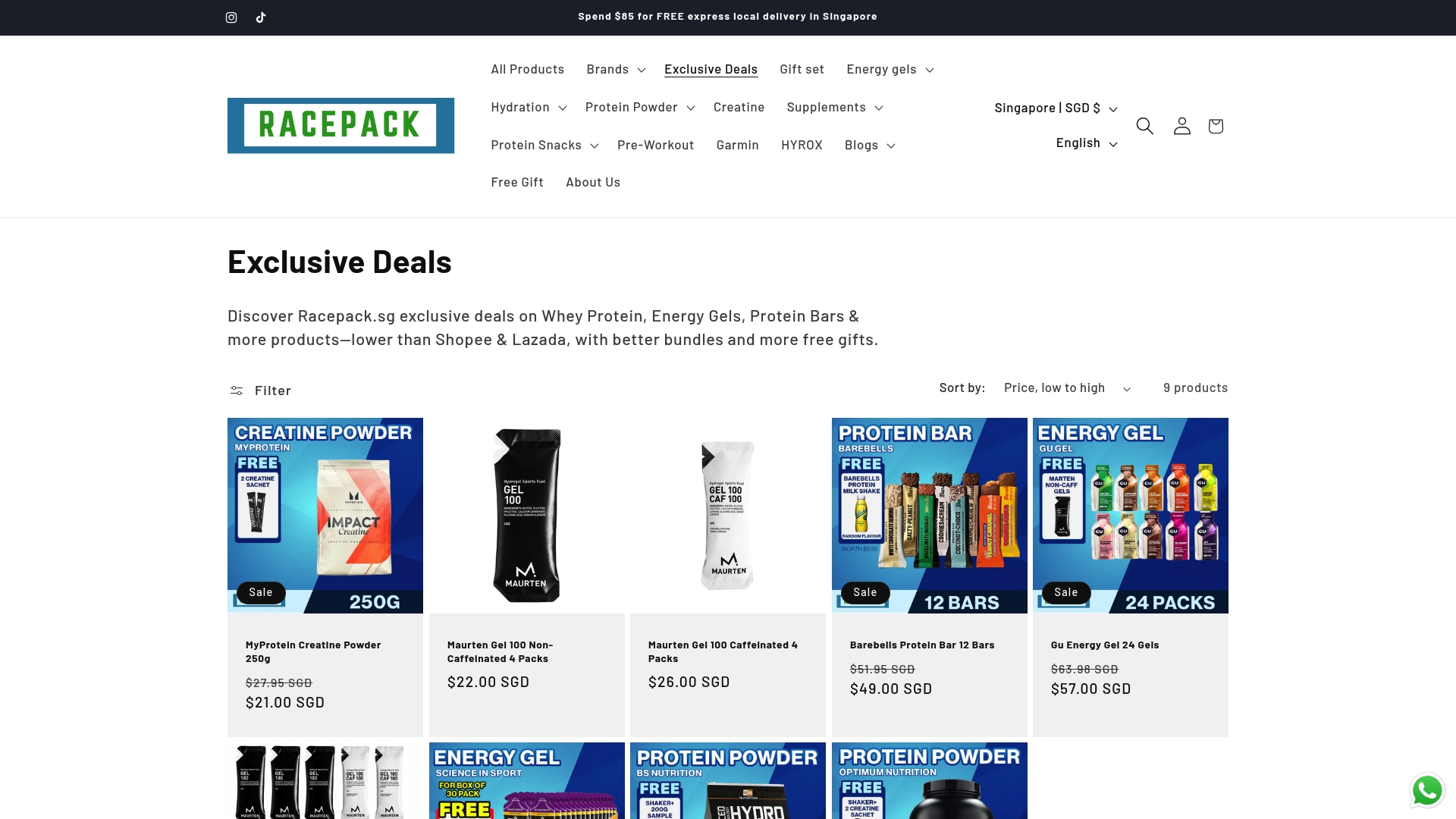
RacepackSingapore carries the full range of products this guide recommends, all with guaranteed authenticity and next-day delivery in Singapore. For energy gels, the GU Energy Gel 24-pack gives you enough supply to gut-train through an entire 8–12 week block. If you want to try flavors first, the GU Energy Gel single-pack option (minimum order 8 packs) lets you test before committing to a full box. For electrolyte replenishment, HIGH5 ZERO+ Multivitamin Electrolyte sachets mix easily into your water bottle, and the HIGH5 750ml bottle with hydration tablets is a practical kit for long-run days. For pacing discipline, the Garmin Forerunner 165 with its pace alerts and fueling alarm capability is the watch this guide references throughout.
Buy your training supply now, practice with it on every long run, and arrive at the start line with zero unknowns. Shop all energy gels and race-day nutrition at RacepackSingapore.
Sources
- The Science of Marathon Bonking: Prevent Glycogen Depletion & Finish Strong — Runners Connect
- Long runs guide — Runners Connect
- How to Prevent Dead Legs in a Marathon: Research-Backed Strategies — Runners Connect
- 6 Ways to Improve Marathon Performance Late in the Race — Runner’s World
- PMC article on probiotics and exercise (example of peer-reviewed evidence) — PMC
- How to Avoid the Wall in a Marathon: The Nutrition Fix You Need — Runner’s World
FAQ
What does “hitting the wall” mean in a marathon?
It refers to glycogen depletion, the point where your muscles and liver run critically low on stored carbohydrate and you can no longer sustain race pace.
When should I take my first gel during a marathon?
Take your first gel at mile 3–4, approximately 30–45 minutes into the race. Starting this early prevents the late-race glycogen crash that delayed fueling cannot reverse.
How many carbohydrates per hour do I need during a marathon?
Target approximately 60 g of carbohydrate per hour as a practical middle-ground. Your individual range may be 30–90 g/hr depending on your pace, body size, and gut tolerance.
Should I take my gel with water or a sports drink?
Always take a concentrated gel with water only. Pairing a gel with a concentrated sports drink raises gut osmolality, slows absorption, and increases the risk of GI distress.
How do I carb-load correctly before a marathon?
Increase carbohydrate intake to 8–12 g per kilogram of body weight per day for 2–3 days before the race, focusing on low-fiber starches. Eat your last big meal 2–3 hours before the start.
What pacing strategy best prevents hitting the wall?
Run the first 10 miles 10–15 seconds per mile slower than your goal pace. This conservative start slows early glycogen depletion and preserves fuel for the final miles.
Does strength training really help prevent the wall?
Yes. Two eccentric-focused strength sessions per week for 8–12 weeks pre-race reduce quad fatigue and improve late-race durability. Eccentric work also increases muscle glycogen storage capacity.
What should I do immediately if I hit the wall mid-race?
Slow to an easy jog or walk, take a gel with 6–8 oz of water, and add a small sodium dose if available. Wait 10–15 minutes for the carbohydrate to absorb before trying to re-establish your running effort.

Does heat affect my risk of hitting the wall?
Yes. Heat and humidity increase the metabolic cost of cooling your body, which accelerates glycogen depletion. In temperatures above 75°F, increase fluid and sodium intake and expect to need the higher end of your hourly carbohydrate range.
How do I gut-train for marathon fueling?
Practice your exact race-day gel brand, water volume, and timing on every long run over 90 minutes. Increase your hourly carbohydrate target by 5–10 g every 2–3 weeks until you reach your race-day dose.
Can mental strategies prevent hitting the wall?
Mental preparation reduces the risk that physical discomfort escalates into a full collapse. Visualization of miles 18–22, a specific action-based mantra, and segmenting the race into smaller chunks all improve your ability to manage the hard miles.
Where can I buy marathon gels and electrolytes to practice with?
RacepackSingapore carries GU Energy Gels, HIGH5 electrolyte products, and the Garmin Forerunner 165 with guaranteed authenticity and next-day delivery in Singapore.