

Match Your Sweat to 400 mg Sodium/L, Skratch Electrolytes in Singapore
Skratch Labs is an athlete-first electrolyte system, and for most endurance athletes, the Sport Hydration is the right starting point. It’s sodium-forward, made with real fruit, and built to replace what heavy sweating strips away. Switch to Unsweetened when sugar intake needs to stay low, or add the Electrolyte Booster when sweat losses run high but you don’t want more carbs. A practical baseline: one scoop per hour of hard sweating, adjusted from there based on thirst and how salty your sweat actually runs.
TL;DR:
- Athletes with high sweat sodium loss or doing extended efforts in hot conditions may need to supplement with the Electrolyte Booster for additional sodium intake.
- Skratch recommends one to two servings of their hydration mix per hour, adjusting for individual thirst and sweat rate, especially during long or hot sessions.
- The Sport Hydration mix provides about 400 mg of sodium and 19 grams of carbs per 16-ounce serving, supporting hydration without overloading on sugars.
- Unsweetened Sport Mix is suitable for low-carb, fasted, or GI-sensitive athletes, delivering the same electrolytes without added sugar.
- Proper testing of individual sweat loss and sodium needs before race day is essential for tailoring hydration and electrolyte strategies effectively.
Table of Contents
- Skratch Electrolytes Product Lineup and What Each One Delivers
- How Do You Use Skratch Hydration Products During Training?
- Pairing Skratch With Gels and Higher-Carb Fuels
- How Do You Adjust Sodium Intake for Your Sweat Rate?
- Where to Buy Skratch Electrolytes and What to Check First
- An Author’s Field Notes on Making Skratch Work
- What Do Athletes Actually Say About Skratch’s Taste and Value
- Does Skratch Contain Common Allergens or Fit Dietary Restrictions?
- What Does Skratch Actually Cost Per Serving?
- How Does Skratch Compare on Price and Value to Other Electrolyte Options
- Why Matching the Formula to the Effort Beats Following a Generic Rule
- Ready to Stock Up on Skratch and Race-Day Fuel
- Sources
- FAQ
Skratch Electrolytes Product Lineup and What Each One Delivers
Skratch Labs didn’t build one electrolyte powder and call it done. The lineup splits into four distinct tools, each solving a different hydration problem, and knowing which one you’re holding matters more than most athletes realize.
Sport Hydration Mix is the flagship and the one most people mean when they say “Skratch.” It’s formulated to match sweat losses with roughly 400 mg of sodium per liter, plus potassium, magnesium, and calcium rounding out the electrolyte profile. A typical 16 ounce serving carries around 19 grams of carbohydrate and about 80 calories, sourced from real fruit rather than artificial flavoring or dyes. That carb load is light by design. It’s meant to support hydration during long efforts, not replace your gels or fueling plan.
Unsweetened Sport Drink Mix strips the sugar out entirely while keeping the same electrolyte backbone. This is the pick for athletes managing total carb intake, doing fasted training, or simply preferring a less sweet mix during multi-hour sessions when flavor fatigue sets in. Skratch reintroduced this formula as part of a broader lineup expansion, positioning it specifically for athletes who wanted sodium replacement without the calories.
Super High-Carb Mix goes the opposite direction. It’s built for race-day fueling scenarios where an athlete needs a much heavier carbohydrate load delivered through liquid rather than solid gels or chews. The formulation leans on a blended carb source designed to move more glucose through the gut without overwhelming digestion, which matters when you’re trying to hit 80 to 100+ grams of carbs per hour during a marathon or long triathlon leg.
Electrolyte Booster is the newest tool in the kit and arguably the most tactical. It’s a standalone sodium additive, sold in 60-serving jars, meant to be mixed into plain water or added on top of another drink when sweat losses call for more sodium than a standard serving provides. The launch specifically targeted athletes who needed to dial up sodium without adding extra carbohydrate, which is exactly the gap that heavy salty sweaters run into during hot-weather training.
Here’s how the four stack up side by side:
- Sport Hydration Mix: ~400 mg sodium/L, ~19 g carbs per 16 oz serving, real-fruit flavor, best for general training and moderate-length events.
- Unsweetened Sport Drink Mix: Same electrolyte profile, zero sugar, best for low-carb strategies and fasted sessions.
- Super High-Carb Mix: Higher carb concentration per serving, built for race-day fueling when gels alone can’t cover carb targets.
- Electrolyte Booster: Sodium-only additive, no carbs, best for stacking sodium on top of an existing hydration strategy.
Mixing ratios matter for taste and gut comfort. Skratch recommends one scoop per 16 to 20 ounces of water for the standard mixes, though many athletes running hotter or sweating heavier will thin it slightly to avoid a syrupy mouthfeel during long rides. For a deeper look at how different sports drink formulas compare across brands and use cases, it helps to see where Skratch’s carb-to-sodium ratio sits relative to isotonic and hypertonic options.
How Do You Use Skratch Hydration Products During Training?
The official starting guidance from Skratch is straightforward: drink one to two servings for each hour of exercise, and drink to thirst rather than on a fixed schedule. That single instruction, taken directly from Skratch’s own product guidance, is the backbone of every pacing plan below.
Here’s how to actually apply it across a training week:
- Baseline sessions under 60 minutes: Water alone usually covers it. Save Skratch for longer or hotter efforts.
- Sessions 60 to 90 minutes in heat or high intensity: One serving of Sport Hydration mixed at the standard ratio, sipped steadily rather than gulped.
- Long rides or runs over 2 hours: One to two servings per hour, adjusted upward if you’re a heavy or salty sweater (look for white salt residue on clothing or gear as a tell).
- Recovery or low-intensity days: Skip it. Electrolyte drinks are built for sweat replacement, and Harvard’s Nutrition Source notes that plain water and a balanced diet cover most people’s needs outside of intense or prolonged exercise.
- Multi-hour events: Rotate Sport Hydration with plain water to avoid overloading on sodium or carbs late in the effort.
Mixing technique affects whether you actually finish the bottle. Cold or room-temperature water dissolves Skratch cleanly with a shake, but grit can build up if you’re using a narrow-mouth bottle without a shaker ball. Pre-mixing the powder into a small amount of warm water first, then topping off with cold water, dissolves it more evenly and cuts down on the gritty texture some athletes report in product reviews.
Swapping to Unsweetened makes sense in a few specific scenarios: fasted training blocks, GI sensitivity to fructose-heavy mixes, or simply wanting the sodium replacement without adding to daily carb totals. It behaves identically in the bottle, so the swap doesn’t change your mixing routine at all.
Pro Tip: Test your exact race-day mix ratio and flavor at least three times in training before event day. GI tolerance to sweetness and grain size varies more than most athletes expect, and race morning is the wrong time to discover you don’t like how a mix sits.
One caution worth repeating: don’t drink electrolyte mixes out of habit when you’re not sweating heavily. Harvard’s guidance flags that unnecessary electrolyte intake adds calories and mineral load that inactive days simply don’t need, and athletes managing blood pressure or kidney conditions should check with a doctor before making sodium supplementation a daily habit.
Pairing Skratch With Gels and Higher-Carb Fuels
Sport Hydration is a light fueling tool, not a full fueling strategy. At roughly 19 grams of carbs per serving, it covers hydration and electrolyte replacement, but most endurance efforts over 90 minutes need more total carbohydrate than a hydration mix alone can deliver.
That’s where pairing comes in. A common structure for moderate-intensity efforts is one serving of Skratch per hour alongside one energy gel, which typically adds another 20 to 25 grams of carbohydrate. Combined, that gets you close to the 40 to 60 gram per hour range that most sports nutrition guidance targets for efforts over an hour.
A few pacing examples show how this plays out in practice:
- Easy long run (90 minutes, moderate heat): One serving of Sport Hydration per hour, no gels needed unless pace picks up.
- Marathon effort (3 to 4.5 hours): One serving of Sport Hydration per hour plus one GU Energy Gel every 45 minutes, alternating flavors to avoid palate fatigue.
- Multi-hour cycling ride (4+ hours, hot conditions): Sport Hydration in one bottle, plain water in a second bottle, with a Chocolate Outrage caffeinated gel taken in the back half for a mental lift when fatigue sets in.
- Ultra-distance or back-to-back training days: A Campfire S’mores non-caffeinated gel rotated with Skratch to keep flavor variety high over many hours of intake.
GI management is the real skill here, not the math. Introduce any new gel-plus-mix combination in training long before race day, and space gels roughly 30 to 45 minutes apart rather than stacking them close together, which is a common cause of stomach distress during marathons.
For events demanding very high carb intake, like a full-distance triathlon bike leg, Super High-Carb Mix can replace some of the gel load entirely, delivering more carbohydrate per bottle than Sport Hydration without requiring six or seven separate gel packets. It’s a trade of convenience for concentration, and it works well for athletes who find solid or gel fueling harder to manage on the move. Racepack SG’s guide to electrolyte balance during marathon racing walks through how to structure this kind of combined hydration and fueling plan across a full race.
How Do You Adjust Sodium Intake for Your Sweat Rate?
A sweat-rate test takes fifteen minutes and removes almost all the guesswork from sodium dosing. Weigh yourself nude or in minimal clothing before a run, exercise for exactly 60 minutes at your normal training intensity without drinking anything (or track exactly how much you drink and subtract it), then weigh yourself again immediately after.
Here’s the math that turns that number into a usable figure:
- Calculate fluid loss: Pre-exercise weight minus post-exercise weight, converted to milliliters (1 kilogram of loss equals roughly 1,000 mL of sweat).
- Add back any fluid consumed during the session to get total sweat loss for the hour.
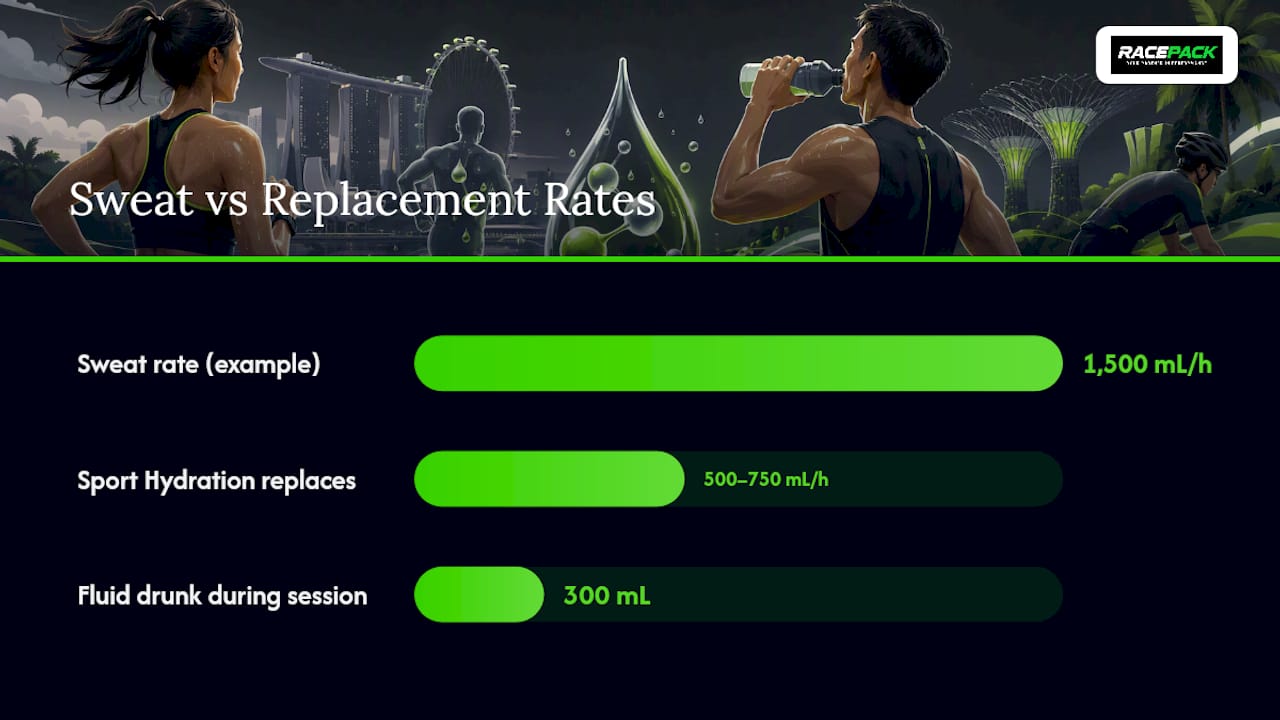
- Convert to an hourly rate: If you lost 1.2 kg over 60 minutes and drank 300 mL, your sweat rate is roughly 1,500 mL per hour.
- Compare against your intake plan: If Sport Hydration is replacing only 500 to 750 mL per hour, you’re running a fluid deficit that adds up over a long race.
- Assess salt residue: Heavy white salt crusting on a hat or shirt after long sessions is a practical sign you’re a “salty sweater,” and it’s often worth adding an Electrolyte Booster serving on top of your regular mix rather than just drinking more fluid.
The numbers matter differently depending on conditions. A 2 hour trail run in cool weather might only require standard Sport Hydration servings. A 4-hour road race in tropical heat and humidity, the kind common across Singapore’s training calendar, can push sweat losses well past what one Sport Hydration bottle per hour replaces, which is exactly when stacking the Electrolyte Booster on top of a normal serving earns its place in a race-day plan.
Sodium needs scale with sweat rate, not body weight. Two athletes of identical size can lose wildly different amounts of sodium per liter of sweat, which is why a generic “drink X mL per hour” rule fails athletes on the salty end of the spectrum. Sweat sodium concentration varies enormously between individuals, and matching your specific loss rather than a population average is what actually prevents cramping and late-race fatigue.
One caution applies here just as it did with general use: athletes managing high blood pressure, kidney disease, or other conditions affecting sodium regulation should get medical guidance before adding a booster on top of a regular hydration mix, especially for repeated high-sodium sessions. For a broader look at how electrolyte timing interacts with high-intensity training, and a solid outside perspective on matching hydration to sweat loss and duration from cycling-specific coaching, both are worth reading before your next big sweat-rate test.
Where to Buy Skratch Electrolytes and What to Check First
Buying Skratch through the brand’s own site or an authorized retailer is the safest way to guarantee you’re getting genuine product, correctly stored and within date. Electrolyte powders don’t carry the same counterfeit risk as some supplement categories, but incorrect storage during shipping or resale through unverified third parties can still degrade a mix before it reaches your bottle.
A few practical checks before buying:
- Confirm the seller is an authorized retailer, not a marketplace reseller with no brand relationship.
- Check pack size against your usage rate: a 20-serving pack lasts roughly five long training sessions at two servings each, while a 10-pack suits athletes still testing flavors.
- Look at the value-per-serving math, not just the sticker price, since larger packs almost always bring the per-serving cost down.
- Ask about delivery timing if you’re training on a tight schedule and can’t afford to run out mid-block.
The Skratch Labs Unsweetened Hydration Sport Drink Mix in 10 and 20 pack sizes is available from various retailers, with delivery options varying by seller.
Storage is simple but easy to overlook. Keep the powder sealed and dry between uses. Humidity is the main cause of clumping in electrolyte mixes, and a scoop left exposed to Singapore’s humidity for even a day or two can start to cake. Most sealed pouches hold their quality well past a year unopened, but once opened, using the pack within a few months keeps flavor and mixability at their best.
An Author’s Field Notes on Making Skratch Work
The sodium-forward, real-fruit approach behind Sport Hydration isn’t a marketing angle. It’s a practical baseline built around what most endurance athletes actually need: enough sodium to match sweat losses, a manageable carb load that doesn’t compete with fueling, and a flavor profile that doesn’t turn into a chore by hour three. The tolerance benefits that reviewers consistently mention, fewer stomach issues, less sweetness fatigue, aren’t incidental. They come directly from using citrate salts and real fruit rather than artificial sweeteners that some athletes struggle to tolerate over long durations.
The mistake I see most often isn’t choosing the wrong Skratch product. It’s never testing the right one before race day. Athletes will train for months on one hydration strategy and then switch products, flavors, or serving sizes the week of an event because a bottle ran empty. Your gut doesn’t get a say in that decision, and it always finds a way to make itself heard at the worst possible mile.
Pro Tip: Buy your race-week Skratch supply at least three weeks out, and use the exact same mix ratio and flavor you’ll use on race day for your final two long training sessions. That’s the only real test that counts.
Orders from authorized retailers help ensure authenticity and timely delivery, simplifying race preparation. For more on how electrolyte strategy fits into overall performance planning, the electrolyte fundamentals guide covers the broader physiology behind sweat loss and replacement.
— Jason John
What Do Athletes Actually Say About Skratch’s Taste and Value
Feedback on Skratch tends to cluster around three themes: flavor, gut comfort, and price. Real-fruit flavoring earns consistent praise for tasting less artificial and less cloying than many traditional sports drinks, especially during multi-hour efforts when sweetness fatigue becomes a real problem. Reviewers frequently note that Skratch sits easier in the stomach than heavily sweetened alternatives, a pattern buyer-guide write-ups attribute to the citrate salt formulation rather than artificial sweeteners.
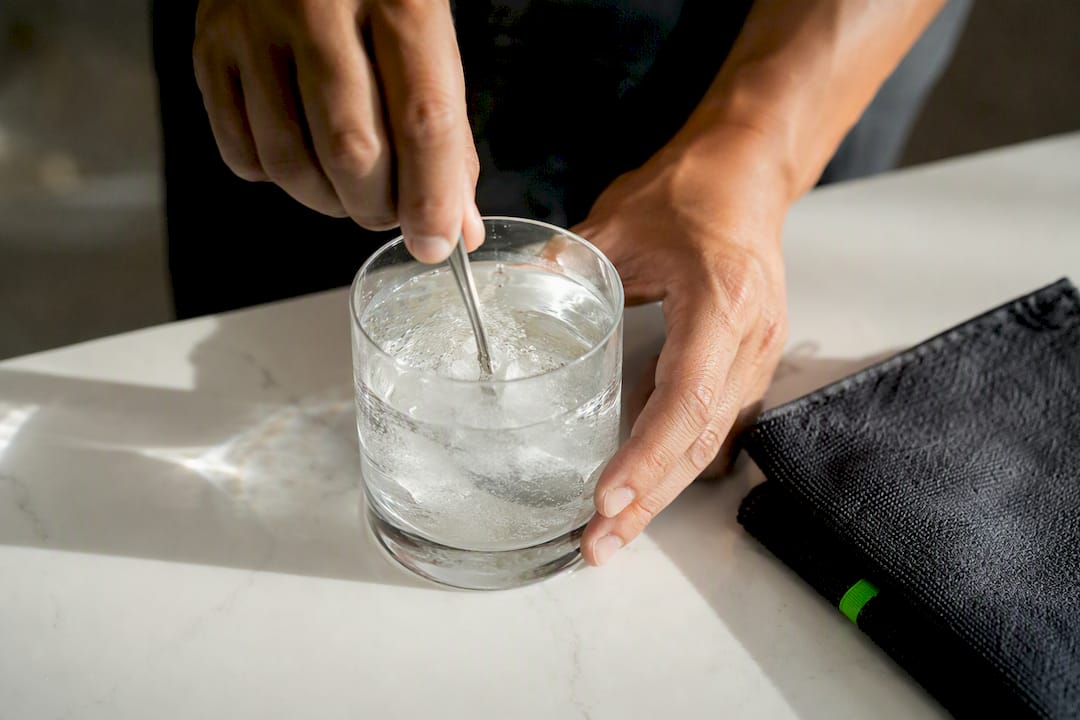
Mixability draws more mixed opinions. Some athletes report a slightly gritty texture if the powder isn’t dissolved thoroughly, particularly in cold water, though pre-mixing with a small amount of warm water before topping off tends to solve this.
Price is the most consistent critique. Skratch sits at a mid-premium point compared to bargain electrolyte tablets, and outdoor gear reviews generally frame it as a stomach-friendly option best suited to endurance riders and long-effort athletes who value tolerance and flavor over the lowest possible price point. For athletes training multiple times per week, that premium adds up, which is exactly why understanding serving math and pack-size value matters before committing to a full training cycle.
Does Skratch Contain Common Allergens or Fit Dietary Restrictions?
Skratch’s core mixes are dairy-free, gluten-free, and made without artificial sweeteners, colors, or flavors, which covers the most common dietary concerns endurance athletes bring up. The real-fruit base means ingredient lists stay relatively short compared to many synthetic sports drinks on the market.
That said, always check the specific product label for your exact flavor and formula before your first use, since fruit-derived ingredients can vary slightly by variant and flavor sourcing changes periodically. Athletes with tree fruit sensitivities, in particular, should scan ingredient panels rather than assuming every flavor uses an identical base.
Unsweetened Sport Drink Mix and the Electrolyte Booster carry no added sugar, which matters for athletes managing diabetes or following low-carb training protocols, though anyone with a medical condition affecting sodium or potassium regulation should still run any new supplement past a doctor, a point Harvard’s Nutrition Source raises directly when discussing populations who need to limit added sodium and potassium. Vegan athletes are generally well covered, since the core formulas don’t rely on animal-derived ingredients.
What Does Skratch Actually Cost Per Serving?
A 20-serving pack of Sport Hydration or Unsweetened mix typically works out to a few dollars per serving, though exact pricing depends on pack size and current retailer pricing. Running the math against your training volume makes the decision clearer than sticker price alone.
Consider a marathon training block: four long runs per month at two servings each means roughly eight servings monthly just for long-run days, before counting shorter sessions in heat. A 20-pack covers that volume with room to spare for one or two additional hot-weather sessions. Athletes training six days a week through a full buildup will burn through packs faster and should factor that into how many packs to order at once, particularly with next-day delivery removing the pressure to over-stock.
The Electrolyte Booster changes the math slightly since it’s typically used on top of an existing mix rather than as a standalone drink, meaning its cost adds to, rather than replaces, a Sport Hydration budget. For athletes who only need it during peak heat blocks or race week, buying it as a targeted addition rather than a daily staple keeps the overall electrolyte budget reasonable.
How Does Skratch Compare on Price and Value to Other Electrolyte Options
Skratch sits at the mid-premium end of the electrolyte category, priced above basic tablet formats but reflecting its real-fruit ingredient base and sodium-forward design. Cheaper tablet and powder options exist, and Healthline’s roundup of electrolyte drinks notes that alternatives like coconut water, basic sports drinks, and homemade electrolyte mixes each carry their own trade-offs in sodium content, sugar load, and cost.
Value isn’t just about price per scoop. It’s about whether the formula matches what an athlete actually needs during long efforts. A cheaper tablet with low sodium content offers little value to a heavy sweater training in heat, no matter how low the per-serving cost runs. Skratch’s value case rests on matching sweat losses accurately and being tolerable enough to actually finish during a four-hour effort, which is where cheaper, higher-sugar alternatives often fall short for GI comfort.
For athletes who want a lower-cost sachet format without sacrificing electrolyte content, HIGH5 ZERO+ sachets offer a comparable electrolyte-forward option at a different price point and format, worth considering as a rotation option or a lighter alternative for shorter sessions where Skratch’s fuller carb profile isn’t needed.
Why Matching the Formula to the Effort Beats Following a Generic Rule
The biggest gap between how athletes actually use electrolyte drinks and how the conventional advice frames them comes down to specificity. Most generic hydration advice treats electrolyte replacement as a single fixed number, one scoop, one bottle, one rule for everyone. That approach ignores how much sweat rate and sodium concentration vary between individuals, which is the exact nuance Harvard’s Nutrition Source and Skratch’s own drink-to-thirst guidance both point toward.
The reader who benefits most from Skratch isn’t the one who buys a single tub and hopes it works. It’s the athlete who runs a sweat-rate test once, learns their actual sodium needs, and then picks between Sport Hydration, Unsweetened, and the Electrolyte Booster based on that data rather than habit. Prioritize testing your specific formula and ratio in training first. Everything else, pack size, price, flavor rotation, is a secondary decision once the core formula fits your sweat profile.
Ready to Stock Up on Skratch and Race-Day Fuel
The products discussed here, including Skratch Labs Unsweetened Hydration Sport Drink Mix in 10 and 20 pack sizes, can be sourced through various retailers.
Pair it with GU Energy Gel packs for race-day carb targets, or grab HIGH5 ZERO+ sachets as a lighter-format alternative for shorter sessions. Every order ships with an authenticity guarantee and next-day delivery within Singapore, so your training block doesn’t stall waiting on a bottle to arrive.
Test your mix ratio and serving frequency in training well before race week, then lock in your race-day plan with confidence. Buy your Skratch and fueling stack now and stop leaving hydration to guesswork.
Sources
- Do I need electrolyte drinks? • The Nutrition Source
- 8 electrolyte drinks to add to your wellness routine
- Skratch Labs launches Electrolyte Booster and reintroduces unsweetened mix
FAQ
Are Skratch Labs Electrolytes Good for Endurance Athletes?
Yes. Skratch’s sodium-forward profile, roughly 400 mg sodium per liter, closely matches typical sweat losses during long or hot exercise, and its real-fruit formulation tends to sit easier on the stomach than heavily sweetened alternatives.
Why Shouldn’t You Drink Electrolyte Drinks Every Day?
Daily use when you’re not sweating heavily adds unnecessary calories and sodium that most people’s diets already cover, and Harvard’s Nutrition Source notes this can be an issue for people managing blood pressure or kidney conditions.
What Is the Healthiest Electrolyte Drink You Can Drink?
There’s no single healthiest option. It depends on your sweat rate and goals, but formulas using real-fruit ingredients and citrate salts, like Skratch’s Sport Hydration, tend to offer a favorable balance of sodium replacement and GI tolerance compared to heavily sweetened commercial sports drinks.
How Often Should You Use Skratch Hydration Mix?
Skratch’s own guidance recommends one to two servings per hour of exercise, adjusted based on thirst and sweat rate, rather than a fixed schedule applied to every session regardless of intensity or heat.
What’s the Difference Between Skratch Sport Hydration and Unsweetened?
Both carry the same electrolyte profile, but Sport Hydration includes roughly 19 grams of carbohydrate per serving from real fruit, while Unsweetened removes the sugar entirely for low-carb strategies or fasted training.
When Should You Use the Skratch Electrolyte Booster Instead of Sport Hydration?
Use the Electrolyte Booster when sweat sodium losses are high but you don’t want additional carbohydrate, typically stacked on top of an existing hydration mix during hot-weather training or racing.
Can You Pair Skratch With Energy Gels During a Race?
Yes, and it’s a common strategy. Sport Hydration covers hydration and roughly 19 grams of carbs per hour, while adding one energy gel per hour brings total carb intake closer to the 40 to 60 gram range many endurance efforts require.
Does Skratch Contain Common Allergens?
Skratch’s core mixes are dairy-free and gluten-free, though athletes with fruit-specific sensitivities should check the ingredient label for their chosen flavor before first use.
How Much Does Skratch Cost Per Serving?
Cost per serving varies by pack size, with larger 20-serving packs generally offering better per-serving value than smaller trial packs, though exact pricing depends on current retailer listings.
Where Can You Buy Genuine Skratch Products?
Buy directly from the brand or an authorized retailer to guarantee authenticity and proper storage. Racepack SG stocks the Skratch Unsweetened Hydration Sport Drink Mix with an authenticity guarantee and next-day delivery within Singapore.
Is Skratch Better Than Cheaper Electrolyte Tablets?
It depends on your needs. Skratch’s real-fruit formula and higher sodium content suit heavy sweaters and long efforts better, while cheaper tablets may suffice for shorter, lower-intensity sessions where sodium replacement demands are lower.
How Do You Know if You Need More Sodium Than a Standard Skratch Serving Provides?
Heavy white salt residue on clothing or gear after training, along with cramping during long efforts, are practical signs that your sweat sodium losses are on the higher end and a booster may be worth testing.