

Adaptogens for Athlete Recovery: Evidence-Based Guide
Yes, selected adaptogens can meaningfully support athlete recovery and stress resilience when used as a targeted, evidence-backed tool alongside nutrition, sleep, and structured training. The role of adaptogens in athlete recovery is not about replacing your protein shake or skipping sleep. It is about giving your body a better hormonal environment to rebuild in.
The three most evidence-backed options for athletes right now:
- Ashwagandha (Withania somnifera): A 42-day randomized trial in team-sport athletes found 600 mg/day of root extract stabilized post-training cortisol and cortisone versus placebo, with improved perceived recovery and strength gains.
- Cordyceps: Linked to improved oxygen utilization and endurance capacity in multiple trials, particularly relevant for aerobic athletes.
- Rhodiola rosea: Associated with reduced perceived fatigue and improved mental resilience under high training loads, with moderate evidence from controlled trials.
The practical caveat: adaptogens require a consistent loading phase of several weeks before measurable effects appear. They are adjuncts, not shortcuts. Product quality and third-party testing matter enormously, and competitive athletes must verify compliance with WADA guidelines before use.
Pro Tip: If you are only two weeks into an adaptogen protocol and feel nothing, that is expected. Most trials showing real results run 8–12 weeks minimum. Stopping early produces false “no-effect” conclusions.
Table of Contents
- How adaptogens actually work for athlete recovery
- What the research shows across key athlete outcomes
- Profiles of the main adaptogens athletes use
- How to build adaptogens into your recovery plan
- Safety, side effects, and anti-doping considerations
- What the pivotal trials actually tell us
- Key Takeaways
- A coach’s honest perspective on adaptogens in periodized training
- Selected sources and further reading
- RacepackSingapore stocks the recovery products that complement your adaptogen protocol
- FAQ
How adaptogens actually work for athlete recovery
Adaptogens are a class of plant-derived compounds defined by their ability to help the body resist physical, chemical, and biological stressors without disrupting normal physiological function. The key word is modulate, not stimulate. That distinction separates them from caffeine or pre-workout compounds entirely.
The primary mechanism is HPA axis modulation. The hypothalamic-pituitary-adrenal axis governs your cortisol response to training stress. When you push hard in a pre-season block or back-to-back race weekends, that axis can stay chronically activated, keeping cortisol elevated long after the session ends. Elevated cortisol suppresses muscle protein synthesis, disrupts sleep architecture, and amplifies systemic inflammation. Adaptogens work by supporting the feedback loop that brings cortisol back to baseline faster, keeping you in physiological homeostasis rather than a prolonged stress state.
For athletes, that translates to four downstream effects: cortisol stabilization post-training, improved sleep quality, lower perceived fatigue during recovery days, and a reduction in pro-inflammatory cytokine activity that would otherwise slow muscle repair. None of these effects are acute. They build over weeks of consistent dosing, which is why the clinical evidence consistently uses trial durations of 8–12 weeks or longer.
Pro Tip: Think of adaptogens as recovery infrastructure, not a performance switch. Take them with your evening meal or post-workout nutrition, not as a pre-training stimulant. Consistent daily dosing matters more than timing precision.
What the research shows across key athlete outcomes
The evidence base is uneven across outcomes. Here is where it stands:
- Endurance and VO2max (Strong-to-Moderate): A systematic review and meta-analysis found ashwagandha supplementation at 300–500 mg twice daily for 8–12 weeks produced a mean VO2max improvement of approximately +4.09 ml·kg⁻¹·min⁻¹ in athletic populations. That is a meaningful gain for endurance athletes, comparable to several weeks of structured aerobic training.
- Perceived recovery and DOMS (Moderate): Multiple trials report reduced perceived muscle soreness and faster subjective recovery scores with ashwagandha and rhodiola. The team-sport trial showed sex-specific effects, with female athletes showing perceptual recovery improvements.
- Inflammation markers (Moderate, mixed): Ashwagandha’s anti-inflammatory and antioxidative properties are well-documented mechanistically, but trial-level reductions in CRP or IL-6 are inconsistent across studies. The effect appears real but context-dependent.
- Mental resilience and anxiety (Moderate): Rhodiola and ashwagandha both show reductions in perceived stress and anxiety in controlled trials, which matters for athletes managing competition pressure alongside heavy training.
- Sleep quality (Moderate): HPA axis normalization correlates with improved sleep onset and sleep duration in several ashwagandha trials. Better sleep is arguably the highest-leverage recovery benefit for most athletes.
A consistent limitation across this literature is that most trials use recreationally active or sub-elite populations with variable extract standardization and limited trial durations. Adaptogenic herbs research confirms the breadth of reported benefits but also flags that evidence strength drops sharply for cordyceps, reishi, and tulsi compared to ashwagandha.
Profiles of the main adaptogens athletes use
| Adaptogen | Typical Trial Dose | Duration | Primary Athlete Benefit | Evidence Level |
|---|---|---|---|---|
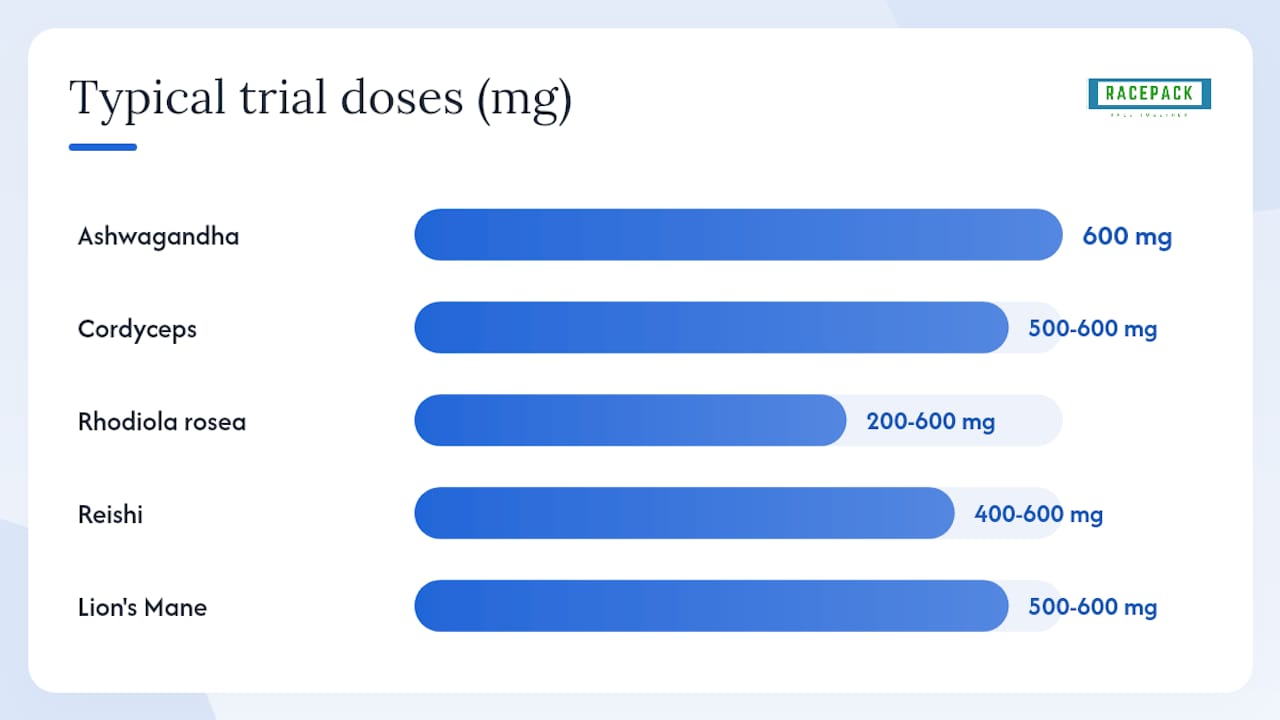
| Ashwagandha | 600 mg/day (root extract) | 8–12 weeks | VO2max, cortisol, strength, sleep | Moderate–Strong |
| Cordyceps | 500–600 mg/day | 8–12 weeks | Oxygen utilization, endurance | Limited–Moderate |
| Rhodiola rosea | 200–600 mg/day | 4–12 weeks | Fatigue, mental resilience | Moderate |
| Reishi | 400–600 mg/day | 8–12 weeks | Immune support, inflammation | Limited |
| Lion’s Mane | 500–600 mg/day | 8–12 weeks | Cognitive recovery, neuroprotection | Limited |
| Tulsi (Holy Basil) | 300–600 mg/day | 8–12 weeks | Cortisol, anxiety, inflammation | Limited |
Ashwagandha is the most clinically validated adaptogen for athletes. The STAR Trial used 500 mg/day of Sensoril® (an aqueous root-and-leaf extract) over 12 weeks and found greater gains in 1-RM squat and bench press alongside improved perceived recovery versus placebo in recreationally active men. Critically, efficacy depends on extraction method: root-only aqueous extracts standardized for withanolide content outperform whole-herb powders in clinical outcomes. Look for products specifying withanolide percentage on the label.
Cordyceps works via adenosine receptor activity and may improve ATP production efficiency, which is why it appears in endurance-focused stacks. Evidence is promising but thinner than ashwagandha’s, with smaller trials and more variable results.
Rhodiola rosea stands out for mental resilience and perceived fatigue reduction, making it particularly useful during high-stress competition periods or overreaching blocks. It acts faster than most adaptogens, with some trials showing effects within 4 weeks.
Reishi and Lion’s Mane are mushroom-based and carry an important caveat: extraction variability is significant. Hot-water extraction is required to release beta-glucans from mushrooms; alcohol extraction targets different compounds. A product that does not specify extraction method is a quality red flag.
Tulsi (Holy Basil) has the thinnest athlete-specific evidence of the group but shows cortisol-lowering and anti-anxiety effects in general population trials that may translate to recovery support.
For broader context on how these herbs fit into a full supplement plan, the evidence-based nutrition guide at RacepackSingapore covers integration strategies across training phases.
How to build adaptogens into your recovery plan
Start with the non-negotiables: sleep, protein, carbohydrates, and hydration. Adaptogens are adjuncts to a functioning recovery system, not a fix for a broken one. If you are under-sleeping and under-eating, no adaptogen will compensate.
Loading and maintenance:
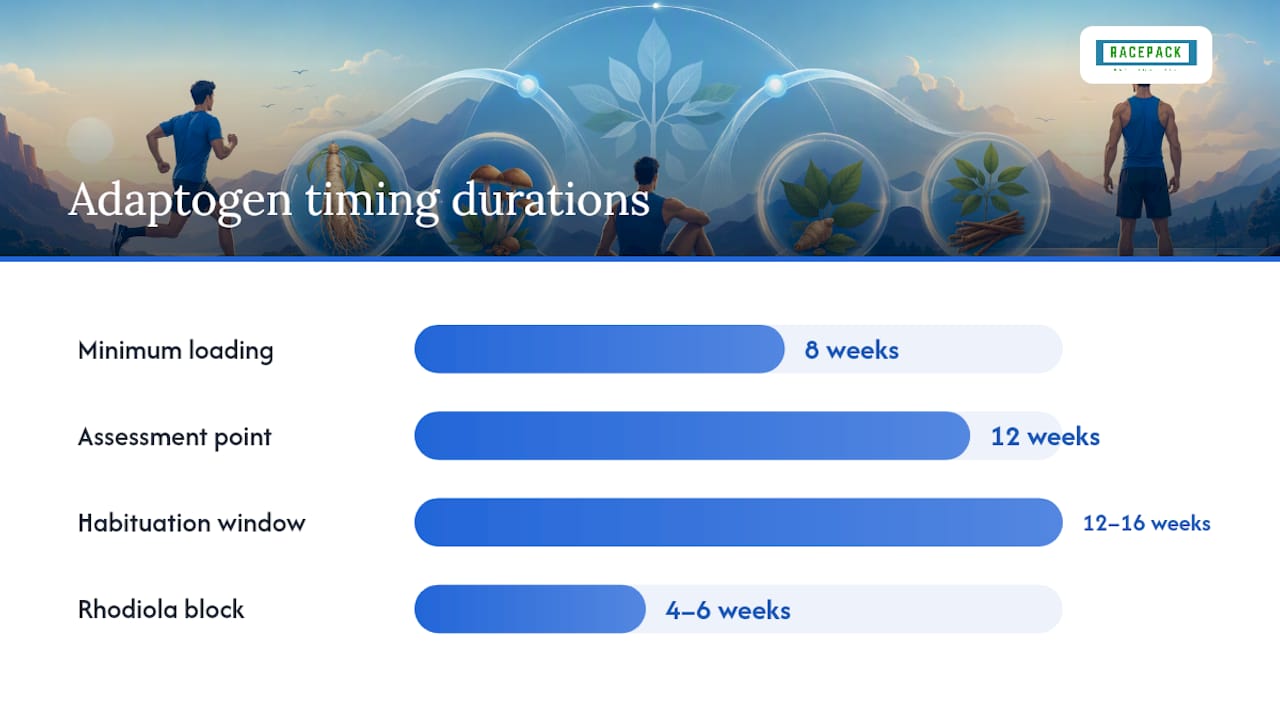
- Run a minimum 8-week loading phase before evaluating results.
- Use consistent daily dosing rather than situational use.
- After 12 weeks, assess with objective markers (sleep quality, training power/pace, DOMS scores) before continuing.
- Consider a 4-week break after 12–16 weeks to prevent habituation, then re-introduce if beneficial.
Stacking guidelines:
- Ashwagandha pairs well with L-theanine (50–200 mg) for mental recovery and sleep quality without sedation.
- Combining adaptogens with post-workout protein strategies maximizes the anabolic window.
- Separate adaptogen dosing from stimulant-heavy pre-workouts by at least 4 hours.
- Avoid combining ashwagandha with thyroid medications or sedatives without medical clearance.
Sample protocols:
- Endurance athlete (marathon/triathlon): Ashwagandha 600 mg/day with evening meal, 12-week pre-season block. Add SiS REGO Cherry Juice post-long-run for inflammation support and sleep quality.
- Strength athlete: Ashwagandha 600 mg/day (aqueous extract), 12 weeks. Stack with EVLution Nutrition Z-Matrix ZMA for sleep and testosterone support during heavy loading blocks.
- Pre-season intensive block: Rhodiola 400 mg/day for 4–6 weeks during the highest-stress training period, then transition to ashwagandha for the longer maintenance phase. Support adrenal function with Life Extension Adrenal Energy Formula.
Athlete readiness checklist before starting:
- Medical clearance from a sports physician, especially if on any prescription medication
- Verified WADA compliance for your specific product and batch
- Third-party testing certification (Informed-Sport or NSF Certified for Sport)
- Baseline metrics recorded (sleep, DOMS, training output) to measure against
Sport nutrition periodization guidance at RacepackSingapore covers how to align supplement loading phases with your training calendar.
Safety, side effects, and anti-doping considerations
Most adaptogens are well-tolerated at clinical doses. Ashwagandha occasionally causes mild GI discomfort, particularly on an empty stomach. Rhodiola can produce mild insomnia or irritability if taken too late in the day. Reishi, at high doses, has been associated with liver enzyme elevation in rare case reports, though this is uncommon at standard supplemental doses.
Key safety principle: Adaptogens are not regulated as drugs under DSHEA in the United States, which means label claims are not pre-approved by the FDA. Product quality varies dramatically. A supplement that lists “ashwagandha extract” without specifying withanolide percentage, plant part, and extraction method may deliver a fraction of the clinical dose used in trials.
Drug interactions to know:
- Thyroid medications: Ashwagandha may increase thyroid hormone levels; athletes on levothyroxine need physician oversight.
- Sedatives and anxiolytics: Additive CNS depressant effects possible with ashwagandha and rhodiola.
- NSAIDs: No direct pharmacokinetic interaction documented, but combining anti-inflammatory adaptogens with NSAIDs may produce redundant effects worth monitoring.
- Immunosuppressants: Reishi and cordyceps have immune-modulating properties that could theoretically interact.
Anti-doping checklist for competitive athletes:
- Confirm the specific adaptogen is not on the current WADA Prohibited List (check wada-ama.org directly, not third-party summaries).
- Choose products certified by Informed-Sport or NSF Certified for Sport, which conduct batch testing for prohibited substances.
- Retain batch certificates and purchase records to present at events if questioned.
- Consult your national anti-doping organization if uncertain about a specific product.
Pro Tip: Certification logos on packaging are not enough. Verify the specific batch number against the certifying body’s database. Batch testing, not brand-level certification, is what protects you at competition.
If you experience adverse effects, stop use immediately, document symptoms and the product batch, and consult a sports physician before restarting. High-performance athletes benefit most from working with a registered sports dietitian who can monitor biomarkers across a supplementation cycle. For a broader view of how supplements fit into recovery, this recovery and wellness guide covers the full picture.
What the pivotal trials actually tell us
The most rigorous athlete-specific trial to date used 600 mg/day of ashwagandha root extract over 42 days in 56 team-sport athletes during pre-season training. The results showed statistically significant stabilization of salivary cortisol and cortisone post-training versus placebo, with sex-specific effects: female athletes showed stronger improvements in perceived recovery, while male athletes showed clearer gains in some strength measures.
Practical recommendation from this evidence: athletes in high-volume training blocks, particularly females managing recovery load, are the most likely to see measurable benefit from ashwagandha at 600 mg/day. Expect a 6–8 week minimum before perceptual recovery improvements become consistent.
Limitations to hold in mind:
- Sample sizes across most adaptogen trials are small (typically under 60 participants).
- Most trials use recreationally active or sub-elite athletes, limiting generalizability to elite sport.
- Extract standardization varies between studies, making cross-trial comparisons difficult.
- Sex-specific effects are underreported; most older trials used male-only samples.
- Long-term safety data beyond 12–16 weeks is limited for most adaptogens.
The Springer Nature review synthesizing multiple ashwagandha trials reaches the same conclusion: the anti-inflammatory and antioxidative mechanisms are credible, but more rigorous research in elite and female athletes is still needed before definitive performance claims can be made.
Key Takeaways
Adaptogens can support athlete recovery through HPA axis modulation, cortisol stabilization, and reduced perceived fatigue, but only when used consistently over 8–12 weeks alongside core recovery nutrition.
| Point | Details |
|---|---|
| Loading phase is non-negotiable | Expect 8–12 weeks before measurable recovery and performance benefits appear. |
| Ashwagandha has the strongest evidence | At 600 mg/day (root extract), it stabilized cortisol and improved perceived recovery in athlete-specific 8–12 week trials. |
| VO2max improvement is quantifiable | A meta-analysis found approximately +4.09 ml·kg⁻¹·min⁻¹ improvement with 8–12 weeks of ashwagandha supplementation. |
| Product quality determines outcome | Choose root-only aqueous extracts standardized for withanolides; verify batch-level third-party testing. |
| RacepackSingapore recovery stack | Pair adaptogens with SiS REGO Cherry Juice, ZMA, and Adrenal Energy Formula for a complete recovery protocol. |
A coach’s honest perspective on adaptogens in periodized training
The athletes who get the most out of adaptogens are not the ones chasing a performance edge in the final week before a race. They are the ones who introduce them at the start of a pre-season block, track their sleep and DOMS scores weekly, and treat the 8-week loading phase as seriously as they treat their long-run progression.
What I find most underappreciated in the adaptogen conversation is the sex-specificity of the evidence. Female athletes in the 42-day ashwagandha trial showed stronger perceptual recovery improvements, yet most supplement marketing still defaults to male-centric messaging. If you are a female endurance athlete managing high training loads, the cortisol-stabilizing evidence is particularly relevant to you.
For monitoring, I would use three metrics: subjective sleep quality (a simple 1–10 nightly score), DOMS severity 48 hours post-session, and training pace or power at a fixed RPE. If all three trend positively over 8 weeks, the protocol is working. If two of three show no change, reassess the dose, the extract quality, or whether the foundational recovery habits are actually in place.
For a strength athlete in a hypertrophy block, I would prioritize ashwagandha at 600 mg/day and pair it with ZMA for sleep depth. For an endurance athlete heading into race season, rhodiola for 4–6 weeks during peak training stress, then ashwagandha through the taper. Neither protocol replaces active recovery work or post-session nutrition. They support it.
Selected sources and further reading
For athletes and practitioners who want to read the primary evidence directly:
- Ashwagandha Root Extract Stabilises Physiological Stress Responses in Male and Female Team Sports Athletes During Pre-Season Training
- Withania somnifera (Ashwagandha) supplementation: a review of its mechanisms, health benefits, and role in sports performance | Nutrition & Metabolism
- The effect of Ashwagandha (Withania somnifera) on sports performance: a systematic review and meta-analysis
- Effects of an Aqueous Extract of Withania somnifera on Strength Training Adaptations and Recovery: The STAR Trial
- Withania somnifera (Ashwagandha) supplementation: a review of its mechanisms, health benefits, and role in sports performance | Nutrition & Metabolism | Springer Nature Link
- Adaptogenic herbs: A natural way to improve athletic performance
- Supplements for Athletic Recovery — Stanford Lifestyle Medicine
- Adaptogens: A review of their historical use, biological basis and potential for fatigue and stress-related disorders
For additional adaptogen supplement examples and product-form comparisons, this wellness guide covers ingredient overviews across categories. For plant-based recovery integration strategies, Onyx Wellness offers a practical companion resource.
Before starting any supplement protocol, consult a registered sports dietitian or sports physician to confirm dosing, interactions, and anti-doping compliance for your specific situation.
RacepackSingapore stocks the recovery products that complement your adaptogen protocol
Athletes who commit to an evidence-based adaptogen protocol still need the foundational recovery stack to be right. RacepackSingapore carries the specific products that pair directly with the protocols outlined in this guide, all with guaranteed authenticity and next-day delivery.
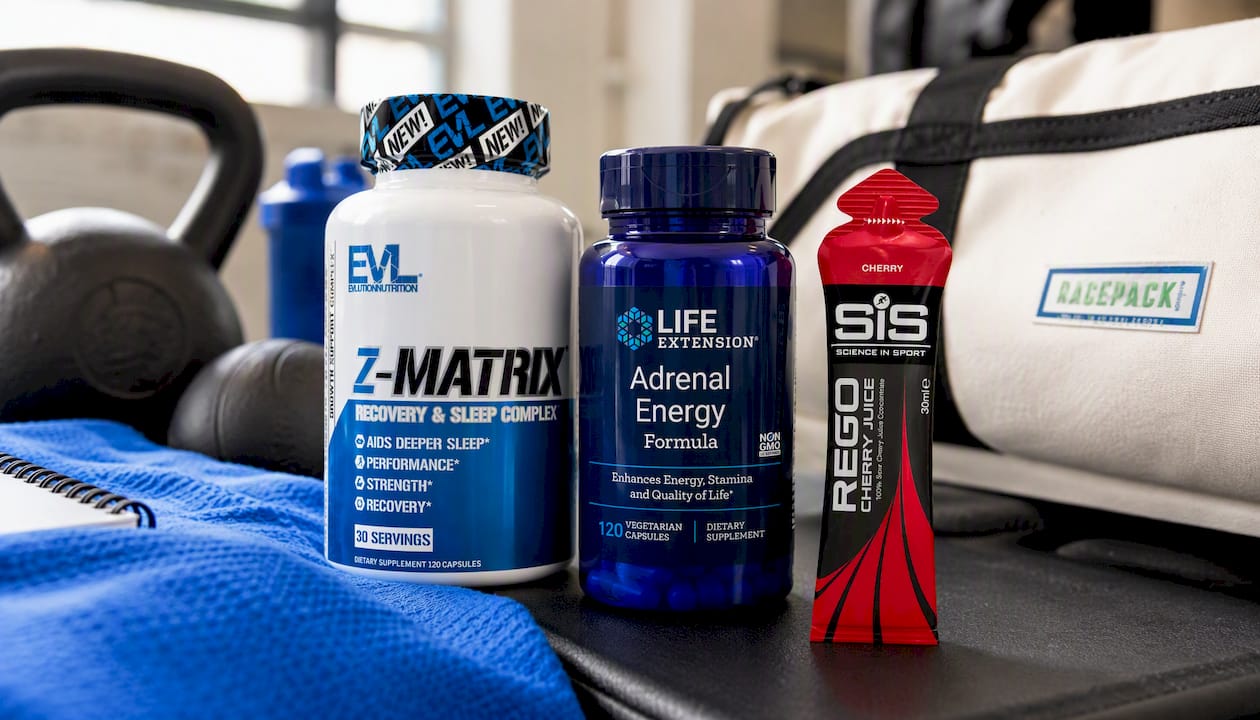
The Life Extension Adrenal Energy Formula targets adrenal and hormonal balance, making it a natural complement to ashwagandha-based protocols during high-load training blocks. For sleep depth and testosterone support during strength phases, EVLution Z-Matrix ZMA is a proven addition. Post-long-run inflammation and sleep quality both respond well to SiS REGO Cherry Juice, which delivers tart cherry’s natural anti-inflammatory compounds in a convenient 30ml format. We also carry Now Foods Panax Ginseng Extract for athletes exploring ginseng as part of their adaptogen rotation.
Browse the full recovery range and build your protocol. Shop recovery products now.
FAQ
Do adaptogens actually help with muscle recovery after training?
Yes, with caveats. Ashwagandha at 600 mg/day has shown cortisol stabilization and improved perceived recovery in a 42-day randomized trial in team-sport athletes. Effects build over 8–12 weeks and work best alongside protein, sleep, and hydration.
How long before adaptogens show results for athletes?
Most clinical trials showing measurable recovery and performance benefits run 8–12 weeks. Stopping before 8 weeks is the most common reason athletes conclude adaptogens “don’t work.”
Are adaptogens safe for competitive athletes under WADA rules?
Current major adaptogens (ashwagandha, rhodiola, cordyceps) are not on the WADA Prohibited List, but athletes must verify their specific product batch via Informed-Sport or NSF Certified for Sport certification before competing.
What is the best adaptogen for endurance athletes?
Ashwagandha has the strongest evidence, with a meta-analysis showing approximately +4.09 ml·kg⁻¹·min⁻¹ VO2max improvement at 600 mg/day (root extract) for 8–12 weeks. Cordyceps is a secondary option for oxygen utilization support.
Can I stack adaptogens with protein and BCAAs?
Yes. Adaptogens are compatible with protein, BCAAs, and most recovery supplements. Ashwagandha pairs particularly well with L-theanine for mental recovery. Separate adaptogen dosing from stimulant-heavy pre-workouts by at least 4 hours.
What adaptogen products does RacepackSingapore carry?
RacepackSingapore stocks the Life Extension Adrenal Energy Formula, EVLution Z-Matrix ZMA, SiS REGO Cherry Juice, and Now Foods Panax Ginseng Extract, all available with next-day delivery and guaranteed authenticity.
Does ashwagandha affect sleep quality for athletes?
Yes. HPA axis normalization from consistent ashwagandha use correlates with improved sleep onset and duration in multiple trials, which is one of the highest-leverage recovery benefits for athletes in heavy training blocks.
Are there any side effects athletes should know about?
Ashwagandha occasionally causes mild GI discomfort on an empty stomach. Rhodiola can disrupt sleep if taken late in the day. Athletes on thyroid medications or sedatives should consult a sports physician before use, as interactions are possible.