

Magnesium Triple Complex: Benefits, Dosage, and Results
TL;DR:
- A magnesium triple complex combines three forms of magnesium—glycinate, malate, and citrate—to support sleep, muscle recovery, and digestion. Each form has a specific absorption pathway and benefits, making the blend more effective than single-form supplements. Proper timing, dosage, and tracking elemental magnesium are essential to maximize benefits and avoid side effects.
A magnesium triple complex is a supplement that combines three distinct forms of magnesium, most commonly glycinate, malate, and citrate, to support muscle function, nerve health, sleep quality, and recovery. This triple magnesium formula is popular among athletes and fitness enthusiasts because each form targets a different physiological need and uses a different absorption pathway. Brands like NatureWise and Sports Research have made this combination widely available, with products delivering around 300 mg elemental magnesium per serving. If you train hard, sleep poorly, or feel muscle tightness after workouts, a triple blend may address multiple gaps at once.
What is magnesium triple complex and how do the three forms differ?
The three forms in a magnesium triple complex each behave differently in your body. Understanding those differences helps you set realistic expectations and choose the right product for your goals.

| Magnesium Form | Primary Benefit | Absorption Profile | Best Use Case |
|---|---|---|---|
| Glycinate | Sleep and relaxation | Gentle, well tolerated | Evening dosing, stress relief |
| Malate | Energy production and muscle recovery | Moderate, steady | Pre or post workout |
| Citrate | Digestive regularity | High, mild laxative effect | Daytime use, general health |
Magnesium glycinate is bound to the amino acid glycine. That bond makes it gentle on the stomach and well absorbed, which is why it consistently appears in sleep and relaxation formulas. Magnesium malate is bound to malic acid, a compound involved in the energy cycle inside muscle cells. Malate supports energy metabolism and is often recommended for athletes dealing with muscle soreness and fatigue. Magnesium citrate is bound to citric acid, giving it a high absorption rate but also a mild laxative effect at larger doses.
The key insight from form-specific research at Mayo Clinic is that each form maintains its distinct effects even inside a complex blend. The combination does not cancel those effects out. Each form also uses a different uptake pathway in the gut, which means combining forms may increase total absorption compared to taking a single form alone. That absorption synergy is the core argument for choosing a triple blend over a single-form product.
- Glycinate is the best choice for sleep support and reducing muscle tension at night.
- Malate is the most relevant form for athletes focused on energy and post-workout recovery.
- Citrate supports digestive regularity and is well absorbed, but large doses at night can disrupt sleep.
How does magnesium triple complex support athletic performance and recovery?
Magnesium supports over 300 enzymatic reactions in the body, including muscle contraction, nerve signaling, and sleep regulation. That breadth makes it one of the most functionally important minerals for athletes. When magnesium levels are low, muscle cramps, poor sleep, and slow recovery become more common.
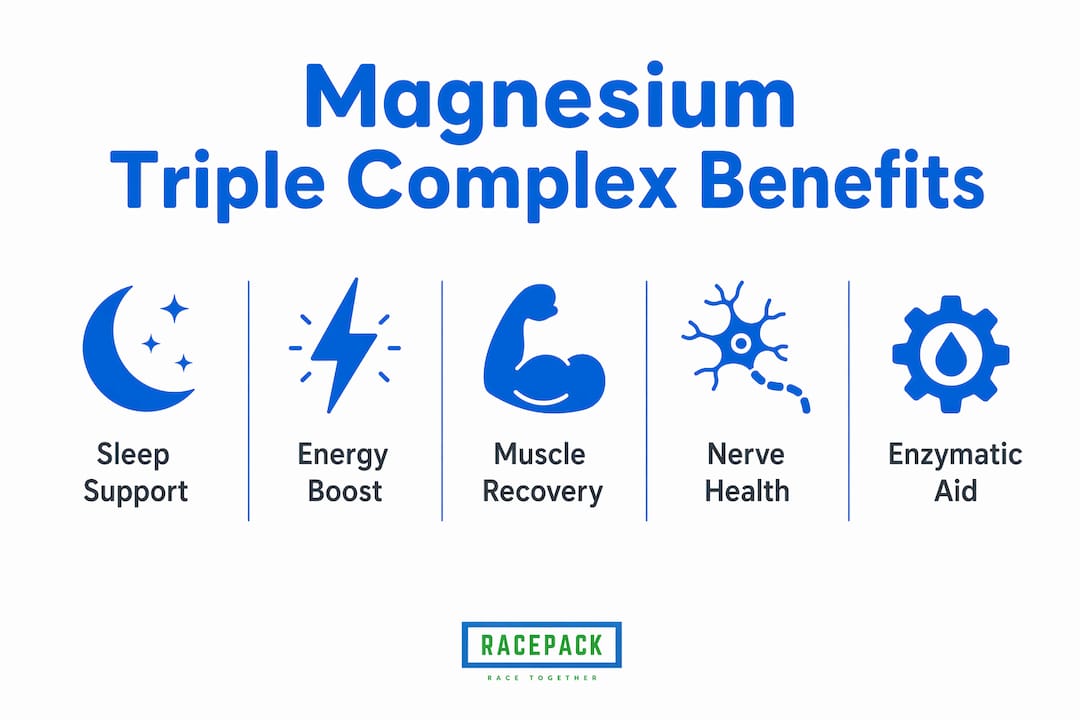
The honest picture on performance is this: magnesium supplementation shows mixed results in randomized controlled trials for direct exercise performance gains. The primary benefit is correcting a deficiency, not boosting performance beyond your normal ceiling. Athletes who already get enough magnesium from food will see limited gains from adding a supplement.
Where the triple blend genuinely helps:
- Muscle relaxation after training. Glycinate specifically reduces tension and supports recovery between sessions.
- Sleep quality. Poor sleep is one of the biggest barriers to athletic progress. Glycinate and malate both support deeper rest.
- Reduced cramping. Low magnesium is a common contributor to exercise-induced cramps, and correcting that deficiency reduces frequency.
- Energy metabolism. Malate supports the Krebs cycle, the process your muscle cells use to generate energy during sustained effort.
- Bone and joint support. Magnesium plays a role in bone repair and recovery, which matters for endurance athletes with high training loads.
Pro Tip: If you train in the evening, take your triple complex about 30 minutes before bed. The glycinate component will support relaxation and sleep onset without the digestive stimulation that citrate can cause at higher doses.
The athletes who benefit most are those with low dietary magnesium intake, high sweat rates, or chronic sleep issues. If you eat a diet rich in natural magnesium sources like spinach, pumpkin seeds, almonds, and dark chocolate, your baseline is already higher and supplementation will have a smaller effect.
What are the safety guidelines and dosage limits for magnesium supplements?
The tolerable upper intake level for supplemental magnesium in healthy adults is 350 mg per day, as established by the NIH. That limit applies to magnesium from supplements only, not from food. Exceeding it raises the risk of diarrhea, nausea, and abdominal cramping.
The most important number to track is elemental magnesium, not the total compound weight listed on a label. A capsule might contain 500 mg of magnesium glycinate by compound weight but deliver only 70 mg of elemental magnesium. Brands like NatureWise explicitly clarify this distinction on their labels. Always check the elemental amount per serving before calculating your daily total.
- Check the elemental magnesium amount on the supplement facts panel, not the compound weight.
- Add up all sources. If you take a pre-workout, electrolyte drink, or multivitamin, those may already contain magnesium. Total all sources before adding a triple complex.
- Start with a lower dose. Begin at half the recommended serving for the first week to assess GI tolerance, especially if you are sensitive to citrate.
- Avoid high doses at night. Citrate’s mild laxative effect can disrupt sleep if taken in large amounts in the evening. Glycinate is the safer evening form.
- Consult a doctor if you have kidney disease. Kidney impairment significantly increases risk from magnesium supplements because the kidneys regulate magnesium excretion. Unsupervised high-dose use is dangerous for this group.
Pro Tip: Athletes who stack multiple supplements should audit their total magnesium intake monthly. A pre-workout, a recovery powder, and a triple complex taken together can push you past the 350 mg daily limit without you realizing it.
The risk of exceeding the upper limit is real in athletic supplement stacks. Tracking total elemental magnesium across all products is the single most effective safety habit you can build.
How to choose and use magnesium triple complex for best results
Choosing the best magnesium complex starts with reading the label correctly. Look for the elemental magnesium amount per serving, confirm all three forms are present (glycinate, malate, and citrate), and check for third-party testing certification from organizations like NSF International or Informed Sport. Third-party testing confirms the product contains what it claims and is free from banned substances.
Timing your dose matters as much as the dose itself. The citrate form’s laxative effect makes large evening doses a poor choice if you want uninterrupted sleep. Products with a higher glycinate ratio are better suited for nighttime use. If your primary goal is energy and muscle recovery, taking the supplement post-workout or with dinner works well.
| Goal | Recommended Timing | Key Form to Prioritize |
|---|---|---|
| Sleep improvement | 30 min before bed | Glycinate |
| Muscle recovery | Post-workout or with dinner | Malate |
| Digestive support | Morning with food | Citrate |
| General deficiency correction | Any time with food | Balanced triple blend |
When stacking with other supplements, keep these points in mind:
- Electrolyte drinks often contain magnesium. Check the label before adding a separate triple complex on the same day.
- Calcium and magnesium compete for absorption at very high doses. Spacing them apart by a few hours reduces that competition.
- Pre-workout formulas from brands like Optimum Nutrition sometimes include magnesium. Factor that into your daily total.
- Magnesium citrate taken alone is a solid option if digestive regularity is your only concern, rather than a full triple blend.
For athletes training six or more days per week, a triple blend taken consistently at night covers sleep, recovery, and muscle relaxation in a single product. That convenience is a real advantage over managing three separate single-form supplements.
Key Takeaways
A magnesium triple complex delivers the most value when it corrects a real deficiency and is timed correctly, with glycinate supporting sleep, malate supporting energy, and citrate supporting absorption and digestion.
| Point | Details |
|---|---|
| Three forms, three functions | Glycinate supports sleep, malate supports energy, and citrate aids absorption and digestion. |
| Absorption synergy | Combining forms targets multiple gut uptake pathways, potentially improving total magnesium delivery. |
| Safety limit is 350 mg/day | The NIH upper limit applies to elemental magnesium from supplements only, not food sources. |
| Track elemental magnesium | Always read the elemental amount per serving, not the total compound weight on the label. |
| Best for deficiency correction | Athletes with low dietary intake or high sweat rates benefit most from consistent supplementation. |
What I have learned from using magnesium triple complex with athletes
The biggest mistake I see athletes make is treating a triple complex like a performance booster. They expect faster times or bigger lifts within two weeks. That is not how this mineral works. The real gains come from fixing what is broken: poor sleep, persistent muscle tightness, and low energy in the second half of training sessions.
I have worked with endurance athletes who were skeptical about magnesium until they tracked their sleep quality for four weeks on a triple blend. The improvement in deep sleep stages was consistent and measurable. That translated directly into better morning recovery scores and fewer complaints about heavy legs.
The form mix matters more than most people realize. A product heavy on citrate and light on glycinate will not support sleep the same way a glycinate-dominant blend does. Read the label for the ratio, not just the total elemental amount. If a brand does not disclose the individual form amounts, that is a red flag worth noting.
My honest advice: start with a lower dose than the label suggests, take it with food, and give it four to six weeks before judging results. Magnesium is not a supplement you feel acutely like caffeine. Its benefits build quietly, and the athletes who stick with it consistently are the ones who notice the difference.
— Jason John
Get your triple magnesium formula from RacepackSingapore
RacepackSingapore stocks the Orzax Magnesium Triple Complex 200 mg, a 60-tablet formula combining glycinate, citrate, and malate in one convenient daily dose. It is designed specifically for athletes and active individuals who need reliable recovery support without GI discomfort.

Every product at RacepackSingapore is guaranteed authentic, and next-day delivery is available across Singapore. Whether you train for marathons, triathlons, or gym performance, this triple blend fits cleanly into your existing supplement stack. Check the elemental magnesium per serving on the label, confirm it fits within your daily total, and you are ready to go.
Buy Now and support your recovery with a formula built for athletes.
FAQ
What is a magnesium triple complex?
A magnesium triple complex is a supplement combining three forms of magnesium, typically glycinate, malate, and citrate, to support muscle function, sleep, and energy through multiple absorption pathways.
Which magnesium form is best for sleep?
Magnesium glycinate is the best choice for sleep support. It is gentle on the stomach and does not carry the laxative effect that citrate can produce at higher doses.
How much magnesium can I take from supplements daily?
The NIH sets the tolerable upper intake level at 350 mg of elemental magnesium per day from supplements. Exceeding this limit increases the risk of diarrhea and GI distress.
Does magnesium triple complex improve athletic performance?
Research shows mixed results for direct performance gains. The primary benefit is correcting a magnesium deficiency, which supports muscle relaxation, better sleep, and faster recovery rather than a direct performance boost.
Is magnesium triple complex safe for everyone?
Most healthy adults tolerate it well at recommended doses. People with kidney disease should avoid unsupervised use because impaired kidneys cannot regulate magnesium excretion effectively.
When is the best time to take a magnesium triple complex?
Taking it 30 minutes before bed works well for sleep and recovery goals. If GI sensitivity is a concern, take it with food and start at half the recommended dose for the first week.
Can I take magnesium triple complex with other supplements?
Yes, but track your total elemental magnesium across all products. Pre-workouts, electrolyte drinks, and multivitamins often contain magnesium, and stacking them with a triple complex can push you past the 350 mg daily limit.
What should I look for on a magnesium supplement label?
Check the elemental magnesium amount per serving, not the total compound weight. Confirm all three forms are listed and look for third-party testing certification from NSF International or Informed Sport.
How long does it take to see results from magnesium supplementation?
Most athletes notice improvements in sleep quality and muscle recovery within four to six weeks of consistent daily use. Magnesium builds its effects gradually rather than producing an immediate acute response.
Are there natural food sources of magnesium I should know about?
Yes. Spinach, pumpkin seeds, almonds, dark chocolate, and black beans are among the richest natural magnesium sources. Athletes with high dietary intake of these foods may need lower supplemental doses.