

Fitness for Endurance Athletes: Your 2026 Performance Guide
For endurance athletes, fitness is not a single metric. It is the integrated result of three interconnected variables: VO2max, lactate threshold, and movement economy. Coaching authorities at ACE Fitness describe this as the classic endurance-performance triad, where VO2max sets your aerobic ceiling, lactate threshold determines how much of that ceiling you can sustain, and economy controls the energy cost of every stride or pedal stroke. Improve all three together, and race performance follows.
The most effective path to that improvement combines three training pillars:
- Aerobic volume as the primary foundation, building peripheral adaptations and work capacity
- Strategic high-intensity work to raise top-end aerobic power without accumulating excessive fatigue
- Resistance training to improve movement economy and reduce injury risk
RacepackSingapore supports this triad directly, stocking the precision nutrition and supplementation tools that make each pillar sustainable across a full training cycle.
Table of Contents
- How core training principles build your endurance fitness
- How personalized sports nutrition powers your performance
- Why intra-workout carbohydrate and electrolyte supplementation works
- Premium endurance products we carry at RacepackSingapore
- Mental toughness and motivation in endurance training
- RacepackSingapore has what your training demands
- Key Takeaways
- FAQ
How core training principles build your endurance fitness
Elite endurance athletes from Norway’s world-leading programs dedicate roughly 75–80% of sessions to low-intensity training (LIT), executed below the first lactate threshold. This is not passive recovery work. Frequent, voluminous LIT drives peripheral aerobic adaptations and improves work economy in ways that cannot be replicated by high-intensity sessions alone.

High-intensity intervals, by contrast, work best when used sparingly and with controlled execution. The Norwegian model shows that interval sessions are characterized by high accumulated volume, progressive intensity buildup, and a deliberately non-exhaustive approach, though exact numbers vary by sport. Pushing every hard session to the limit is one of the fastest routes to overtraining.
Resistance training belongs in every endurance program, not just for injury prevention. A recent systematic review cited by ACE Fitness found that high-load strength training and combined strength methods improved running economy, while plyometric training improved economy particularly at lower running speeds. One to two weekly sessions emphasizing squats, Romanian deadlifts, step-ups, and low-dose plyometrics can produce meaningful gains without compromising recovery.
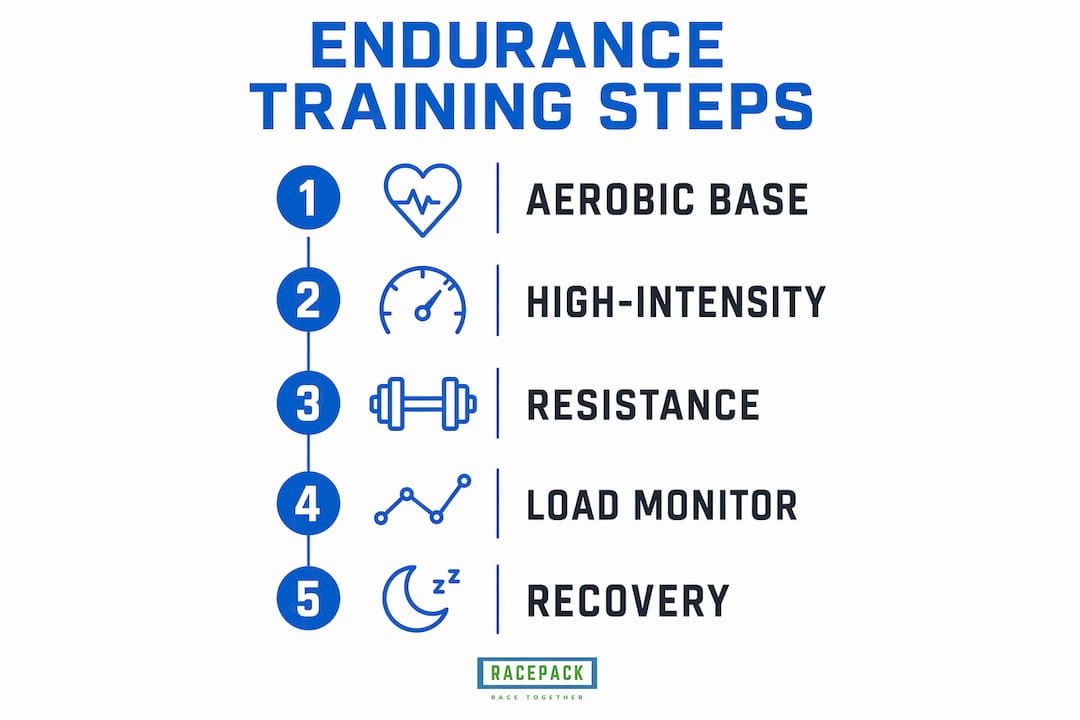
Monitoring training load objectively matters as much as the programming itself. A significant drop in bar velocity or countermovement jump height signals accumulated neuromuscular fatigue, giving you a concrete trigger for a recovery intervention rather than relying on subjective feel. Pair this with a structured training periodization approach that modulates volume and intensity across blocks, and you create the conditions for consistent, compounding adaptation.
How personalized sports nutrition powers your performance
Generic fueling strategies leave performance on the table. The 4Ps framework, developed by sports nutrition researchers, gives endurance athletes a structured approach to individualized fueling:
- Personalise: Match intake to your sweat rate, metabolic profile, and sport-specific demands
- Periodise: Adjust carbohydrate and protein targets to training phase, not a fixed daily number
- Prefuel: Establish pre-session and pre-event nutrition windows that maximize glycogen availability
- Prepare: Build consistent daily habits that support adaptation, not just race-day performance
Carbohydrate timing is where most athletes leave the most gains unrealized. Periodized carbohydrate and protein intake timed to workout cycles optimizes both recovery and adaptation, outperforming static daily targets. Pre-event, carbohydrate loading in the 48 hours before competition maximizes muscle glycogen and directly supports sustained output.
Hydration is equally individual. Personalized electrolyte strategies matched to your sweat rate reduce cramping risk and preserve thermoregulatory capacity, especially in hot or humid conditions. Water alone is not enough for sessions exceeding 60–90 minutes.
Pro Tip: Track your sweat rate during a controlled training session by weighing yourself before and after. Every pound lost equals roughly 16 oz of fluid deficit. Use that number to calibrate your intra-workout hydration target.
Why intra-workout carbohydrate and electrolyte supplementation works
The science here is clear. A meta-analysis of 26 studies confirmed that carbohydrate-electrolyte (CHO-E) supplementation during moderate-to-high intensity exercise significantly extended time to exhaustion (SMD 0.60; p = 0.006) and maintained blood glucose and sodium levels compared to placebo. That translates directly to more sustained output in the final miles of a race.
Dosing is where individual tolerance becomes critical:
- 30–60 g/hr suits most recreational athletes and shorter events
- 60–90 g/hr is the established guideline for events exceeding 2.5 hours, using multiple transportable carbohydrates (glucose/fructose blends)
- Up to 120 g/hr may benefit trained athletes in ultra-endurance events, as emerging research suggests exogenous carbohydrate oxidation can increase at these higher ingestion rates, though gut tolerance must be trained progressively
Electrolytes, particularly sodium, preserve plasma volume and neuromuscular function during prolonged effort. Dehydration beyond a moderate threshold of body mass loss consistently impairs cardiac output and elevates perceived exertion. Combining carbohydrates with electrolytes addresses both energy depletion and fluid balance simultaneously, which is why CHO-E products outperform plain water or carbohydrate-only solutions in endurance contexts. For practical intra-race fueling strategies with timed examples, the approach translates directly from training to competition.
Premium endurance products we carry at RacepackSingapore
Every product below is selected for its direct role in supporting the training and nutrition principles covered above.
- GU Energy Gel 24-Pack: Delivers fast-acting carbohydrates with amino acids and electrolytes in a portable format. The 24-pack is the standard training supply for athletes logging consistent weekly mileage.
- GU Energy Gel 6/12/24 Pack: Flexible pack sizing lets you match your order to your training block length, whether you are building base or peaking for a race.
- GU Energy Gel Single Pack (min. 8): Ideal for testing new flavors or building a mixed-flavor race kit without committing to a full box.
- HIGH5 ZERO+ Multivitamins/Ultra Electrolytes 16 Sachets: A zero-calorie electrolyte and multivitamin formula designed for daily hydration support and recovery, not just race day.
- HIGH5 750ml Bottle with 10 Zero Hydration Tablets: A practical all-in-one hydration kit for training runs and gym sessions. Drop a tablet, fill the bottle, go.
- MyProtein Pea Protein Isolate 2.5kg with Shaker and Creatine Sachet: Plant-based protein paired with creatine supports muscle repair and neuromuscular readiness between hard sessions.
- MyProtein EAA Powder 360g: Essential amino acids in a 30-serving format, useful for intra-workout or post-session recovery when whole-food protein timing is not practical.
- MyProtein Supplement Storage Box: Keeps your daily supplement stack organized and travel-ready, so your nutrition routine stays consistent on race weekends.
Pro Tip: Pair a GU Energy Gel with a HIGH5 ZERO+ sachet during long training runs to cover both carbohydrate and electrolyte needs in one simple protocol. It mirrors the CHO-E combination that the meta-analytic research validates.
Mental toughness and motivation in endurance training
Physical preparation only goes so far. The athletes who perform best under race pressure are those who have trained their minds as deliberately as their bodies. Endurance events are long enough that psychological state becomes a genuine performance variable, not a soft skill.
Goal structure matters more than motivation level. Specific, process-oriented goals, such as holding a target heart rate zone for a defined interval block, give you something concrete to execute when discomfort peaks. Vague goals like “run faster” collapse under fatigue. Breaking a long training block into weekly targets also reduces the psychological weight of a distant race date.
Discomfort tolerance is trainable. Deliberately practicing at the uncomfortable edge of your lactate threshold, rather than always backing off, builds the mental familiarity with hard effort that translates to race-day composure. Sleep is the recovery tool most athletes undervalue here: research shows that sleep quality below 7 hours per night during the final taper week can blunt peak performance by suppressing key hormonal normalization. Protecting sleep is as much a mental performance strategy as a physical one.
Body recomposition goals intersect with endurance performance more than many athletes realize. Understanding how body composition and training load interact helps you set realistic expectations and avoid the motivation dip that comes from chasing two conflicting targets simultaneously.
RacepackSingapore has what your training demands
When your training block calls for precision fueling, you need products that show up reliably, are guaranteed authentic, and are selected specifically for endurance performance. RacepackSingapore carries GU Energy Gels, HIGH5 electrolyte systems, and MyProtein recovery supplements, all sourced from verified international brands and available with next-day delivery. There is no guesswork about product quality, and no waiting a week for your pre-race nutrition to arrive.
Whether you are stocking up for a full training block or building a race-day kit, browse the full energy gels collection and find the right combination for your fueling protocol. Your next personal best starts with the right fuel in your kit.
Key Takeaways
Endurance fitness improves fastest when aerobic volume, strategic high-intensity work, and resistance training are combined with personalized, periodized nutrition that matches your metabolic demands.
| Point | Details |
|---|---|
| Train the full triad | VO2max, lactate threshold, and movement economy all require targeted work to drive race performance. |
| Low intensity dominates | Elite programs dedicate roughly 75–80% of sessions to low-intensity training as the aerobic foundation. |
| CHO-E supplementation works | Meta-analytic research confirms CHO-E significantly extends time to exhaustion (SMD 0.60; p = 0.006). |
| Personalize your nutrition | The 4Ps framework (Personalise, Periodise, Prefuel, Prepare) outperforms generic fueling strategies. |
| RacepackSingapore | Stocks GU Energy Gels, HIGH5 electrolytes, and MyProtein recovery products with guaranteed authenticity and next-day delivery. |
FAQ
What is the most important fitness variable for endurance athletes?
Lactate threshold is the most directly programmable variable for day-to-day training, because it maps closely onto sustainable race pace. VO2max sets the ceiling, but threshold determines how much of that ceiling you can use.
How much carbohydrate should I consume during a long training run?
The established guideline suggests carbohydrate intake using multiple transportable carbohydrates for sessions over 2.5 hours, while emerging research indicates trained athletes may tolerate higher amounts, though gut tolerance must be built progressively.
Does resistance training help endurance performance?
Yes. A recent systematic review found that high-load strength training and combined strength methods improved running economy. One to two weekly sessions of lower-body strength work is enough to produce meaningful benefit.
How do I know when I need a recovery day?
Objective markers are more reliable than subjective feel. A 10% drop in bar velocity or a 5% drop in countermovement jump height signals accumulated neuromuscular fatigue and indicates a recovery intervention is needed.
What electrolyte products does RacepackSingapore carry for endurance athletes?
RacepackSingapore carries the HIGH5 ZERO+ Multivitamins/Ultra Electrolytes 16 Sachets and the HIGH5 750ml Bottle with 10 Zero Hydration Tablets, both designed to support personalized hydration and electrolyte replenishment during training and competition.
How does sleep affect endurance performance?
Sleep quality below 7 hours per night during the final taper week can blunt peak performance by suppressing testosterone and IGF-1 normalization. Protecting sleep is a non-negotiable part of the taper protocol.
What is the 4Ps nutrition framework?
The 4Ps stands for Personalise, Periodise, Prefuel, and Prepare. It is a structured approach to sports nutrition that matches fueling to individual metabolic needs and training phase demands, outperforming one-size-fits-all strategies.