

Out-of-Date Protein Shake: Safety & What to Do
TL;DR:
- Most unopened protein powders and shelf-stable drinks are safe past their quality dates, but once opened or mixed, spoilage and safety risks increase. Proper storage, careful inspection, and sensory checks help determine if an expired product remains usable, though potency often declines over time. Refrigerated or liquid products should be discarded after 24 to 48 hours to avoid bacterial growth and potential illness.
Most out-of-date protein powders and unopened shelf-stable protein drinks are quality-reduced but not usually dangerous. Opened, refrigerated, or already-mixed shakes are a different story — those carry a real safety risk once time and temperature work against them. The USDA’s food-product dating guidance makes clear that most food dates are quality markers, not regulated safety cutoffs. Registered dietitians generally agree: a sealed powder a few weeks past its best-by date is usually fine to use, but your senses are your best final check.
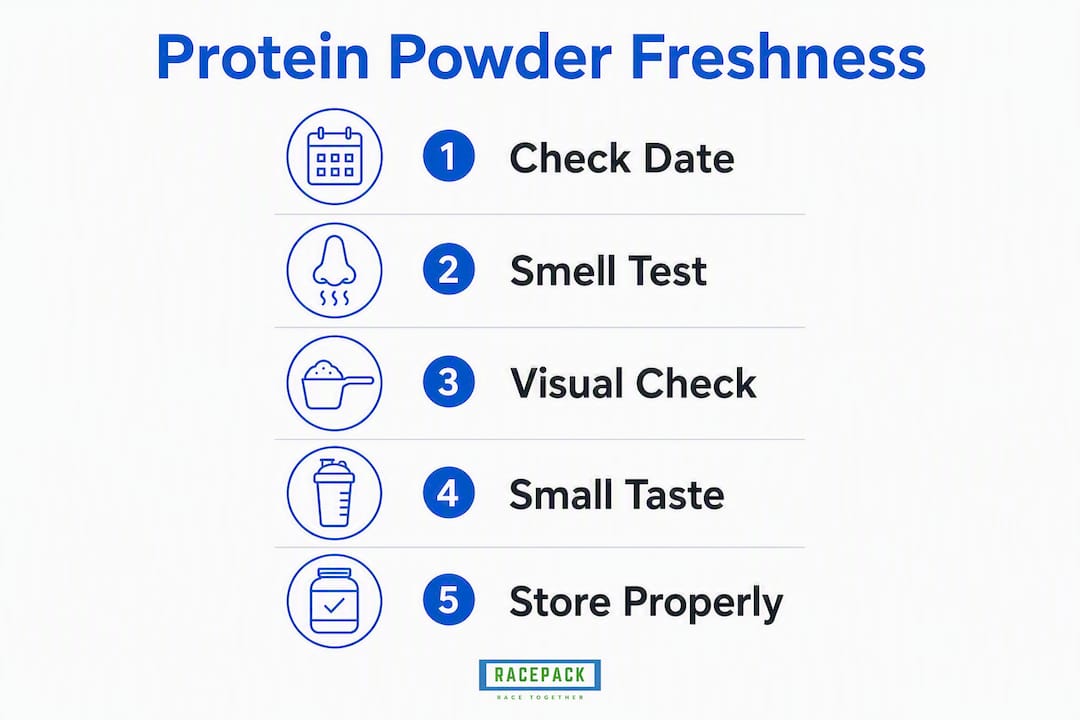
Before you scoop or sip, run through these four checks:
- Packaging intact? No tears, dents, bulging, or broken seals.
- Smell neutral? Rancid, sour, or cardboard-like odors mean discard immediately.
- No visible clumping or mold? Moisture intrusion accelerates spoilage fast.
- Storage history clean? Heat, humidity, or repeated opening without resealing shortens safe use.
If all four pass, a sealed powder is likely still usable. If any one fails, toss it — the cost of a new tub is nothing compared to a day of GI misery.
Table of Contents
- How long does protein powder actually last?
- What are the real health risks of drinking expired protein?
- How to tell if your protein has gone bad
- Storage habits that protect your protein’s potency
- Should you keep it or toss it? A step-by-step check
- What to do if you already drank a bad shake
- What food-safety authorities and dietitians actually say
- Key Takeaways
- The habit that actually prevents this problem
- Where to find fresh, authentic protein products
- Useful sources
- FAQ
How long does protein powder actually last?
Shelf life varies significantly by format and whether the container has been opened. The table below gives practical ranges based on manufacturer best-by conventions and food-safety guidance.
| Sealed protein powder (whey/casein) | typical shelf life varies by product and storage conditions | 3–6 months if stored dry and cool | Sealed protein powder (plant-based) | generally longer shelf life than dairy-based powders | Similar to dairy; slightly more stable | | Shelf-stable canned/RTD protein drink | shelf life varies by manufacturer and storage | Consume within 24–48 hours of opening | | Refrigerated RTD protein shake | usually short shelf life as indicated on label | 24–48 hours refrigerated after opening | | Mixed/blended shake (homemade) | N/A | up to 24 hours refrigerated; discard if left at room temp |
Whey and casein powders tend to have shorter shelf lives than plant-based options because dairy-derived proteins carry added fats, emulsifiers, and vitamins that oxidize faster. A simple pea or rice protein with minimal additives can stay stable longer. For runners and endurance athletes evaluating which protein type suits their recovery needs, our protein guide for runners breaks down the differences clearly.
Sealed cans provide oxygen and light barriers that slow both chemical and microbial degradation, making them resilient past the best-by date when packaging is undamaged. Refrigerated RTD shakes behave more like perishable dairy — once opened, bacterial growth risk rises quickly and the 24–48 hour window is firm.
What are the real health risks of drinking expired protein?
The risk level depends heavily on the product format. Dry powders are low-moisture environments that are hostile to most common bacteria, so foodborne illness from a sealed powder is uncommon. The bigger concern with an old powder is potency loss, not poisoning.
Registered dietitians consistently flag amino acid and vitamin degradation as the primary reason to avoid out-of-date powder. Oxidized fats in whey-based products cause off-flavors well before safety becomes a serious issue. Protein molecules themselves are chemically stable over long periods; it’s the added vitamins, emulsifiers, and fats that degrade first.
That said, consuming a clearly spoiled product — one with off odors, visible mold, or moisture damage — can cause:
- Nausea, vomiting, or diarrhea
- Bloating, gas, and indigestion
- Abdominal cramping
Liquid and refrigerated products carry higher bacterial contamination risk, especially after opening. If a ready-to-drink shake has been left at room temperature for several hours or stored past its opened window, the risk profile shifts from “reduced potency” to “possible foodborne illness.” People with compromised immune systems should apply stricter standards across all formats.
How to tell if your protein has gone bad
Your senses do most of the work here. Check in this order: smell first, then look, then taste only if the first two pass.
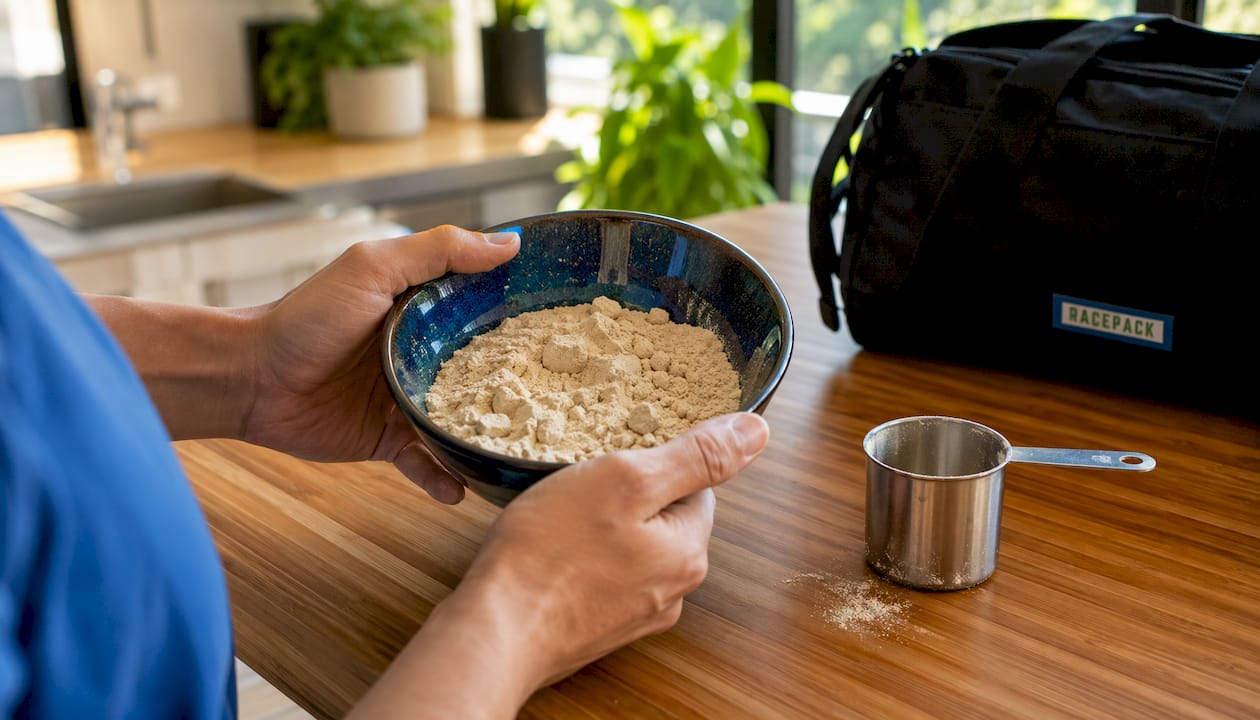
Smell: A rancid, sour, or stale cardboard odor is the clearest red flag. Fresh protein powder smells neutral or faintly sweet. Any sharp or off-putting scent means discard without tasting.
Visual check: Look for clumping (especially hard, dense lumps rather than soft settling), discoloration, or visible mold. In canned or bottled RTD products, check for bulging lids, damaged seals, or unusual separation that won’t remix after shaking.
Taste: Only attempt a small cautious taste if smell and appearance both pass. A bitter, metallic, or sour flavor confirms spoilage.
Pro Tip: Keep the original desiccant packet inside the tub and return it after every use. Always use a completely dry scoop — a wet scoop introduces moisture that accelerates clumping and microbial risk faster than almost anything else. Write the date you opened the container on the lid with a marker so you always know exactly how long it’s been open.
Storage habits that protect your protein’s potency
Where and how you store protein matters as much as the product itself. Temperature is the most critical variable — chemical reaction rates increase markedly with heat, which means a tub stored in a hot garage or near a stove degrades far faster than one kept in a cool pantry. Aim to keep powders below 85°F (30°C) in a stable environment.
Do:
- Store in a cool, dry, dark location with stable temperature
- Reseal the container tightly after every use
- Keep the original desiccant packet inside
- Use single-serve packets if you train infrequently — they eliminate repeated-opening exposure entirely
Don’t:
- Store near a stove, in a bathroom, or in a car trunk
- Transfer powder to clear containers that allow light exposure unless they are airtight and opaque
- Leave a damp scoop inside the tub between uses
- Leave mixed shakes or opened RTD drinks at room temperature for more than two hours
For ready-to-drink products, refrigerate immediately after opening and treat them like milk. The Barebells protein milkshake is a good example of a refrigerated RTD that should be consumed within 24–48 hours of opening. If you use protein infrequently, our protein powder guide walks through format choices that reduce waste and storage risk.

Should you keep it or toss it? A step-by-step check
Follow these steps in order when you’re unsure about an out-of-date protein product.
- Check the label and packaging. Is the date a “best-by” or “use-by”? Is the seal intact, the can undented, and the bag uncompromised? A damaged container fails here — stop and discard.
- Assess storage history. Has the product been stored in a cool, dry place? Has it been opened repeatedly? A powder stored in a humid bathroom for six months past its best-by date is a different risk than one kept sealed in a pantry.
- Smell it. Open the container and take a direct sniff. Neutral or faintly sweet: proceed. Rancid, sour, or sharp: discard immediately.
- Look at it. Check for hard clumping, discoloration, or mold. For liquids, check for unusual separation, cloudiness, or a bulging seal.
- Small taste test — only if steps 1–4 pass. A bitter or metallic taste confirms spoilage. Spit and discard.
- When in doubt, throw it out. A tub of protein costs far less than a doctor’s visit or a lost training day. If you’re immune-compromised, skip steps 3–5 and discard anything past its best-by date without testing.
For non-food uses: a powder that smells slightly stale but shows no mold or rancidity can sometimes be used in baking (pancakes, muffins) where heat processing adds a safety buffer. Consult a healthcare professional if you have any underlying health conditions before making that call.
What to do if you already drank a bad shake
Stop consuming more of the product immediately. Most people who drink a mildly expired protein shake experience nothing worse than mild GI discomfort — bloating, gas, or loose stools — that resolves within a few hours.
Self-care steps:
- Stay well hydrated. HIGH5 Zero Hydration Tablets with electrolytes can help if you’re losing fluids through vomiting or diarrhea.
- Rest and avoid intense training until symptoms clear.
- Over-the-counter remedies for nausea or diarrhea are appropriate for mild cases.
Seek urgent care if you experience: high fever, bloody stools, severe abdominal pain, signs of dehydration (extreme thirst, no urination, dizziness), or if symptoms worsen after 24 hours. Immune-compromised individuals should contact a healthcare provider at the first sign of GI symptoms after consuming a questionable product.
What food-safety authorities and dietitians actually say
The USDA’s food-product dating guidance is unambiguous: most date labels on food products are quality indicators, not safety-regulated expiration dates. The only federally regulated expiration date in the U.S. is on infant formula. For protein supplements, the FDA’s dietary supplement labeling framework does not mandate a safety-based expiration date — manufacturers set best-by dates based on their own quality-assurance testing.
Manufacturers treat the best-before date as the boundary of their quality guarantee. Past that date, they cannot ensure efficacy, taste, or quality — but that is a quality-assurance statement, not a declaration that the product becomes dangerous overnight.
Registered dietitians generally agree that consuming powder a few weeks or months past its best-by date is safe if it was properly stored and shows no spoilage signs. Their main concern is potency loss — degraded amino acids and vitamins mean the powder delivers less recovery value, which matters when you’re training hard and counting on those nutrients.
Pro Tip: Photograph the lot number and best-by date on every new container before you open it. If a recall is issued for that batch, you’ll have the information you need without hunting for discarded packaging. The FDA’s recall database at fda.gov lets you search by product and lot number.
Key Takeaways
Sealed protein powder past its best-by date is usually safe to use if stored properly and showing no spoilage signs; opened or mixed products are time-sensitive and carry higher risk.
| Point | Details |
|---|---|
| Best-by is a quality date | Most protein date labels are quality markers, not regulated safety cutoffs — the USDA confirms this. |
| Sealed powders vs. liquids | Sealed dry powders are lower risk; refrigerated or mixed shakes must be consumed within 24–48 hours of opening. |
| Potency loss is the main concern | Amino acids and vitamins degrade over time, reducing recovery value even when the product is technically safe. |
| Storage temperature matters most | Keeping powder below 85°F in a dry, dark place is the single biggest factor in extending quality and safety. |
| RacepackSingapore for fresh stock | Buying from RacepackSingapore’s protein collection gives you guaranteed-authentic, in-date products with next-day delivery. |
The habit that actually prevents this problem
The real issue with expired protein isn’t usually a dramatic safety crisis. It’s the slow, invisible potency drain that happens when a tub sits open for months in a warm pantry. You’re still scooping, still mixing, still expecting results — but the amino acid profile you paid for has quietly degraded.
The fix is simple and takes about five seconds: write the open date on the lid every time you crack a new tub. Rotate stock so older product gets used first. And if you train two or three times a week rather than daily, consider buying smaller tubs or single-serve packets instead of the largest size available. The per-serving cost difference is usually small, and you eliminate the risk of a half-used tub sitting open for six months.
For athletes focused on body recomposition or recovery optimization, the quality of your protein source matters as much as the timing. A degraded powder from a tub that’s been open since last season isn’t giving you what the label promises.
Where to find fresh, authentic protein products
RacepackSingapore stocks premium protein powders, ready-to-drink options, and performance nutrition from leading international brands — all guaranteed authentic and delivered next day within Singapore. If you’ve just tossed an old tub after reading this, restocking with a fresh, properly dated product is the right next step.
For athletes who use protein infrequently, the MyProtein Impact Whey 1kg is a practical size that won’t sit open long enough to degrade. Pair it with GU Energy Gels for clean fuel during training and HIGH5 ZERO+ Multivitamins and Electrolytes to replace the micronutrients that degrade fastest in old powders. Every product ships with next-day delivery and full authenticity assurance.
Browse the full protein collection and buy now at RacepackSingapore
Useful sources
These are the primary references used in this article. Bookmark them for your own research or recall checks.
- USDA Food Product Dating — The authoritative U.S. government source explaining the difference between quality-based and safety-regulated food dates.
- FDA Dietary Supplement Labeling Guide — Covers what manufacturers are and aren’t required to disclose on supplement labels.
- Healthline: Does Protein Powder Expire? — Evidence-based overview of shelf life, storage, and spoilage signs.
- EatingWell: Is It Safe to Take Expired Protein Powder? — Registered dietitian perspective on safety and potency loss by protein type.
- FDA Recall Database — Search by product name or lot number to check for active recalls on supplements.
- RacepackSingapore Protein Collection — In-date, authenticated protein products with next-day delivery in Singapore.
This article is general information, not medical or dietary advice. For personal health concerns, consult a registered dietitian or healthcare professional and verify current guidance with the relevant primary source.
FAQ
Can you drink a protein shake after the expiration date?
Yes, in most cases — if the product is a sealed dry powder with a “best-by” date and shows no spoilage signs, it is generally safe to consume past that date, though potency may be reduced. Refrigerated or already-mixed shakes are different and should be discarded once past their use-by date or 24–48 hours after opening.
Is it bad to drink an expired protein shake?
It depends on the format and condition. A sealed powder past its best-by date is usually safe if stored properly; a liquid shake that’s been open for days or left at room temperature poses a real bacterial risk and should be discarded.
Is it OK to drink out-of-date protein powder?
Generally yes, if the powder is sealed or was stored correctly, smells neutral, and shows no clumping or discoloration. The USDA confirms that most food date labels are quality markers, not safety cutoffs, so a few weeks or months past the best-by date is usually acceptable for properly stored dry powder.
Can I drink 2-year-old protein powder?
Possibly, but with caution. Whey and casein powders typically carry best-by dates of 9–18 months; a two-year-old tub is well past that window. Run the full sensory check — smell, look, small taste — and discard immediately if anything seems off. Potency will be noticeably reduced even if it passes the safety check.
Can I eat 2-year expired whey protein?
Two years past the best-by date is a significant gap for whey protein, which contains fats and emulsifiers that oxidize over time. If the powder smells rancid or tastes bitter, discard it. If it passes all sensory checks and was stored in a cool, dry place, the safety risk is low — but the amino acid and vitamin content will be meaningfully degraded.
Is 4-year-old protein powder still good?
Four years past manufacture is far beyond any manufacturer’s quality guarantee. Even if the powder passes a basic smell test, the micronutrient and amino acid content will have degraded substantially. We’d recommend replacing it with a fresh product rather than relying on it for recovery.
How long does an opened tub of protein powder last?
An opened tub stored in a cool, dry place with the lid tightly resealed typically maintains acceptable quality for 3–6 months. Humidity, heat, and repeated opening with a damp scoop accelerate degradation significantly.
What are the signs that protein powder has gone bad?
The clearest signs are a rancid or sour smell, a bitter or metallic taste, hard clumping (beyond normal settling), visible discoloration, or mold. Any one of these is sufficient reason to discard the product.
How should I store protein powder to make it last longer?
Keep it in a cool, dry, dark location below 85°F (30°C), always use a dry scoop, reseal the container tightly after each use, and keep the original desiccant packet inside the tub. Avoid storing near heat sources or in humid environments like bathrooms.
What should I do if I feel sick after drinking an old protein shake?
Stop consuming the product, stay hydrated, and rest. For mild GI symptoms, over-the-counter remedies are appropriate. Seek medical care if you experience high fever, bloody stools, severe abdominal pain, or signs of dehydration. Post-workout recovery foods can help you maintain nutrition while your system recovers.
Where can I buy fresh, in-date protein products in Singapore?
RacepackSingapore carries a full range of authenticated, in-date protein powders and ready-to-drink options with next-day delivery. Browse the protein powder collection to find the right format and size for your training frequency.
Are single-serve protein packets safer than large tubs?
Yes, for infrequent users. Single-serve packets eliminate repeated-opening exposure entirely, meaning each serving comes from a sealed, uncontaminated portion. They’re a practical choice if you train a few times per week rather than daily.