

Marathon Training With a Full-Time Job: Your 2026 Guide
Marathon training with a full-time job is absolutely doable. The key is not finding more hours in your day. It is using the hours you already have with real intention. Most working runners succeed on 3–4 quality runs weekly: one long run, one quality session (tempo or intervals), and one or two easy runs. That structure, done consistently over 16 weeks, gets the vast majority of busy runners across the finish line.
Here is what that looks like in practice:
- Protect your long run above everything else. It is the single session you cannot afford to skip repeatedly.
- Use time-based goals, not mileage targets. If you have 45 minutes on a Tuesday, run for 45 minutes. No math, no pressure.
- Treat key sessions like work meetings. They have a time, a place, and canceling them requires real friction.
- Use small pockets in your day. Early mornings, lunch breaks, and run commutes are all legitimate training windows.
- Adapt rather than abandon. Miss a Tuesday interval session? Shift it to Thursday. Never just skip it and move on.
How do you choose a marathon training plan that fits your work schedule?
The right plan for a working adult is not the most ambitious one. It is the one you can actually repeat for 12–16 weeks without unraveling.
Start by mapping your fixed commitments before you write a single workout. Early meetings, school pickups, work travel, and late deadlines all shape which time slots are genuinely available. Most runners discover more pockets than they expected: a 45-minute lunch break, a Saturday morning before the family wakes up, a 6 AM alarm two days a week.
Three plan structures work well for full-time workers:
- 3-day week: One long run, one tempo or interval session, one easy run. Best for experienced runners with a solid aerobic base who need maximum schedule flexibility.
- 4-day week: One long run, one quality session, two easy runs. The sweet spot for most busy runners training for their first or second marathon.
- 5-day week: For experienced runners with time-goal ambitions and proven recovery capacity. Only add the fifth day when the first four feel genuinely manageable.
Use periodized training blocks of 12–16 weeks, with a recovery week every fourth week that cuts volume by 20–30% while keeping one quality session intact. This prevents the burnout that derails so many working runners mid-plan.
Pro Tip: Switch from distance targets to time targets on weekday runs. “Run for 40 minutes” fits your schedule no matter what. “Run 6 miles” creates pressure when your lunch break runs short.
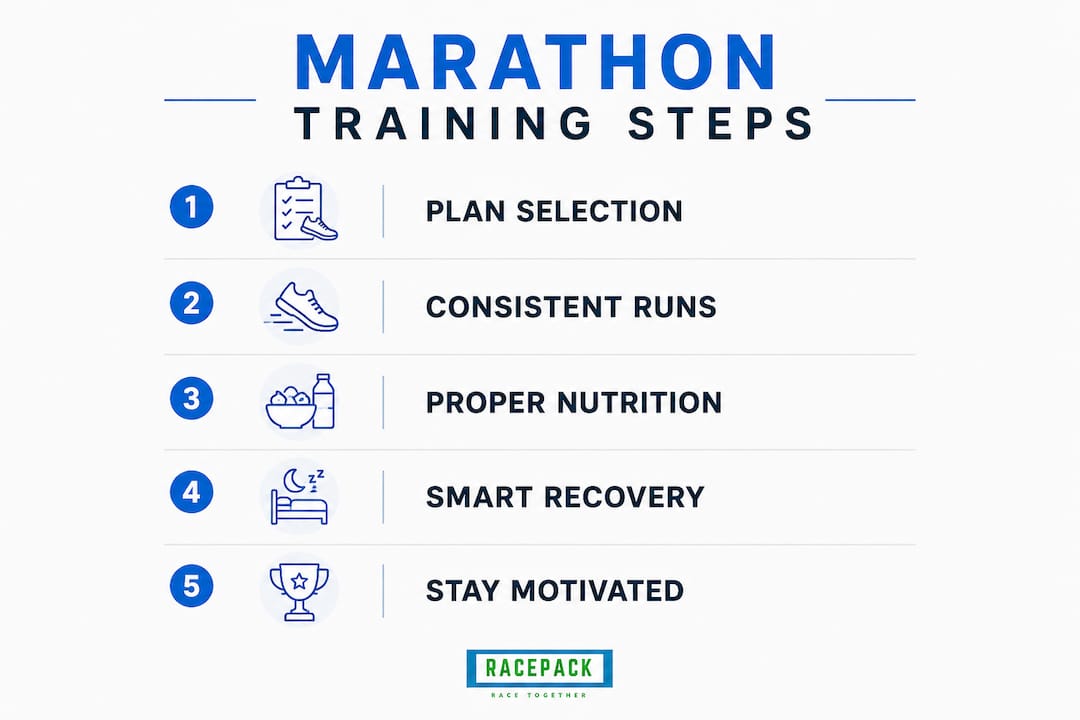
How to build a running routine you can actually sustain
Consistency is the real training variable. A slightly lower-volume plan you stick to for 16 weeks beats an aggressive plan that falls apart in week five.

The most reliable way to build consistency is to schedule runs as mandatory appointments with the same weight as a work meeting. They get a time slot, a route, and a backup plan if the day goes sideways. For most full-time workers, this looks like an early morning run on Tuesday or Wednesday, a lunch run on Thursday, and the long run on Sunday before the day fills up.
Practical habits that reduce friction:
- Lay out your gear the night before every planned run.
- Know your route in advance so there is zero decision-making in the morning.
- Keep a gym bag at your desk for lunch runs.
- Identify a backup slot for each session, so a chaotic Monday does not cascade into a lost week.
- For commute runs, use public transit for the return trip and run one way.
Morning runs earn their reputation for a reason. Work cannot schedule a meeting at 5:30 AM. The inbox is quiet. The family is asleep. Early morning training windows are the most protected slots in a working adult’s day, which is why nearly every time-crunched runner who figures this out eventually becomes a morning runner.
What should busy marathon runners eat and how should they recover?
Recovery is where fitness actually gets built. Your body adapts during rest, not during the runs themselves. For working adults absorbing both training stress and job stress, this matters more than most training plans acknowledge.

Sleep is the foundation. Target 7–9 hours nightly and protect it the same way you protect your long run. When you have to choose between an extra recovery routine and an extra hour of sleep, choose sleep every time.
Nutrition timing makes a real difference without requiring hours of meal prep:
- Eat a balanced meal with carbohydrates and protein about two hours before quality sessions.
- Consume 30–40 g of protein within 60 minutes post-run to support muscle repair and recovery.
- On long runs exceeding 90 minutes, practice race-day fueling with 60–90 g of carbohydrates per hour using gels or sports drinks you plan to use on race day.
- Stay hydrated throughout the workday, not just during workouts. A water bottle at your desk and electrolytes during higher-mileage weeks keeps your endurance support consistent.
For post-run protein, RacepackSingapore’s marathon recovery nutrition guide covers timing and composition in detail. Add two short strength sessions weekly, 20–30 minutes each, focusing on glutes, hips, calves, and core. That investment reduces injury risk significantly during heavier training blocks, and it fits onto an easy run day or a rest day without adding schedule pressure.
How do you stay motivated when work and training both feel overwhelming?
The biggest failure point for busy runners is not a lack of discipline. It is the perfection trap: believing that a missed session means the week is ruined, or that an imperfect training block means race day is compromised.
Consistency beats perfection every time. Missing one workout will not hurt your race-day performance. Trying to compensate aggressively by stacking missed sessions back-to-back is what leads to injury and burnout. Shift or shorten workouts instead of stacking them, and never place a hard session the day before your long run.
Reframing running as a personal investment rather than another obligation changes how you protect it. Research supports this: viewing running as an investment in personal health positively impacts discipline and time management across both professional and personal life.
Practical strategies for the hard weeks:
- Tell your family or partner what your key sessions are. Their understanding removes friction.
- Find one accountability partner or run group. Training alone every week is one of the fastest ways to lose motivation.
- On brutal weeks, lower the bar deliberately. Twenty minutes beats zero minutes, and a shorter long run still counts.
- Balance family commitments by combining runs with existing routines: run while kids bike, or use a lunch run as a midday reset instead of scrolling.
What does an expert-backed weekly training structure look like?
Micro-cycle training with strategic high-intensity sessions and deliberate recovery delivers comparable aerobic gains to higher-volume plans when total weekly training time stays between 4–6 hours. For working adults, that range is both realistic and sufficient.
The structure below is a proven template for a working adult in a mid-build week:
| Day | Session | Purpose |
|---|---|---|
| Monday | Rest or 20-min easy walk | Flush weekend fatigue |
| Tuesday | 45-min quality session (intervals or tempo) | Primary fitness builder |
| Wednesday | 30-min easy run or cross-training | Active recovery |
| Thursday | 40-min easy run with strides | Aerobic volume, low fatigue |
| Friday | Rest | Bank recovery before weekend |
| Saturday | 90-min long run | Cornerstone endurance session |
| Sunday | 30-min recovery run or yoga | Light movement, no stress |
Effective long runs do not need to exceed two hours when structured well. Incorporate marathon-pace segments and varied terrain to maximize training stimulus per minute. A long run lasting around 90 minutes to two hours with segments at goal marathon pace builds both endurance and pace familiarity without consuming the entire weekend.
Never stack hard days back-to-back. If you miss Tuesday’s quality session, slot it Thursday, not Friday before the long run. That single rule prevents most of the fatigue-related breakdowns that derail working runners in peak training weeks. For a full beginner-friendly framework, the marathon training plan for beginners at RacepackSingapore walks through the full structure.
How can you maximize sleep quality during marathon training?
Sleep is an active training component, not passive downtime. Seven to nine hours nightly is the target, and the quality of those hours matters as much as the quantity.
Habits that protect sleep during heavy training blocks:
- Set a consistent bedtime and wake time, even on weekends. Your body’s recovery systems run on rhythm.
- Avoid hard workouts within three hours of bedtime. Elevated core temperature and adrenaline delay sleep onset.
- Keep your bedroom cool and dark. Even small light sources disrupt sleep depth.
- Eat enough carbohydrates after hard sessions. Under-fueling is one of the most common causes of poor sleep quality in runners.
- Take at least one genuinely low-stress day weekly, with easy effort only and no alarm pressure.
When work stress is high, sleep often suffers first. Protect it the same way you protect your long run: block the time, defend it from late-night work, and treat chronic sleep deprivation as a training problem, not just a lifestyle inconvenience. A runner logging six hours of sleep nightly while stacking hard workouts is accumulating stress without the recovery to absorb it.
What gear helps you train efficiently with limited time?
The right equipment removes friction from your routine and makes every limited training window count.
A GPS running watch is the single most useful tool for time-based training. The Garmin Forerunner 165 tracks pace, heart rate, and workout duration so you can run by effort and time rather than chasing distance targets. For runners who want more advanced metrics, the Garmin Forerunner 265 adds training load analysis and recovery time estimates, which are genuinely useful when you are balancing job stress and training stress simultaneously.
For fueling long runs efficiently, GU Energy Gels deliver clean, fast-absorbing carbohydrates without requiring a kitchen or prep time. Practice with them during training so your gut is ready on race day. Pair them with HIGH5 Isotonic Hydration Drink for electrolyte replenishment during and after longer efforts, especially in warmer months when sweat loss climbs.
For runners exploring efficient cross-training options on rest days, 20-minute Pilates routines build core stability and mobility without adding running load. Two short sessions weekly improve running economy and reduce the compensation patterns that lead to overuse injuries. RacepackSingapore’s gut training guide for marathon runners also covers how to practice race-day fueling during training runs so nothing surprises you on the start line.
Fuel Your Training: Products We Recommend

Every working runner deserves nutrition that keeps up with their schedule. RacepackSingapore carries the endurance fuel and hydration products that fit into a busy training life without extra prep time.
- GU Energy Gel 24-Pack: Stock your training supply for the full 16-week block. Clean energy, proven on race courses worldwide.
- HIGH5 ZERO+ Electrolytes: Drop a tablet in your water bottle for daily hydration support without the sugar load.
- HIGH5 750ml Bottle with Zero Tablets: Desk-ready hydration for workdays when you are running later.
- Garmin Forerunner 165: Time-based training made simple. Know your effort, protect your schedule.
Buy Now at RacepackSingapore and get your training nutrition sorted before your next long run.
Key Takeaways
Marathon training with a full-time job works when you prioritize 3–4 quality sessions weekly, protect the long run above all else, and treat recovery as a planned training input rather than optional downtime.
| Point | Details |
|---|---|
| 3–4 runs weekly is enough | One long run, one quality session, and one or two easy runs covers the training stimulus most working runners need. |
| Time-based training reduces pressure | Running by duration instead of distance fits unpredictable schedules and removes mileage anxiety on short days. |
| 4–6 hours weekly is the target | Micro-cycle training in this range delivers comparable aerobic gains to higher-volume plans for time-crunched runners. |
| Protect the long run first | Consistently skipping or cutting long runs is the fastest way to compromise race-day readiness. |
| Recovery is a planned input | Targeting 7–9 hours of sleep and 30–40 g of protein within 60 minutes post-run supports adaptation and reduces injury risk. |
FAQ
Can you train for a marathon while working full time?
Yes. Most marathon runners are not professional athletes. Working adults train effectively on a few focused runs per week, protecting the long run and one quality session while keeping everything else flexible.
How many days per week should a busy professional run?
Four days often works well for many working runners, providing enough aerobic stimulus and recovery balance. Experienced runners with a solid base may succeed on fewer days; those with proven recovery capacity and time-goal ambitions may train more frequently.
What is the minimum weekly training time for marathon preparation?
Micro-cycle training in the 4–6 hours weekly range delivers comparable aerobic improvement to higher-volume plans when sessions are quality-focused and recovery is disciplined.
Is 4 months enough time to train for a full marathon?
For runners with an existing aerobic base, a training plan of several months is a realistic and well-established standard. First-timers building from a low base benefit from slightly longer plans to allow a buffer for the inevitable disrupted weeks that come with full-time work.
How do you avoid burnout when balancing work and marathon training?
Keep easy runs genuinely easy, never stack hard sessions after missed workouts, and treat one rest day weekly as non-negotiable. Chronic exhaustion from under-recovery is the primary cause of burnout in working runners, not the training volume itself.
What should I eat after a run when I have limited time?
Consume 30–40 g of protein and fast-absorbing carbohydrates within 60 minutes post-run. A banana with nut butter or a protein shake covers both macronutrients quickly without requiring meal prep.
When is the best time of day to run with a demanding job?
Morning runs are the most reliable for working adults because nothing can preempt them. Work emergencies, late meetings, and social commitments cannot cancel a run that is already done by 7 AM.
How do I handle a week when work completely takes over?
Prioritize the long run and one quality session above everything else. Drop easy runs before you drop anchor sessions, shorten workouts rather than skipping them entirely, and never try to compensate by stacking sessions the following week.