

Why Runners Cramp During a Race: The 2026 Guide
TL;DR:
- Muscle cramps during running are caused by neuromuscular fatigue, not dehydration or electrolytes alone. Training, pacing, and nervous system conditioning are crucial to prevent cramps effectively. Addressing neuromuscular resilience through race-specific training and proper fueling reduces cramp risk.
Muscle cramps during running races are caused by neuromuscular fatigue, a breakdown in the nervous system’s ability to regulate muscle contractions under sustained load, not simply dehydration or electrolyte loss. A 2026 ultra-trail study found that crampers showed creatine kinase levels of 5,166 U·L⁻¹ compared to 1,940 U·L⁻¹ in non-crampers, pointing directly to muscle damage from overexertion. The same study found that men experienced exercise-associated muscle cramps (EAMC) at four times the rate of women, with an overall incidence of 16% among finishers. Understanding why runners cramp during a race means looking past the salt tablet myth and into how training, pacing, and nervous system conditioning interact on race day.
Why do runners cramp during a race?
The clinical term for race cramps is exercise-associated muscle cramps, or EAMC. They occur when the nervous system loses its ability to properly balance the signals that tell muscles to contract and relax. Think of it as a dimmer switch failing mid-race. Under normal conditions, that switch modulates muscle tension up and down smoothly. When fatigue sets in, the switch gets stuck at maximum, and the muscle locks into a sustained, involuntary contraction.
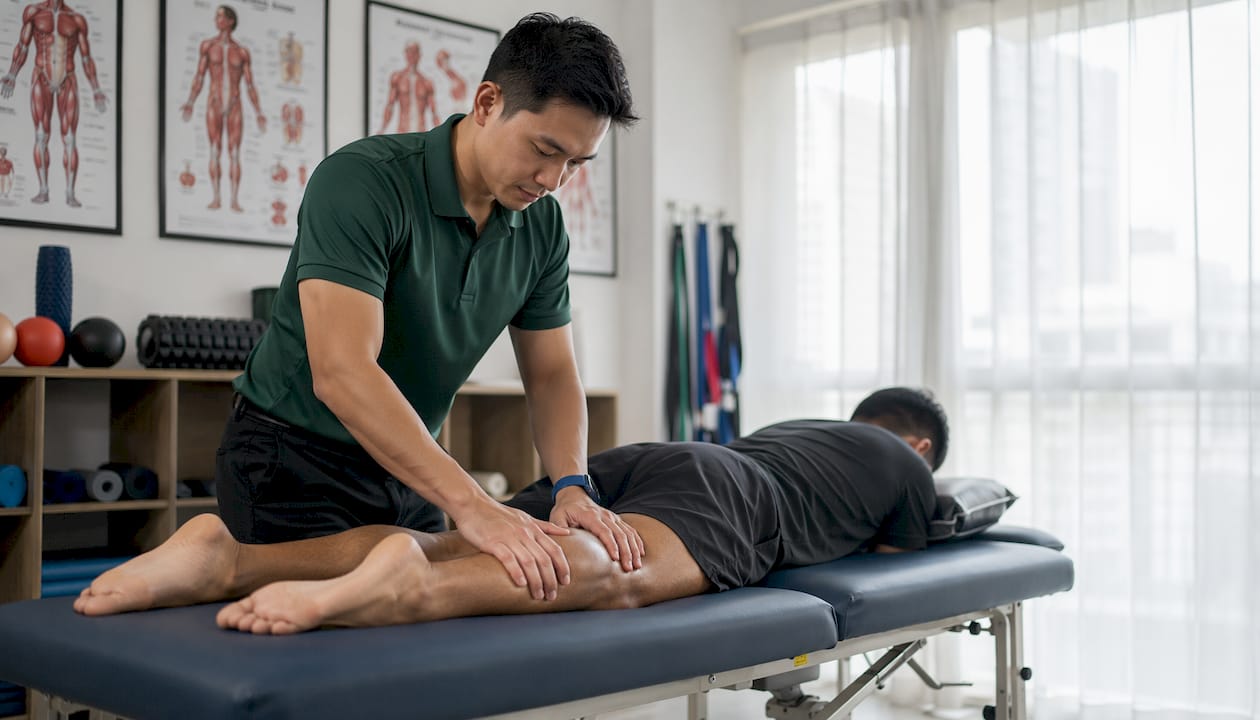
Two sensory systems govern this process. Muscle spindles send excitatory signals that trigger contraction. Golgi tendon organs (GTOs) send inhibitory signals that tell the muscle to relax. Fatigue disrupts this balance, causing spindles to fire excessively while GTOs go quiet. The result is a muscle that cannot stop contracting.
This explains why well-hydrated, well-fueled runners still cramp. Neuromuscular hyperexcitability drives the contraction regardless of hydration status. Electrolytes and sodium matter, especially for heavy sweaters in hot races, but they rarely act as the sole trigger. The nervous system’s workload is the primary variable.
“Cramps happen when the nervous system is overloaded, not when a single nutrient runs out. Runners who fix their electrolytes but ignore their pacing and conditioning will keep cramping.”
Pro Tip: If you cramp consistently in the final third of races, your nervous system is hitting its ceiling before your lungs do. That gap closes with race-specific training, not just more salt.
What risk factors push muscles into cramping?
Multiple stressors stack to cause cramps. No single deficiency flips the switch on its own. Recognizing your personal risk factors is the first step toward preventing them.
The most common triggers include:
- Starting too fast. Crampers diverge from non-crampers significantly after 25km due to early pacing errors. The fatigue builds invisibly and surfaces hours later as a cramp.
- Underfueling with carbohydrates. Low carbohydrate intake accelerates muscular fatigue and raises cramp risk. Muscles running low on glycogen lose their ability to contract efficiently.
- Challenging terrain. Hills and uneven surfaces force stabilizer muscles to work harder than they do in flat training. That extra load accelerates neuromuscular fatigue in muscles that are not conditioned for it.
- Skipping strength training. The 2026 ultra-trail study found that only 55.6% of crampers did lower-limb strength training, compared to 87.5% of non-crampers. Strength work builds the neuromuscular resilience that delays fatigue.
- Mental and nervous system stress. Race anxiety, poor sleep, and excess caffeine all raise baseline nervous system excitability. A runner who starts the race already wired has less buffer before the system overloads.
- Prior injury or muscle weakness. A previously injured calf or hamstring has altered motor patterns. Those compensations create uneven load distribution and earlier local fatigue.
The electrolyte role in cramping is real but secondary. Heavy sweaters racing in heat do face higher sodium loss, and over-hydrating without electrolytes can dilute sodium further. But for most runners, the nervous system load is the deciding factor.
How to prevent cramps while running: training, pacing, and nutrition
Prevention works on three levels: building a more resilient neuromuscular system, managing race-day load, and fueling correctly. Runners who address all three see the biggest reduction in cramp frequency.
Build race-specific neuromuscular conditioning
- Train at race pace regularly. Neuromuscular adaptations to race intensity happen slower than cardiovascular improvements. Your lungs may be ready before your nervous system is. Include tempo runs and race-pace intervals weekly so your muscles learn to handle the specific demand.
- Add lower-body strength training. Single-leg strength work builds the neuromuscular resilience that delays fatigue onset. Exercises like single-leg deadlifts, Bulgarian split squats, and calf raises directly target the muscles most prone to cramping.
- Use progressive overload. Increase training volume and intensity gradually. Jumping from 40km to 60km weekly without adaptation time is a direct path to EAMC.
- Practice race-specific conditioning. If your race has significant elevation, train on hills. Sport-specific conditioning prepares the exact muscle groups and movement patterns your race demands.
- Warm up with dynamic stretching. Dynamic stretching before a run activates the neuromuscular system and raises muscle temperature. Save static stretching for after the run, when it helps recovery without reducing power output.
Pro Tip: If you follow an 80/20 training model, check that your intense sessions are genuinely race-specific. Easy volume alone does not build the neuromuscular ceiling you need for race pace.
Pace and fuel correctly on race day
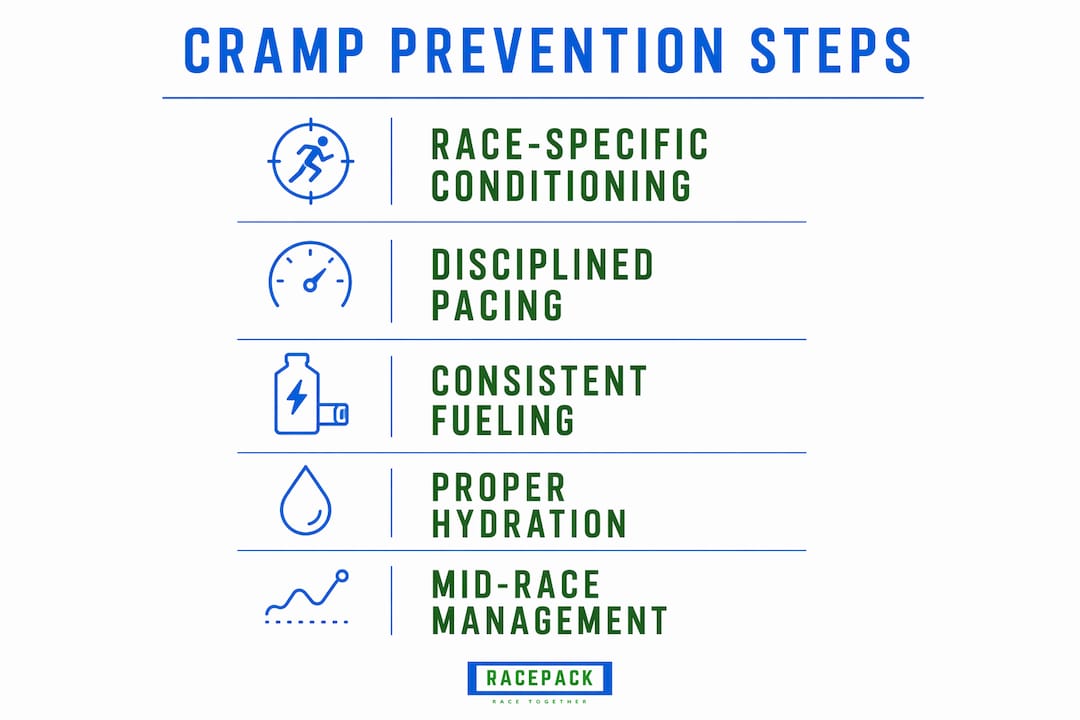
Pacing discipline is your most powerful cramp prevention tool. Start conservatively, especially in the first quarter of the race. The fatigue you accumulate in kilometers 1–10 determines whether you cramp in kilometers 30–42.
Fueling matters just as much. Aim to take in carbohydrates consistently throughout the race rather than waiting until you feel depleted. Consistent carbohydrate intake keeps glycogen stores higher for longer, which delays the muscular fatigue that triggers cramps. For electrolyte support, products like SaltStick Electrolyte Caps provide balanced mineral replenishment without the sodium spike that can come from gels alone. Read more on electrolyte balance during marathon racing to calibrate your intake to conditions.
Hydration strategy should match sweat rate and conditions. Heavy sweaters in hot races face higher sodium loss and need to replace both fluid and electrolytes. Over-hydrating with plain water dilutes sodium and can worsen cramp risk. Drink to thirst and supplement with electrolytes on runs longer than 90 minutes.
How to manage cramps when they hit mid-race
Even well-prepared runners cramp. Knowing how to respond quickly limits the damage and keeps you moving.
- Ease off immediately. Drop to a walk or slow jog the moment a cramp starts. Continuing at race pace worsens the neural overload and deepens the cramp.
- Stretch gently. Gentle stretching stimulates sensory receptors that calm hyperactive nerves. For a calf cramp, flex your foot upward slowly. For a hamstring cramp, straighten the leg with a soft forward lean.
- Avoid aggressive stretching. Forcing a cramped muscle into a deep stretch can trigger secondary cramps in adjacent muscles. Move slowly and stop at the point of resistance.
- Breathe and relax. Slow, deliberate breathing reduces overall nervous system excitability. A few deep breaths while walking can help the muscle release faster than stretching alone.
- Use a fast-acting cramp aid. A CrampFix Shot works by stimulating nerve receptors in the mouth and throat, which overrides the hyperactive motor signal causing the cramp. Carry one in your race vest for immediate use.
- Know when to stop. Severe cramping with visible muscle distortion, extreme pain, or cramps that spread to multiple muscle groups warrants stopping and seeking medical attention at the nearest aid station.
Pro Tip: Trial your cramp management strategy in training, not on race day. Practice the stretching sequence and test any cramp aid product during a long run so you know exactly how your body responds.
Key takeaways
Race cramps are caused by neuromuscular fatigue, and preventing them requires race-specific training, disciplined pacing, and consistent fueling, not just electrolyte supplements.
| Point | Details |
|---|---|
| Neuromuscular fatigue is the primary cause | Disrupted nerve signals between muscle spindles and GTOs cause sustained, involuntary contractions. |
| Strength training cuts cramp risk | Only 55.6% of crampers did lower-limb strength training vs. 87.5% of non-crampers in a 2026 study. |
| Pacing errors create hidden fatigue | Going out too fast in the first quarter of a race sets up cramps in the final third. |
| Carbohydrate fueling delays fatigue | Consistent carbohydrate intake keeps glycogen higher and pushes back the fatigue threshold. |
| Fast-acting aids work on the nervous system | Products like CrampFix Shot target nerve receptors directly, not just mineral levels. |
The part most runners get wrong about cramps
I’ve watched runners obsess over their sodium intake for months, carry three different electrolyte products on race day, and still cramp at kilometer 35. The problem was never the salt. It was that their nervous system had never been trained to handle race pace for that long.
The uncomfortable truth is that neuromuscular adaptation is slow. Your cardiovascular fitness can improve noticeably in six to eight weeks. Your nervous system’s ability to sustain race-specific contractions without overloading takes months of consistent, targeted work. Runners who build aerobic fitness quickly often outpace their own neuromuscular readiness. Their lungs say yes. Their legs say no.
I also think cramps carry a useful signal that most runners ignore. A cramp late in a race often means you are pushing at or near your current ceiling. That is not a failure. It is data. The right response is not to back off permanently but to raise the ceiling through strength work and race-specific training over the next training block.
Mental calm matters more than most training plans acknowledge. A runner who starts a race anxious, overcaffeinated, and sleep-deprived has a nervous system already running hot. There is less buffer before overload. Treating race morning as part of your performance preparation, not just the hours before the gun, is one of the most underrated cramp prevention strategies I know.
— Jason John
RacepackSingapore products for cramp prevention and relief
Cramp prevention starts in training, but having the right products on race day gives you a real edge when your body is under pressure.
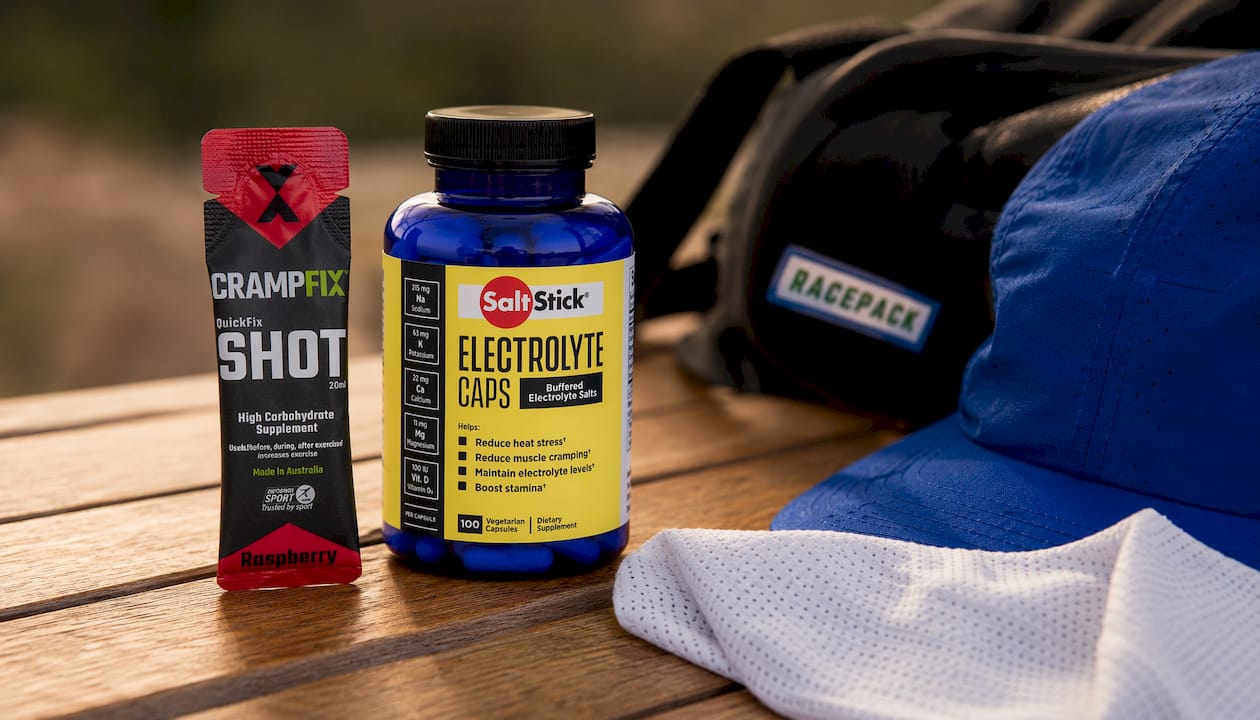
For immediate cramp relief, the CrampFix Shot 20ml Sachet is a race-vest staple. It works on the nervous system directly, not by replacing minerals, making it effective within seconds of onset. For ongoing electrolyte support throughout long races, SaltStick Electrolyte Caps deliver a balanced mineral profile that matches sweat composition without overloading sodium. Trial both products in training before race day so you know exactly how they work for you. RacepackSingapore offers next-day delivery across Singapore with guaranteed product authenticity. Buy now and have your race-day kit ready before your next long run.
FAQ
What is the main cause of muscle cramps during a race?
The primary cause is neuromuscular fatigue. Sustained high-intensity effort disrupts the nerve signals that regulate muscle contraction, causing muscles to lock into an involuntary, sustained contraction.
Does dehydration cause running cramps?
Dehydration and sodium loss contribute to cramp risk in hot, long races, but they are rarely the sole cause. Most race cramps occur because of neuromuscular overload, not a single electrolyte deficiency.
How does strength training prevent race cramps?
Strength training builds neuromuscular resilience, which delays the fatigue that triggers cramps. A 2026 study found that 87.5% of non-crampers did lower-limb strength training, compared to only 55.6% of crampers.
What should I do immediately when a cramp hits mid-race?
Ease off to a walk, apply gentle stretching to the affected muscle, breathe slowly to reduce nervous system excitability, and use a fast-acting cramp aid like CrampFix Shot if available.
How does pacing affect cramping during a race?
Starting too fast creates hidden fatigue that surfaces as cramps hours later. Research shows crampers diverge significantly from non-crampers after 25km, tracing back to early pacing errors.
Can carbohydrate intake prevent cramps?
Yes. Low carbohydrate intake accelerates muscular fatigue, which raises cramp risk. Consistent fueling throughout a race keeps glycogen levels higher and delays the fatigue threshold.
Are men more likely to cramp than women during races?
Yes. A 2026 ultra-trail study found EAMC incidence was four times higher in men (22%) than women (5%), with an overall incidence of 16% among all finishers.
What products help prevent or relieve cramps during a race?
CrampFix Shot provides immediate nerve-targeted cramp relief. SaltStick Electrolyte Caps support balanced mineral intake throughout endurance events. Both are available at RacepackSingapore with next-day delivery in Singapore.
How do I know if my cramps are from neuromuscular fatigue or electrolyte loss?
Neuromuscular fatigue cramps typically appear late in a race, in heavily worked muscles, and in runners who started fast. Electrolyte-related cramps are more common in extreme heat with heavy sweating. Most race cramps involve both factors, with neuromuscular fatigue as the dominant driver.
What is the best warm-up to reduce cramp risk before a race?
Dynamic stretching before a race activates the neuromuscular system and raises muscle temperature. Static stretching is better saved for post-run recovery. A 10-minute dynamic warm-up that includes leg swings, high knees, and hip circles prepares the muscles for race-specific demands.
How long does it take to build neuromuscular cramp resistance?
Neuromuscular adaptations to race pace take longer than cardiovascular improvements. Consistent race-specific training over several months is required to meaningfully raise the threshold at which cramps occur.
Where can I learn more about preventing cramps during a marathon?
RacepackSingapore’s marathon cramp prevention guide covers training, pacing, and nutrition strategies in detail. The electrolytes for running guide explains how minerals support muscle function throughout endurance events.