

Magnesium for Runners: Does It Actually Help Performance?
Magnesium helps runners who are actually low on it, but it isn’t a universal performance booster. If you deal with frequent cramps, poor sleep, heavy sweat losses, or a restrictive diet, correcting a shortfall can genuinely improve recovery and sleep quality. If your levels are already adequate, extra magnesium probably won’t shave time off your next 10K.
Here’s what the evidence points to:
- A systematic review found active people may need 10 to 20% more magnesium than sedentary people, and small trials linked supplementation to reduced muscle soreness.
- A 2017 review in Nutrients found mixed results across RCTs, with benefits concentrated in people starting from a deficit.
- Sports-nutrition experts writing for Women’s Running caution that well-nourished athletes shouldn’t expect a performance jump from supplementing.
Start with food. If symptoms or heavy sweat losses persist, a short trial of well-absorbed forms like magnesium glycinate or citrate is a reasonable next step before reaching for a blood test.
Key Takeaways
Magnesium supplementation reliably improves sleep and recovery markers mainly in runners who start out deficient, not across the board.
| Point | Details |
|---|---|
| Verdict is conditional | Magnesium helps most when you’re actually low on it; well-nourished runners shouldn’t expect a performance jump. |
| Athletes need more | Active people may require 10 to 20% more magnesium than sedentary people due to sweat and urine losses. |
| Form matters | Glycinate and citrate absorb well; magnesium oxide is a poor choice despite being common in cheap products. |
| Dose stays modest | Keep supplemental intake near or under the 350 mg upper limit and trial changes during training, never on race day. |
| RacepackSingapore stocks trusted forms | Glycinate, malate, and threonate options are available with next-day delivery for runners building a recovery stack. |
This article is general information, not a substitute for advice from a qualified doctor. Consult a qualified healthcare professional about your own circumstances before acting on anything here.
Table of Contents
- How Magnesium for Runners Supports Muscle and Nerve Function
- Does Magnesium Help With Cramps, Recovery, or Race Performance?
- Am I Low on Magnesium? How to Check Your Status
- Which Magnesium Form Is Best for Runners?
- Side Effects, Drug Interactions, and When to See a Doctor
- A Simple Way to Test Whether Magnesium Helps You
- A Publisher’s Honest Take on Magnesium Hype
- Where to Get Reliable Magnesium and Recovery Products
- Sources
- FAQ
How Magnesium for Runners Supports Muscle and Nerve Function
Magnesium isn’t a niche mineral for runners chasing marginal gains. It’s a structural requirement for more than 300 enzymatic reactions, including the ones that activate ATP, your muscles’ basic energy currency. Every stride draws on that system.
It also governs the calcium exchange inside muscle fibers that controls contraction and relaxation. Calcium tells a muscle to fire; magnesium tells it to let go. When that balance tips, muscles can stay slightly contracted longer than they should, which is part of why deficiency gets blamed for twitching and cramping, even though the picture is more complicated than “low magnesium equals cramps.”
Magnesium also plays a role in nervous system regulation, including the wind-down process that supports deep sleep. Since sleep is where most training adaptation actually happens, this is where magnesium’s case for runners gets stronger:
- Regulates the calcium/magnesium exchange in the sarcoplasmic reticulum, the structure inside muscle cells that triggers contraction.
- Supports parasympathetic nervous system activity, the “rest and digest” state tied to recovery.
- Feeds ATP production directly, which matters during long, glycogen-depleting efforts.
Picture the muscle contraction cycle as a light switch: calcium flips it on, magnesium flips it back off. Runners low on magnesium may have a switch that’s slower to reset.
Does Magnesium Help With Cramps, Recovery, or Race Performance?
The honest answer is: it depends on where you’re starting from. A systematic review published in Springer Nature found magnesium supplementation reduced delayed-onset muscle soreness and offered some protective effect against muscle damage in select athlete groups, though sample sizes were small. That’s a real signal, but not proof it works for everyone.
The 2017 Nutrients review is the most cited piece of evidence on this topic, and it’s genuinely mixed. Some trials showed improved functional measures with supplementation. Others, particularly in athletes who already had normal magnesium status, showed no measurable performance benefit at all. A well-known null result comes from marathon-focused trials, where runners with adequate baseline magnesium saw no improvement in race times from supplementing beforehand.
Why results vary: dose, chemical form, bioavailability, and each subject’s starting magnesium status all shift outcomes. A trial using poorly absorbed magnesium oxide in already-replete runners is almost guaranteed to show nothing.
Where the evidence holds up best: sleep quality and some recovery markers, particularly in people with low baseline magnesium. Where it’s weak: routine cramp prevention and consistent race-day performance gains, especially for runners who already eat a magnesium-rich diet. Cramps have multiple causes, including heat, pacing errors, and sodium loss, so magnesium is one lever among several, not a fix-all.
Am I Low on Magnesium? How to Check Your Status
Certain runners are more likely to be running a deficit than others. If several of these apply, magnesium deserves a closer look:
- Heavy or frequent sweat losses, especially training in heat or humidity.
- High weekly mileage without a matching increase in magnesium-rich food intake.
- A restrictive diet: low-carb, low-calorie, or minimal vegetables and legumes.
- Persistent muscle twitching, restless legs, or poor sleep quality despite good training habits.
- Alcohol intake or gut issues that reduce mineral absorption.
Here’s the complication: a standard serum magnesium blood test only measures about 1% of your body’s total magnesium, since most of it is stored in bone and muscle tissue. A “normal” result doesn’t rule out a functional shortfall. Clinicians sometimes use RBC magnesium testing instead, but even that isn’t perfect.
For most runners, the practical route beats the lab route. Run a 7 day food log and see how it stacks up against the RDI of roughly 400 to 420 mg for men and 310 to 320 mg for women. If your diet looks light on magnesium and you’re logging heavy mileage, a supplement trial is a reasonable next move. If symptoms are severe or persistent, loop in a doctor before self-treating.
Which Magnesium Form Is Best for Runners?
Not all magnesium is created equal, and the form you pick determines whether you actually absorb it or just pay for expensive urine. Magnesium oxide, the type in most cheap multivitamins, has poor bioavailability. Industry reviews note it’s popular mainly because it lets brands print a bigger elemental magnesium number on the label, not because it works better.

| Form | Best For | Runner Notes |
|---|---|---|
| Glycinate | Sleep, recovery, sensitive stomachs | Gentle on the gut, well absorbed, a solid first choice for evening use |
| Citrate | General supplementation, budget option | Well absorbed but more likely to cause loose stools at higher doses |
| Malate | Daytime energy support | Paired with malic acid, which plays a role in the energy production cycle |
| Threonate | Sleep architecture, cognitive focus | Crosses into the brain more readily; pricier and less studied in runners specifically |
| Oxide | Avoid as a primary source | Roughly 4% absorption; a poor choice despite showing up in many cheap products |
Dose guidance: total intake, food plus supplement, should land near the RDI unless you’re training heavily, in which case the 10 to 20% higher range applies. A common starting supplement dose is around 200 mg of glycinate in the evening. The tolerable upper limit for supplemental magnesium sits near 350 mg per day; going well beyond that mainly increases your odds of a bathroom emergency, not your recovery.
Timing matters more than most runners assume:
- Take glycinate or citrate in the evening to support the sleep benefits some trials have shown.
- Save malate for daytime if you want it linked to energy metabolism rather than sleep.
- Never trial a new dose or form the night before a race. Save experimentation for regular training weeks.
Practical protocol: start low, run a 10 to 14 day trial, track stool consistency and sleep quality daily, then adjust the dose or switch forms if something feels off.
Pro Tip: The single biggest mistake runners make is taking a large single dose of magnesium citrate the morning of a race “just in case.” That’s a fast route to an unplanned bathroom stop at mile six. Trial any new supplement during an easy training week, never on race day.
If you’re comparing glycinate against citrate in more detail, this breakdown of absorption and GI effects is worth a read before you commit to one.
Side Effects, Drug Interactions, and When to See a Doctor
The most common side effect of oversupplementing is loose stools, usually the first sign you’ve gone past what your gut can absorb. Staying under the roughly 350 mg supplemental upper limit keeps most runners clear of this.
Magnesium can also interact with certain medications, including some antibiotics, bisphosphonates used for bone density, and select anticonvulsants, by altering how the body absorbs them. If you take prescription medication regularly, check with a pharmacist or doctor before adding a daily magnesium supplement.
Runners with a diagnosed heart rhythm condition should also get medical clearance first, since electrolyte shifts can affect heart rhythm. If you develop persistent diarrhea, unusual fatigue, or irregular heartbeat after starting magnesium, stop and speak with a doctor.
A Simple Way to Test Whether Magnesium Helps You
- Log your current diet and symptoms for one week as a baseline.
- Pick one form (glycinate is the easiest starting point) and one modest dose.
- Run a 10 to 14 day trial without changing anything else in your routine.
- Track stool consistency, sleep quality, and perceived recovery daily.
- Adjust the dose, switch forms, or stop if nothing changes after 2 to 8 weeks.
A Publisher’s Honest Take on Magnesium Hype
Magnesium gets oversold in running media as a cramp cure and undersold as a sleep and recovery tool, and that’s backward given what the actual evidence shows. The research is stronger on sleep and soreness than on race-day performance, yet most headlines chase the cramp angle because it’s the sexier promise. RacepackSingapore stocks products because runners genuinely benefit from consistent access to well-absorbed forms, not because magnesium is a miracle fix, and next-day delivery only matters if the product itself is one worth trusting in the first place. Authenticity checks matter more here than most supplement categories, since a mislabeled oxide product sold as “high-potency” is a common way runners get shortchanged.
Where to Get Reliable Magnesium and Recovery Products
If your food log and symptoms point toward a genuine shortfall, RacepackSingapore carries chelated forms built for absorption rather than a big number on the label. The NOW Foods Magnesium Glycinate is a solid evening option for sleep and recovery, while NOW Magnesium Malate suits runners who want daytime energy support instead. Runners curious about cognitive and sleep-architecture benefits can look at Life Extension Neuro-Mag Magnesium L-Threonate.
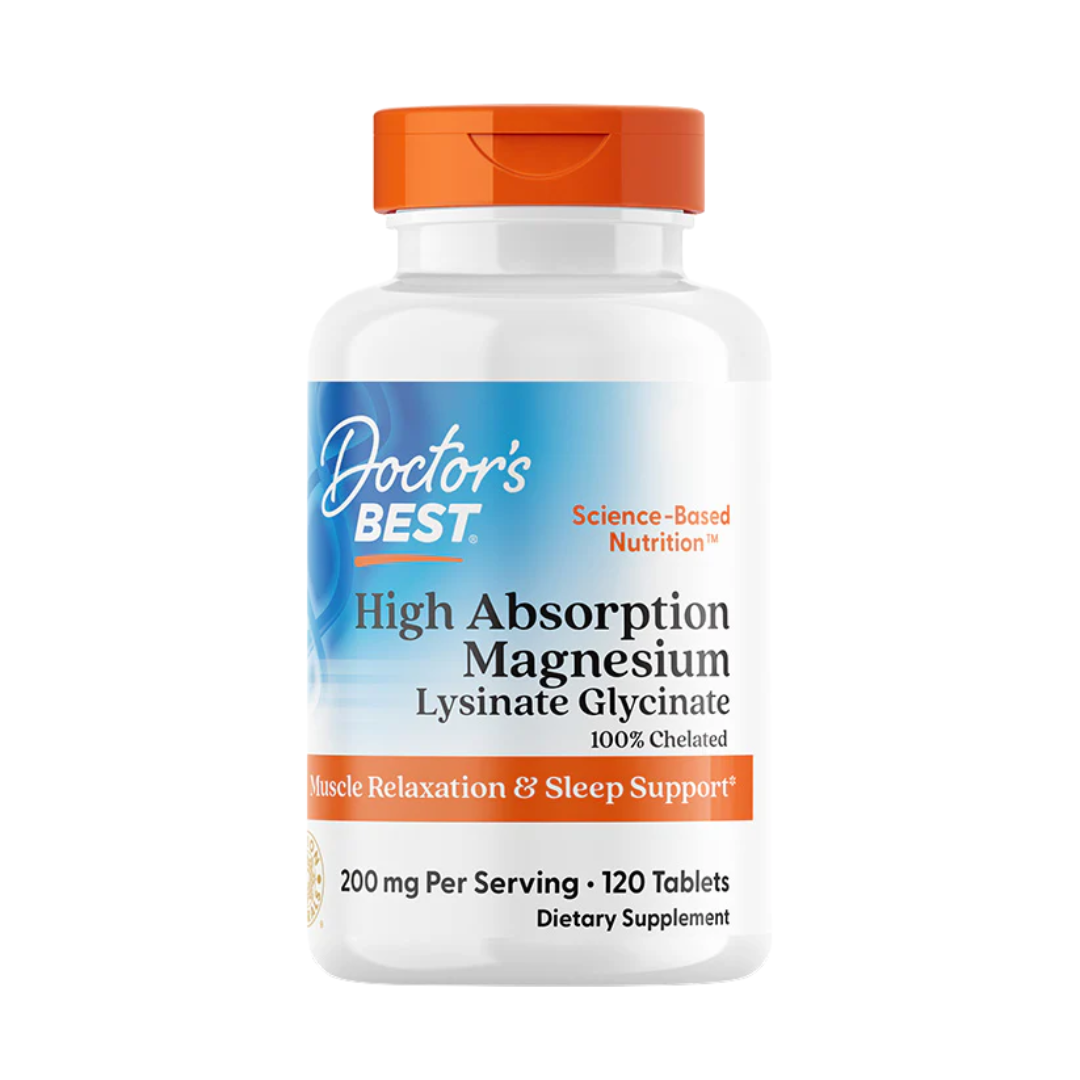
Pair whichever form you choose with proper race-day fueling and electrolyte replacement, since magnesium alone won’t cover sodium losses during a long run. The HIGH5 ZERO+ Ultra Electrolytes sachets and GU Energy Gel 24-pack cover that gap for training blocks and race day. If you’re juggling multiple daily supplements, the MyProtein Supplement Storage Box keeps your glycinate, electrolytes, and other capsules organized and travel-ready. Start with a low dose, follow the safety guidance above, and browse the full magnesium and recovery range to build a stack that fits your training load.
Sources

Supplements are a backup plan, not a starting point. Most balanced diets get close to the RDI without any pill involved, and food sources come with fiber, potassium, and other nutrients supplements can’t replicate.
Reliable sources include spinach and other leafy greens, almonds and cashews, pumpkin and chia seeds, black beans and edamame, whole grains like quinoa and oats, and dark chocolate (70% cacao or higher).
A few simple options to build into your week:
- Effects of magnesium supplementation on muscle soreness in different type of physical activities: a systematic review - PMC
- Can Magnesium Enhance Exercise Performance? Nutrients (2017)
- Why Runners Need To Care About Their Magnesium Intake — Women’s Running
- Harvard T.H. Chan School of Public Health — Magnesium
If your log shows you’re consistently short despite eating well, that’s when a supplement earns its place.
FAQ
Should runners take magnesium?
Runners with heavy sweat losses, high mileage, restrictive diets, or poor sleep may benefit from magnesium, but runners with adequate levels shouldn’t expect it to boost performance directly.
Which type of magnesium is best for runners?
Magnesium glycinate is generally best for sleep and recovery, citrate works as a budget option, and malate suits daytime energy needs; magnesium oxide is a poor choice due to low absorption.
How much magnesium should a runner take per day?
Aim for the RDI of roughly 400 to 420 mg for men and 310 to 320 mg for women through food and supplements combined, staying under the roughly 350 mg supplemental upper limit.
Can magnesium stop muscle cramps during a run?
Magnesium may help if a deficiency is contributing to cramps, but cramps often stem from heat, pacing, or sodium loss, so it isn’t a guaranteed fix on its own.
Is magnesium ok to take with lamotrigine?
Magnesium hasn’t been shown to have a major direct interaction with lamotrigine, but anyone on anticonvulsant medication should confirm with a doctor or pharmacist before adding a daily supplement.
Can I take magnesium if I have colitis?
Magnesium supplements, especially citrate, can worsen loose stools in people with colitis or other GI conditions, so check with a gastroenterologist before starting one.
How long does it take for magnesium to help with sleep or recovery?
Give it 2 to 8 weeks of consistent use to judge sleep quality and recovery, tracking symptoms daily during that window.
What are signs of magnesium deficiency in runners?
Persistent muscle twitching, restless legs, poor sleep, and unexplained fatigue despite solid training habits are common signs worth investigating.
Does a blood test accurately show magnesium status?
Standard serum magnesium tests only reflect about 1% of total body magnesium, so a normal result doesn’t rule out a functional shortfall.
What foods are highest in magnesium for runners?
Leafy greens, almonds, pumpkin seeds, black beans, whole grains, and dark chocolate are reliable, practical sources to build into training-week meals.
Can I take too much magnesium as a runner?
Yes. Going well past the roughly 350 mg supplemental upper limit mainly causes loose stools and GI discomfort rather than added benefit.
Where can I buy trusted magnesium supplements for runners in Singapore?
RacepackSingapore carries glycinate, malate, and threonate options with guaranteed authenticity and next-day delivery. Buy Now to start building your recovery stack.