

Race Tested Hyrox Nutrition Plan: 3 Rules to Test in Training
Your Hyrox nutrition plan works when it does three things: scales daily carbs to your training load, spreads 1.6–2.2 g/kg of protein across every meal, and puts electrolytes ahead of plain water once the venue gets warm. Everything else is a detail. Get those three rules right and the rest of this guide is just fine-tuning for your body weight, training volume, and race week.
TL;DR:
- Proper fueling depends on adjusting carbohydrate intake based on training volume, with higher carb doses on demanding days and consistent protein intake of 1.6 to 2.2 g/kg daily.
- Electrolytes should be prioritized over plain water during warm sessions and race week, with sodium intake around 500 mg per hour once activity exceeds an hour.
- A solid pre-race strategy involves a low-fat, moderate-carb meal 3 to 4 hours before, with a small snack an hour prior and tailored hydration to prevent GI issues.
- During races longer than 75 minutes, plan for fueling windows every 30 to 40 minutes, including sodium-rich hydration and portable gels tested in training.
- Recovery nutrition within the first hour post-race should include a mix of carbs and protein, such as chocolate milk or rice with chicken, to optimize muscle repair and glycogen replenishment.
Table of Contents
- What Is a Hyrox Nutrition Plan, and Why Does It Differ From Endurance or Strength Diets?
- Training-Phase Nutrition: Set Calories and Periodize Macros by Session
- Macro Targets and Quick Calculators You Can Run in Your Head
- Sample Day Templates for Training, Rest, and Busy Weeks
- Race-Week Tapering: How to Top Off Glycogen Without GI Issues
- Race Day: Pre-Race Meal Timing, Warm-Up Snacks, and Hydration
- In-Race Fueling and Hydration: Windows, Sodium, and Packing
- Recovery: The First 60 Minutes and Supplements Worth Considering
- Where to Go Deeper on Hyrox Fueling and Race Prep
- The Overlooked Truth About Hyrox Nutrition
- Race-Day and Recovery Products Worth Packing
- Sources
- FAQ
What Is a Hyrox Nutrition Plan, and Why Does It Differ From Endurance or Strength Diets?
Hyrox is eight 1km runs alternated with eight functional stations, and that hybrid format is exactly why a straight runner’s diet or a straight lifter’s diet falls short. You need the glycogen reserves of a distance runner and the protein intake of a strength athlete, which is a combination most generic sports nutrition guides never quite address.
That’s the standard term worth knowing here: performance periodization, the practice of matching your fuel intake to the actual demands of a given session rather than eating the same way every day. A Hyrox fueling strategy built on periodization beats a flat, one-size-fits-all meal plan because your sled push day and your easy recovery run don’t ask the same thing of your body.
Most athletes get this backwards. They either eat like a marathoner and short their protein, or they eat like a powerlifter and bonk on run five. The fix is a nutrition guide for Hyrox that treats carbs as a dial, not a constant.
Training-Phase Nutrition: Set Calories and Periodize Macros by Session
Your calorie needs move with your training volume, not your mood. A low-volume week (2 to 3 sessions) sits close to maintenance calories. A high-volume week (5 to 6 sessions with compromised running) can push 300 to 500 calories above that, mostly from carbohydrate.
Protein stays constant regardless of volume: 1.6 to 2.2 g/kg per day, split into 35 to 50 grams per meal so your body actually has raw material to repair muscle between sessions, a range echoed in sports dietitian guidance on Hyrox training. Carbs, on the other hand, should swing with the session:
- Easy or technique days: 3 to 5 g/kg of body weight
- Moderate mixed sessions (running plus stations): 5 to 6 g/kg
- Hard interval or double-session days: 6 to 8 g/kg, occasionally higher in a short pre-race window
Fat fills whatever calorie gap remains after carbs and protein are set, usually landing around 0.8 to 1.2 g/kg. Pull it back on heavy training days and again in race week, since fat slows digestion when your gut needs to be moving fast, not sitting heavy.
The most common mistake in Hyrox training and nutrition isn’t overeating. It’s under-fueling carbs because a low-carb trend sounded appealing. Chronic carb restriction wrecks the exact glycogen stores your runs depend on, and it shows up first at station six or seven, not station one.
Macro Targets and Quick Calculators You Can Run in Your Head
Three formulas cover almost every athlete:
- Protein: body weight (kg) × 1.6 to 2.2 = daily grams, divided across 4 to 5 meals
- Carbs: body weight (kg) × session-intensity multiplier (3 to 5 for easy, 5 to 8 for hard)
- Calories: maintenance + 0 to 500, scaled to weekly training volume
Example A, a 70 kg athlete training 4 hours a week (moderate load): roughly 126 grams of protein, 280 to 350 grams of carbs on hard days, closer to 210 to 350 on lighter days. That protein target splits into four meals of about 30 to 35 grams each.
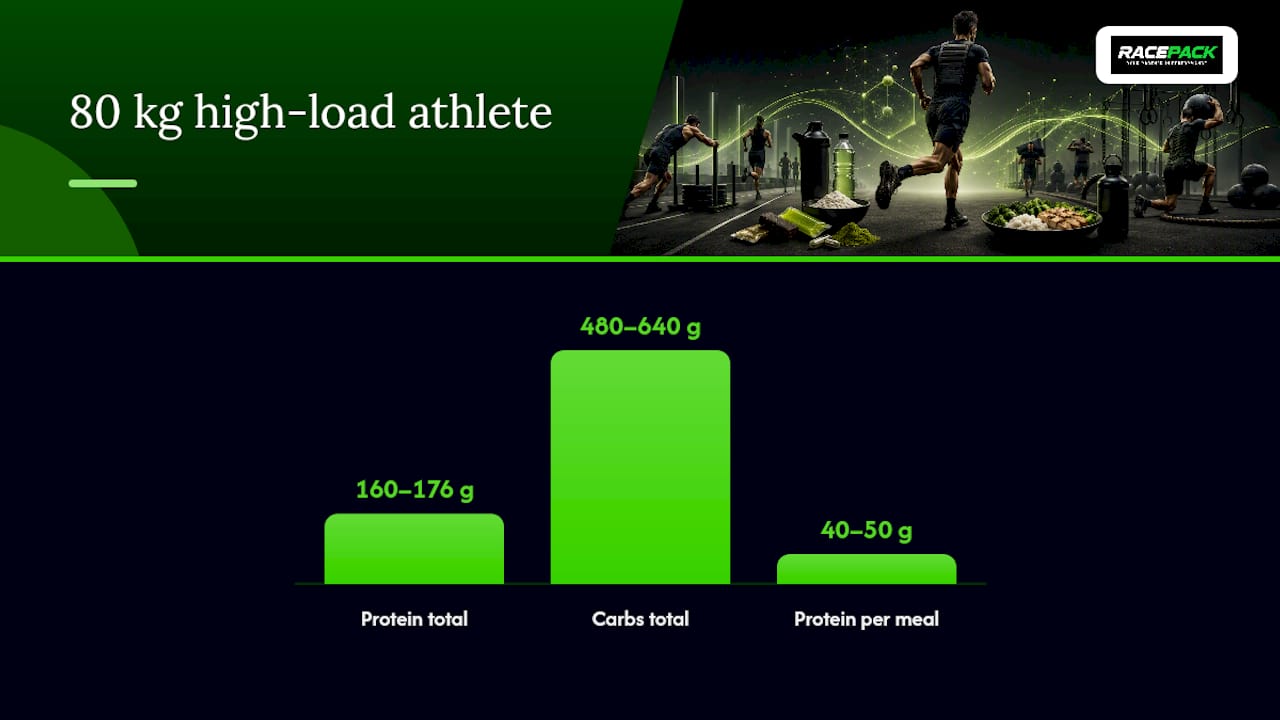
Example B, an 80 kg athlete training 10+ hours a week (high load, near a race build): roughly 160 to 176 grams of protein and 480 to 640 grams of carbs on the hardest days. That’s a plate-level shift, not just a number on paper. Meals should run 40 to 50 grams of protein each, with carbs filling half the plate on training days.
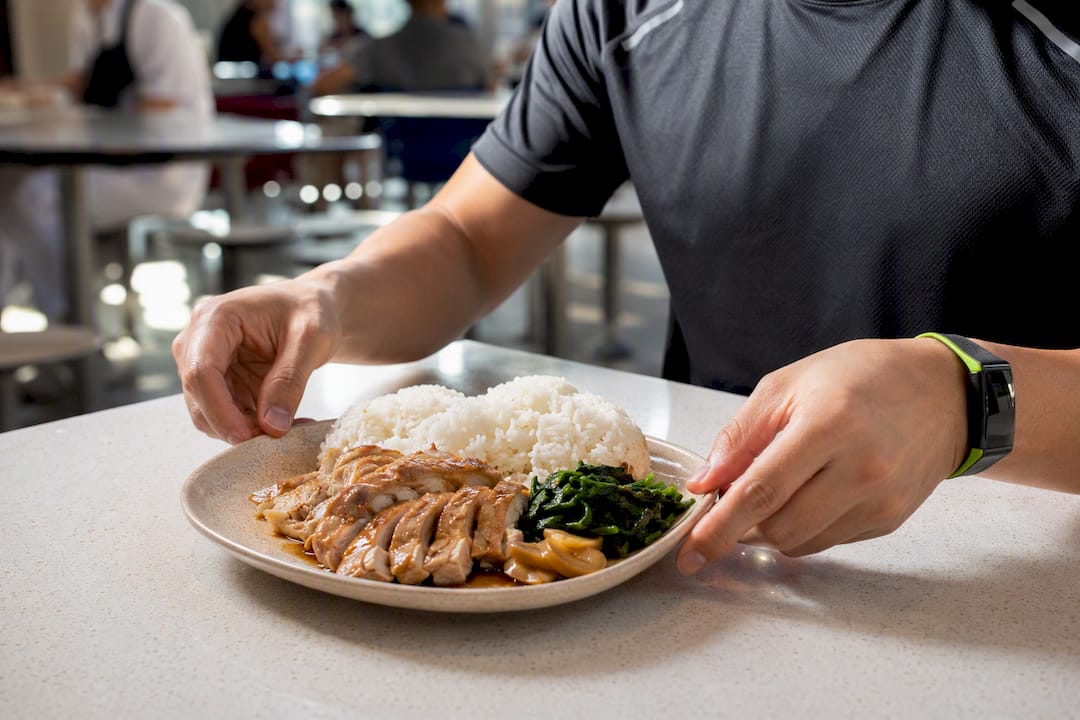
At the meal level, aim for a palm of protein, a fist to two fists of carbs depending on session intensity, and a thumb of fat. Simple, repeatable, and something you can actually eyeball at a hawker stall or a meal-prep container without a food scale.
Sample Day Templates for Training, Rest, and Busy Weeks
A meal plan for Hyrox only works if you’ll actually eat it on a Tuesday when you’re tired. Here’s a training day template for a moderate-load athlete:
- Breakfast: oats, banana, whey protein (roughly 45g carbs, 30g protein)
- Lunch: rice, chicken breast, vegetables (roughly 70g carbs, 40g protein)
- Pre-session snack: rice cakes with honey (roughly 30g carbs)
- Dinner: pasta, lean beef, olive oil (roughly 80g carbs, 40g protein)
- Evening: Greek yogurt with berries (roughly 20g carbs, 20g protein)
On rest or low-volume days, drop the pre-session snack and trim dinner carbs by roughly a third. Fat can climb slightly since digestion speed matters less.
For busy-athlete shortcuts: a shake with two scoops of protein and a banana covers a rushed breakfast, rice plus rotisserie chicken from any grocery store covers lunch in ten minutes, and a bar plus fruit covers a gap between meetings. Vegetarian swaps work the same way: tofu, tempeh, or a plant protein blend in place of chicken or beef, and lentils or chickpeas to bulk out rice-based meals.
Pro Tip: Test every new meal or bar on a training day, never for the first time on race day. Your gut has opinions, and race morning is the worst place to discover them.
Race-Week Tapering: How to Top Off Glycogen Without GI Issues
The 48 to 72 hours before your race call for a different approach than training, built around race-week carbohydrate strategy rather than daily periodization. Some athletes benefit from pushing toward 7 to 10 g/kg in that final 24 hour window, but that number only works alongside low-residue food choices.
Prefer: white rice, white pasta, white bread, bananas, pretzels, and low-fiber cereals. Avoid: high-fiber vegetables, beans, excess raw salad, heavy cream sauces, and large amounts of fat close to race start.
Hydration matters just as much as carbs here. A simple 48 hour checklist:
- Add electrolytes to at least two drinks daily, not just water
- Check urine color; pale yellow is the target, dark is a warning sign
- Reduce alcohol and caffeine excess the night before
- Eat your final large low-residue meal the evening before, not morning-of
This is where the electrolyte guidance for high-intensity training becomes practical rather than theoretical, especially for indoor venues that run warm under lights and crowd heat.
Race Day: Pre-Race Meal Timing, Warm-Up Snacks, and Hydration
Race morning rewards a plan you’ve already rehearsed, not a new idea:
- 3 to 4 hours before start: a low-fat, low-fiber meal with a moderate amount of carbohydrates and protein to top off energy stores. Think oats with banana and honey, or white rice with eggs.
- 60 to 90 minutes before: a small snack of carbohydrates if needed; skip if you feel full or nervous; a queasy stomach at the start line beats a stomach that’s still working through breakfast.
- Caffeine: dose at 3 to 6 mg/kg roughly 45 to 60 minutes before start, but only if you’ve tested this exact dose in training. Race day is not the day to discover you’re sensitive.
- Hydration: sip 150 to 250 ml of an electrolyte drink every 20 to 30 minutes leading up to the start, favoring sodium content over plain water once you’re indoors under heat.
In-Race Fueling and Hydration: Windows, Sodium, and Packing
Under roughly 75 minutes, water and electrolytes alone usually cover most age-group athletes. Between 75 and 90 minutes, one gel timed around the midpoint station helps prevent the late-race fade. Past 90 minutes, plan for multiple fueling windows spaced every 30 to 40 minutes.
Sodium matters more than most athletes realize in warm indoor venues: aim to include sodium in your hydration strategy during the race, especially after the first hour to support cardiovascular function. Practical packing looks like this:
- Stash one gel near the sled or lunge station for a mid-race grab
- Carry a small flask rather than relying only on aid-station cups
- Take fuel between stations, never mid-rep, to avoid choking risk
- Test your exact race-day gel and drink combination in a training session first
Recovery: The First 60 Minutes and Supplements Worth Considering
The window right after you cross the finish line does more for tomorrow’s session than anything else on this list. Hit roughly 1.0 to 1.2 g/kg carbs and 0.3 to 0.4 g/kg protein within that first hour, a target backed by post-exercise recovery research. That’s the practical range across most sports-dietitian guidance, not a hard universal law, but it’s a solid one to build around.
Fast options: chocolate milk, a shake with fruit, or rice with chicken if you can stomach solid food. All hit the target without overthinking it.
- Creatine: a daily maintenance dose supports high-intensity efforts
- Beta-alanine: regular use over several weeks can build buffering capacity for repeated efforts
- Omega-3s: helpful for recovery and joint comfort during heavy training
- Electrolytes: important daily, especially if training indoors or sweating heavily
Sleep and consistent daily calories do more for long-term recovery than any supplement stack, including creatine. For deeper recovery-specific guidance, see this breakdown on why recovery nutrition after Hyrox matters.
Where to Go Deeper on Hyrox Fueling and Race Prep
This guide covers the framework, but a few Racepack SG resources go further into specifics. The full Hyrox nutrition breakdown expands on meal timing across a training block, while the race format explainer covers why the eight-station structure demands this specific fueling approach in the first place. Test every recommendation here in training before race day arrives.
The Overlooked Truth About Hyrox Nutrition
Most Hyrox nutrition content sells complexity: precise timing charts, supplement stacks, and race-week protocols that read like a lab manual. The research doesn’t actually support that level of precision mattering more than consistency. A simple, repeatable meal plan you’ll follow on a tired Tuesday beats a perfect plan you abandon after two weeks.
Where conventional advice falls short is treating race day as the main event. It’s not. Race day nutrition is just the final rehearsal of habits built over months. If your daily protein distribution and carb periodization are solid, your race-day plan writes itself, since it’s the same food you’ve been eating in training, just timed a little tighter.
What should you prioritize first? Fix your daily protein distribution before you touch a single gel or supplement. Athletes chase caffeine dosing and creatine timing while skipping 40 grams of protein at breakfast, and that’s backwards. Nail the boring daily structure, then layer in the race-week and race-day refinements. The supplements and timing tricks add maybe 2 to 5 percent on top of a foundation that’s either solid or it isn’t.
— Jason John
Race-Day and Recovery Products Worth Packing
Once your daily plan is dialed in, the last mile is logistics: having the right fuel actually in your bag on race morning. The MyProtein HYROX The Electrofuel Electrolyte Powder is built for exactly the sodium-first hydration approach covered above, useful daily in training and critical in race week.

For anyone assembling a full race pack rather than shopping item by item, the Hyrox Athletes Performance Premium Gift Set bundles fueling essentials into one order, which saves you from hunting down five separate products before race week gets hectic. The Sports Gift Set for Hyrox Athletes works as a lighter alternative or a solid gift for a training partner chasing their first race.
A practical starting pack: one electrolyte powder tub, two gels for mid-race windows, and a recovery shake for the finish line. Next-day shipping is available within Singapore and product authenticity is guaranteed, so what arrives is exactly what you tested in training, not a substitute. Buy now and get your race pack sorted before your next long session.
Sources
- The Complete HYROX Nutrition Guide: What to Eat Before, During & After Your Race | HyroxDataLab
- Hyrox Nutrition: What to Actually Eat to Train Hard, Race Smart, and Not Bonk at Station 7 - Justin Thomas Miller
- A Sports Dietitian’s Guide to Hyrox Training Nutrition | NOW Foods
FAQ
Is Hyrox good for losing weight?
Hyrox training can support fat loss because of its high training volume, but a Hyrox nutrition plan built around carb-forward fueling isn’t designed as a weight-loss diet. Cutting calories too aggressively while training this hard tends to hurt performance and recovery before it meaningfully changes body composition.
Is there a PDF version of the Hyrox diet plan available?
Racepack SG doesn’t currently offer a downloadable PDF, but every template and formula in this guide is designed to be usable directly, including the worked macro examples and sample day templates above.
What is the 3-3-3 rule for meal prep?
Definitions vary across fitness content, and this exact framework isn’t part of established Hyrox nutrition guidance. A safer approach is the meal structure covered above: protein, carbs, and a controlled fat portion at every sitting, prepped a few days ahead.
What to eat one week before Hyrox?
Focus on your normal training diet for the first four to five days, then shift toward low-residue, low-fiber carb sources like white rice and white pasta in the final 24 to 72 hours to top off glycogen without digestive stress.
How much protein do I actually need for Hyrox training?
Most guidance lands at 1.6 to 2.2 g/kg of body weight daily, split into 35 to 50 gram portions across four or five meals rather than loaded into one or two large meals.
Should I carb-load the night before a Hyrox race?
A moderate carb increase the night before helps, but the bigger lever is the full 24 to 72 hour window beforehand using low-residue carbs, not a single oversized pasta dinner.
How much caffeine should I take before racing?
A common range is 3 to 6 mg per kg of body weight taken roughly 45 to 60 minutes before start, but only at a dose you’ve already tested during training sessions.
Do I need electrolytes during a Hyrox race?
Yes, especially in warm or indoor venues. Aim for around 500 mg of sodium per hour once your race passes the one-hour mark, and lean on electrolytes over plain water once conditions get warm.
What should I eat immediately after finishing?
Target roughly 1.0 to 1.2 g/kg carbs and 0.3 to 0.4 g/kg protein within 60 minutes. Chocolate milk, a protein shake with fruit, or rice with chicken all hit that window quickly.
Are creatine and beta-alanine worth taking for Hyrox?
Both have reasonable evidence behind them for repeated high-intensity efforts. Creatine works at 3 to 5 g daily as a maintenance dose, and beta-alanine needs several weeks of consistent use at 3 to 6 g daily to build buffering capacity.
Can I follow this nutrition plan as a vegetarian?
Yes. Swap tofu, tempeh, or plant-based protein blends for meat, and add lentils or chickpeas to bulk carb-heavy meals without changing the underlying g/kg targets.
How do I know if my race-day nutrition plan will actually work?
Test it in training first. Every meal, gel, and caffeine dose in this guide should get a trial run on a training day that mimics race intensity before you rely on it during an actual event.