

Cross-Training Workouts for Runners: 10 Ready-to-Use Examples
TL;DR:
- Cross-training for runners focuses on strength, low-impact aerobic work, plyometrics, and mobility, each improving performance and injury resilience. Consistent strength training targeting the hips and posterior chain can enhance running economy by 3–4%, while cycling and pool running preserve aerobic fitness with minimal joint stress. Proper scheduling, limited equipment, and targeted nutrition support sustained, effective cross-training throughout a training cycle.
The best cross-training workouts for runners fall into four categories: strength (hips, glutes, posterior chain), low-impact aerobic (cycling, pool running, elliptical, rowing), plyometrics and power, and mobility/recovery. Each category serves a distinct purpose:
- Strength builds running economy and injury resilience
- Low-impact aerobic adds volume without extra joint stress
- Plyometrics develops fast force production and late-race kick
- Mobility/recovery preserves range of motion and reduces soreness
Strength training alone can improve running economy by 3–4%, meaning you use less oxygen at the same pace after 8–12 weeks of consistent sessions. This week, pick one strength session and one easy bike ride. That combination covers the two highest-return categories immediately.
Table of Contents
- 1. Strength training that targets your hips and posterior chain
- 2. Low-impact aerobic options that protect your joints
- 3. Plyometric and power sessions for speed and economy
- 4. Mobility and active recovery routines you can do in 15 minutes
- 5. How to schedule cross-training across your training cycle
- 6. Three sample weekly templates you can use right now
- 7. Progression rules and red flags to watch for
- 8. Minimal equipment you need to get started
- Key Takeaways
- The case for cross-training that most runners miss
- Fuel your cross-training sessions with RacepackSingapore
- Useful sources
- FAQ
1. Strength training that targets your hips and posterior chain
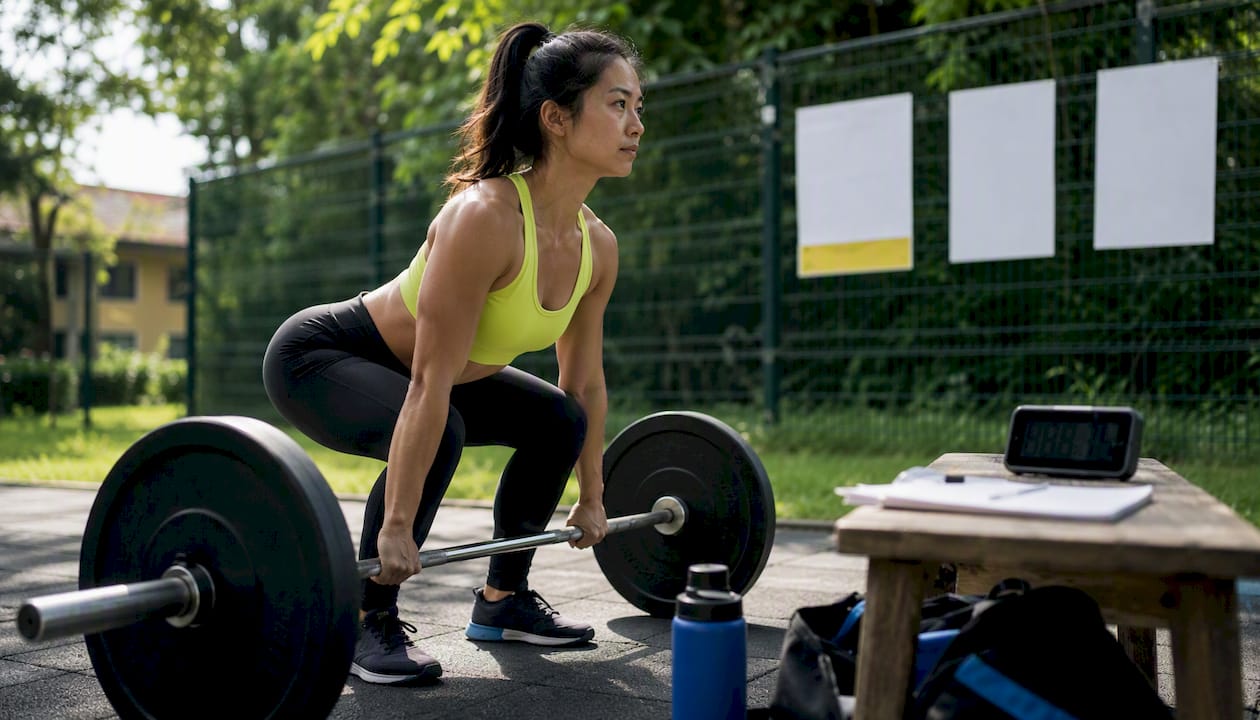
Coach Jason Fitzgerald notes that most runners are underpowered in the hips and posterior chain, and that cross-training is the most direct way to fix that imbalance. Strength work is not optional maintenance; it belongs in your weekly plan as a primary performance tool.
Core runner-specific exercises:
- Single-leg Romanian deadlift (3 × 8 each side)
- Rear-foot-elevated split squat (3 × 10 each side)
- Glute bridge or barbell hip thrust (3 × 12)
- Heavy trap-bar deadlift (3 × 5)
- Single-leg calf raise (3 × 15)
- Pallof press for anti-rotation core control (3 × 10 each side)
Sample 30-minute maintenance session: Two sets of each exercise above, moderate load, 60-second rest. Focus on control, not speed.
Sample 45-minute build session: Three sets, heavier load, 5–6 reps on the compound lifts, 90-second rest. Add a fourth set on the split squat if recovery allows.
| Week | Sets per exercise | Reps (compound) | Load target |
|---|---|---|---|
| 1–2 | 2 | 10–12 | 60% of max effort |
| 3–4 | 3 | 8–10 | moderate effort |
| 5–8 | 3–4 | 5–8 | 80%+ of max effort |
Pro Tip: Place strength sessions after a hard run or on an easy day. Never schedule heavy lifting the day before a key quality workout — your legs need to be fresh for speed work.
For a full leg-strength program, the marathon leg-strength plan at RacepackSingapore covers progressive templates built for runners.
2. Low-impact aerobic options that protect your joints
Cycling ranks as the top aerobic cross-training choice for most runners because it is easy to dose, requires minimal skill, and transfers directly to aerobic capacity. The other modalities each fill a specific gap.
- Cycling (road or trainer): 45-minute steady ride at RPE 3–4 for recovery; 30-minute session with 4 × 5-minute intervals at RPE 7 for aerobic development.
- Pool running (deep-water): 30–40 minutes with a flotation belt, mimicking your running stride. Six weeks of pool running can preserve VO2 and economy in trained runners when impact must be removed entirely.
- Swimming: 30 minutes of continuous freestyle at RPE 4–5, or 10 × 50-meter efforts with 20-second rest for a harder aerobic stimulus.
- Rowing: 20–25 minutes at steady state (RPE 4), or 8 × 250-meter hard efforts with 1-minute rest. Rowing loads the posterior chain and builds upper-body endurance simultaneously.
- Elliptical: 40 minutes at easy effort. Stand upright without leaning on the handles — gripping the rails reduces core and stabilizer engagement and undercuts the session’s value.
Intensity guidelines by training phase:
- Base phase: 1–2 aerobic cross-training sessions per week at RPE 3–5
- High-mileage phase: 1 easy session only (RPE 2–4), used as a fatigue buffer
- Taper: Optional 20–30 minutes at very low effort to stay loose
3. Plyometric and power sessions for speed and economy
Short power sessions — 10–20 minutes, 2–3 exercises — deliver high return for running speed without adding mileage. Ultra-runner Ian Torrence emphasizes that TRX and plyometric work maintain mechanics as fatigue accumulates in long-distance efforts, which is exactly when form breaks down.
Sample plyo session (15 minutes):
- Ankle hops: 3 × 20 reps, 45-second rest (fast ground contact, minimal knee bend)
- Single-leg bounds: 3 × 8 each side, 60-second rest
- Box jumps or broad jumps: 3 × 5, full reset between reps
For a deeper exercise library, the plyometric exercises guide covers progressions and landing mechanics in detail.
Safety notes:
- Always warm up with 5 minutes of easy movement and dynamic drills before any plyo work
- Land softly, absorbing force through the ankle, knee, and hip
- Runners with recent lower-leg or knee injuries should skip maximal plyometrics until cleared by a clinician
Pro Tip: Limit total jump volume to 60–80 ground contacts per session. Place plyo sessions early in the week or on low-mileage days — never the day before a long run.
4. Mobility and active recovery routines you can do in 15 minutes
Ten to fifteen minutes of foam rolling and targeted mobility reduces soreness in the 48 hours after a hard effort and supports long-term consistency. Treat this as its own session, not a five-minute afterthought.
15-minute recovery routine:
- Foam roll quads, IT band, calves, and thoracic spine (4–5 minutes)
- Hip flexor stretch with posterior pelvic tilt (90 seconds each side)
- 90/90 hip rotation (10 reps each direction)
- Dead bug core control drill (3 × 8 reps)
- Cat-cow and thoracic rotation (1 minute)
Choose active recovery over complete rest when you feel general fatigue but no sharp pain. Keep RPE at 2 or below. Complete rest is appropriate after illness, sharp pain, or a race effort.
Pro Tip: Schedule mobility as a standalone block, not tacked onto the end of a run when you are already tired. Even 10 minutes done consistently beats a 30-minute session done twice a month.
The active recovery science guide at RacepackSingapore explains how to structure these sessions for faster performance gains.
5. How to schedule cross-training across your training cycle
Peloton instructor Andy Speer recommends scaling cross-training down during high-mileage blocks and using recovery rides and mobility as fatigue buffers rather than added stressors. The principle is simple: cross-training volume moves inversely with running volume.
Scheduling rules:
Good session pairings:
6. Three sample weekly templates you can use right now
Base week (moderate mileage, 2 cross-training sessions):
- Monday: Easy run 40 min + strength 30 min
High-mileage week (priority on running, trimmed cross-training):
Taper week (minimal cross-training, low intensity):
Injured runner swaps: Replace any easy run with 30–40 minutes of pool running or aqua jogging. Clinician-guided cycling and pool work maintain fitness while protecting healing tissue.
7. Progression rules and red flags to watch for
The core rule: increase volume before intensity, and intensity before complexity. Never match hard running intensity during cross-training sessions — keep non-impact aerobic work at RPE 2–4 to allow muscular repair.
Warm-up checklist (5–7 minutes):
- 2 minutes easy movement (walk, light jog, or bike spin)
- Leg swings front-to-back and side-to-side (10 each)
- Hip circles and glute activation (banded clamshells or bodyweight bridges)
- Dynamic lunges with rotation (6 each side)
Progression steps:
- Add volume first (more minutes, not harder effort)
- Increase intensity only after 2–3 weeks at the new volume
- Add complexity last (e.g., introduce plyometrics after 4 weeks of strength)
- Reduce load by 20–30% every fourth week for recovery
Red flags — stop and seek clinical advice if you notice:
- Sharp or localized pain during or after a session
- Swelling around a joint
- Symptoms that worsen with each session rather than improving
- Persistent pain lasting more than 48 hours post-workout
For injury-prevention strategies that pair with cross-training, the running injury prevention guide at RacepackSingapore covers the key protocols.
8. Minimal equipment you need to get started
You do not need a full gym. These items cover every workout category above:
- Kettlebell or dumbbell set (one or two weights): covers all strength exercises
- Resistance band (loop and long): glute activation, Pallof press, mobility
- Foam roller: recovery and mobility sessions
- Flotation belt: deep-water running when pool access is available.
- Stationary bike or trainer: the highest-return aerobic tool for most runners
No-equipment alternatives:
- Bodyweight single-leg squats and glute bridges replace kettlebell work
- Hill repeats (walking or running) replace bike intervals for aerobic load
- Ankle hops and broad jumps require no equipment at all
Fuel matters as much as gear. For sessions longer than 60 minutes, carry GU Energy Gels to maintain output. After strength sessions, MyProtein EAA Powder supports muscle repair. For hot-weather cross-training, HIGH5 ZERO+ electrolyte sachets replace what you lose in sweat.
Key Takeaways
Strength work targeting the hips and posterior chain, combined with one low-impact aerobic session per week, delivers the highest return for runners seeking better economy and fewer injuries.
| Point | Details |
|---|---|
| Strength economy gains | Consistent strength training can improve running economy by 3–4%, reducing oxygen cost at race pace. |
| Schedule cross-training inversely | Reduce cross-training volume and intensity during high-mileage weeks; increase it during base phases. |
| Plyometrics need limits | Cap jump volume at 60–80 ground contacts per session; place plyo early in the week, never before a long run. |
| Mobility earns its own slot | A standalone 10–15 minute mobility session reduces soreness for 48 hours post-effort better than a rushed cool-down. |
| RacepackSingapore fueling | GU Energy Gels, HIGH5 ZERO+ electrolytes, and MyProtein EAA Powder cover fueling and recovery across all cross-training modalities. |
The case for cross-training that most runners miss
Most runners treat cross-training as something you do when injured. That framing is backwards. The runners who benefit most from cycling, strength work, and mobility are the ones doing it consistently before anything breaks down.
The 3–4% economy improvement from strength training is not a small number. At marathon pace, that gap separates a PR from a missed goal. Yet the majority of recreational runners still skip strength work because it does not feel like “real” training. It is.
What I find underestimated is the scheduling piece. Runners often add cross-training on top of their existing load rather than substituting it intelligently. Andy Speer’s point about recovery rides acting as fatigue buffers only works if you are not already running at maximum volume. The cross-training has to replace something, not stack on top of it. That single adjustment changes everything about how sustainable the plan feels over a full training cycle.
Fuel your cross-training sessions with RacepackSingapore
RacepackSingapore stocks the nutrition that keeps your cross-training sessions productive and your recovery on track, with guaranteed authenticity and next-day delivery in Singapore.
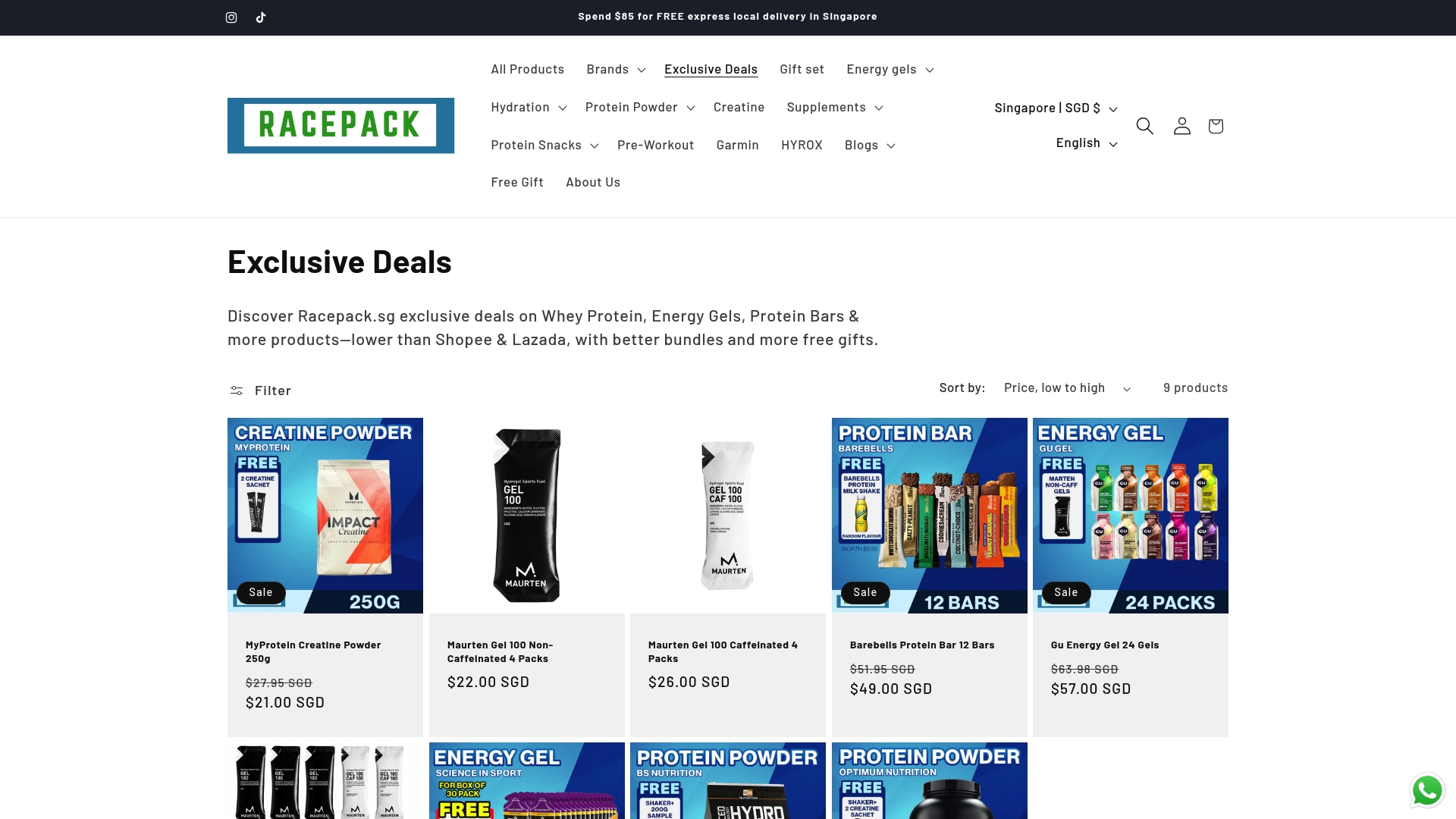
For sessions over 60 minutes, GU Energy Gel (24-pack) delivers clean, fast-acting carbohydrate energy without GI issues. The GU Energy Gel 6/12/24 pack lets you choose the right quantity for your training block, while the single-serve GU gel packs are ideal for trialing flavors before committing. After strength sessions, MyProtein Pea Protein Isolate and MyProtein EAA Powder support muscle repair. For hot-weather rides or pool sessions, the HIGH5 750ml bottle with Zero hydration tablets keeps electrolyte replenishment simple. Keep your supplements organized on long training days with the MyProtein Supplement Storage Box.
Buy Now at RacepackSingapore
Useful sources
- Cross Training and Running — Strength Running: Jason Fitzgerald’s coaching framework for hip/posterior-chain priorities and scheduling.
- Cross Training for Runners — iRunFar: Meta-analysis evidence on running economy gains and Ian Torrence’s plyometric guidance.
- Reach Your Running Goals With This Cross-Training Guide — Runner’s World: Andy Speer’s periodization advice and mobility session research.
- Cross Training for Runners — NextGait: Modality rankings and sample bike workout structures.
- Cross Training for Runners — Runstreet: NASM-certified coach perspective on exercise selection and sample sessions.
FAQ
What are the best cross-training workouts for runners?
Strength training (hips and posterior chain), cycling, pool running, and mobility sessions are the highest-return options. Research links strength training to a 3–4% improvement in running economy after 8–12 weeks.
How often should runners cross-train each week?
Most runners benefit from 1–2 strength sessions and 1 low-impact aerobic session per week during base training. Reduce to one easy aerobic session during high-mileage or peak weeks.
Can cross-training replace running when I’m injured?
Pool running and cycling can maintain aerobic fitness and running-specific conditioning during injury. A six-week pool running program can preserve VO2 and economy in trained runners when impact must be removed.
What should I eat or drink during cross-training sessions?
For sessions under 60 minutes, water is sufficient. For longer sessions, use an energy gel every 30–45 minutes and an electrolyte drink to replace sodium and minerals lost in sweat.
Does cross-training improve running speed?
Yes. Plyometric sessions build fast force production, and strength work improves running economy, both of which contribute directly to faster race times. The gains compound over an 8–12 week strength cycle.
Is the elliptical a good cross-training tool for runners?
The elliptical is an effective easy-run replacement when used correctly. Stand upright without leaning on the handles to engage your core and stabilizers; gripping the rails reduces the session’s effectiveness significantly.
When should I schedule strength sessions relative to my runs?
Place strength sessions after easy runs or on easy days. Avoid heavy lifting the day before speed work or long runs, when your legs need to be fully recovered.
What products does RacepackSingapore recommend for cross-training recovery?
RacepackSingapore recommends GU Energy Gels for session fueling, HIGH5 ZERO+ electrolyte sachets for hydration, and MyProtein EAA Powder for post-strength muscle repair. All are available with next-day delivery in Singapore.