

30–120 g/hr Targets: Cycling Nutrition Plan That Actually Works
The best cycling nutrition plan periodizes carbohydrate to the demands of each session, targets 30 to 120 grams of carbs per hour on the bike depending on ride intensity and duration, and closes every ride with 20 to 40 grams of protein alongside carbs to kickstart recovery. Everything else, from pre-ride meals to hydration and race-week loading, builds on those three numbers.
TL;DR:
- Most riders should gradually increase carbohydrate intake from 3-5 g/kg on easy days to 7-10 g/kg for intense or long sessions, and do so over 8 to 12 weeks of gut training.
- Pre-ride meals should be timed based on effort; 3 to 4 g/kg of carbs four hours before or 1 g/kg an hour prior, with low fat and fiber to prevent digestion issues.
- In-ride fueling varies with ride duration, from 30 g/hr for rides under an hour to 90–120 g/hr for ultra-distance events, requiring multiple carbohydrate sources and trained gut tolerance.
- Fluid intake should be adjusted based on sweat rate, generally 500–750 ml per hour, with extra sodium for rides over 90 minutes or in heat.
- Post-ride recovery benefits from a 3:1 or 4:1 carb-to-protein ratio within 60 to 90 minutes, ideally via recovery powders or balanced meals, with consistent practice being key to reliability.
Table of Contents
- Periodized Nutrition: Fueling for the Work You’re Actually Doing
- How Many Hours Before Cycling Should You Eat?
- Carbs Per Hour on the Bike: What the Bands Actually Mean
- Hydration and Electrolytes: Getting Bottle Volume Right
- Post-Ride Recovery: Refueling Glycogen and Repairing Muscle
- Your Weekly Fueling Blueprint: Easy, Moderate, and Hard Days
- Balancing Performance and Body Composition Across a Training Block
- Meet the Team Behind This Cycling Nutrition Plan
- Micronutrients Cyclists Often Overlook
- Why Fat and Protein Matter as Much as Carbohydrate Timing
- Fueling Endurance Rides Versus High-Intensity Sessions
- Which Supplements Actually Help Cycling Performance
- Common Fueling Mistakes That Undo Good Training
- Adjusting Your Plan for Heat, Body Size, and Gut Sensitivity
- Matching Your Fueling to Base, Build, and Peak Phases
- The Real Gap in Most Cycling Nutrition Advice
- Where to Start Building Your Fueling Kit
- Sources
- FAQ
Periodized Nutrition: Fueling for the Work You’re Actually Doing
Periodized nutrition means your carbohydrate intake moves with your training load instead of sitting at one flat number every day. This “fuel for the work required” model is the framework sports scientists now favor for adapting nutrition to session demand, and it’s simpler to apply than it sounds.
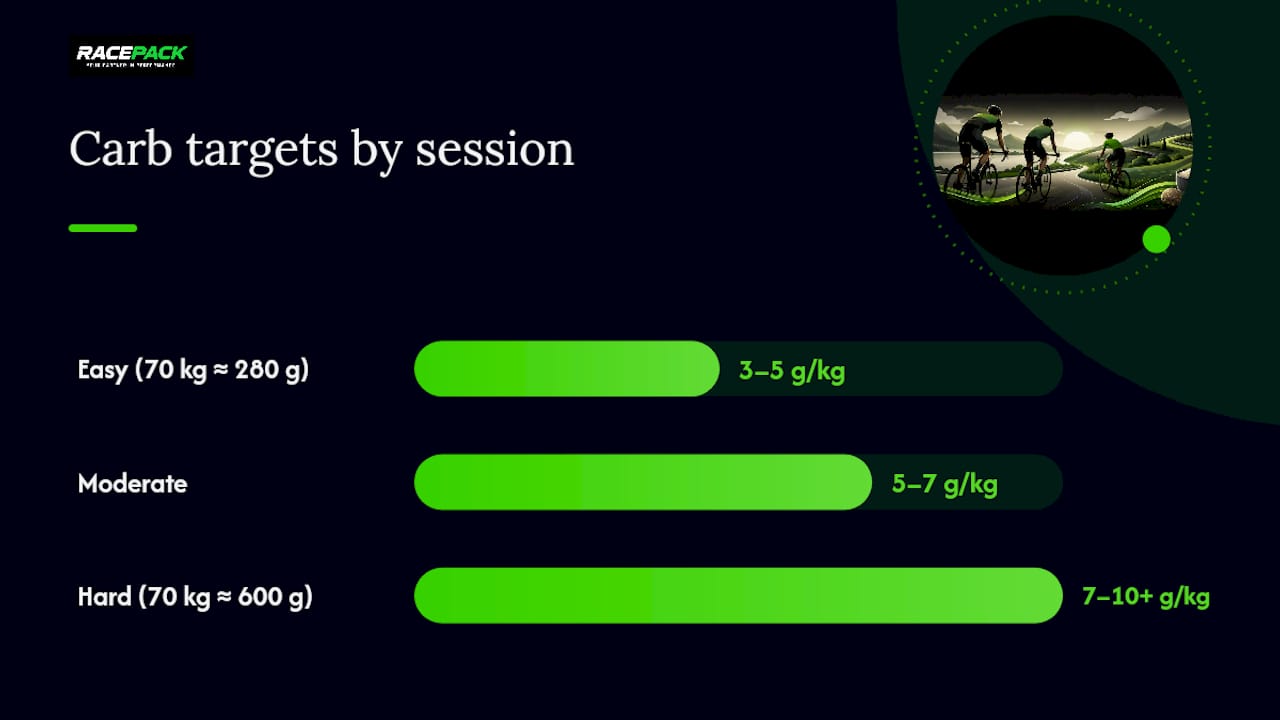
On easy or recovery days, most riders do fine around 3 to 5 g/kg of body weight in carbohydrate. On moderate training days with tempo work or longer endurance rides, that climbs to 5 to 7 g/kg. Big interval sessions, race simulations, or back-to-back long rides push the target to 7 to 10 g/kg or higher. A 70 kg cyclist, for example, might eat roughly 280 grams of carbs on an easy spin day and closer to 600 grams before a hard block.
Protein stays steadier across the week: aim for 1.6 to 2.0 g/kg per day, split across meals rather than loaded into one sitting.
If body composition is a goal, the smart move is trimming calories on easy days, not race days. Cutting carbs before a threshold session or a big weekend ride sabotages the very work you’re trying to build fitness from. Save the deficit for days when the legs don’t need to perform.
How Many Hours Before Cycling Should You Eat?
Timing your pre-ride meal comes down to a simple rule: the closer you eat to the start, the smaller and simpler that meal needs to be. Four hours out, you can eat a full meal with 3 to 4 g/kg of carbohydrate. One hour out, you’re looking at a small snack with 1 g/kg, nothing more.
The Gatorade Sports Science Institute frames pre-ride intake as 1 to 4 g/kg of carbohydrate eaten 1 to 4 hours before the event, adjusted to your own gut comfort and how long you’ll be riding. That range gives you room to experiment rather than chase one magic number.
Here’s how that plays out on the plate:
- 4 hours before: oatmeal with banana and honey, or rice with grilled chicken and a small amount of vegetables.
- 2 to 3 hours before: toast with jam, a bagel with a thin layer of peanut butter, or a smaller portion of rice and lean protein.
- 1 hour before: a banana, a few dates, or a small energy gel.
- 30 minutes before: a sip of a carbohydrate drink mix if you skipped solid food.
Keep fat and fiber low in that final pre-ride meal. Both slow digestion, and neither does you any favors when you’re bent over the bars an hour later. Caffeine, if you use it, works best about 45 to 60 minutes before the start for most riders. Vegetarian cyclists can swap chicken or eggs for tofu, lentils, or Greek-style yogurt alternatives without losing the carb-to-protein balance.
Pro Tip: Test your pre-ride meal on a training ride first, never on race morning. Gut tolerance is personal, and the worst place to discover a problem is at the start line.
Carbs Per Hour on the Bike: What the Bands Actually Mean
In-ride fueling is where most cyclists either unlock real performance gains or blow up on a climb. The carbohydrate-per-hour target depends entirely on ride duration and intensity, and TrainerRoad’s fueling guidance breaks it into workable bands:
- 0 to 30 g/hr: rides under 60 to 75 minutes at moderate effort. A bottle of water is often enough.
- 30 to 60 g/hr: endurance rides of 1.5 to 3 hours, or shorter high-intensity sessions where glycogen depletes fast. One gel or 500ml of a carb drink mix roughly covers this.
- 60 to 90 g/hr: long rides over 3 hours, or hard group rides and races. This usually means combining a drink mix with a gel or a bar every 45 minutes.
- 90 to 120 g/hr: elite-level intake for stage races or ultra-distance events, achievable only with a trained gut and multiple carb sources (glucose plus fructose blends) working together.
A recent review of contemporary road cycling nutrition confirms that professional practice has climbed toward that 90 to 120 g/hr ceiling over the past decade, backed by dedicated culinary support most amateurs don’t have. That’s the context for the gap between what pros eat and what recreational riders should attempt.
Getting to higher carb rates without gut distress takes deliberate gut training. Most amateurs start comfortably around 50 to 60 g/hr, then add about 10 g/hr every two to three weeks during long training rides, building toward a higher target over 8 to 12 weeks. Test every increase on a training ride, never a race, and track how your stomach responds at each step.
Heat and high intensity both slow gastric emptying, so drop your target 10 to 15 g/hr on the hottest days or hardest efforts until you’ve adapted. A drink mix covers your baseline carbs, gels handle quick top-ups on climbs, and real food like a rice cake or banana adds variety on rides over three hours.
Pro Tip: Rotate your fuel sources within the same ride. Relying on one flavor or one product for four hours often triggers flavor fatigue and, eventually, gut rebellion. Mixing gels, drink mix, and solid food spreads the load across different sugar transporters and your palate.
Hydration and Electrolytes: Getting Bottle Volume Right
Most riders should start with 500 to 750 ml of fluid per hour and adjust from there based on sweat rate, temperature, and effort. That range, confirmed by TrainerRoad’s hydration research, works as a baseline for moderate conditions, not a fixed rule for every ride.
A basic sweat-rate check tells you where you actually fall in that range. Weigh yourself before and after a one-hour ride at race effort, accounting for fluid consumed. Lose a kilogram beyond what you drank, and you’re sweating close to a liter an hour, meaning you need to push toward the top of the bottle range or higher.
Quick rules worth keeping in your back pocket:
- Hot or humid rides push fluid needs up by 25 to 50%, sometimes more.
- Add electrolyte supplementation for any ride over 90 minutes in the heat, since sodium losses climb fast through sweat.
- Under-drinking shows up as dark urine, cramping, and a fading power output late in the ride.
- Over-drinking shows up as sloshing discomfort, bloating, and in rare cases dangerously diluted blood sodium.
- Salty sweat stains on your kit or gear are a decent sign you’re a heavier sweater than average.
Long or hot events call for dedicated sodium replacement, not just plain water. A hydration tablet or electrolyte-enhanced drink mix handles that without you needing to calculate exact milligrams mid-ride.
Post-Ride Recovery: Refueling Glycogen and Repairing Muscle
The recovery window right after a hard ride is where a lot of cyclists leave gains on the table. A carbohydrate-to-protein ratio of roughly 3:1 or 4:1, paired with 20 to 40 grams of high-quality protein, gives your body what it needs to restock glycogen and start rebuilding muscle tissue within 60 to 90 minutes of finishing.
For a rider around 70 to 75 kg, that translates to roughly 80 to 120 grams of carbs and 25 to 30 grams of protein in that first sitting.
- A recovery shake mixed with milk covers both targets in one glass when you’re too tired to cook.
- Whole-food meals like rice with chicken and vegetables, or a loaded burrito, work just as well if you have the appetite and the time.
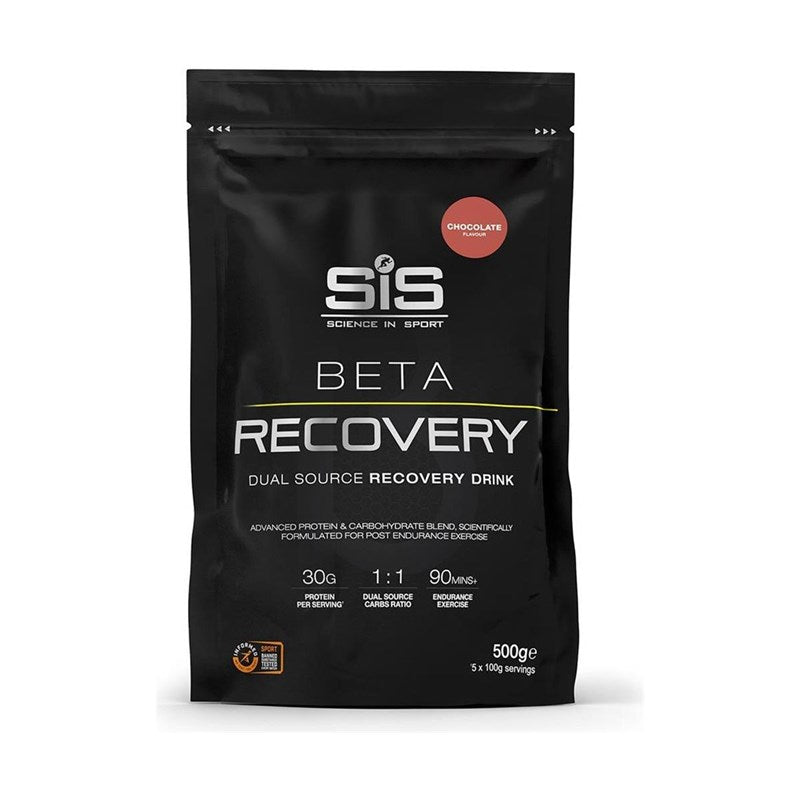
- SiS Beta Fuel Recovery Powder 500g is built specifically around that 3:1 carb-to-protein ratio, making it a convenient option straight off the bike before a proper meal follows an hour or two later.
- Pairing a scoop of recovery powder with a banana or toast bridges the gap nicely when a full meal isn’t immediately available.
During a race week or heavy training block, maintain elevated carbohydrate intake and adequate protein over 24 to 48 hours post-effort. Prioritize sleep as a key component of recovery.
Your Weekly Fueling Blueprint: Easy, Moderate, and Hard Days
A seven-day plan makes the periodization concept concrete instead of theoretical. Here’s how a typical week might map out for a rider training 8 to 12 hours weekly:
- Monday (recovery ride, easy): 3 to 4 g/kg carbs. Breakfast: eggs and toast. Lunch: salad with grilled fish. Dinner: moderate portion of pasta with vegetables.
- Tuesday (intervals, hard): 6 to 7 g/kg carbs. Breakfast: oatmeal with fruit. Lunch: rice bowl with chicken. Dinner: potatoes, steak, and vegetables, plus a recovery shake post-session.
- Wednesday (endurance, moderate): 5 to 6 g/kg carbs. Breakfast: toast with eggs. Lunch: sandwich with turkey. Dinner: stir-fry with rice.
- Thursday (rest or easy spin): 3 to 4 g/kg carbs. Meals lean on vegetables and protein with smaller carb portions.
- Friday (tempo, moderate to hard): 6 g/kg carbs. Similar structure to Tuesday, with a pre-ride snack added.
- Saturday (long ride, hard): 7 to 8 g/kg carbs. Big breakfast, in-ride fueling per the carb-per-hour bands, and a full recovery meal after.
- Sunday (group ride or race, hard): 6 to 8 g/kg carbs, following race-day fueling and recovery protocol.
Race week itself calls for a short carbohydrate-loading protocol: 10 to 12 g/kg per day for 24 to 36 hours before the event, favoring easily digested carbs like rice, pasta, and bread over high-fiber options that can cause bloating on race morning. Racepack.sg’s guide on carbohydrate loading walks through the checklist in more detail if you’re prepping for a big event.
Balancing Performance and Body Composition Across a Training Block
Protecting your hardest sessions matters more than protecting a calorie target. Fuel your intervals, your long rides, and your races fully, and accept a modest deficit only on easy or rest days if weight management is a goal. A rider who under-fuels a threshold session to save calories usually loses more fitness than they gain in scale weight.
Keep protein at the higher end of that 1.6 to 2.0 g/kg range during any deficit phase, and add resistance training twice a week to protect lean muscle mass while body fat comes down.
Heading into a race, a small weight buffer of a kilogram or two above your leanest possible weight is normal and often beneficial. Riders who chase peak leanness right before a key event frequently show up underfuelled and underperform.
Track progress with a few simple markers instead of obsessing over the scale: session RPE (does a familiar workout feel harder than it should?), weekly body weight trend rather than daily fluctuation, and morning resting heart rate as an early warning sign of under-recovery.
Meet the Team Behind This Cycling Nutrition Plan
This guide was written by Jason John, drawing on applied sports nutrition research and established fueling frameworks used across endurance cycling coaching.
Racepack SG stocks the products that make this plan executable, not just readable. The catalog spans energy gels, hydration drinks, protein powders, and recovery formulas from brands including Maurten, SiS, GU, and Optimum Nutrition, all backed by a guaranteed authenticity promise and next-day delivery. That matters when your gut-training ramp depends on consistent access to the exact product you tested, not a substitute picked up last minute.
The SiS Beta Fuel Recovery Powder 500g sits at the center of the recovery section above, built around the carb-to-protein ratios sports science recommends. As Racepack SG expands its catalog, expect more product-specific dosing guides and athlete feedback added directly to product pages.
Micronutrients Cyclists Often Overlook
Carbs, protein, and fluids get most of the attention, but a handful of micronutrients quietly determine whether your training adaptations actually stick.
Iron deserves the top spot. Endurance training increases iron turnover, and low iron status shows up as unexplained fatigue and stalled performance long before standard bloodwork flags anemia. Lean red meat, spinach, and lentils help, though female cyclists and those on plant-based diets often need closer monitoring.
Calcium and vitamin D work together to protect bone density, a real concern for cyclists since the sport is low-impact and doesn’t load bones the way running does. Dairy, fortified plant milks, and sensible sun exposure cover most needs, but riders training indoors through winter months should pay closer attention.
B vitamins, particularly B12 and folate, support the energy metabolism pathways that convert food into usable fuel during long rides. Vegetarian and vegan cyclists should watch B12 intake specifically, since it’s found almost exclusively in animal products or fortified foods.
Magnesium and zinc round out the list, both tied to muscle function and immune resilience during heavy training blocks. A varied diet built around whole foods usually covers these without needing a supplement stack, but a simple multivitamin can act as insurance during peak training months when appetite and food variety often slip.
Why Fat and Protein Matter as Much as Carbohydrate Timing
Carbohydrate gets the spotlight because it’s the fuel your muscles burn fastest, but a cycling nutrition plan built entirely around carbs and ignoring fat and protein falls apart over a full season.
Fat should make up roughly 20 to 35% of total daily calories for most cyclists. It’s essential for hormone production, joint health, and fat-soluble vitamin absorption, and it becomes the dominant fuel source during long, low-intensity endurance rides once glycogen stores start running low. Cutting fat too aggressively to make room for more carbs often backfires, leaving riders under-fueled on rest days and struggling with hunger management.
Protein’s role extends well beyond the post-ride recovery window. Distributing that 1.6 to 2.0 g/kg daily target evenly across three to four meals, rather than loading it all into dinner, keeps muscle protein synthesis elevated throughout the day and supports the repair work that happens between sessions, not just immediately after them.
Meal composition also affects how well carbs get absorbed and used. A meal that’s pure carbohydrate spikes blood sugar and crashes faster than one built around carbs, a moderate protein portion, and a small amount of healthy fat. That combination is exactly what a good pre-ride or recovery meal should look like: not just “how many carbs,” but the full plate working together.
Fueling Endurance Rides Versus High-Intensity Sessions
A four-hour endurance ride and a 60-minute interval session demand almost opposite fueling approaches, even though both fall under “cycling training.”
Long endurance rides burn through glycogen steadily over hours, which is exactly why the 60 to 90 g/hr carb bands matter so much for anything past the three-hour mark. Fat contributes a meaningful share of fuel during these rides too, so pre-ride meals can lean slightly more moderate on carbs than they would before a short, hard effort.
High-intensity sessions, intervals, races, and hard group rides burn almost exclusively through carbohydrate stores, and they burn through them fast. These sessions demand a carb-forward pre-ride meal closer to the top of the 3 to 4 g/kg range, plus in-ride fueling that leans on fast-digesting sources like gels and drink mixes rather than slower whole foods, since gut blood flow drops at high effort and digestion slows down with it.
The practical takeaway: match your fuel source to the intensity, not just the duration. A three-hour endurance ride and a 90-minute race simulation might need similar total carbs, but the timing and format of that intake should look different.
Which Supplements Actually Help Cycling Performance
Most of what a cyclist needs comes from food and the fueling framework already outlined, but a few supplements have real, evidence-backed roles worth knowing about.
Caffeine remains one of the most consistently effective performance aids, typically dosed around 3 to 6 mg/kg roughly an hour before a hard effort or race. Beetroot juice and nitrate-rich supplements show modest benefits for time-trial-style efforts by supporting oxygen efficiency. Creatine, while more associated with strength sports, can support high-intensity repeated efforts like criterium racing or short, hard climbs.
Beyond that, supplementation should fill genuine gaps rather than replace real food. An iron supplement makes sense for a rider with confirmed low ferritin, not as a blanket addition. A recovery powder like the one detailed earlier earns its place because it solves a real logistical problem: getting carbs and protein into your body fast when cooking isn’t an option.
Skip the supplement stacks promising vague “performance boosts” without a specific mechanism behind them. If a product can’t tell you what it does and why, in plain terms, it’s probably not worth the money or the extra thing to remember on race morning.
Common Fueling Mistakes That Undo Good Training
The single most common mistake is under-fueling hard sessions to “save calories,” which quietly erodes the exact training stimulus you showed up for. A close second is skipping breakfast before a morning ride and expecting a gel at the 90-minute mark to make up the deficit.
Ignoring gut training until race day is another frequent trap. Riders who never practice their race-day fueling strategy on training rides often discover intolerance to a product at the worst possible moment. Test everything, every time, before it matters.
Relying on a single flavor or product for an entire long ride causes flavor fatigue that turns into genuine appetite aversion by hour three. Rotating between drink mix, gels, and real food avoids that trap entirely.
Finally, many riders treat hydration as an afterthought on cool days and only think about electrolytes when it’s hot. Sweat losses happen year round, just at a slower rate, and a rider who ignores hydration in cooler months often gets caught off guard the first time a heat wave hits.
Adjusting Your Plan for Heat, Body Size, and Gut Sensitivity
No single carb-per-hour number or hydration volume works for every rider, and adjusting for your own body and environment separates a plan that works on paper from one that works on the road.
Heat changes everything about pacing your fueling. Drop carb intake slightly during the hottest efforts since gastric emptying slows, but increase fluid and sodium intake meaningfully, sometimes 25 to 50% above your baseline bottle volume.
Body size shifts your gram-per-kilogram targets in a straightforward way: a 55 kg climber and an 85 kg rider following the same “60 to 90 g/hr” advice are actually experiencing very different relative fueling loads. Use your own body weight to translate general bands into personal numbers, and don’t assume a smaller rider needs proportionally less on the bike. Absolute carb-per-hour targets matter more than body-weight-scaled ones during exercise, since your gut can only absorb carbs at a certain rate regardless of your size.
Gut sensitivity varies enormously between riders, and no amount of gut training turns every stomach into an ultra-endurance machine. If 90 g/hr consistently causes distress after a full 12-week ramp, settling at a comfortable 70 to 80 g/hr and fueling smarter around it beats forcing a number that doesn’t work for your body.
Matching Your Fueling to Base, Build, and Peak Phases
Nutrition periodization mirrors your training periodization, and syncing the two is where a lot of riders leave easy gains unclaimed.
During the base phase, when volume is high but intensity is generally lower, carbohydrate needs sit in the moderate range, and this is the ideal window to practice gut training since the stakes on any single ride are low. Build phase intensity climbs, interval sessions multiply, and carb intake should scale up accordingly, particularly around the hardest sessions of each week. Peak phase, right before a key event, is where race-week carb loading and final fueling rehearsals happen, using the exact products and timing you plan to use on race day itself.
Recovery weeks and off-season periods call for scaling carbohydrate back down toward the lower end of the daily range, since training volume drops and the body simply doesn’t need the same fuel load. Trying to maintain peak-phase eating habits during a lighter training week is a common reason riders gain unwanted weight during planned rest periods.
The Real Gap in Most Cycling Nutrition Advice
Most cycling nutrition content treats fueling like a math problem: hit this number, eat this gram count, done. That framing misses the actual skill involved, which is adjusting the plan in real time when the ride, the weather, or your gut doesn’t cooperate with the spreadsheet.
The conventional advice oversells precision and undersells practice. A rider who spends 12 weeks gut training toward 90 g/hr but never rehearses that intake on a hot day, a hilly day, or a day when they’re already fatigued from the week’s training hasn’t actually built a reliable system. They’ve built a number that works under ideal conditions, which rarely describes race day.
What the evidence actually supports is prioritizing consistency over precision early on. Get your pre-ride meal timing dialed in first. Get comfortable hitting 60 g/hr reliably before chasing 90. Build hydration habits before optimizing sodium milligrams. The riders who fuel best on race day usually aren’t the ones with the most sophisticated plan on paper. They’re the ones who’ve rehearsed the basics enough times that fueling becomes automatic under pressure.
— Jason John
Where to Start Building Your Fueling Kit
Reading the framework is one thing. Having the right products on hand when a long ride, a race, or a hard training block arrives is another problem entirely, and it’s the one Racepack SG solves directly.
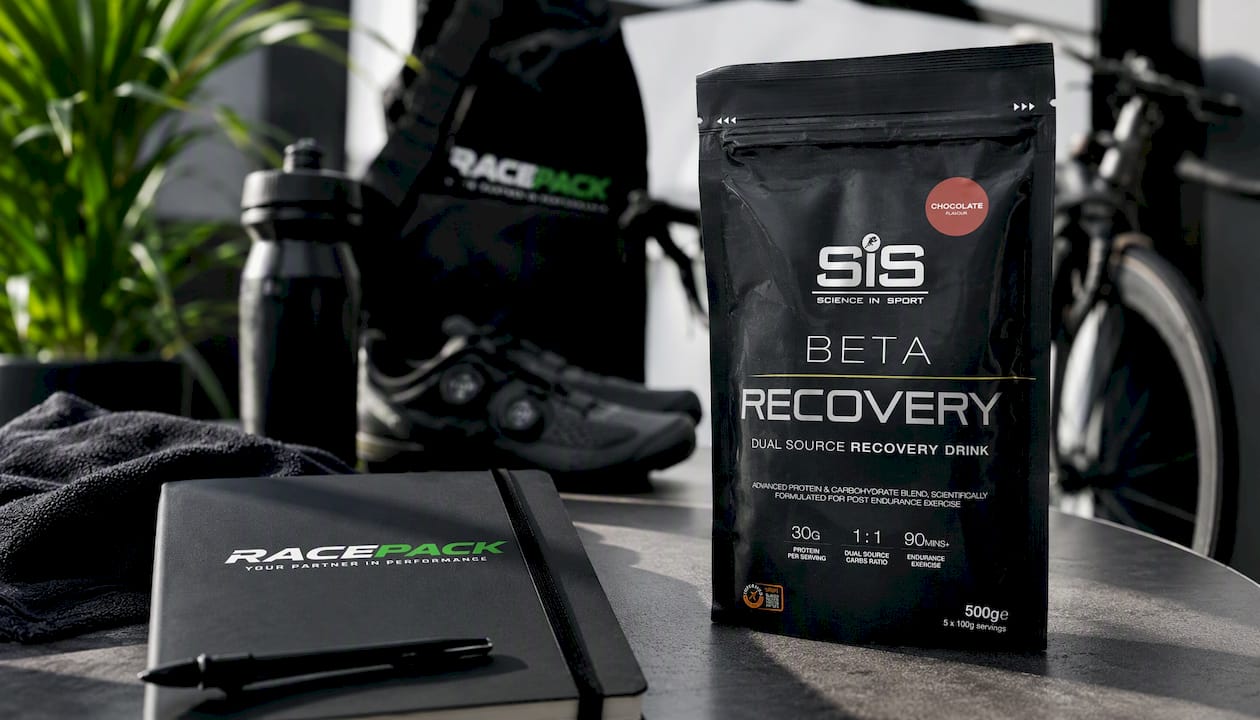
The SiS Beta Fuel Recovery Powder 500g matches the 3:1 to 4:1 carb-to-protein recovery ratio outlined earlier, mixing quickly into a shake that covers your 60 to 90 minute recovery window without waiting on a stove. Pair a scoop with a banana straight off the bike, then follow up with a full meal an hour or two later once appetite returns. It’s just as useful as an interim fix on a busy race day when a proper sit-down meal isn’t happening between events.
Every order ships with Racepack SG’s authenticity guarantee, so you know exactly what’s in the tub, and next-day delivery within Singapore means your fueling kit shows up in time for this weekend’s long ride, not next month’s. Browse the full nutrition range to build out your gels, drink mix, and recovery stack, or head straight to the SiS Beta Fuel Recovery Powder product page and buy now to have it ready for your next hard session.
Sources
- Nutrition For Successful Cycling Performance - Gatorade Sports Science Institute
- Cycling Nutrition: Everything You Need To Know | TrainerRoad
- Periodised Nutrition for Cyclists — Fuel for the Work | Roadman Cycling
- Sport Nutrition and Exercise — contemporary review (DOI link)
FAQ
What is a good cycling nutrition plan?
A good plan periodizes daily carbohydrate to match training load (roughly 3 to 10 g/kg depending on session intensity), targets 30 to 120 grams of carbs per hour while riding, and follows every session with 20 to 40 grams of protein alongside carbs for recovery.
How many hours before cycling should I eat?
Eat a full meal with 3 to 4 g/kg of carbohydrate about four hours before riding, or a smaller snack with roughly 1 g/kg if you’re starting within an hour, adjusting to your own gut comfort.
Can cycling help me lose 10 kg?
Cycling supports weight loss through a sustained calorie deficit built mainly on easy training days, while hard sessions should stay fully fueled; expect steady, gradual loss over months rather than a fast fix, since aggressive deficits undermine the training needed to keep burning calories efficiently.
What do pro cyclists eat to manage weight during racing?
Professional cyclists prioritize high carbohydrate intake, often 90 to 120 g/hr during racing and 8 to 10+ g/kg daily during stage races, since the training and racing volume itself, combined with careful portion control on rest days, manages body composition rather than restrictive dieting.
How many carbs per hour should I eat while cycling?
Most riders should target 30 to 60 g/hr for rides under three hours and 60 to 90 g/hr for longer or harder efforts, building toward 90 to 120 g/hr only after a dedicated gut-training progression.
What should I eat before a long bike ride?
Oatmeal with banana, toast with jam, or rice with lean protein all work well two to four hours before a long ride, paired with a small carb snack in the final 30 to 60 minutes if needed.
How do I know how much water to drink while cycling?
Weigh yourself before and after a one-hour ride at typical effort; each kilogram lost beyond fluid consumed represents roughly a liter of sweat, which tells you where to set your hourly bottle target within the 500 to 750 ml baseline.
What should I eat after a bike ride to recover?
Aim for a 3:1 to 4:1 ratio of carbohydrate to protein, delivering 20 to 40 grams of protein within 60 to 90 minutes, using either a recovery shake like SiS Beta Fuel Recovery Powder or a whole-food meal such as rice with chicken.
How long does gut training take for higher carb intake?
Most riders need 8 to 12 weeks, adding about 10 g/hr every two to three weeks during long training rides to safely reach higher in-ride carbohydrate targets without gastrointestinal distress.
Do I need electrolytes on every ride?
Short, cool-weather rides under 90 minutes usually don’t require extra electrolytes, but any ride over 90 minutes, especially in heat, benefits from added sodium alongside your regular fluid and carb intake.
What is carbohydrate loading and when should I do it?
Carbohydrate loading means eating 10 to 12 g/kg of carbohydrate daily for 24 to 36 hours before a major event to maximize glycogen stores, using easily digested foods like rice, pasta, and bread rather than high-fiber options.
Is a recovery powder better than a regular meal after cycling?
A recovery powder isn’t inherently better, but it’s faster and more convenient immediately after a ride when appetite is low or a proper meal isn’t available; combining a shake right after the ride with a whole-food meal an hour or two later covers both speed and completeness.
Ready to fuel your next ride properly? Buy Now on Racepack SG and get your recovery kit delivered next day.