

Endurance Athletes: Energy Gel Ingredients That Speed Carb Uptake
Energy gels are concentrated carbohydrate packets that deliver a moderate amount of fast-acting carbs per serving. Look for a maltodextrin or glucose base paired with fructose for better absorption, and treat electrolytes, caffeine, and gelling agents as secondary features worth testing before race day, not deciding factors you pick blind off a label.
TL;DR:
- Electrolyte gels containing sodium are most beneficial in hot, humid conditions or long events exceeding 90 minutes to prevent cramping and support fluid balance.
- Most energy gels deliver 20 to 30 grams of carbs with a blend of glucose and fructose, which optimizes absorption through different intestinal transporters.
- Caffeine doses in gels range from 25 to 100 milligrams per serving, with 0.3 milligrams per kilogram of body weight being a good training start to avoid jitters.
- Gelling agents like alginate claim to improve gastric emptying, but evidence is mixed; testing hydrogel variants is advised for those with stomach heaviness during races.
- Proper storage, avoiding heat exposure, and thorough testing in training are crucial to prevent GI issues and confirm tolerance before race day.
Table of Contents
- Do Electrolytes in Energy Gels Actually Matter?
- How Much Caffeine and What Other Additives Are in Energy Gels?
- What Are Gelling Agents and Do Hydrogel Gels Work Better?
- What Are the Downsides and GI Risks of Energy Gels?
- How Do You Choose the Right Energy Gel Ingredients for Your Race?
- How Racepack SG Thinks About Energy Gel Ingredients
- How Long Do Energy Gels Last and What Preservatives Keep Them Stable?
- What Flavorings and Sweeteners Are Used in Energy Gels?
- Are Energy Gel Ingredient Labels Regulated and Accurate?
- Perspective: Test Before You Trust the Label
- Which Racepack SG Energy Gels Match These Ingredients?
- Sources
- FAQ
Do Electrolytes in Energy Gels Actually Matter?
Sodium is the electrolyte that does the heavy lifting in a gel. It supports fluid balance and helps stave off cramping during long, hot efforts. Potassium shows up less often and in smaller amounts, but it plays a supporting role in muscle contraction and nerve signaling alongside sodium.
Electrolyte-enhanced gels earn their place in specific conditions:
- Heat and humidity push sweat sodium losses up, making electrolyte gels more useful than plain carb ones
- Events past 90 minutes increase cumulative sodium loss enough to warrant supplementation beyond what a sports drink alone covers
- Heavy sweaters (you know who you are if your kit is crusted white after a long run) benefit from front-loading sodium earlier rather than waiting for cramps
Some formulas also fold in small amounts of B vitamins or magnesium, though at gel-sized doses these are more of a marketing footnote than a performance lever. Pairing an electrolyte gel with an isotonic drink like HIGH5 Isotonic Hydration Drink works well when you’re also drinking plain water on course, since it lets you dial sodium intake independent of fluid volume.
Pro Tip: Don’t double up blindly. If you’re already drinking an electrolyte sports drink, switch to plain carb gels for fueling so you’re not overshooting sodium and inviting stomach discomfort.
How Much Caffeine and What Other Additives Are in Energy Gels?
Caffeine is the best-evidenced performance additive in this category. Modest doses of caffeine improve perceived exertion and time trial outcomes, and most caffeinated gels land between 25 and 100 milligrams per serving, roughly the range of a weak to moderate cup of coffee.
A reasonable starting reference is 0.3 milligrams per kilogram of body weight per dose, tested in training long before race day, since sensitivity varies widely from person to person.
- Amino acids (often branched-chain types) and nitrates show up on some labels, but at the tiny quantities included in a single gel packet, the evidence for measurable performance effect is thin
- Stacking multiple caffeinated products across a race, gel plus chews plus a pre-race coffee, is the most common way athletes accidentally overshoot their tolerance and end up jittery or nauseated
What Are Gelling Agents and Do Hydrogel Gels Work Better?
Pectin, alginate, gellan, and xanthan gum are the agents that give a gel its texture, everything from a thin syrup to a thick paste. Alginate in particular is central to so-called hydrogel formulas, which claim to form a pH-sensitive matrix in the acidic stomach environment that theoretically speeds gastric emptying and reduces the sloshy, bloated feeling some athletes get from standard gels.
The science backing that claim is genuinely mixed. Research on hydrogel and gelling-agent effects shows some small studies reporting modest gastric emptying benefits, while others find no measurable difference compared to standard formulations. Hydrogels are worth testing if a regular gel has ever left you feeling heavy or sloshy mid race, but treat any brand’s claims as a hypothesis to trial in training, not a guarantee.
What Are the Downsides and GI Risks of Energy Gels?
Your gut has a practical carbohydrate ceiling for a single-source carb that can be exceeded during intense intake, potentially causing gastrointestinal issues. Push past that and unabsorbed sugar sits in your intestine, pulling in water osmotically and triggering bloating, cramping, or diarrhea, the classic mid-race GI meltdown.
Common triggers beyond simple overfueling include:
- High osmotic load from concentrated sugar syrups taken without enough water
- Artificial sweeteners (sucralose, acesulfame potassium) that some athletes tolerate poorly at volume
- Allergen flags: soy lecithin, tree nut derivatives, and dairy-based additives appear in a subset of products, so check labels if you have known sensitivities
If GI issues hit mid-event, work through this checklist:
- Slow your carb intake immediately, skip the next scheduled gel if you’re already uncomfortable
- Switch to water only for one aid station to dilute gut osmotic load
- Walk or ease pace briefly to let gastric emptying catch up
- Sip rather than gulp any fluid going forward to avoid compounding the problem
- Note what you took and when so you can identify the trigger post-race
Pro Tip: Never introduce a new gel flavor, brand, or caffeine dose on race day. Every ingredient change belongs in a training run first, ideally more than one, so your gut has already met it before it meets pressure.
How Do You Choose the Right Energy Gel Ingredients for Your Race?
Match the ingredient profile to your event before you match it to flavor preference. Run through this checklist:
- Duration and intensity: Shorter, harder efforts favor fast glucose; anything past 90 minutes benefits from a glucose plus fructose blend for sustained oxidation
- Environmental heat: Hot conditions push electrolyte gels up your priority list
- Caffeine plan: Decide your total race caffeine budget before selecting individual products, then work backward from that
- Electrolyte needs: Heavy sweaters lean toward sodium-forward gels; others can stick to plain carbs and manage electrolytes through a drink
- Texture tolerance: Thick pastes versus thinner hydrogel textures come down to personal preference, tested, not assumed
Validate your picks with a simple trial progression (see our partner’s training periodization for athletes: a complete guide):
- Test a single gel on an easy run to check for basic tolerance
- Repeat that same gel across two or three sessions at race pace
- Run a full-simulation long session using your entire planned race-day fueling sequence, timing and spacing included
- Log GI response, energy levels, and perceived effort each time
For a three-hour half marathon, that might mean taking gels at regular intervals, alternating plain carb gels with caffeinated ones, to meet your carbohydrate needs over the race. Our gut training guide for marathon runners walks through building that carb capacity progressively over a training block.
How Racepack SG Thinks About Energy Gel Ingredients
I prioritize a glucose or maltodextrin base with fructose blended in, and I never trust a caffeine dose I haven’t already tested in training. That’s the filter worth applying to every gel on the shelf, not just the ones with the flashiest marketing.
Here’s how the ingredient categories covered above map to what Racepack SG stocks:
| Ingredient Category | What to Look For | Racepack SG Example |
|---|---|---|
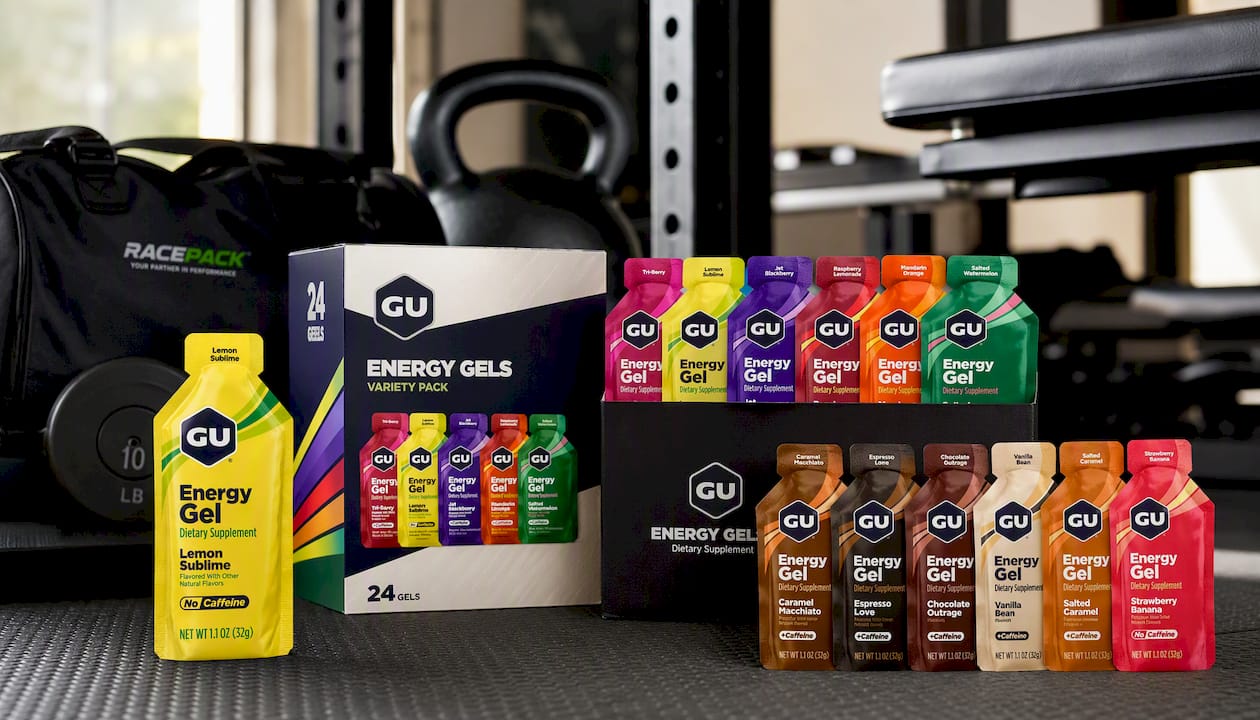
| Glucose/maltodextrin + fructose | Dual carb sources for higher oxidation | GU Energy Gel 24 Pack |
| Electrolyte-enhanced | Sodium forward for heat and long duration | HIGH5 ZERO+ Multivitamins/Ultra Electrolytes |
| Fueling logistics | Storage and organization for race-day kits | MyProtein Supplement Storage Box |
For the biology behind why this combination works, our breakdown of energy gel absorption goes deeper into transporter mechanics than most product pages bother to.
How Long Do Energy Gels Last and What Preservatives Keep Them Stable?
Most commercial gels carry a shelf life of 12 to 24 months unopened, thanks largely to their low water activity and acidic pH, conditions that naturally resist microbial growth without heavy preservative loads. Citric acid does double duty here: it adjusts flavor and acts as a mild preservative by keeping the pH low enough to deter spoilage organisms.
Potassium sorbate and sodium benzoate appear in some formulations as backup preservatives, particularly in gels with added fruit purees or natural flavor extracts that carry more inherent moisture. These are standard, low-dose food preservatives used across the packaged food industry, not unique to sports nutrition.
Once opened, a gel should be consumed immediately. The sealed pouch format exists specifically to maintain that shelf-stable environment, and an opened packet left exposed to air for an extended period can develop texture changes or, in warm conditions, minor spoilage.
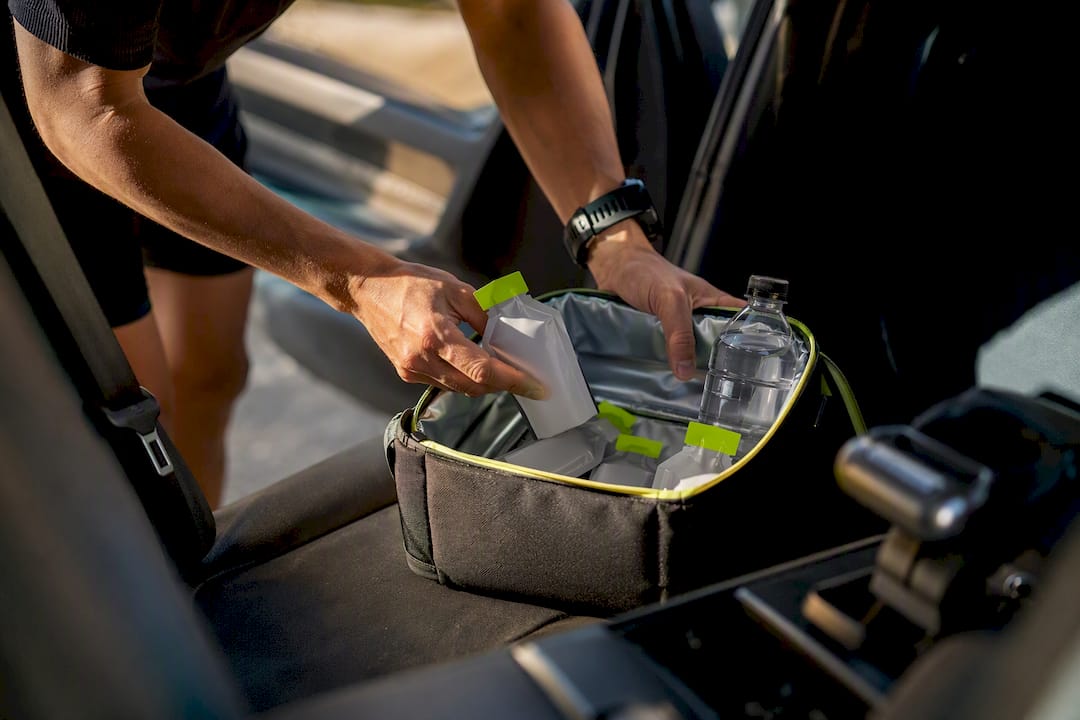
Heat exposure during storage or transport is the bigger practical concern for athletes. Leaving gels in a hot car or direct sun for hours can degrade texture and, over repeated heat cycles, slightly reduce flavor quality, though the carbohydrate content itself remains stable. Store your race-day stash somewhere temperature-moderate, and check expiration dates on gels that have been sitting in a gear bag for a season or two. If you’re prepping a storage system for training blocks and race kits, a dedicated container like the MyProtein Supplement Storage Box keeps gels, electrolyte tabs, and capsules organized and away from heat and light.
What Flavorings and Sweeteners Are Used in Energy Gels?
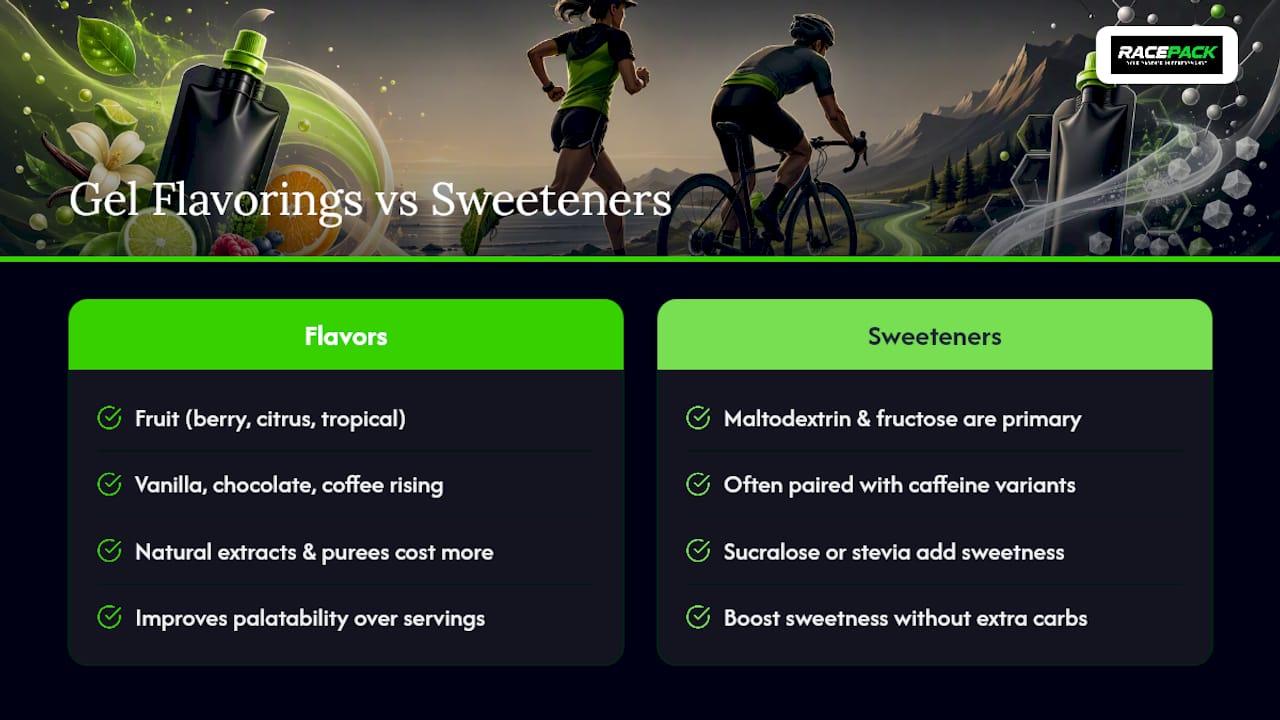
Fruit flavors dominate the category (berry, citrus, tropical blends) largely because they mask the flat sweetness of maltodextrin and pair naturally with fructose’s inherent fruitiness. Vanilla, chocolate, and coffee flavors have grown in popularity too, often paired with caffeine variants since the flavor profile matches the caffeine source conceptually even when the caffeine itself is synthetic.
Natural flavor extracts and fruit purees add cost but often improve palatability over multiple servings, which matters more than people expect. A gel that tastes fine once can become genuinely hard to stomach on your eighth serving of a long race, flavor fatigue is real and underrated in fueling strategy.
Sweeteners split into two camps. The primary sweetness in most gels comes from the carbohydrate base itself, maltodextrin and fructose are both sweet on their own. Some lower-calorie or electrolyte-focused products add sucralose or stevia extract to boost sweetness without adding carb load, which matters if you’re targeting a specific carbohydrate number and don’t want extra sugar diluting your ratio.
Artificial sweeteners are where individual tolerance varies the most. Sucralose in particular has anecdotal ties to GI upset in a subset of athletes at higher gel volumes, even though it’s approved and considered safe at typical intake levels. If you notice a pattern of stomach discomfort with one brand but not another, check whether the difference is an added artificial sweetener rather than the carbohydrate source itself.
Are Energy Gel Ingredient Labels Regulated and Accurate?
Sports nutrition products, including energy gels, fall under general food labeling regulations in most markets, meaning ingredient lists must be truthful, complete, and listed in descending order by weight. This is standard food law, not a sports-specific certification, so a gel label carries the same legal accuracy requirements as a cereal box.
Nutritional claims about performance benefits (endurance support, faster absorption) are marketing language, not regulated medical claims, and don’t require clinical substantiation the way a drug claim would. That’s worth knowing before you take a “rapid absorption” label as gospel; it’s a formulation choice communicated as a benefit, not a tested guarantee.
Third-party testing for banned substances matters more for competitive athletes subject to anti-doping rules. Products certified through programs like Informed Sport undergo batch testing for prohibited substances, which caffeine and amino acid additives can sometimes carry trace contamination risk in poorly controlled manufacturing. If you compete under a federation with doping controls, prioritize gels carrying that certification over ones that simply list “caffeine” with no verification behind the claim.
Perspective: Test Before You Trust the Label
The biggest mistake I see athletes make isn’t picking the wrong gel, it’s never testing the one they picked. Ingredient lists tell you what’s theoretically possible, not what your gut will actually tolerate at race pace under stress. Build your carb capacity deliberately, trial caffeine doses in training, and treat every claim on a wrapper as a hypothesis worth confirming with your own logged data before it ever matters on race day.
— Jason John
Which Racepack SG Energy Gels Match These Ingredients?
If you’ve read this far, you already know what to look for: a glucose or maltodextrin base with fructose blended in, sodium when conditions call for it, and caffeine you’ve already trialed. The GU Energy Gel 24 Pack fits that dual-carbohydrate profile directly and works well for training blocks where you’re testing tolerance across repeated long sessions. If your race falls in hot or humid conditions, the HIGH5 ZERO+ Multivitamins/Ultra Electrolytes sachets cover the sodium and potassium side without adding extra carb load on top of your gels. For race-day organization, a MyProtein Supplement Storage Box keeps your gels, electrolyte tabs, and any trial products sorted and protected from heat between training sessions.
Every product ships with authenticity guaranteed and next-day delivery across Singapore, so you can start your training trial this week instead of waiting on a slow shipment from overseas. Ready to build your fueling kit? Shop the full energy gels collection and buy now to get your next long run properly fueled.
Sources
Maltodextrin is a chain of glucose molecules pulled from corn or rice starch. Your gut breaks it down fast, which makes it the workhorse base in most gels on the shelf. Glucose and dextrose are functionally the same molecule and get absorbed almost immediately, giving you a quick jolt but a shorter runway. Fructose, by contrast, digests more slowly and uses a completely different absorption pathway.
That difference matters more than most athletes realize. A standard energy gel packet weighs 28 to 45 grams and delivers 20 to 30 grams of carbohydrate at around 100 to 120 kilocalories. The real engineering question is how those carbs get from your stomach into your bloodstream fast enough to matter.
Glucose travels through the intestinal wall via the SGLT1 transporter. Fructose uses a separate one called GLUT5. Since each transporter has its own ceiling, a gel that relies on glucose alone caps out earlier than one that splits the load between both. Combining glucose and fructose increases carbohydrate oxidation because your body processes both simultaneously instead of bottlenecking a single pathway.
When you’re checking labels, here’s what to prioritize:
- PMC review article on carbohydrate ingestion and performance — NCBI PMC
- The best energy gels, according to a dietitian — Healthline
If a gel lists only maltodextrin with no fructose, it still works fine at moderate intake, but you’ll hit your gut’s absorption ceiling faster once you’re pushing volume.
FAQ
What Is Energy Gel Made Of?
Energy gels are primarily maltodextrin or glucose combined with fructose, water, and gelling agents like pectin, with many formulas adding electrolytes, caffeine, or flavoring extracts on top of that carbohydrate base.
How Healthy Are Energy Gels?
Energy gels are a functional fueling tool, not a general health food. They’re formulated for rapid carbohydrate delivery during exercise, and their concentrated sugar content isn’t intended for regular daily consumption outside of training or racing.
What Are the Downsides of Using Energy Gels?
The main risks are gastrointestinal distress from exceeding your gut’s carbohydrate absorption capacity, sensitivity to artificial sweeteners, and allergen exposure from soy, dairy, or nut derived additives in certain products.
What Is the Healthiest Energy Gel?
There’s no single “healthiest” gel since the right choice depends on your gut tolerance, event duration, and environment. Look for a glucose plus fructose base, moderate additive load, and ingredients you’ve already confirmed you tolerate in training.
How Many Carbs Are in a Typical Energy Gel?
Most gels deliver 20 to 30 grams of carbohydrate per 30 to 35 gram serving, totaling around 100 to 120 kilocalories, according to standard energy gel nutrition data.
Why Do Some Gels Combine Glucose and Fructose?
Glucose and fructose use separate intestinal transporters, SGLT1 and GLUT5, so combining them lets your body absorb carbohydrate faster than relying on a single sugar source, which increases usable carbohydrate oxidation during exercise.
How Much Caffeine Is in an Energy Gel?
Caffeinated gels typically contain 25 to 100 milligrams per serving. A reasonable trial starting point is about 0.3 milligrams per kilogram of body weight, tested in training well before race day.
Do Hydrogel Energy Gels Really Work Better?
The evidence is mixed.
How Do I Avoid Stomach Issues With Energy Gels?
Stay under your gut’s practical carbohydrate absorption ceiling, pair gels with adequate water, and never trial a new brand, flavor, or caffeine dose on race day itself.
Can I Make Homemade Energy Gel Ingredients?
Yes. Homemade recipes commonly combine dextrose and fructose in a roughly comparable ratio to commercial gels, using alginate or calcium lactate to replicate hydrogel texture, though achieving consistent shelf stability is harder outside a manufacturing setting.
Are Energy Gel Ingredient Labels Regulated?
Energy gels fall under standard food labeling law, requiring accurate, weight-ordered ingredient lists, but performance claims like “faster absorption” are marketing language rather than regulated medical claims.
Which Racepack SG Gel Should I Start With?
For most endurance athletes beginning ingredient testing, the GU Energy Gel 24 Pack offers a dual carbohydrate base ideal for progressive training trials before committing to a race-day fueling plan.