

Compression Gear for Runners: Types, mmHg, and Fit Guide
Runners rely on six main categories of compression gear: socks, calf sleeves, tights, shorts, arm sleeves, and compression tops. Wear lighter athletic-grade compression (15–20 mmHg) during runs for support and soft-tissue protection, and reserve firmer recovery-specific pieces (20–30 mmHg) for after hard sessions. A systematic review covering 160 studies backs this split, and so does practical guidance from Runner’s World.
- Compression socks: best for shin/Achilles protection and travel days before a race.
- Calf sleeves: best for hot weather runs where you want compression without a full sock.
- Tights/leggings: best for cool-weather long runs and full-leg muscle support.
- Shorts: best for hip flexor and hamstring support without leg heat buildup.
- Arm sleeves and tops: best for sun protection and mild upper-body circulation support.
Key Takeaways
Compression’s biggest, most consistent benefit is recovery, not performance: wear lighter compression during runs and firmer compression afterward.
| Point | Details |
|---|---|
| Match garment to goal | Socks and calf sleeves protect shins and Achilles; tights suit long, cool-weather runs; recovery pieces need firm compression. |
| Use 20–30 mmHg for recovery | Runner’s World and product guides point to this range for most post-run recovery use. |
| Size by measurement, not guesswork | Measure ankle and calf, then check the specific brand’s chart before buying. |
| Trial before race day | Test any new compression piece on easy runs first to rule out discomfort or fit problems. |
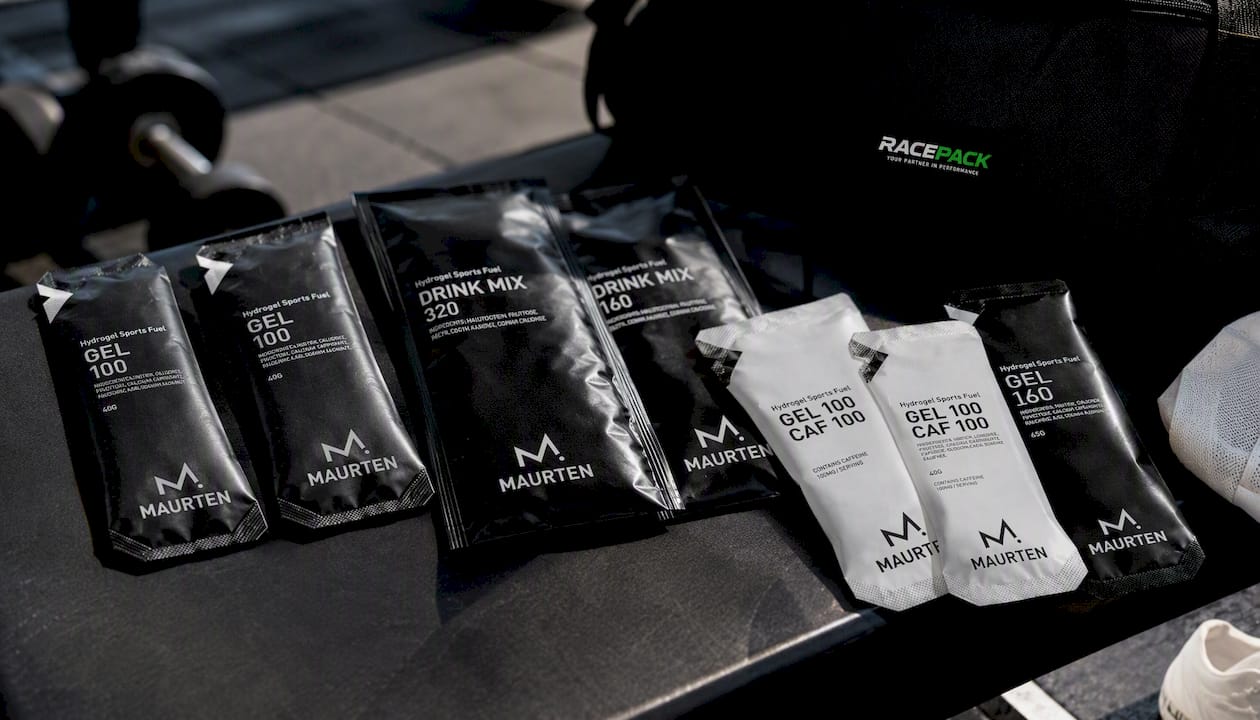
| Pair gear with fueling | RacepackSingapore’s Maurten Full Marathon Starter Kit complements a compression-and-recovery routine for race-day and long-run fueling. |
Table of Contents
- The Different Types of Compression Gear Runners Use and When Each Helps
- Types of Compression Garments Runners Actually Use
- How Compression Levels (mmHg) and Sizing Actually Work
- When to Wear Compression: During Runs vs After
- How to Choose Compression Gear and Check the Fit
- Sources
- FAQ
The Different Types of Compression Gear Runners Use and When Each Helps
Compression gear is tight technical apparel engineered to apply graduated pressure against your skin and muscles. That single sentence covers what it is. What matters more is what that pressure actually does once you’re moving.
Four mechanisms show up across the research on compression apparel for athletes:
- Graduated pressure and venous return: tighter at the ankle, looser higher up, which theoretically helps blood move back toward your heart instead of pooling in your lower legs.
- Reduced soft-tissue vibration: compression fabric limits the bounce in your calf and quad muscles with every footstrike, which some runners feel as less fatigue late in a run.
- Thermoregulation: many fabrics wick moisture and hold heat differently than loose apparel, which matters more in cold starts than hot afternoons.
- Perceptual effects: feeling “supported” changes how hard a run feels, independent of anything happening physiologically.
Here’s the honest split in the evidence: a Charles Sturt University research report found compression garments don’t consistently shave time off race performance, but they’re tied to lower lactate dehydrogenase and less perceived soreness during recovery. Global endurance performance barely moves. Recovery markers do. Know which one you’re buying compression for before you spend the money.
Types of Compression Garments Runners Actually Use
Not every garment does the same job, and matching the piece to your goal saves you from buying gear that sits in a drawer.
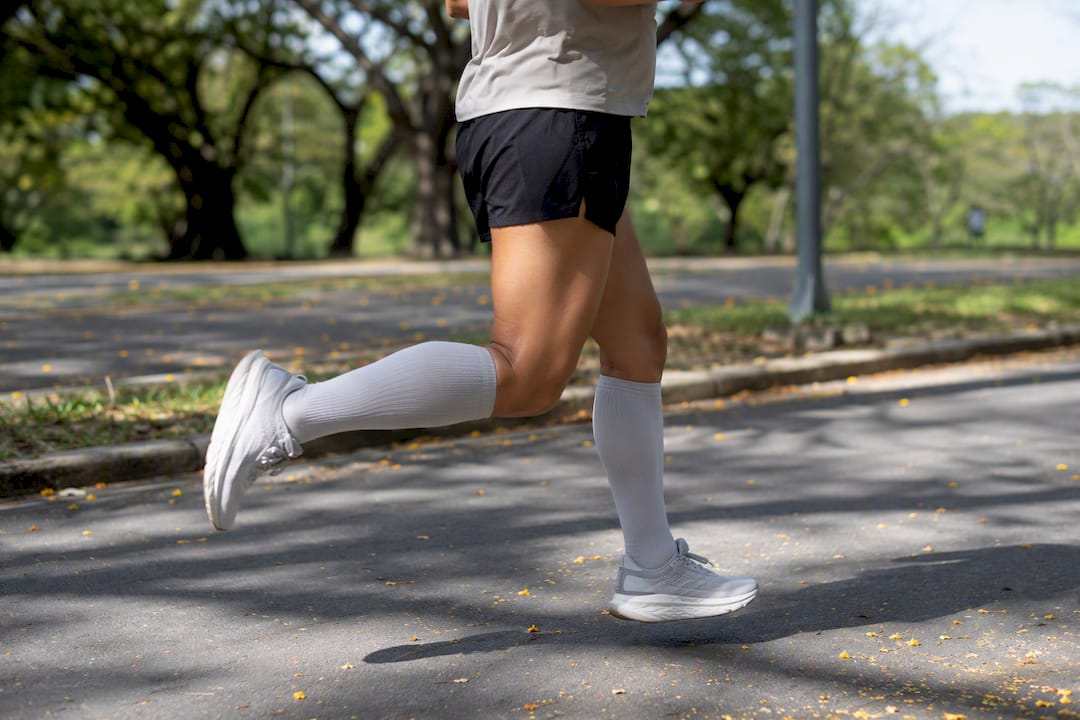
- Compression socks: cover the foot through mid-calf or over-the-calf, typically 15–30 mmHg with graduated pressure. Best for shin splints, Achilles protection, travel swelling, and long-run comfort. Forbes Vetted notes that most running-specific socks now build in venting panels and reinforced arch zones to balance support with breathability.
- Calf sleeves: target the lower leg only, skipping the foot. A typical range. Best for hot-weather runs, treadmill sessions, or runners who already like their own socks but want calf support layered on top.
- Compression tights and leggings: full-leg coverage, generally lighter compression (10–20 mmHg) than dedicated socks since the fabric spans a larger surface area. Best for cool-weather long runs, hill repeats, and quad/hamstring support.
- Running compression shorts: hit the hip flexors, glutes, and upper hamstrings without adding leg heat. Best for tempo runs, speed work, and runners managing minor groin or hip strain.
- Arm sleeves: lighter-grade compression, often 10–20 mmHg, mainly for sun protection and mild forearm/bicep support on trail or road ultras.
- Compression tops: cover the torso and sometimes shoulders, offering core stability and moisture management more than measurable circulatory benefit.
Seam placement and fabric blend decide whether any of this feels good after mile 10. iRunFar’s testing guide points to nylon-spandex and merino blends with dedicated venting channels as the difference between socks you forget you’re wearing and ones you’re tugging at by the second lap.
How Compression Levels (mmHg) and Sizing Actually Work
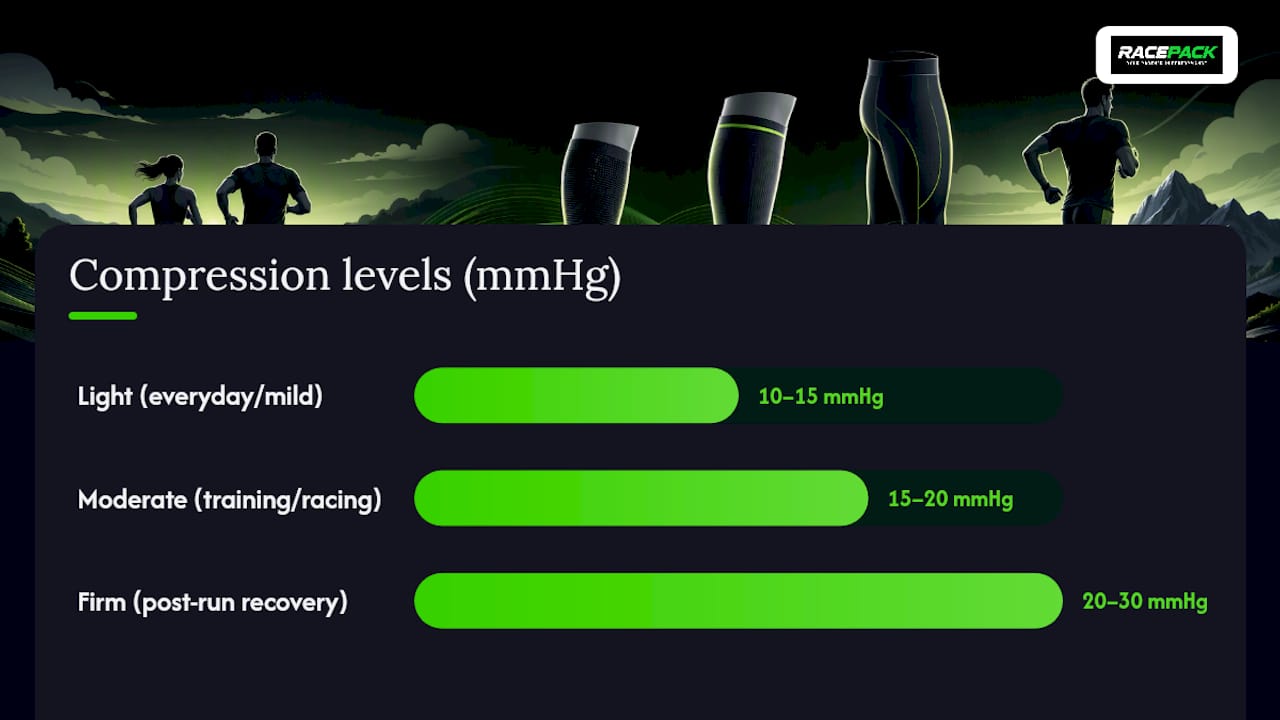
mmHg stands for millimeters of mercury, the same pressure unit doctors use for blood pressure. It measures how much force the fabric applies to your skin. Athletic compression typically falls into three bands: light (10–15 mmHg) for everyday wear and mild support, moderate (15–20 mmHg) for training and racing, and firm (20–30 mmHg) for post-run recovery. Runner’s World recommends 20–30 mmHg for most running and recovery applications, and Forbes Vetted confirms that range as standard across current running-specific sock lines.
Medical-grade compression (used for conditions like venous insufficiency) runs higher and requires a prescription; athletic compression sold at retail stays below that threshold and needs no medical sign-off.
Getting the fit right takes four steps:
- Measure your ankle at the narrowest point and your calf at its widest point.
- Check the brand’s specific size chart rather than assuming your usual shoe or clothing size applies. Sizing standards vary enough between brands that a chart is not optional. Manufacturer-specific charts, like those detailed by Vivewear, exist for exactly this reason.
- Try the garment on and check for even pressure with no bunching behind the knee or at the calf.
- Watch for numbness, tingling, or discoloration in the first 20 minutes of wear. Any of those signals mean size up or return it.
Graduated compression only works when pressure is tightest at the ankle and eases upward. A sock that bunches at the calf, as Illinois Foot & Ankle points out, can restrict flow instead of helping it.
When to Wear Compression: During Runs vs After
Wear lighter compression during your run for soft-tissue protection and a sense of support. Save firmer, higher-mmHg recovery garments for after hard sessions when soreness and inflammation are the actual targets.
The evidence lines up cleanly behind that split:
- The systematic review of 160 studies and 2,530 participants found compression’s effects on race-day performance are small and inconsistent, but its effects on perceived soreness and lactate dehydrogenase during recovery are consistent.
- PubMed-indexed trials report the same pattern: mixed or minor performance gains, but reliable subjective recovery benefits across controlled studies.
- A ScienceDirect review reaches a similar conclusion, describing compression’s effect on running performance as small and inconsistent across the studies it covers.
Compression doesn’t reliably make you faster. What it reliably does is make the hours after a hard effort feel less beaten up, which is a different kind of return on investment than a personal record.
Practically, that means testing recovery-specific garments after a long run or a hard workout, not for the first time on race morning. Wear them for two to four hours post-run, or overnight if you find them comfortable enough to sleep in.
How to Choose Compression Gear and Check the Fit
Start with your goal, not the product page. If you’re chasing race pace, lighter moderate-compression socks or calf sleeves during the run make sense. If long-run comfort is the issue, tights with even, full-leg pressure matter more than a specific mmHg number. If you’re managing a nagging shin or Achilles issue, graduated socks that hit that zone specifically are worth the money. If recovery is the goal, buy firm compression and wear it after, not during.
A quick fit checklist:
- The garment should feel snug and even, not painfully tight or restrictive at any single point.
- You should be able to slide one finger under the top band without it gapping loosely.
- No numbness, tingling, or skin discoloration after 15 to 20 minutes of wear.
- If a sock or sleeve leaves deep, lingering welts long after removal, size up.
Stop wearing any compression garment immediately if you feel numbness, sharp pain, or unusual swelling, and check with a doctor if those symptoms persist.
Pro Tip: Test any new compression piece on an easy run or two before wearing it on race day. Fit that feels fine standing in your living room can feel very different at mile 18.
What the Research and Coaches Actually Recommend
The clearest conclusion from the systematic review is that compression helps recovery more reliably than it helps performance. Coaches tend to draw a practical line from that: lighter, flexible compression for wearing during activity, firmer recovery-grade compression for afterward. Beyond the physiology, compression sleeves for legs and arms also guard against sun, wind, and trail debris on long efforts, and reduced soft-tissue vibration may help conserve energy over multi-hour outings, even when the finish-line clock doesn’t show it.
How I Actually Use Compression in a Training Week
I wear calf sleeves during long tempo runs mostly for the shin support, then switch to firmer compression socks the moment I’m done, especially after back-to-back hard days. That combination has worked for my legs, but individual response to compression apparel for athletes varies enough that the only way to know what works for you is to trial it yourself, ideally on a low-stakes training day rather than the morning of a goal race.
Pairing Compression With Recovery Nutrition and Fueling
Compression is one piece of a recovery routine, not the whole thing. What you eat and drink after a hard run does more heavy lifting for muscle repair than any sleeve or sock, and pairing the two is where most experienced runners land. Marathon-specific recovery nutrition and consistent protein intake work alongside compression, not instead of it.
If you’re building out a race-day fueling plan to go with your recovery gear, the Maurten Full Marathon Starter Kit packages the gels and hydration mix marathoners lean on for long-run and race-day fueling, sized for exactly the kind of extended effort where compression and nutrition both earn their keep. It’s a straightforward adjacent pick if you’re already thinking about recovery protocols and want fueling sorted at the same time. RacepackSingapore ships it next-day across Singapore, with authenticity guaranteed on every order, so you’re not gambling on a gray-market product before a goal race. Add it to your cart and have it in hand before your next long run.
Sources
- Tight Margins: Compression Garment Use during Exercise and Recovery—A Systematic Review
- Compression garments and recovery study — Charles Sturt University
- Best Compression Socks 2026 - Forbes Vetted
- PubMed article 27106555
FAQ
What are the different types of compression garments for runners?
The main categories are compression socks, calf sleeves, tights or leggings, running compression shorts, arm sleeves, and compression tops, each targeting a different area and use case.
Are Skins or 2XU better for running?
Both brands make athletic compression apparel in similar mmHg ranges, and neither has been shown in independent research to outperform the other on running performance; fit and personal comfort matter more than brand choice.
Which is tighter, 15/20 mmHg or 20/30 mmHg?
20/30 mmHg is tighter and delivers more pressure than 15/20 mmHg; the first number in each range marks the lightest point of pressure and the second marks the firmest.
What are Class 1 and Class 2 compression stockings?
Class 1 and Class 2 are medical compression classifications, not athletic ones. Class 1 typically applies lighter pressure (around 15–20 mmHg) for mild conditions, while Class 2 applies firmer pressure (around 20–30 mmHg) and usually requires a doctor’s guidance.
How does compression gear actually help runners?
It supports graduated blood flow back toward the heart, reduces muscle vibration on impact, and is consistently linked to less perceived soreness and lower lactate dehydrogenase during recovery, according to a systematic review.
Do compression socks improve race times?
Not reliably. Multiple studies, including research from Charles Sturt University, show inconsistent effects on race performance despite clear recovery benefits.
What mmHg is best for running compression socks?
Most guides, including Runner’s World, point to 20–30 mmHg for combined running and recovery use, while lighter 15–20 mmHg suits all-day wear or travel.
How do I measure my leg for compression sock sizing?
Measure the widest part of your calf and the narrowest part of your ankle, then check those numbers against the specific brand’s size chart, since sizing standards differ between manufacturers.
Should I wear compression during a run or only after?
Wear lighter compression during runs for support and protection, and save firmer, higher-mmHg garments for after hard sessions when recovery is the priority.
Can compression gear cause harm if it doesn’t fit right?
Yes. Garments that are too tight or bunch improperly can restrict blood flow and cause numbness, tingling, or discoloration; remove the garment and size up if this happens.
What’s the difference between compression socks and calf sleeves?
Compression socks cover the foot and lower leg together, while calf sleeves target only the calf muscle and skip the foot, which many runners prefer in hot weather.
Is recovery-specific compression different from what I wear during a run?
Yes. Recovery garments generally use firmer compression (20–30 mmHg) worn for a few hours or overnight after training, while during-run compression tends to be lighter and more flexible.

Ready to pair your compression routine with proven race-day fueling? Buy the Maurten Full Marathon Starter Kit now and have it delivered next-day, guaranteed authentic, straight from RacepackSingapore.