

Race Day Essentials Checklist: What to Pack and When
A race day essentials checklist should cover four zones: what you wear to the start, what goes in your drop bag, what you eat before and during the race, and what you need the moment you cross the finish. Build this the night before, not the morning of, and you cut out the panicked last-minute scramble that ruins otherwise solid training. The list below works whether you’re running a 5K or a marathon; the quantities and timing shift by distance, but the categories stay the same.
Pack this the night before. Runners who lay out gear the night before make fewer race-morning mistakes, according to advice from The Straits Times ahead of the Standard Chartered Singapore Marathon. A calm morning starts with a packed bag, not a search for socks at 5 a.m.
Top 5 non-negotiables:
- Bib and timing chip, pinned or attached the night before
- Race shoes that already have real mileage on them
- Fuel you’ve practiced and tolerated in training
- ID, a small amount of cash, and your phone
- Anti-chafe balm applied before you leave the house
The one-page checklist:
- Wearing: shoes, socks, shorts or tights, top, sports bra, bib, GPS watch charged overnight
- Carrying: gels or chews, electrolyte tablets, phone, ID, cash or card, house key
- Drop bag: dry shirt, recovery shoes, towel, hydration or recovery drink, snack
- Safety: sunscreen, blister supplies, anti-chafe balm, emergency contact card
- Documents: race confirmation, bib pickup confirmation, hotel or parking details if traveling
Key Takeaways
The most reliable race day depends on packing the night before, practicing every fuel and clothing item in training, and following a wake-up window of two to four hours based on race distance.
| Point | Details |
|---|---|
| Do the gear audit tonight | Lay out your kit, pin your bib, charge your watch, and pack your drop bag before bed. |
| Follow the timing rules | Wake up 3–4 hours before long races, 2–3 hours before shorter ones, and eat 2–4 hours before the start. |
| Practice your fueling cadence | Take one gel every 30–45 minutes and test the schedule on long training runs first. |
| Pack a real finish bag | Include dry clothes, a recovery drink, and quick carbohydrate and protein for the first 30 minutes after finishing. |
| Stock fuel and recovery ahead of time | RacepackSingapore’s GU gels, HIGH5 electrolytes, and MyProtein recovery options cover the full checklist with next-day delivery. |
Table of Contents
- Start-Line Essentials: What You Must Bring to the Start Area
- Race-Weekend and Travel Checklist for Out-of-Town Events
- How Early Should You Wake Up and Eat Before a Race?
- Clothing, Weather, and Layering for Race Conditions
- Post-Race Kit: What to Pack in Your Drop Bag
- Commonly Forgotten Race Day Items and Fast Fixes
- Distance-Specific Checklists: 5K, 10K/Half, and Marathon
- Where to Get Race Fuels and Recovery Products
- Sources
- FAQ
Start-Line Essentials: What You Must Bring to the Start Area
Everything you need at the start line fits into four categories: what you wear, what’s on your bib, what fuels you, and what protects your skin. Miss one and you’ll feel it by mile three.
Wear and carry to the start:
- Race shoes, broken in over multiple training runs, never fresh out of the box
- Moisture-wicking socks that match what you trained in
- Shorts, tights, or a skirt you’ve run in before, plus a top and sports bra that won’t rub
- GPS watch, charged the night before, not the morning of
- Bib with safety pins or a race belt, and a timing chip if it’s separate from the bib
- Emergency ID, a small amount of cash, a card, and your phone with the route saved
Nutrition and hydration at the start:
- A pre-race bottle of water or an electrolyte drink
- Gels or chews you’ve practiced in training, not something you grabbed at the expo
- Electrolyte tablets if you use them regularly
- A small snack for the waiting period before the gun goes off
Safety and medical basics:
- Sunscreen, applied before you leave, not at the start line
- Blister supplies: tape, blister plasters, or a small tube of lubricant
- Anti-chafe balm on any spot that’s ever rubbed raw, since humid conditions accelerate skin breakdown faster than dry ones
- A medical ID if you have a condition a race medic should know about
What not to wear or try:
- New shoes, straight from the box
- Untested socks, even if they look breathable
- A gel flavor or brand you’ve never eaten before
- Any piece of clothing you haven’t run at least one long run in
Pro Tip: Test every item you plan to wear or eat on race day during a long training run that mimics race conditions as closely as possible. The nothing new on race day rule applies to shoes, gels, sunscreen, and even the socks you think are “basically the same” as your usual pair.
Race-Weekend and Travel Checklist for Out-of-Town Events
Race weekend and race day need separate packing lists. Race weekend covers everything from the moment you leave home to the moment you’re standing in the start corral; race day is what’s actually on your body and in your hands when the gun fires.

| Category | Race-Weekend Items | Race-Day Items |
|---|---|---|
| Documents | Race confirmation email, hotel confirmation, bib pickup ticket | Bib, timing chip, ID |
| Clothing | Spare clothes, comfortable walking shoes, layers for expo | Race outfit, throwaway layer if cold |
| Logistics | Parking or shuttle schedule, directions to packet pickup | Directions from hotel/home to start line |
| Electronics | Phone charger, backup battery pack | GPS watch (charged), phone in a pouch |
| Nutrition | Grocery run for tested breakfast foods | Gels, chews, electrolyte tablets for the race |
Beyond the table, a few logistics items make or break race weekend: confirm your hotel reservation and note the checkout time against your race start, print or screenshot your bib pickup confirmation, and check shuttle or parking times the night before rather than the morning of. If the venue has limited parking, plan a backup route.
Packing for hotel or flight:
- Pack race-day shoes and your bib in your carry-on, never in checked luggage
- Bring gels and chews in your carry-on so a delayed bag doesn’t wreck your fueling plan
- Pack a ziplock bag for liquids and gels going through airport security
- Throw an extra pair of socks in your hand luggage in case checked bags go missing
If you’re flying in for a race, travel logistics deserve as much planning as your training block does. A lost bag two days before a marathon is a solvable problem only if your essentials are already in your carry-on.
How Early Should You Wake Up and Eat Before a Race?
Wake up several hours before longer races, and somewhat less time before shorter races. This allows time to digest breakfast, manage pre-race nerves, and use the bathroom, according to guidance from HealthXChange.
Eat your pre-race meal a few hours before the start. Stick to high-carbohydrate, low-fiber, low-fat foods you’ve already tested in training: toast with jam, oatmeal with a banana, or white rice with a small portion of protein. Skip anything high in fat or fiber, since both slow digestion and raise the odds of a mid-race bathroom emergency.
During the race, a common fueling guideline is one gel or equivalent every 30 to 45 minutes, though the right frequency depends on how your gut handles carbohydrate under load and needs to be tested in training first. For events longer than 60 minutes, take your first gel 20 to 30 minutes in, once your body has settled into race pace, according to Ahotu Magazine’s race day guidance.
A sample timeline for a morning marathon: Wake up several hours before → breakfast a couple of hours before start → leave for venue about an hour before → arrive, bag drop, bathroom → warm-up shortly before start.
Arriving about an hour before the gun gives you enough buffer for parking, bag drop, and the porta-potty line that always looks longer than it is, per Ahotu’s arrival guidance. Set a timer on your watch for your fueling cadence during long runs so it becomes automatic, and never start your first gel while you’re still finding your rhythm in the opening mile.
Pro Tip: Run a full dress rehearsal of your race-morning timeline during a long training run: same wake-up time, same breakfast, same gel schedule. If it works at 6 a.m. on a Saturday, it’ll work on race morning too.
Clothing, Weather, and Layering for Race Conditions
Weather drives most last-minute packing decisions, and planning layered options beats trying to predict the exact temperature at gun time. Build your kit around the range of conditions you might hit, not the forecast you saw three days out.
Cold starts (below 50°F): base layer under your race top, arm warmers you can push down and forget about, gloves, and a throwaway layer like an old sweatshirt or garbage bag you can shed once you warm up.
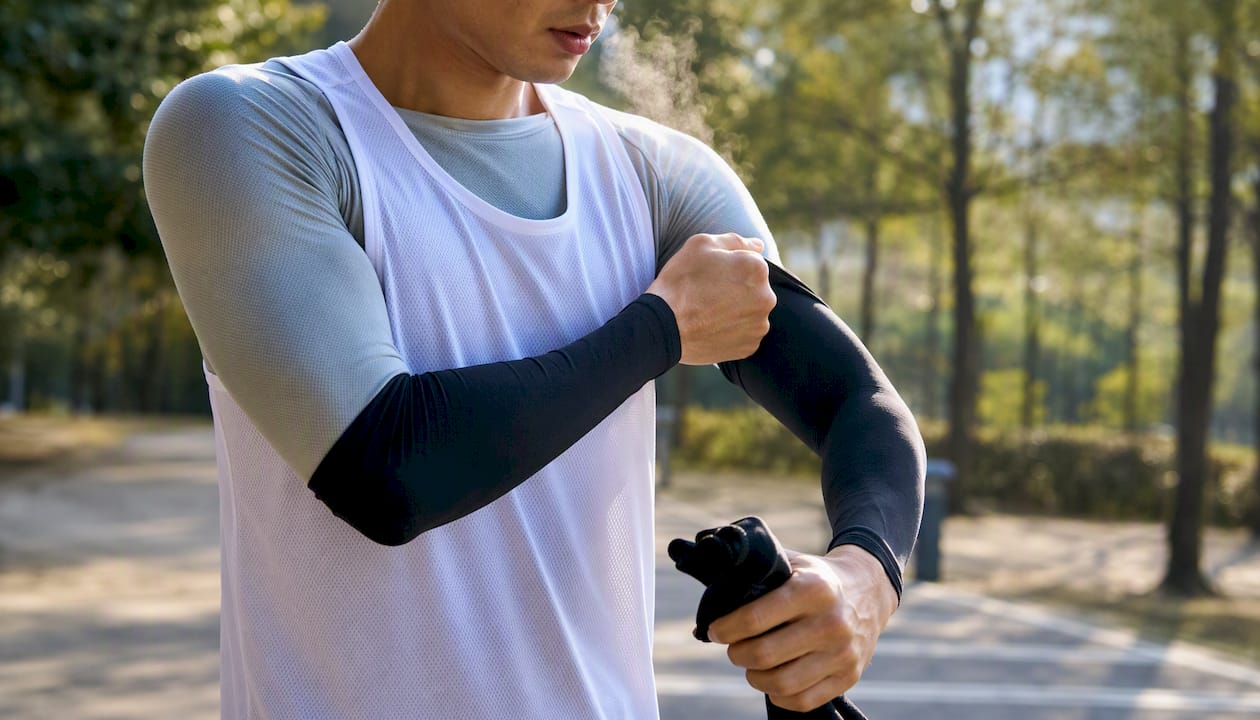
Mild conditions: your standard race kit, no extra layers, maybe a light long-sleeve for the first mile if there’s a chill at the start.
Hot and sunny conditions: a brimmed hat or visor, sunglasses, extra sunscreen, and a singlet or top with more ventilation than you’d normally choose.
Rain: a light rain poncho for the start-line wait, quick-dry socks, and a spare pair sealed in a ziplock bag in your drop bag in case your feet get soaked early.
Throwaway layers work well for cold starts because most major races collect discarded clothing for charity or have designated drop zones along the first mile. Toss your layer to the side, not into the middle of the road, and check your race’s website for its specific policy.
Protect your electronics from rain the same way you protect your feet: a ziplock bag or small waterproof pouch keeps your phone and watch running even if the forecast turns ugly mid-race.
Pro Tip: Layer for a start-line temperature about 15 degrees warmer than what the forecast says. You’ll be standing still and cold before the gun, then generating heat within the first mile.
Post-Race Kit: What to Pack in Your Drop Bag
The minutes right after you cross the finish line matter more than most runners plan for. Your body is cooling down fast, your glycogen stores are empty, and a good drop bag turns that window into a smooth recovery instead of a shivering wait for a ride home.
Immediate recovery items:
- A dry shirt and a spare pair of socks
- Recovery sandals or a broken-in pair of shoes, since your feet will have swollen
- A foil blanket if the race doesn’t provide one, plus a towel
- Your phone, wallet, and house key
- A hydration drink or recovery shake ready to drink within minutes of finishing
Getting carbohydrate and protein into your system within 30 minutes of finishing speeds up glycogen replenishment, a window Ahotu Magazine’s race day guide flags as worth planning for in advance. A banana paired with a scoop of protein powder covers both bases without needing refrigeration or prep. For a pre-mixed option, a MyProtein Pea Protein Isolate shake stashed in your drop bag with a shaker bottle solves the “what do I eat right now” problem before you’ve even thought about it.
Emergency and comfort items:
- A pain reliever if you use one, and know your own tolerance beforehand
- A blister kit for anything that flared up in the final miles
- A change of underwear and a plastic bag for wet or dirty clothes
- Extra electrolyte tablets if the race ran long or hot
Pre-order your recovery fuel the week of the race rather than hunting for it at the expo, where lines are long and stock runs out. Racepack.sg’s protein and recovery options ship next-day within Singapore, so you can have your drop bag fully stocked days before the gun goes off.
Commonly Forgotten Race Day Items and Fast Fixes
Small items cause disproportionate problems. A missing safety pin or a dead phone battery won’t end your race, but it will cost you time and stress you don’t need in the last hour before the start.
Most forgotten items:
- Spare safety pins, in case one bends or you lose one
- An extra pair of socks, tucked into your bag just in case
- A phone charger cable, easy to leave plugged in at the hotel
- Pre-cut energy gels taped to a race belt or pinned inside a pocket
- A sunscreen stick and SPF chapstick, small enough to forget entirely
- Small cash and a copy of your ID
Keep fast-access items where you can grab them without thinking. A race belt or a jacket pocket beats digging through a packed drop bag when you’re nervous and short on time. Tie a bright ribbon around your gear bag so you can spot it instantly in a crowded drop zone, a trick that works because labeled, segmented packing genuinely speeds up chaotic morning logistics.
Pro Tip: Pack mini-essentials into labeled Ziploc pouches: a “start pouch” with pins, gels, and cash, and a “finish pouch” with your phone charger, blister kit, and spare socks. Grab each one without having to think through what’s inside.
Distance-Specific Checklists: 5K, 10K/Half, and Marathon
What belongs in your bag changes with distance. A 5K needs almost no on-course fueling, while a marathon demands a full nutrition and electrolyte strategy planned out in advance.
5K checklist: race shoes, bib, watch, water bottle for before the start, sunscreen. Skip on-course fuel entirely unless you’re racing in extreme heat. Leave the drop bag light: a dry shirt and water is usually enough.
10K/half marathon checklist: race shoes, bib, watch, one to two gels or chews depending on pace, electrolyte tablets if it’s hot, anti-chafe balm, a light post-race snack. A drop bag with a dry shirt, recovery shoes, and a recovery drink covers the rest.
Marathon checklist: race shoes, bib, watch, four to six gels or equivalent fuel spaced every 30 to 45 minutes, electrolyte tablets, salt capsules if you’re a heavy sweater, anti-chafe balm reapplied at halfway if the race offers it, and a full post-race kit including a recovery shake, dry clothes, and pain relief if needed.
Do the gear audit tonight. Lay out your full kit, pin your bib to your top, charge your watch, count your gels against your race plan, and pack your drop bag by category. This single ritual, used consistently by experienced marathoners, turns race morning into a routine instead of a scramble.
Pro Tip: Print a one-page version of your distance’s checklist and tape it to your bag the night before. Check off each item as you pack it so nothing gets left on the kitchen table.
A Runner’s Take on the Night-Before Ritual
I’ve watched more races get derailed by a forgotten gel or an untested breakfast than by actual training mistakes. The runners who show up calm at the start line aren’t the ones who trained the hardest that week. They’re the ones who ran the exact same morning routine three or four times before race day, down to the brand of oatmeal and the time they laced up their shoes.
The gear audit sounds almost too simple to matter. Lay everything out, pin the bib, charge the watch, count the gels. But it works precisely because it removes decisions from a morning when your brain is already working overtime on nerves. Test your fueling plan on a long run that mimics race pace, not a casual jog, and you’ll know exactly how your gut handles gel number four at mile eighteen long before it matters. For more on dialing in that fueling window, the guide on testing fuel during training runs is worth reading well before race week, not the night before.
Where to Get Race Fuels and Recovery Products
Once your checklist is packed, the last piece is making sure your fuel and recovery products are actually in the bag, not still on a shopping list. RacepackSingapore stocks the exact fueling categories this checklist calls for, so you’re not piecing together gels from three different stores the week before your race.
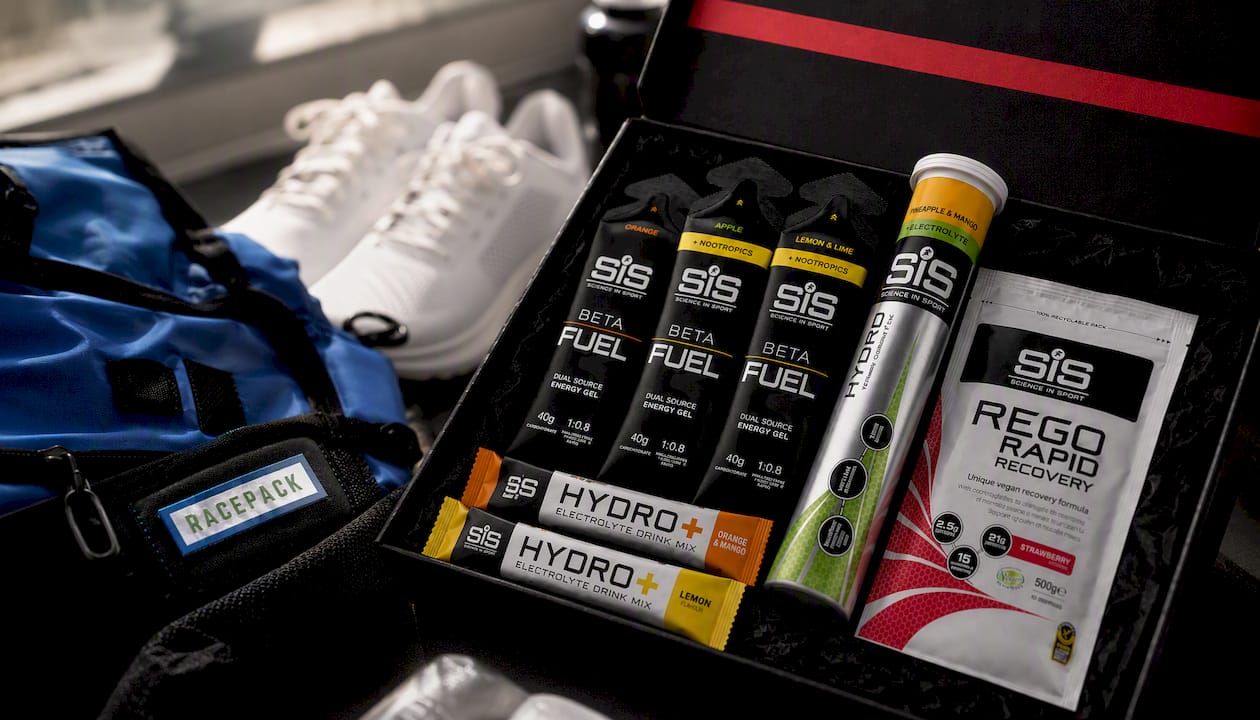
For the one-gel-per-30-to-45-minute rule, GU Energy Gel in a box of 24 covers a full marathon training block with fuel to spare, while the 6/12/24 pack option lets you test flavors before committing to a bigger order. If you just want to trial a few before race day, the single-pack option or the full energy gel collection makes flavor comparisons easy.
For hot-weather races or longer distances, HIGH5 ZERO+ Electrolyte sachets replace what you sweat out, and the HIGH5 bottle with hydration tablets gives you a portable setup for both training and race morning. Keep everything organized with a MyProtein storage box so your gels and electrolyte tablets don’t end up loose at the bottom of your gym bag. For recovery, MyProtein Pea Protein Isolate or MyProtein EAA Powder round out your post-race drop bag.
Order this week and you’ll have everything packed with days to spare, since RacepackSingapore offers next-day delivery within Singapore. Shop race fuels and recovery products now and check your bag off the list before race week even starts.
Sources
- How to manage: what to eat before, during and after a marathon | HealthXChange
- Race Day Checklist Generator — Morning-of Routine | RunDida
- Race Day Checklist: Everything You Need to Remember | Ahotu Magazine
FAQ
What is the 10-10-10 rule for marathons?
The 10-10-10 rule refers to running the first 10 miles conservatively, the middle 10 miles at steady effort, and the final stretch by feel. It’s a pacing framework, not a packing or fueling rule, and it works best when paired with a tested fueling schedule like one gel every 30 to 45 minutes.
What is the 80% rule for running?
The 80% rule generally refers to keeping about 80% of training runs at an easy, conversational effort and reserving harder efforts for the remaining 20%. It’s a training-load principle rather than a race-day rule, though it directly affects how prepared you feel on race morning.
Is finishing 21K in two hours good?
A two-hour half marathon is a solid, competitive time for most recreational and intermediate runners, well ahead of the average half marathon finish time. Whether it feels “good” depends entirely on your own training history and goals for that specific race.
How early should I arrive at the start line?
Arrive 60 to 90 minutes before your start time to handle parking, bag drop, bathroom lines, and a proper warm-up, according to Ahotu Magazine. Large events or races with tight security may require even more buffer time.
What should I eat the morning of a race?
Eat a high-carbohydrate, low-fiber, low-fat meal two to four hours before the start, using foods you’ve already tested in training, such as toast with jam or oatmeal with banana. Avoid anything new, high in fat, or high in fiber, since both slow digestion and raise your risk of GI trouble.
How often should I take a gel during a race?
A common guideline is one gel or equivalent every 30 to 45 minutes, starting your first gel 20 to 30 minutes into events longer than an hour. The exact frequency should be dialed in during long training runs, since gut tolerance varies runner to runner.
What should go in my race-day drop bag?
Pack a dry shirt, spare socks, recovery shoes, a towel, your phone and wallet, and a recovery drink or protein shake ready to consume within 30 minutes of finishing. Add a blister kit and pain reliever if you typically need them post-race.
Do I need electrolyte tablets for a 5K or 10K?
Most runners don’t need electrolyte tablets for a 5K, and they’re optional for a 10K unless conditions are especially hot. They become more useful for half marathons and marathons, particularly for heavy sweaters or races run in high heat and humidity.
How do I prevent chafing on race day?
Apply anti-chafe balm or lubricant to any spot that’s rubbed before, especially underarms, inner thighs, and under sports bra lines, before you leave for the race. Humid conditions speed up skin breakdown, so reapply if your race includes a mid-race gear check or drop bag stop.
What’s the biggest race-morning mistake runners make?
Trying something new on race day, whether that’s a shoe, a gel flavor, or a piece of clothing, causes more avoidable problems than any packing mistake. Test every item during training runs that mimic race conditions so nothing on race morning is a surprise.
Should I pack differently for a marathon versus a 5K?
Yes. A 5K needs minimal fueling and a light drop bag, while a marathon requires four to six gels or equivalent fuel, electrolyte tablets, and a fuller recovery kit for after you finish. Distance should drive every packing decision, from fuel quantity to what goes in your drop bag.
What’s the best way to organize race-day gear the night before?
Lay out every item you plan to wear or carry, pin your bib, charge your watch, and pack your drop bag in labeled sections by race segment. This gear audit ritual, used by experienced marathoners, removes decision-making from race morning and cuts down on forgotten items.
Ready to fill in the fueling gaps in your checklist? Shop race fuels and recovery essentials on RacepackSingapore now and get your gels, electrolytes, and recovery protein delivered before race week even starts.