

Why Recovery Nutrition After HYROX Matters for Performance
Recovery nutrition after HYROX is defined as the timely intake of carbohydrates and protein within 30 to 60 minutes post-race to restore depleted glycogen stores and stimulate muscle protein synthesis. HYROX places a uniquely high demand on both aerobic capacity and muscular strength, making post-race nutrition a direct performance variable, not an afterthought. Protein and carbohydrate co-ingestion within 30 to 45 minutes accelerates glycogen resynthesis by approximately 150% compared to delayed intake. Chocolate milk, protein shakes, and yogurt with fruit are practical options that deliver this combination fast. The recovery window extends well beyond the finish line, spanning 48 to 72 hours of targeted nutrition to complete the repair process.
Why is recovery nutrition critical after a HYROX event?
HYROX depletes glycogen aggressively. The format combines an 8-kilometer run with eight functional workout stations, including sled pushes, burpee broad jumps, and rowing, all performed at race intensity. This combination triggers significant glycogen depletion and mechanical muscle damage, particularly from eccentric-loading stations like the sled push and wall balls.
Glycogen is the primary fuel source for high-intensity work. When stores run low, performance drops, fatigue accelerates, and the body begins breaking down muscle tissue for energy. Muscle protein synthesis elevation lasts 48 hours or more after a HYROX event, meaning the repair window is long and the nutritional demand is sustained.
“Because HYROX involves repeated strength efforts causing muscle damage, recovery nutrition must focus on both muscle repair and glycogen replenishment rather than soreness relief alone.” — RunReps Nutrition Guide
Suboptimal recovery nutrition produces measurable consequences:
- Delayed glycogen resynthesis reduces readiness for the next training session
- Prolonged muscle soreness increases injury risk in subsequent workouts
- Impaired muscle protein synthesis slows adaptation and strength gains
- Compromised immune function increases susceptibility to illness in the days following a race
Skipping or delaying recovery nutrition beyond 90 minutes measurably slows glycogen resynthesis rates. That 90-minute window is not a suggestion. It is a physiological deadline with real performance consequences.
What are the optimal nutrients and timing for post-HYROX recovery?
The first 30 to 60 minutes after crossing the finish line represent the highest-priority nutrition window. During this period, muscle cells are primed to absorb glucose and amino acids at an accelerated rate. Missing this window means slower recovery, plain and simple.

Carbohydrate and protein targets
Optimal recovery nutrition includes 20 to 40 grams of protein plus 40 to 80 grams of carbohydrate within 30 to 60 minutes post-race. For a 70-kilogram athlete, that translates to roughly 70 grams of carbohydrates and 28 grams of protein. These numbers are not arbitrary. They reflect the rate at which muscle glycogen synthase operates and the minimum dose required to trigger meaningful muscle protein synthesis.
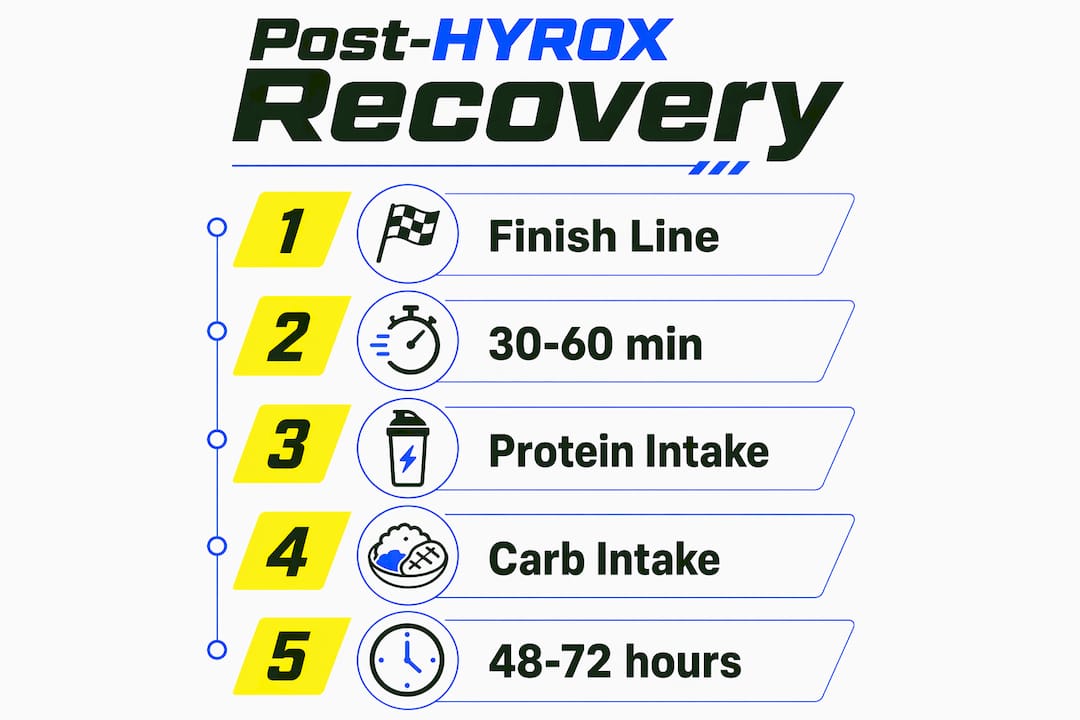
High-fat foods slow gastric emptying and blunt glycogen resynthesis in this window. Prioritize low-fat, easily digestible options immediately post-race, then shift to more balanced meals as the hours progress.
| Recovery window | Carbohydrate target | Protein target | Practical option |
|---|---|---|---|
| 0 to 60 minutes | 1 to 1.2 g/kg body weight | 0.3 to 0.5 g/kg body weight | Chocolate milk, protein shake + banana |
| 2 to 4 hours | 1 to 1.2 g/kg body weight | 0.3 to 0.4 g/kg body weight | Rice + chicken + vegetables |
| 24 to 72 hours | Distributed across meals | 1.6 to 2.2 g/kg/day total | Regular balanced meals with protein at each sitting |
Pro Tip: If solid food feels unappealing immediately after a HYROX race due to GI discomfort, a liquid option like chocolate milk or a protein shake with a banana delivers the carb-protein ratio your body needs without stressing a sensitive stomach.
Extended recovery nutrition over 48 to 72 hours
Glycogen resynthesis is not complete within 24 hours after a HYROX event. Full restoration requires consistent carbohydrate intake across multiple meals over the following two to three days. Protein needs remain elevated throughout this window as well.
HYROX athletes require approximately 1.6 to 2.2 grams of protein per kilogram of body weight per day to support ongoing muscle repair. Treating protein as a 24-hour operational target, spread across four to five meals, produces better outcomes than a single large post-race serving. This approach keeps muscle protein synthesis elevated continuously rather than in isolated spikes.
How does recovery nutrition support training outcomes and performance?
Recovery nutrition is not just about feeling better the next day. It directly determines how quickly you adapt, how soon you can train again, and how well you perform in your next HYROX event or training block.
The connection between nutrition timing and adaptation is direct. Carbohydrates restore the glycogen that powers your next session. Protein provides the amino acids that rebuild damaged muscle fibers stronger than before. Without adequate supply of both, the adaptation signal from training is present but the raw materials for executing it are missing.
The performance benefits of consistent post-HYROX nutrition strategies include:
- Faster return to full training capacity, often within 48 to 72 hours instead of five or more days
- Reduced delayed onset muscle soreness, particularly in the legs and posterior chain
- Lower risk of overuse injury by maintaining tissue integrity between sessions
- Stronger immune response in the days following a race, when immune suppression is highest
- Better sleep quality, which amplifies the hormonal recovery processes that nutrition initiates
Structured active recovery with low-intensity Zone 1 to 2 aerobic work in the 12 to 72 hours post-race supports circulation and lactate clearance. Pairing this movement with proper nutrition accelerates the physiological restoration process more effectively than rest alone.
Inadequate recovery nutrition produces a compounding deficit. One poorly recovered session leads to reduced output in the next, which reduces the training stimulus, which slows progress over weeks and months. For competitive HYROX athletes racing multiple events per season, this compounding effect is a real threat to performance.
What are practical recovery nutrition strategies for HYROX athletes?
Knowing the targets is one thing. Executing them in the chaos of a race day environment is another. Here is a structured approach that works in practice.
- Pack your recovery nutrition before race day. Bring a protein shake, a banana, and an electrolyte drink in your race bag. Do not rely on venue food options to meet your 30-minute window.
- Prioritize liquid nutrition immediately post-race. Chocolate milk delivers roughly 30 grams of carbohydrates and 8 grams of protein per 250 milliliters. A protein shake blended with a banana hits similar targets with less GI stress.
- Rehydrate with sodium-containing drinks. Sodium-containing drinks restore plasma volume more effectively than plain water. Plain water consumed in large volumes post-race can actually accelerate urinary loss without restoring fluid balance.
- Eat a full recovery meal within two to four hours. Aim for rice, sweet potato, or pasta with a lean protein source like chicken, fish, or eggs. This meal bridges the gap between immediate recovery and the extended 48-hour window.
- Distribute protein across the next two to three days. Aim for 30 to 40 grams of protein per meal across four to five meals daily to keep muscle protein synthesis elevated throughout the full recovery window.
- Avoid alcohol for at least 24 to 48 hours. Alcohol post-race suppresses sleep quality, impairs protein synthesis, and reduces heart rate variability. Even moderate intake in the 24 to 48 hours after a HYROX event measurably extends recovery timelines.
- Consider creatine supplementation. Creatine supports recovery by enhancing phosphocreatine resynthesis and reducing muscle damage between intense functional efforts. A daily dose of 3 to 5 grams is the standard maintenance protocol.
Pro Tip: Omega-3 fatty acids from fish oil taken consistently during your training cycle reduce exercise-induced inflammation and support faster tissue repair. They work best as a long-term habit rather than a post-race intervention.
You can explore more evidence-based approaches on the Racepack recovery blog for guidance that goes beyond race day.
Key takeaways
Recovery nutrition after HYROX requires carbohydrates and protein within 60 minutes post-race, sustained over 48 to 72 hours, to fully restore glycogen and complete muscle repair.
| Point | Details |
|---|---|
| Hit the 60-minute window | Consume 40 to 80 g carbs and 20 to 40 g protein within 60 minutes of finishing. |
| Extend nutrition over 72 hours | Glycogen and muscle repair are not complete in 24 hours; sustained intake is required. |
| Daily protein target matters | Aim for 1.6 to 2.2 g/kg/day across multiple meals, not one large post-race serving. |
| Rehydrate with electrolytes | Sodium-containing drinks restore plasma volume faster than plain water alone. |
| Avoid alcohol post-race | Alcohol in the 24 to 48 hours after HYROX directly impairs sleep, synthesis, and recovery. |
Recovery nutrition is a performance decision, not a post-race ritual
I’ve watched a lot of athletes nail their HYROX race and then completely undo their recovery by celebrating with beer and skipping a proper meal for six hours. The race effort was real. The recovery was not.
What shifted my thinking was treating post-race nutrition the same way I treat pre-race nutrition: as a deliberate, planned performance input. You would not show up to a HYROX event without fueling beforehand. Showing up to recovery without a plan produces the same result as racing on empty.
The athletes I’ve seen recover fastest are not the ones with the most sophisticated supplement stacks. They are the ones who have a shake and a banana ready in their bag before the gun goes off. They eat a real meal within two hours. They drink electrolytes instead of alcohol that evening. These are not complex interventions. They are consistent habits that compound over a full training season.
One thing most articles miss: the importance of recovery nutrition is highest when races are closely spaced. If you have two HYROX events within a few weeks, or a race followed by a heavy training block, the 48-hour window becomes critical. Missing it once when you have six weeks to recover is forgivable. Missing it when your next hard session is in three days is a real setback.
Treat recovery nutrition as the first training decision you make after the race ends. Your next performance depends on it.
— Jason
Fuel your HYROX recovery with Racepack
At Racepack, we build our product range around exactly what HYROX athletes need in the hours and days after race day.
The SiS REGO Rapid Recovery Powder delivers a precise blend of protein and carbohydrates formulated to hit your 30-minute recovery window. For hydration, the HYROX Electrofuel Electrolyte is co-developed with HYROX to match the electrolyte losses from race-level sweat output. If you prefer a ready-to-drink option, the Barebells Protein Milkshake combines protein and carbohydrates in a portable format you can have waiting in your race bag. We stock what works, so your recovery starts the moment you cross the finish line.
FAQ
Why is recovery nutrition after HYROX so important?
HYROX depletes glycogen stores and causes significant muscle damage across eight functional stations. Consuming carbohydrates and protein within 60 minutes post-race accelerates glycogen resynthesis and initiates muscle repair, directly reducing downtime and improving readiness for the next session.
How long does recovery nutrition need to continue after HYROX?
Recovery nutrition remains critical for 48 to 72 hours post-race. Glycogen resynthesis is not complete within 24 hours, and muscle protein synthesis stays elevated for 48 hours or more, requiring sustained carbohydrate and protein intake across multiple meals.
What should I eat immediately after a HYROX race?
Aim for 40 to 80 grams of carbohydrates and 20 to 40 grams of protein within 30 to 60 minutes. Practical options include chocolate milk, a protein shake with a banana, or a low-fat yogurt with fruit. Avoid high-fat foods in this window as they slow glycogen resynthesis.
Does alcohol affect HYROX recovery?
Yes. Alcohol consumed within 24 to 48 hours post-race suppresses sleep quality, impairs muscle protein synthesis, and reduces heart rate variability. Even moderate intake measurably extends recovery timelines and should be avoided in the immediate post-race period.
How much protein do HYROX athletes need per day during recovery?
HYROX athletes require approximately 1.6 to 2.2 grams of protein per kilogram of body weight per day during recovery. Spreading this across four to five meals sustains muscle protein synthesis more effectively than consuming it in one or two large servings.