

Does Pre Workout Actually Work, and Which Kind Fits Your Goal?
Pre workout supplements provide a modest, real performance boost for most athletes, and the effect comes almost entirely from caffeine. If you train for short bursts of high intensity, grind through heavy powerlifting sets, or push through long endurance sessions, a well-dosed pre workout can sharpen focus, delay fatigue, and shave perceived effort down a notch. It is not a substitute for sleep, food, or a structured program, but used correctly, it is one of the more reliable supplements on the market, as explained in What Is Pre Workout and How It Improves Exercise.
Not everyone needs one. If you are sensitive to caffeine, pregnant, or managing a heart condition, a stimulant-free option or a simple pre-training snack is the smarter starting point.
- Quick energy before a race or session: an energy gel delivers fast carbohydrate and a caffeine hit without a scoop or shaker.
- Full-featured support with strength or endurance goals: a multi-ingredient powder with citrulline, beta-alanine, and caffeine.
- Evening training or caffeine sensitivity: a low-stimulant or stimulant-free formula built around electrolytes and aminos.
According to WebMD, pre-workout formulas are typically taken 20 to 60 minutes before exercise and commonly combine caffeine, creatine, beta-alanine, and BCAAs to support energy, focus, and endurance.
Key Takeaways
Pre workout supplements deliver a modest, mostly caffeine-driven performance boost, while beta-alanine and creatine require weeks of consistent daily dosing to work at all.
| Point | Details |
|---|---|
| Caffeine drives most benefit | Acute doses of 3–6 mg/kg improve focus and reduce perceived effort within an hour. |
| Chronic ingredients need consistency | Beta-alanine (4–6 g/day) and creatine (3–5 g/day) require 2–4 weeks of daily use to show results. |
| Timing matters | Take most formulas 20–60 minutes before training; gels act faster. |
| Safety first | Avoid dry scooping, watch for proprietary blends, and prefer third-party tested products. |
| Racepack SG matches format to goal | Offers gels, powders, EAAs, and electrolyte options with guaranteed authenticity and next-day Singapore delivery. |
Table of Contents
- What Pre Workout Supplements Do and Who They Help
- Core Ingredients and How They Actually Work
- Timing and Dosing: Practical Rules for Pre Workout Use
- What the Research Actually Shows
- Risks, Side Effects, and How to Verify a Product Is Safe
- How to Choose a Pre Workout: A Practical Checklist
- How Pre Workout Interacts With Medications or Health Conditions
- Potential Tolerance and When to Cycle Off
- The Racepack SG Perspective on Choosing Pre Workout Right
- Racepack SG Has the Right Format for Every Training Goal
- Sources
- FAQ
What Pre Workout Supplements Do and Who They Help
A pre workout is a multi-ingredient formula, usually a powder, gel, or capsule, taken roughly 20 to 60 minutes before training to raise alertness, reduce how hard exercise feels, and support power or endurance output. The formula does the work your morning coffee does, plus a few targeted extras aimed at muscle performance rather than just wakefulness.
Three training goals see the most consistent payoff:
- Short, high-intensity efforts like sprints or HIIT circuits, where caffeine’s effect on perceived exertion matters most.
- Heavy powerlifting or strength sets, where a slight bump in focus and power output can mean an extra rep.
- Long endurance sessions, where sustained caffeine intake helps offset fatigue over hours, not minutes.
If your goal is a casual 30-minute gym session, a banana and a cup of coffee often deliver a similar acute lift without the cost of a tub of powder, a point echoed in Healthline’s ingredient breakdown. Save the dedicated formula for sessions where the extra edge actually shows up on the clock or the bar.
Core Ingredients and How They Actually Work
Not every ingredient in a pre workout works the same way, and that distinction changes how you should dose and time your product.
Caffeine is the workhorse. It acts acutely, meaning a single dose does the job, typically in the 3 to 6 mg per kilogram of body weight range for trained users. Beta-alanine buffers acid buildup in muscle during high-intensity work, but only after chronic use of about 4 to 6 grams a day for two to four weeks, according to Verywell Health. A single scoop before one session does almost nothing. Creatine supports ATP regeneration for power output, and it needs consistent daily dosing of 3 to 5 grams, whether or not you train that day, to build the muscle saturation that produces results.
Citrulline and arginine, the nitric oxide boosters behind the “pump” feeling, widen blood vessels for better nutrient delivery but have a thinner evidence base for direct performance gains. BCAAs and nootropics show up in most labels but matter far less than the big three above.
| Ingredient | Acts acutely or chronically | Effective dose | What to watch for |
|---|---|---|---|
| Caffeine | Acute | 3–6 mg/kg | Total daily intake from all sources |
| Beta-alanine | Chronic (2–4 weeks) | 4–6 g/day | Tingling sensation (paresthesia) |
| Creatine | Chronic, daily | 3–5 g/day | Needs consistency, even on rest days |
| Citrulline/arginine | Acute, modest evidence | 6 g typical | Often underdosed in blends |
Pro Tip: Check the label for a “proprietary blend” disclaimer. If a product hides exact milligram amounts behind a blend name, you cannot verify you are getting an effective dose of anything, including the caffeine.
Watch for excess sugar alcohols or artificial sweeteners too. They will not hurt your workout, but they can trigger GI discomfort in sensitive people, an issue Healthline flags repeatedly across sports nutrition labels.
Timing and Dosing: Practical Rules for Pre Workout Use
Most pre workouts work best taken some time before you start training, per WebMD’s guidance. Gels act faster since they skip digestion of a full mixed drink, so 15 to 20 minutes out is usually enough.
- Calculate your caffeine dose. Aim for 3 to 6 mg per kilogram of body weight, and stay under the roughly 400 mg daily ceiling most healthy adults tolerate, factoring in coffee or tea you have already had.
- Handle the chronic ingredients separately. Beta-alanine and creatine do not need to be taken pre-workout at all. Many experienced lifters keep creatine in a separate tub so daily dosing continues on rest days.
- Start with a half scoop. Test tolerance before committing to a full serving, and never dry scoop, a practice that spikes caffeine absorption dangerously fast and irritates the throat.
Our sport nutrition timing guide breaks down how to stack pre, intra, and post-workout nutrition around a full training week.
What the Research Actually Shows
Caffeine explains most of the acute performance benefit you feel from a pre workout, and multi-ingredient products rarely outperform a matched dose of caffeine alone, according to The Conversation’s review of the research. Effect sizes across studies tend to be small to moderate, not the dramatic transformation marketing copy implies.
Beta-alanine and creatine show real benefit, but only from consistent, chronic dosing over weeks, not from a single pre-training scoop. Treat them as daily supplements that happen to live inside your pre-workout tub, not as instant boosters.
The practical takeaway: expect steady, incremental gains layered on top of solid training and sleep, not a shortcut around either.
- Caffeine: works the day you take it.
- Beta-alanine and creatine: work after weeks of consistent use.
- Multi-ingredient blends: rarely beat a well-dosed caffeine baseline.
Risks, Side Effects, and How to Verify a Product Is Safe
The most common complaints are jitteriness, GI upset, disrupted sleep from late caffeine intake, and the beta-alanine tingling known as paresthesia. That tingling is harmless and usually fades within 30 to 60 minutes, and splitting the dose or starting lower reduces the sensation according to Verywell Health.
Watch for these label red flags:
- Undisclosed “proprietary blends” that hide exact dosages.
- Extremely high caffeine per serving, often 300 mg or more in a single scoop.
- Novel stimulants like p-synephrine stacked on top of high caffeine, a combination linked to cardiovascular strain.
For competitive athletes, third-party testing through programs like Informed Sport or NSF Certified for Sport matters because it verifies the label matches the contents and screens for banned substances, a real consideration if you compete under a testing body.
Pro Tip: If you have a heart condition, anxiety disorder, or are pregnant, talk to a doctor before starting any caffeinated pre-workout, and lean toward stimulant-free formulas instead.

How to Choose a Pre Workout: A Practical Checklist
Run any product through this checklist before you buy:
- Does the label show exact milligram amounts, or does it hide ingredients behind a blend name?
- How much caffeine is in one serving, and how does that fit your daily limit?
- Does it contain beta-alanine or creatine, which require daily consistency to pay off?
- What sweetener does it use, and does that matter for your digestion?
- Is it third-party tested for banned substances?
Match the format to the goal:
- Fast, portable energy: an energy gel for race day or a quick session.
- Full-spectrum support: a powder combining caffeine, citrulline, and beta-alanine for strength or endurance blocks.
- Stimulant-free pump work: a citrulline-based formula without caffeine for evening lifts.
Compare per-serving caffeine across brands before you buy, and consider stacking a separate beta-alanine supplement if your pre workout underdoses it.
How Pre Workout Interacts With Medications or Health Conditions
Caffeine and other stimulants in pre workout formulas can interact with several common medications and conditions, so this deserves real attention before you add one to your routine. Stimulants can compound the effects of other stimulant medications, including ADHD prescriptions like amphetamine salts, raising heart rate and blood pressure beyond what either substance alone would cause. Anyone on blood pressure medication, particularly beta-blockers, should be cautious, since caffeine’s cardiovascular effect can partially counteract the medication’s purpose.
People with anxiety disorders often find that caffeine-heavy pre workouts worsen symptoms like racing thoughts or a pounding heartbeat, sometimes indistinguishable from a panic response. Those with acid reflux or GERD may find caffeine and carbonation-adjacent ingredients aggravate symptoms. Pregnant or breastfeeding individuals should avoid stimulant pre workouts entirely and stick to food-based fueling or a doctor-approved alternative.
If you take any prescription medication, especially anything affecting heart rhythm, blood pressure, or the central nervous system, check with a pharmacist or physician before adding a caffeinated supplement. This is not a place to guess. A quick conversation with a healthcare provider costs you nothing and removes real uncertainty.

Potential Tolerance and When to Cycle Off
Caffeine tolerance builds the same way it does with coffee: the more consistently you take it, the more you need to feel the same lift. Athletes who use a caffeinated pre workout daily for months often report the “edge” fading, even though the dose stayed the same. That is your nervous system adjusting, not a sign the product stopped working.
Cycling off for one to two weeks every couple of months resets sensitivity and lets a moderate dose feel effective again. During a cycle-off period, switch to a stimulant-free formula or rely on food and hydration alone. This also gives you a clean read on whether the pre workout is still contributing meaningfully to your sessions or has become more habit than tool.
Beta-alanine and creatine do not follow the same tolerance pattern since their benefit comes from sustained tissue saturation rather than an acute nervous-system response. There is no need to cycle those off, and doing so simply resets the weeks of loading you already put in. The one exception: if you take a full break from training altogether, tapering creatine intake down is reasonable, though not medically necessary for most healthy adults.
The Racepack SG Perspective on Choosing Pre Workout Right
Most of the confusion around pre workout comes from treating a caffeine delivery system like a magic formula. It isn’t. The ingredients that matter most, caffeine, creatine, beta-alanine, have decades of research behind them individually, and the smartest approach is dosing each one deliberately rather than trusting a flashy label.
Racepack SG carries products from internationally recognized brands specifically because authenticity and accurate labeling are non-negotiable for athletes who depend on knowing exactly what they are putting into their bodies before a race or a heavy training block. For deeper dosing detail, our guides on creatine monohydrate and pre-workout nutrition timing go further into the mechanics covered here.
— Jason John
Racepack SG Has the Right Format for Every Training Goal
Racepack SG is the direct route to authentic, next-day-delivered sports nutrition in Singapore, so you skip the guesswork of comparing gray-market listings or unverifiable label claims.
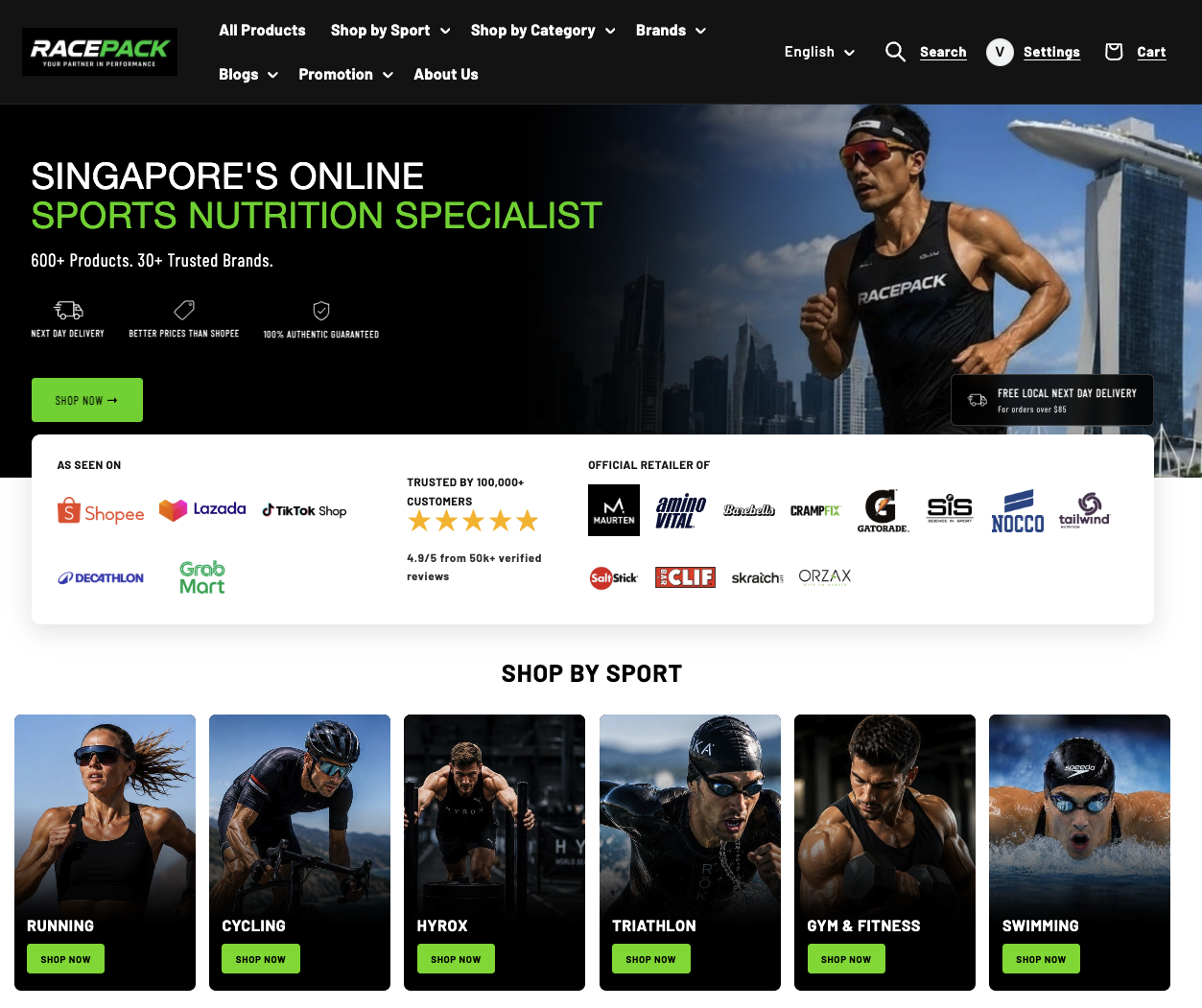
If quick, portable energy is the goal, the GU Energy Gel 24-pack and the smaller GU Energy Gel 6/12/24 pack options fit long runs and race day fueling without a shaker bottle in sight. Want to sample before committing? The GU Energy Gel single pack lets you test flavors in smaller quantities. For full-featured pre-training support, the MyProtein Pea Protein Isolate bundle with a creatine sachet combines chronic-dose creatine with a plant-based protein base, a solid vegan pre workout adjacent option. Amino support between or before sessions comes from MyProtein EAA Powder, and for stimulant-free electrolyte coverage on long training days, HIGH5 ZERO+ Multivitamins and Ultra Electrolytes round out the fueling picture. Keep every sachet and tub organized with the MyProtein Supplement Storage Box, and if you want to track how these changes show up in your training data, a Garmin Forerunner 165 GPS smartwatch pairs heart rate and pace tracking with your fueling strategy.
Browse the full energy gels collection and place your order today. Buy now and get it delivered next day across Singapore.
Sources
- Pre-Workout Supplements: How It Can Benefit Your Overall Well-Being — WebMD
- What Does Preworkout Do? — Verywell Health
- Pre-Workout Supplements: Ingredients, Precautions, and More — Healthline
- Can pre-workout supplements benefit your workouts? — The Conversation
FAQ
What does a pre workout do?
It raises alertness and reduces perceived effort during exercise, primarily through caffeine, while ingredients like beta-alanine and creatine support endurance and power output when taken consistently over weeks.
Is pre workout good or bad for you?
For most healthy adults, a well-dosed, third-party tested pre workout is safe and can modestly improve performance, but people with heart conditions, anxiety disorders, or pregnancy should avoid stimulant versions or consult a doctor first.
Is it OK to take pre workout every day?
Daily use is generally fine for the chronic-dose ingredients like creatine and beta-alanine, but daily caffeine intake builds tolerance over time, so cycling off stimulant formulas every couple of months helps maintain effectiveness.
Is pre workout good before a workout?
Yes, when taken 20 to 60 minutes beforehand, since that window allows caffeine to reach peak blood levels right as you start training.
How much caffeine is safe in a pre workout?
Most healthy adults tolerate up to about 400 mg of caffeine per day total, so a serving delivering up to 300 mg leaves little room for additional coffee or tea that day.
Does beta-alanine tingling mean something is wrong?
No, the tingling sensation, called paresthesia, is harmless and typically fades within 30 to 60 minutes; starting with a smaller dose or splitting it reduces the intensity.
Can beginners use pre workout safely?
Yes, but beginners should start with a half serving to test tolerance, avoid dry scooping, and choose a product with transparent labeling rather than a proprietary blend.
Are there good vegan pre workout options?
Yes, plant-based options exist, including the MyProtein Pea Protein Isolate bundle with a creatine sachet, which pairs a vegan protein source with chronic-dose creatine.
What is a stimulant-free pre workout alternative?
Stimulant-free formulas built around citrulline and electrolytes, like HIGH5 ZERO+ Multivitamins and Ultra Electrolytes, support hydration and endurance without caffeine, suitable for evening training.
Can I just drink coffee instead of buying pre workout?
For many people, yes. A cup of coffee delivers a similar acute caffeine boost to many pre workouts, though it lacks the added creatine, beta-alanine, or citrulline some formulas include.
How do I know if a pre workout is safe from contaminants?
Look for third-party certification like Informed Sport or NSF Certified for Sport, which verify label accuracy and screen for banned substances, an especially important check for competitive athletes.
Should I keep creatine separate from my pre workout?
Many experienced athletes do, since creatine needs daily dosing of 3–5 grams regardless of training day, and a standalone creatine supplement makes that consistency easier to track.