

Marathon Recovery Nutrition: Protein Guide for Runners
Protein is the primary driver of muscle repair after a marathon, and getting your post-marathon protein intake right determines how fast you bounce back. The standard recommendation is 20 to 30 grams of high-quality protein within the first two hours of crossing the finish line, distributed every three to four hours across the recovery day. Carbohydrates work alongside protein to replenish depleted glycogen stores, making the combination more effective than either nutrient alone. For endurance athletes juggling training blocks and race cycles, understanding marathon recovery nutrition protein strategies is the difference between a two-day recovery and a two-week one.
How much protein should marathon runners consume right after finishing?
The evidence-backed target for immediate post-race protein is 0.3 grams per kilogram of body weight within the first zero to two hours after finishing. For most runners, that translates to 20 to 30 grams of quickly digestible protein. This amount strongly stimulates muscle protein synthesis, the biological process that rebuilds damaged muscle fibers.
Here is what that looks like for different body weights:
-
60 kg (132 lbs): 18 grams of protein
-
70 kg (154 lbs): 21 grams of protein
-
80 kg (176 lbs): 24 grams of protein
-
90 kg (198 lbs): 27 grams of protein
The popular “30-minute window” rule is less rigid than once believed. Muscles stay sensitized to protein for at least 24 hours after endurance exercise, meaning the anabolic window extends well beyond the first hour. That said, eating sooner rather than later still gives you a head start on repair, especially if you did not eat before the race.
Fluid and electrolyte intake matters here too. Protein digestion requires adequate hydration, and post-race dehydration can slow absorption. Pair your protein source with water or an electrolyte drink to support both recovery and rehydration at the same time.
Pro Tip: If solid food feels unappealing right after the finish line, a protein shake or a carton of chocolate milk delivers your 20 to 30 gram target without requiring a full meal.
What are the best protein sources for marathon recovery?
Leucine is the amino acid that directly triggers muscle protein synthesis, and choosing leucine-rich proteins like whey, dairy, eggs, meat, and soy gives your muscles the strongest repair signal. Not all protein sources deliver the same leucine density per gram, which is why source quality matters as much as quantity.

| Protein source | Leucine content per 25 g protein | Digestibility | Best use case |
|---|---|---|---|
| Whey isolate | ~2.7 g | Very high | Immediate post-race shake |
| Eggs | ~2.0 g | High | Recovery breakfast |
| Greek yogurt | ~1.8 g | High | Quick snack with carbs |
| Chicken breast | ~1.9 g | High | Recovery meal |
| Soy protein isolate | ~1.6 g | Moderate to high | Plant-based shake option |
| Lentils / legumes | ~0.6 g | Moderate | Supplement with other sources |
Animal proteins generally deliver more leucine per gram than plant proteins. This does not mean plant-based runners cannot recover effectively. It means they need to consume larger protein portions or combine sources strategically. Pairing rice with lentils, or adding soy protein isolate to a smoothie, brings leucine levels closer to what whey delivers in a single serving.
For practical convenience right after a race, Greek yogurt with fruit, a ready-to-drink protein shake, or two to three hard-boiled eggs are all solid choices. These options are portable, easy to digest, and require zero preparation at the finish line.
Pro Tip: Plant-based athletes should aim for soy protein isolate as their primary post-race protein. Among plant sources, soy comes closest to whey in leucine density and digestibility, making it the strongest single-source option available.
How to distribute protein intake in the first 24 hours after a marathon
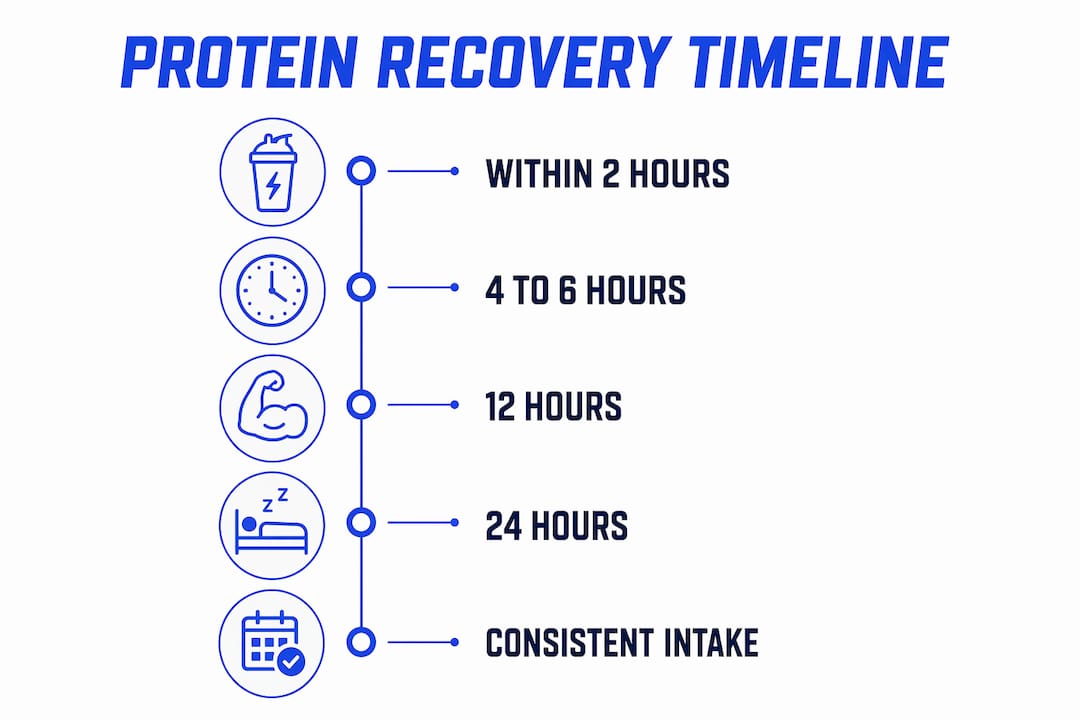
Spreading protein across the recovery day produces better muscle repair outcomes than front-loading one large serving. Research supports protein doses of 20 to 40 grams every three to four hours post-exercise to maximize muscle protein synthesis throughout the day. Think of these as “protein anchors” that keep your muscles in a repair state continuously.
Here is a practical 24-hour protein distribution plan for a 70 to 80 kg runner:
-
Within 2 hours of finishing: 20 to 25 grams of quickly digestible protein. A whey shake, Greek yogurt, or a Barebells Protein Milkshake works well here. Pair with 60 to 90 grams of carbohydrates.
-
3 to 4 hours later (lunch or early dinner): 30 to 35 grams of protein from a full meal. Chicken with rice, salmon with sweet potato, or a tofu stir-fry with quinoa all hit this range.
-
Afternoon snack (3 to 4 hours after lunch): 20 to 25 grams of protein. Cottage cheese, a protein bar, or a handful of edamame with a boiled egg keeps the synthesis signal active.
-
Pre-sleep meal or snack: 40 grams or more of slower-digesting protein. Overnight recovery benefits from a larger dose of casein or a full protein-rich meal because the feeding gap is longer. Cottage cheese, casein powder, or a substantial chicken dish all qualify.
One common mistake is under-consuming protein in the first 24 to 48 hours while focusing almost entirely on carbohydrates. Carbs are critical, but neglecting protein during this window leaves muscle repair incomplete. Planning your protein anchors in advance, especially for race day when appetite is unpredictable, removes the guesswork.
Total daily protein intake for endurance athletes sits at 1.3 to 2.4 grams per kilogram of body weight. For a 150-pound athlete, that is roughly 90 to 165 grams per day. On race day and the day after, targeting the higher end of this range accelerates recovery.
How to pair carbs with protein for marathon recovery
Carbohydrates replenish muscle glycogen, the primary fuel source depleted during a marathon, and pairing them with protein produces faster recovery than protein alone. A practical post-race meal targets 60 to 90 grams of carbohydrates alongside 20 to 30 grams of protein. This combination restores energy stores and initiates muscle repair simultaneously.
The carbohydrate-to-protein ratio most commonly cited in sports nutrition research is 3:1 to 4:1. For a 25-gram protein serving, that means 75 to 100 grams of carbohydrates in the same meal or snack. This ratio is especially relevant if you have another training session within 24 hours and need glycogen stores restored quickly.
Practical food pairings that hit these targets:
-
Banana + Greek yogurt: approximately 27 g carbs and 17 g protein per serving. Add a second banana or a handful of granola to reach the 60 g carb target.
-
White rice + grilled chicken: 60 g carbs and 35 g protein per standard portion. White rice digests faster than brown rice, making it the better choice immediately post-race.
-
Chocolate milk (500 ml): roughly 50 g carbs and 17 g protein. A classic recovery drink backed by decades of sports nutrition research.
-
Maurten Drink Mix 320 + whey shake: delivers fast-absorbing carbohydrates alongside protein for runners who prefer liquid recovery nutrition.
Hydration and electrolyte replacement belong in this equation too. Sodium, potassium, and magnesium lost through sweat affect muscle function and nutrient absorption. Adding an electrolyte replenishment drink to your recovery meal supports both rehydration and mineral balance, which protein and carbs alone cannot address.
Key takeaways
Effective marathon recovery requires protein distributed consistently across the first 24 hours, not just consumed once at the finish line.
| Point | Details |
|---|---|
| Immediate protein target | Consume 20 to 30 grams of protein within 2 hours of finishing to initiate muscle repair. |
| Protein distribution matters | Spread 20 to 40 gram doses every 3 to 4 hours across the recovery day for continuous muscle protein synthesis. |
| Leucine-rich sources win | Choose whey, eggs, dairy, or soy protein to maximize the muscle repair signal per gram consumed. |
| Carbs and protein together | Pair 60 to 90 grams of carbohydrates with your protein serving to restore glycogen and repair muscle simultaneously. |
| Daily protein target | Aim for 1.3 to 2.4 grams per kilogram of body weight across the full recovery day, not just post-race. |
What most runners get wrong about post-race protein
I have worked with a lot of endurance athletes, and the pattern I see most often is this: runners obsess over the finish-line snack and then completely forget about protein for the rest of the day. They grab a banana, maybe a recovery drink, and then spend the afternoon eating mostly carbs because that is what feels good after 26.2 miles. By the time dinner rolls around, they have consumed maybe 40 grams of protein total. That is not enough.
The research is clear that total daily protein and consistent feeding frequency matter more than nailing a narrow post-exercise window. The 30-minute rule is not a myth exactly, but it is not the whole story either. If you ate a protein-containing meal two hours before the race, your muscles are already primed. The more important habit is building those protein anchors throughout the day so you never go more than four hours without a meaningful dose.
The other mistake I see is plant-based runners assuming their diet is adequate without checking leucine levels. Eating a lot of legumes and whole grains does not automatically deliver the leucine density your muscles need after a marathon. Soy protein isolate, available through Racepack’s plant-based protein options, is the most practical fix here.
One thing I always recommend: prepare your recovery snacks before race day. Pack a protein shake, a bar, or a tub of Greek yogurt in your post-race bag. Appetite suppression after a marathon is real, and having food ready removes the barrier of having to seek it out when you feel least like eating.
If you are serious about your recovery, consider working with a sports dietitian to personalize your targets. General guidelines are a strong starting point, but body weight, training load, and race conditions all shift what optimal looks like for you.
— Jason John
Fuel your recovery with Racepack
Getting your post-marathon nutrition right starts with having the right products on hand before race day.
At Racepack, we stock the recovery nutrition that endurance athletes actually need. The BS Hydro Whey Protein delivers fast-absorbing hydrolyzed whey protein, ideal for that critical two-hour post-race window. For runners who want zero prep at the finish line, the Barebells Protein Milkshake is a ready-to-drink option that hits your protein target without requiring a kitchen. Pair either with the HYROX Electrofuel Electrolyte to cover hydration and mineral replenishment alongside your protein intake. Browse our full recovery and wellness range to build a post-race nutrition plan that works.
FAQ
How much protein do you need right after a marathon?
Consume 20 to 30 grams of quickly digestible protein within the first two hours of finishing. This amount, roughly 0.3 grams per kilogram of body weight, strongly stimulates muscle protein synthesis to begin repair.
Is the 30-minute protein window real for marathon runners?
The strict 30-minute rule is less critical than once believed. Muscles remain sensitized to protein for at least 24 hours after endurance exercise, so total daily protein intake and consistent distribution across meals matter more than hitting an exact post-race minute.
What are the best foods for recovery after a marathon?
Leucine-rich sources like whey protein, Greek yogurt, eggs, chicken, and soy protein isolate are the most effective choices. Pair them with fast-digesting carbohydrates like white rice, bananas, or chocolate milk to restore glycogen and repair muscle at the same time.
How do plant-based runners meet their protein needs after a race?
Plant-based athletes should prioritize soy protein isolate as their primary post-race source and combine other plant proteins throughout the day to reach adequate leucine levels. Larger overall portions are needed compared to animal-based sources to achieve the same muscle repair signal.
How much total protein should a marathon runner eat on race day?
Endurance athletes benefit from 1.3 to 2.4 grams of protein per kilogram of body weight across the full day. For a 150-pound runner, that is 90 to 165 grams total, distributed across four to five meals and snacks rather than consumed in one or two sittings.