

Sport Nutrition Periodization: Your 2026 Athlete Guide
Sport nutrition periodization is the planned, purposeful manipulation of energy intake, macronutrients, and micronutrients across training cycles to promote physiological adaptations, support body composition goals, and optimize athletic performance. As defined in peer-reviewed research, it refers to the strategic combined use of exercise training and nutrition with the overall aim of obtaining adaptations that support exercise performance. This is not simply eating more on hard days. It is a structured, season-long approach that aligns what you eat with what your body needs to adapt, recover, and compete.
Here is what nutritional periodization actually covers:
- Energy management: Adjusting total caloric intake to match training volume and intensity across micro-, meso-, and macrocycles
- Macronutrient manipulation: Shifting carbohydrate, protein, and fat targets based on session type and phase goals
- Micronutrient and hydration planning: Ensuring vitamins, minerals, and fluid strategies support tissue repair and immune function throughout the season
- Systemic adaptation support: Nutrition affects not just muscle but also the brain, vasculature, gut, and metabolic pathways
- Phase alignment: Matching nutritional priorities to preparation, pre-competition, competition, and transition phases
The core principle is that training adaptations can be amplified or reduced by nutrition. Getting that relationship right, across an entire season, is what separates athletes who peak at the right time from those who plateau or break down.
What are the four phases of nutrition periodization?
The four traditional phases of periodization in sports each carry distinct nutritional demands. Understanding what shifts between phases, and why, gives you a practical framework for sport diet planning throughout the year.
Preparation phase (off-season)
This phase focuses on building an aerobic and strength base. Training volume is typically high but intensity is moderate, which means total energy needs are elevated. The nutritional priority is supporting recovery and body composition goals, whether that means building lean mass or shedding excess body fat accumulated during the transition. Carbohydrate intake is moderate, protein stays high to support muscle remodeling, and fat intake can be slightly elevated to support hormonal health during longer, lower-intensity sessions.
Pre-competition phase (pre-season)
Training intensity rises sharply here. Athletes shift from general conditioning to sport-specific work, and the body’s demand for carbohydrates increases accordingly. This is the phase where carbohydrate loading strategies begin to matter, and where pre-workout nutrition becomes a direct performance lever. Gut training, which means regularly consuming fluids and gels during sessions, also starts in earnest here so the digestive system is ready for race-day fueling.
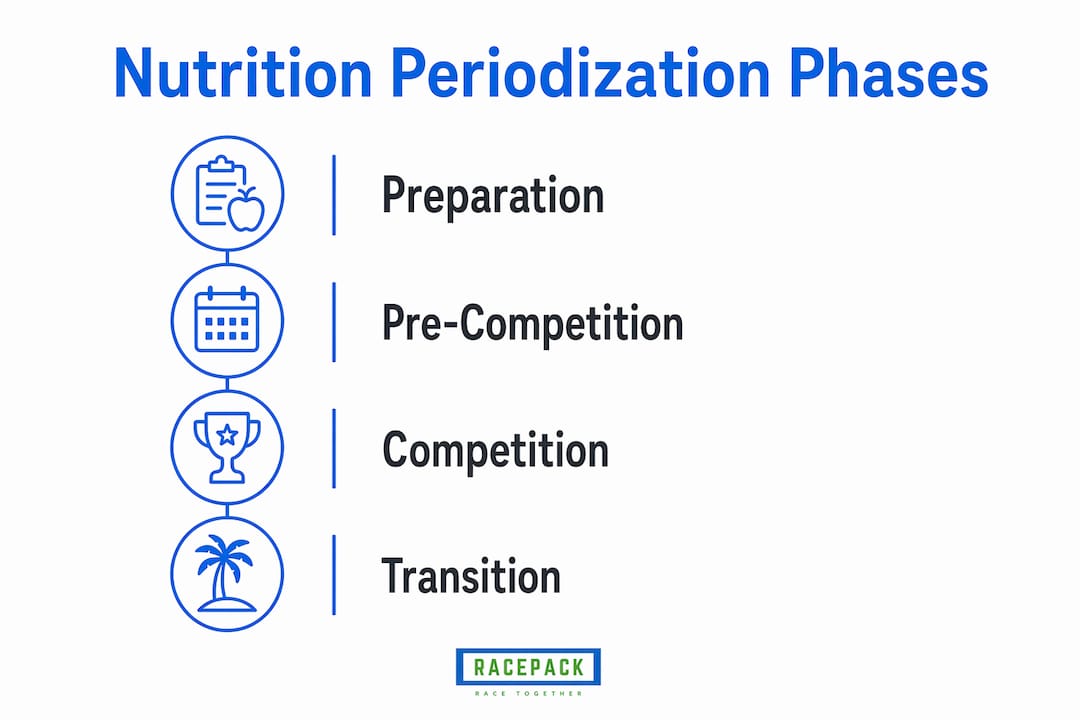
Competition phase (in-season)
Performance is the single priority. Energy availability must be high enough to fuel training, racing, and recovery simultaneously. Carbohydrate intake peaks, protein remains consistent to preserve muscle mass under competitive stress, and nutrition timing around sessions becomes critical. Intra-workout carbohydrates are a standard tool here, not an optional add-on.
Transition phase (post-season)
This phase serves biological regeneration and typically lasts several weeks. Training load drops significantly, so energy intake should decrease to match. The focus shifts to anti-inflammatory foods, micronutrient replenishment, and gut rest. Athletes who ignore this phase and maintain competition-level caloric intake often gain unwanted body fat and enter the next preparation phase at a disadvantage.
Key nutritional shifts across phases:
- Off-season: Moderate carbs, high protein, slight fat increase, body composition focus
- Pre-season: Rising carbs, consistent protein, gut training begins, timing precision increases
- In-season: Peak carbs, high protein, maximum timing discipline, supplement use peaks
- Post-season: Reduced energy, anti-inflammatory emphasis, micronutrient recovery, gut rest
How do macronutrient strategies drive training adaptation?
Macronutrient manipulation is where periodized nutrition gets genuinely technical, and where the biggest performance gains are available if you apply it correctly.
Carbohydrate periodization: train high vs. train low
The “train high” approach means performing sessions with high carbohydrate availability, which directly supports high-intensity work and preserves training quality. The “train low” approach deliberately restricts carbohydrate availability before or during specific sessions to amplify metabolic signaling, particularly fat oxidation pathways. Studies show that training low enhances metabolic adaptations but can impair high-intensity session quality, which is why the “fuel for the work required” strategy is the practical gold standard. You do not train low before a threshold interval session. You train low before a low-intensity aerobic recovery run.
Pro Tip: Schedule your train-low sessions on easy aerobic days and always fuel high before quality sessions. Misapplying train-low to hard workouts is one of the most common mistakes athletes make.
Carbohydrate availability also regulates molecular signaling pathways that govern muscle adaptation. This means the timing and quantity of carbohydrate intake is not just an energy question. It is a signaling question that determines which adaptations your body prioritizes after each session.
Protein: timing and distribution matter as much as total intake
Protein supports muscle repair, enzyme synthesis, and immune function across all phases. The key insight from sports science is that distribution across the day matters as much as the daily total. Spreading protein intake across 4–5 meals or snacks, rather than concentrating it in one or two large servings, maximizes muscle protein synthesis. For runners and endurance athletes, protein type and timing directly influence how well the body rebuilds between sessions.
Fat: strategic, not feared
Fat intake should be modulated rather than minimized. During low-intensity training blocks, slightly higher fat intake supports fat oxidation adaptations and hormonal health. During high-intensity competition phases, fat intake typically decreases as carbohydrates take priority. Extreme fat restriction at any phase is counterproductive.
Macronutrient targets by training phase
| Phase | Carbohydrate (g/kg/day) | Protein (g/kg/day) | Fat (g/kg/day) |
|---|---|---|---|
| Preparation (off-season) | 3–5 | moderate to high range | moderate range |
| Pre-competition (pre-season) | 5 | moderate to high range | 0.8 |
| Competition (in-season) | 6–10 | moderate to high range | 0.8 |
| Transition (post-season) | 3–4 | moderate range | moderate range |

These ranges reflect general consensus guidelines for endurance and mixed-sport athletes. Individual targets depend on body weight, sport type, session duration, and personal metabolic response.
What role do nutraceuticals and functional foods play in periodized nutrition?
Supplements and functional foods are not a replacement for sound nutrition planning. Used correctly within a periodized framework, though, certain nutraceuticals can meaningfully support adaptation and performance.
Supplements with strong evidence
When periodized appropriately, supplements such as creatine, nitrates, and caffeine can augment training adaptations and competition performance. Here is how each fits into a periodized plan.
- Creatine: Most effective during high-volume strength or power training blocks. Loading during the preparation phase supports muscle phosphocreatine stores and can accelerate recovery between high-intensity sets.
- Caffeine: Best reserved for key training sessions and competition days to preserve sensitivity. Using it daily blunts its ergogenic effect, so periodizing its use, meaning saving it for when it counts most, is a deliberate strategy.
- Dietary nitrates (from beetroot, for example): Most useful in the pre-competition and competition phases where oxygen efficiency directly affects performance. Regular consumption in the 2–3 days before a key event is the evidence-based approach.
Functional foods and gut health
Fermented foods such as yogurt, kefir, and kimchi support gut microbiome health, which matters more in periodized nutrition than most athletes realize. A healthy gut improves nutrient absorption, reduces inflammation, and supports immune function during high training loads. Tart cherry juice has a body of research behind it for reducing exercise-induced muscle soreness, making it a useful addition during heavy training blocks.
Gut training itself is a form of functional nutrition periodization. Regularly consuming fluids and carbohydrates during training sessions improves gastric emptying and absorption, directly reducing gastrointestinal distress on race day. Athletes who skip gut training and then take gels for the first time during a race often pay for it around mile 18.
Comparison of common nutraceuticals by phase
| Nutraceutical | Best Phase | Primary Benefit | Evidence Level |
|---|---|---|---|
| Creatine | Preparation | Power output, recovery | Strong |
| Caffeine | Pre-competition, Competition | Endurance, focus | Strong |
| Dietary nitrates | Pre-competition, Competition | Oxygen efficiency | Moderate-Strong |
| Tart cherry juice | All phases (heavy blocks) | Muscle soreness reduction | Moderate |
| Probiotics/fermented foods | All phases | Gut health, immunity | Moderate |
| Beta-alanine | Preparation, Pre-competition | Buffering capacity | Moderate |
Individual response to supplements varies considerably. What works well for one athlete may produce no benefit or even adverse effects for another. Working with a registered dietitian or certified sports nutritionist before adding nutraceuticals to your plan is the right call.
How do you build a practical nutrition periodization plan?
Knowing the theory is one thing. Translating it into daily meals, snacks, and supplement timing is where most athletes either get it right or fall apart. The Periodised Nutrition System developed for elite athletes uses color-coded frameworks, specifically Red-Amber-Green (RAG) intensity ratings and performance plates, to structure nutrition aligned with training load. You can apply the same logic without a sports science team.
Sample daily nutrition framework by phase
Preparation phase (moderate volume, moderate intensity)
| Meal | Timing | Focus |
|---|---|---|
| Breakfast | about one hour pre-training | Moderate carbs, moderate protein, low fat |
| Intra-session | During session (if over an hour) | Water, electrolytes |
| Post-training | Within about 30 to 45 minutes | Protein + moderate carbs |
| Lunch | 2–3 hours post-training | Balanced macros, vegetables |
| Dinner | Evening | Protein-forward, moderate carbs |
| Optional snack | Before bed | Casein protein or dairy |
Competition phase (high intensity, race schedule)
| Meal | Timing | Focus |
|---|---|---|
| Pre-race breakfast | 2–3 hours before | High carbs, low fat, low fiber |
| Warm-up fuel | about 15 to 30 minutes before | Small carb top-up (gel or banana) |
| Intra-race | Every half hour to 45 minutes | Energy gels, electrolyte drink |
| Post-race recovery | Within 30 minutes | Protein + high carbs |
| Recovery meal | 2 hours post-race | Full balanced meal |
For sport nutrition timing to work, consistency matters more than perfection. Missing one pre-training meal is not a crisis. Consistently under-fueling high-intensity sessions across weeks is.
Hydration integration
Hydration is not separate from nutrition periodization. It is part of it. Fluid needs increase with training volume and ambient temperature. Electrolyte replenishment, particularly sodium, potassium, and magnesium, becomes critical during competition phases and in hot conditions. Comparing hydration options across isotonic, hypotonic, and hypertonic formulations helps you match the right product to the right session type.
Monitoring and adjusting your plan
Track body weight, energy levels, sleep quality, and training performance weekly. A consistent drop in training output alongside stable or increasing body weight often signals under-fueling of carbohydrates. Unexpected weight loss during a high-volume block may indicate insufficient total energy intake. Work with a coach or sports dietitian to interpret these signals and adjust macronutrient targets accordingly. The 4Ps framework emphasizes that personalization is not a luxury. It is the foundation of effective periodized nutrition.
What does the latest research say about sport nutrition periodization?
The science of nutritional periodization has moved well beyond simple calorie cycling. The most current consensus, reflected in 2025 and 2026 expert guidelines, centers on the 4Ps framework as the organizing principle for athlete nutrition.
The 4Ps framework explained
The 4Ps framework, developed by sports nutrition researchers, provides a structured approach to athlete-centered nutrition:
| Pillar | What it means | Practical application |
|---|---|---|
| Personalize | Tailor nutrition to the individual athlete’s physiology, goals, and sport | Body composition testing, metabolic profiling, dietary preference assessment |
| Periodize | Align nutrient intake with training phase and session goals | Carb cycling, protein distribution, supplement timing by phase |
| Prefuel | Ensure adequate fuel availability before key sessions and events | Pre-workout meals, carbohydrate top-ups, hydration protocols |
| Prepare | Use nutrition to prepare all body systems, not just muscle | Gut training, heat acclimatization nutrition, immune support |
The “Prepare” pillar is where current research is expanding most rapidly. Adaptations from training extend beyond skeletal muscle to include the brain, vasculature, and intestinal absorptive capacity. Nutrition strategies that support these systemic adaptations, not just muscle glycogen, represent the frontier of periodized nutrition science.
Molecular signaling and carbohydrate availability
Carbohydrate availability acts as a molecular switch. When glycogen stores are low, the body upregulates genes associated with fat oxidation and mitochondrial biogenesis. When stores are high, it prioritizes performance and recovery. Manipulating nutrient timing to influence these signaling pathways is the scientific rationale behind train-low strategies. The practical takeaway is that not every session should be fueled the same way, and the decision about how to fuel each session should be deliberate, not accidental.
For athletes looking to align training structure with nutrition, the complete guide to training periodization provides a useful framework for understanding how training blocks map to nutritional phases.

Expert consensus in 2026
Sports nutrition specialists now emphasize integrating nutrition with training as a non-optional component of elite performance. The field has moved from “eat well generally” to “eat specifically for the adaptation you are targeting today.” That shift in framing is what makes periodized nutrition a genuine performance tool rather than a wellness concept.
Common misconceptions about nutrition periodization
Getting periodized nutrition wrong is easy. The concept sounds straightforward until you start applying it, and several persistent myths make the process harder than it needs to be.
“Just eat more on training days”
This is the most reductive version of periodized nutrition, and it misses the point entirely. The goal is not simply to add calories on hard days. It is to provide the right macronutrients at the right times to support specific physiological adaptations. Eating a large pizza after a long run adds calories, but it does not deliver the protein distribution, carbohydrate timing, or micronutrient density that recovery actually requires.
“Train low means eat low carb all the time”
Train-low is a targeted strategy for specific sessions, not a dietary philosophy. Applying train-low indiscriminately to high-intensity sessions impairs training quality and can compromise immune function. The strategy only works when it is applied to the right sessions, typically low-intensity aerobic work, while high-quality sessions remain well-fueled.
“The transition phase doesn’t need a nutrition plan”
Post-season is when many athletes abandon structure entirely. This is a mistake. The transition phase serves biological regeneration, and nutrition during this period directly affects how well you enter the next preparation block. Continuing to eat at competition-level caloric intake when training load has dropped by half leads to unwanted fat gain and metabolic sluggishness heading into off-season training.
“Gut training is optional”
Athletes who discover mid-race that their gut cannot handle gels or sports drinks at race pace have made a costly error. Gut training is a physiological process that requires weeks of consistent practice. It is not optional for endurance athletes. It is a performance variable that needs to be periodized just like any other.
“Supplements replace nutrition gaps”
No supplement compensates for chronic under-fueling, poor food quality, or missed recovery meals. Nutraceuticals work at the margins of an already solid nutrition plan. Athletes who rely on supplements to fix a broken diet will not get the results they expect.
“Hydration and micronutrients are secondary concerns”
Dehydration of even 2% of body weight measurably impairs endurance performance. Iron deficiency reduces oxygen-carrying capacity. Vitamin D insufficiency affects muscle function and immune health. These are not secondary concerns. They are primary performance variables that belong inside a periodized nutrition plan, not as afterthoughts.
Why micronutrients and hydration belong inside your periodization plan
Micronutrients and hydration are often treated as background maintenance rather than active performance tools. That framing costs athletes more than they realize.
Iron, vitamin D, calcium, magnesium, and zinc each play direct roles in energy metabolism, muscle contraction, bone health, and immune function. During high-volume training blocks, micronutrient demands increase because training stress depletes stores faster than a standard diet replenishes them. Female athletes and plant-based athletes are particularly vulnerable to iron and calcium shortfalls during preparation and competition phases.
Hydration strategy should be phase-specific. During low-intensity off-season training, plain water is often sufficient. As training volume and intensity rise in the pre-competition phase, electrolyte replenishment becomes necessary to maintain plasma volume and prevent cramping. During competition, sodium intake during prolonged events is a direct performance variable, not a preference. Products like the HIGH5 ZERO+ electrolyte sachets combine micronutrient support with electrolyte replenishment, making them a practical tool for athletes managing both simultaneously.
Sweat rate testing, where you weigh yourself before and after a training session to calculate fluid loss, is the most practical way to personalize hydration targets. A one-kilogram drop in body weight during a session equals approximately one liter of fluid lost. Replacing that fluid, plus electrolytes, within the post-session recovery window supports the next day’s training quality.
Pro Tip: Add a multivitamin to your transition phase protocol. Post-season is when micronutrient stores are most depleted after months of high training stress, and replenishing them before the next preparation block begins sets a stronger foundation.
How does nutrition periodization change based on sport type and athlete goals?
A marathon runner and a competitive powerlifter both benefit from periodized nutrition, but the specifics look completely different. Sport type, training structure, and individual goals all shape how you apply the principles.
Endurance athletes
Endurance sports like running, cycling, and triathlon place the highest demands on carbohydrate availability and gut function. Carbohydrate periodization is central to the plan, with train-low sessions used strategically during base-building phases and high carbohydrate availability prioritized for all quality sessions and races. Gut training is non-negotiable. Cycling nutrition for endurance athletes illustrates how phase-specific fueling translates into real-world performance gains across a season.
Strength and power athletes
For athletes in weightlifting, powerlifting, or team sports with explosive demands, protein periodization takes priority alongside carbohydrate management. During hypertrophy-focused preparation phases, protein intake and caloric surplus support muscle gain. During competition phases, body weight management and performance fueling take over. Creatine supplementation is most effective when introduced during high-volume strength blocks.
Team sport athletes
Soccer, basketball, and rugby players face a unique challenge: a long competitive season with weekly games and limited true off-season periods. Nutrition periodization for team sport athletes often operates on a weekly microcycle rather than a seasonal macrocycle. Match-day nutrition, recovery nutrition in the 24–48 hours post-game, and mid-week training fueling each require distinct approaches. Recovery nutrition after high-intensity events directly affects how quickly an athlete can train hard again.
Weight-category athletes
Athletes in sports with weight classes, such as wrestling, rowing, or combat sports, face the added complexity of body weight management within a periodized framework. Aggressive caloric restriction close to competition impairs performance and recovery. The evidence-based approach is to manage body composition gradually during the preparation phase rather than crash-cutting weight in the final days before competition.
Goal-specific adjustments
| Athlete goal | Key nutritional adjustment |
|---|---|
| Build lean muscle | Caloric surplus, high protein, creatine in preparation phase |
| Reduce body fat | Moderate caloric deficit in off-season, preserve protein, avoid deficit during competition |
| Peak for a single event | Carbohydrate loading in final 2–3 days, taper nutrition with training taper |
| Sustain performance across long season | Weekly microcycle nutrition, consistent recovery fueling, micronutrient monitoring |
How do you monitor whether your nutrition periodization is working?
Periodized nutrition only delivers results if you track the right variables and adjust when the data tells you to. Guessing is not a strategy.
Body composition tracking
Periodic body composition assessments, using DEXA scanning, skinfold calipers, or bioelectrical impedance, give you objective data on whether your nutrition plan is producing the intended body composition changes across phases. Weigh-ins alone are insufficient because they do not distinguish between muscle, fat, and fluid changes.
Training performance markers
Power output, pace at a given heart rate, and session rating of perceived exertion (RPE) are the most direct indicators of whether your fueling is adequate. A consistent decline in power or pace at the same effort level, without a corresponding increase in training load, often signals a carbohydrate or total energy shortfall.
Recovery quality
Sleep quality, morning resting heart rate, and muscle soreness levels between sessions all reflect how well your nutrition supports recovery. Athletes who are consistently sore, sleeping poorly, or showing elevated resting heart rates despite adequate sleep may be under-fueling recovery nutrition, particularly protein and carbohydrates in the post-session window.
Blood biomarkers
Quarterly blood panels that include ferritin, vitamin D, complete blood count, and metabolic markers give you objective data on micronutrient status and overall metabolic health. Many athletes discover iron deficiency or vitamin D insufficiency only after performance has already declined. Getting ahead of these deficiencies through proactive monitoring is far more effective than treating them reactively.
Adjusting the plan
When monitoring reveals a gap, the adjustment should be specific. If training performance is declining during a high-intensity block, increase carbohydrate intake around key sessions before changing anything else. If body composition is not shifting as expected during the preparation phase, review total energy balance and protein distribution before adding supplements. Supplements that support recovery work best when the foundational nutrition plan is already sound.
Working with a registered dietitian who specializes in sports nutrition is the most reliable way to interpret monitoring data and make evidence-based adjustments. The 4Ps framework places personalization at the center of effective periodized nutrition, and personalization requires data, not guesswork.
Key Takeaways
Sport nutrition periodization is the planned manipulation of energy, macronutrients, and micronutrients across training phases to promote physiological adaptations, support body composition, and optimize athletic performance throughout the season.
| Point | Details |
|---|---|
| Four phases structure the year | Preparation, Pre-competition, Competition, and Transition each require distinct macronutrient and energy targets. |
| Fuel for the work required | Train-low enhances fat oxidation but impairs high-intensity quality; reserve it for easy sessions only. |
| Transition phase lasts 3–4 weeks | Post-season biological regeneration requires reduced energy intake and micronutrient replenishment. |
| The 4Ps framework guides modern practice | Personalize, Periodize, Prefuel, and Prepare form the evidence-based structure for athlete-centered nutrition. |
| Monitoring drives adjustment | Track body composition, training performance, recovery quality, and blood biomarkers to personalize and refine your plan. |
Fuel Your Periodization Plan with the Right Products
Knowing your nutrition phases is only half the equation. Having the right products on hand, ready for the right moment, is what makes the plan work in practice. At RacepackSingapore, we carry the fueling tools that fit every phase of your training year.
For competition-phase fueling, GU Energy Gels deliver clean, fast-acting carbohydrates precisely when your muscles need them most. If you prefer to build your supply gradually or test different flavors, the GU Energy Gel flexible pack lets you match your order size to your current training block. For hydration and micronutrient support across all phases, the HIGH5 ZERO+ sachets combine electrolyte replenishment with multivitamin coverage in a single convenient format. Athletes building their protein foundation will find the MyProtein Pea Protein Isolate bundle covers both muscle repair and creatine support in one package.
Browse the full sports nutrition range at RacepackSingapore and build your phase-specific fueling kit today.
Buy Now and Fuel Every Phase of Your Training
FAQ
What is nutrition periodization?
Nutrition periodization is the planned, strategic manipulation of energy, macronutrients, and micronutrients across training cycles to promote physiological adaptations and optimize athletic performance, as defined in peer-reviewed sports science literature.
What are the four phases of periodization?
The four traditional phases are Preparation (off-season), Pre-competition (pre-season), Competition (in-season), and Transition (post-season), each with distinct nutritional priorities. The transition phase lasts 3–4 weeks and focuses on biological regeneration.
Is sports nutrition a specialized field requiring professional guidance?
Yes. Sports nutrition is a specialized field, and 2025 consensus guidelines emphasize that registered dietitians or certified sports nutritionists should tailor intake to the individual athlete’s training phase, sport type, and performance goals.
What is the 4Ps framework in sports nutrition?
The 4Ps framework stands for Personalize, Periodize, Prefuel, and Prepare. It is an athlete-centered approach that structures nutrition strategies before, during, and after exercise aligned with individual physiological needs and training phases.
Does train-low mean following a low-carb diet?
No. Train-low is a targeted strategy applied to specific low-intensity sessions to enhance fat oxidation and metabolic signaling. Applying it to high-intensity sessions impairs training quality and is counterproductive. High-quality sessions should always be well-fueled.
How do I know if my nutrition periodization plan is working?
Track body composition, training performance metrics such as power output and pace at a given effort level, recovery quality, and quarterly blood biomarkers including ferritin and vitamin D. Consistent declines in training performance without increased load often signal inadequate carbohydrate or total energy intake.
What supplements fit best into a periodized nutrition plan?
Creatine, caffeine, and dietary nitrates have the strongest evidence base. When periodized appropriately, each can augment training adaptations and competition performance. Creatine works best during high-volume preparation phases; caffeine and nitrates are most effective in pre-competition and competition phases.
Why is gut training part of nutrition periodization?
Gut training involves regularly consuming fluids and carbohydrates during training sessions to improve gastric emptying and absorption. This reduces gastrointestinal distress on race day and is a critical but often overlooked component of endurance nutrition periodization.
How does nutrition periodization differ by sport type?
Endurance athletes prioritize carbohydrate periodization and gut training; strength athletes focus on protein distribution and creatine timing; team sport athletes operate on weekly microcycles aligned with match schedules. The principles are the same, but the application changes based on the sport’s energy demands and competitive calendar.
Can recreational athletes benefit from nutrition periodization?
Yes. The principles scale to any training level. Even recreational athletes benefit from aligning carbohydrate intake with session intensity, distributing protein across the day, and adjusting total energy intake to match training volume across the season. The complexity of the plan should match the athlete’s training structure and goals.
What is the biggest mistake athletes make with nutrition periodization?
The most common error is applying train-low strategies to high-intensity sessions, which impairs training quality without delivering the intended metabolic benefits. A close second is neglecting the transition phase, where reduced energy intake and micronutrient replenishment are critical for setting up the next training year.
How does hydration fit into a periodized nutrition plan?
Hydration needs are phase-specific. Electrolyte replenishment becomes critical as training intensity rises in the pre-competition and competition phases. Sodium intake during prolonged events directly affects performance, and sweat rate testing helps athletes personalize their fluid replacement targets across different training conditions.