

Taurine for Athletes: What the Evidence Really Shows
Taurine can modestly improve certain high-power and endurance outcomes, and the evidence is strongest for jump performance, anaerobic power in repeated-sprint tasks, and some time-to-exhaustion measures. A 2026 Frontiers in Nutrition meta-analysis reported statistically significant gains in vertical jump (mean difference = 3.60) and countermovement jump (mean difference = 8.50) versus placebo, and found taurine attenuated power decline during repeated sprints in hot and humid conditions. A 2021 JISSN review found improvements across multiple studies for time-to-exhaustion and some anaerobic measures, while VO2max and peak power results remained inconsistent.
Where taurine’s effects are clearest:
- Jump performance (vertical and countermovement) — statistically significant pooled effects
- Repeated-sprint power maintenance, particularly in heat or high-humidity environments
- Time-to-exhaustion in some aerobic protocols
- Recovery markers: creatine kinase (CK), lactate dehydrogenase (LDH), and delayed-onset muscle soreness (DOMS) in the 24–48 hour post-exercise window
Where benefits are inconsistent or absent:
- VO2max (mixed results across trials)
- Peak and mean anaerobic power on standard Wingate tests
- Rate of perceived exertion (RPE)
Key Takeaways
Taurine’s most reliable performance benefits are for jump and anaerobic power outputs, with moderate evidence for recovery and lower certainty for VO2max or peak Wingate power.
| Point | Details |
|---|---|
| Strongest evidence | Jump performance (statistically significant improvements in vertical and countermovement jump performance) and repeated-sprint power in heat. |
| Recovery benefits | Taurine consistently reduces CK, LDH, and DOMS markers in the 24–96 hour post-exercise window. |
| Effective dose range | Trials use 1–6 g acutely or ~1–3 g/day chronically; no clear dose-response relationship exists. |
| Safety and interactions | Well tolerated in healthy adults; caffeine and fasted state can alter acute effects. |
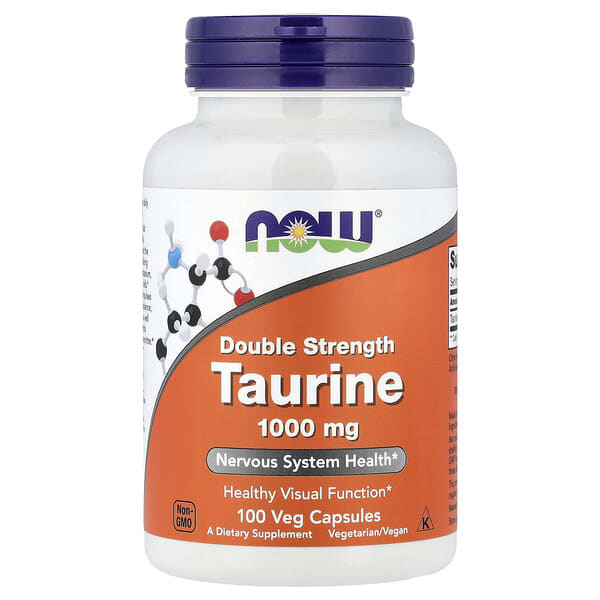
| RacepackSingapore | NOW Taurine 1000mg is available for athletes ready to run a structured taurine trial. |
Table of Contents
- How does taurine affect athletic performance? A look at the evidence
- What biological mechanisms explain taurine’s effects?
- What dosing and timing does the research actually support?
- Is taurine safe, and what interactions should you know about?
- How to trial taurine in your training: a practical step-by-step plan
- Where does the evidence fall short?
- How we evaluated the evidence: trust signals and study quality
- An honest take on taurine for athletes
- Ready to test taurine? RacepackSingapore has you covered
- Sources
- FAQ
How does taurine affect athletic performance? A look at the evidence
The clinical picture for taurine and exercise performance is mixed but meaningfully positive for specific outcomes. Pooled data from the 2026 Frontiers meta-analysis provides the clearest signal yet for jump and anaerobic tasks, while endurance data shows a smaller but consistent effect. A meta-analysis on oral taurine and endurance performance reported a small but consistent effect on endurance outcomes (Hedges’ g ≈ 0.4) across doses from 1–6 g, with single acute doses producing similar results to short-term supplementation.
| Outcome | Evidence type | Finding |
|---|---|---|
| Vertical jump | 2026 meta-analysis | MD = 3.60 (significant) |
| Countermovement jump | 2026 meta-analysis | MD = 8.50 (significant) |
| Time-to-exhaustion | Multiple RCTs/reviews | Frequently improved; inconsistent across studies |
| VO2max | Multiple reviews | Mixed; some positive, many null results |
| Anaerobic power (Wingate) | RCTs | Inconsistent; context-dependent |
| CK/LDH/DOMS (recovery) | Narrative review, RCTs | Consistently reduced in 24–96 h window |
A double-blind, placebo-controlled crossover trial in elite speed skaters reported acute anaerobic power improvements with taurine, illustrating that context matters: athlete training status, sport type, and environmental conditions all shape whether a meaningful effect appears.
Evaluate taurine’s practical relevance against your sport’s performance margins, not just statistical significance.*
Key patterns across the evidence base:
- Anaerobic and jump outcomes show the most consistent positive signal
- Endurance time-to-exhaustion benefits appear in multiple trials but not all
- Recovery markers (CK, LDH, DOMS) are reduced more reliably than acute power outputs
- VO2max improvements are reported in some studies but not replicated consistently
What biological mechanisms explain taurine’s effects?
Taurine is not a stimulant. It works as a cellular modulator, influencing ion flux, antioxidant systems, and membrane stability in ways that plausibly explain both its performance and recovery effects. Three mechanisms carry the strongest support.
-
Calcium handling in the sarcoplasmic reticulum (SR): Taurine interacts with SR calcium-handling proteins, including calsequestrin1, to regulate Ca²⁺ release and reuptake during muscle contraction. Better Ca²⁺ cycling translates to more forceful and sustained contractions, which is the most plausible explanation for jump and short-power improvements. Mechanistic research confirms this pathway in both animal and some human cell studies, though direct human in-vivo evidence remains limited.
-
Antioxidant and mitochondrial stabilization: Taurine replenishes intracellular thiol pools and stabilizes the mitochondrial membrane, reducing exercise-induced oxidative stress. This mechanism aligns with the consistent finding that CK, LDH, and DOMS markers drop in the 24–48 hour window after taurine supplementation, as reported in a 2025 narrative review. It also offers a plausible pathway for fatigue resistance during longer efforts.
-
Osmoregulation and cell volume: Taurine acts as an organic osmolyte, helping muscle cells maintain volume and structural integrity under thermal or mechanical stress. This mechanism is the most likely explanation for why taurine’s power-maintenance benefits are especially pronounced in hot and humid conditions, as the 2026 meta-analysis specifically noted.
Thermoregulatory support is a fourth proposed mechanism: taurine may help regulate core temperature during exercise in heat, though this is less well characterized in human trials than the Ca²⁺ and antioxidant pathways.
Pro Tip: When evaluating any taurine study, check the environmental conditions. Trials conducted in heat or humidity tend to show larger effects, likely because osmoregulation and thermoregulation are under greater stress. A null result from a cool-lab study does not rule out a real benefit for athletes who train or compete outdoors.

What dosing and timing does the research actually support?
Trials have used a wide range of doses, and a systematic dose-response review found no clear dose-response relationship: some positive outcomes appeared at 1 g, others at 6 g, and the pattern was not linear. The practical takeaway is that doses between 1 g and 6 g cover the range used in most positive trials.
| Protocol | Dose | Timing | Population | Reported effect |
|---|---|---|---|---|
| Acute pre-workout | 1–6 g | 1–3 hours before exercise | Trained athletes | Jump, sprint, and TTE improvements in some trials |
| Short-term loading | 2 g × 3/day for 7 days | Throughout the day | Untrained males | VO2max and TTE improvement (small sample) |
| Maintenance/chronic | ~1–3 g/day | Daily | Mixed | Recovery markers; some performance maintenance |
One small trial using 2 g three times daily for seven days reported improved VO2max and time-to-exhaustion in untrained males, though the study’s small sample and potential learning effects limit how far those results generalize. Acute single doses of 1–3 g taken 1–3 hours before training are the most commonly used protocol in positive jump and sprint trials.
Common protocols in practice:
- Acute pre-workout: 1–3 g taken 60–120 minutes before training or competition
- Short-term loading block: 1–3 g/day for 7–14 days to assess chronic effects
- Recovery support: 1–2 g post-workout, particularly after high-volume or high-intensity sessions
For athletes testing taurine for the first time, starting at 1 g acutely and assessing tolerance before moving to higher doses is a sensible approach. The dose-response review found no evidence that higher doses reliably produce larger effects, so more is not necessarily better.
Is taurine safe, and what interactions should you know about?
Taurine is generally well tolerated at the doses used in human trials, but a few interactions and special-population cautions are worth knowing before you start.
Key safety points:
- Common side effects: Rare at studied doses (1–6 g). No serious adverse events have been consistently reported in healthy adults across published trials.
- Caffeine interaction: Small trial evidence shows taurine’s effect on maximal voluntary muscle power differed depending on caffeine status. In some protocols, combining taurine with caffeine altered or negated the individual effect of each compound. If you use both, test them together and separately to understand your personal response.
- Fasted vs. fed state: The same trial data indicates that fasting status influenced taurine’s acute power effects. Taking taurine in a fed state appears to produce more consistent results in the available evidence.
- Upper bounds from trials: Most human studies have used up to 6 g acutely or up to 6 g/day in short-term protocols without reporting toxicity. Long-term safety data beyond several weeks is limited.
Taurine is not regulated as a drug in the United States. Under the Dietary Supplement Health and Education Act (DSHEA), manufacturers are responsible for safety and labeling before a product reaches market, and the FDA does not pre-approve supplements. For U.S. consumers, this means third-party testing (NSF Certified for Sport, Informed Sport, or USP verification) is the most reliable way to confirm ingredient purity and label accuracy.
Pro Tip: Look for a supplement that lists taurine as the sole active ingredient with no proprietary blends. Proprietary blends make it impossible to confirm the actual taurine dose, which matters when you are trying to replicate a specific trial protocol.
Special population cautions: individuals who are pregnant, have chronic kidney disease, or are under 18 should consult a physician before using taurine supplements. Kidney disease in particular affects taurine clearance, and supplemental doses have not been adequately studied in these groups.
This article provides general information only and is not a substitute for professional medical advice. Confirm current supplement guidelines with a qualified healthcare provider.
How to trial taurine in your training: a practical step-by-step plan
Trial taurine during a controlled training block, not on competition day. Testing an unfamiliar supplement on race day introduces a confounding variable you cannot control for.
-
Establish a baseline. In the week before starting taurine, record your target metric: jump height on a jump mat, sprint times through gates, or a time-to-exhaustion protocol. Do this at the same time of day, under the same conditions, at least twice to get a reliable average. For reactive strength and jump testing protocols, a standardized warm-up and consistent surface are non-negotiable.
-
Choose your dose and timing. Start with 1–2 g of taurine taken 60–120 minutes before your target training session. Keep caffeine intake constant throughout the trial: either always include it or always exclude it, since mixed caffeine status confounds results.
-
Run a two-week trial block. Use taurine consistently for 14 days, logging your target metric at least twice per week. Note sleep quality, hydration, and training load alongside performance data.
-
Assess and compare. After two weeks, compare your post-trial averages to your baseline. A meaningful improvement in jump height or sprint time that exceeds normal day-to-day variation suggests you are a responder.
-
Washout and repeat if needed. Take 7–10 days off taurine, then retest your baseline metric. If performance returns toward pre-trial levels, that is additional evidence the supplement was contributing. A second trial block confirms the pattern.
Pro Tip: Log everything in a simple training diary or spreadsheet: dose, timing, caffeine intake, sleep hours, session RPE, and your target metric. Without this data, you cannot distinguish a taurine effect from a training adaptation or a good week of sleep.
Responder vs. non-responder checklist:
- Did your target metric improve by more than normal daily variation?
- Did performance return toward baseline during washout?
- Were confounders (caffeine, sleep, diet) consistent throughout?
- Did you use a third-party-tested product with a confirmed taurine dose?
For athletes looking for a clean, well-dosed starting point, NOW Taurine 1000mg provides a straightforward single-ingredient option that makes dose control simple. Pair your taurine trial with a broader recovery and wellness strategy to get the most out of each training block.
Where does the evidence fall short?
The evidence base for taurine and performance is promising but not definitive. Most trials share structural limitations that prevent strong universal recommendations.
Main limitations:
- Small sample sizes: Many positive trials enrolled fewer than 20 participants, making it difficult to detect true effects reliably or rule out chance findings.
- Inconsistent outcome measures: Studies use different tests for “anaerobic power” (Wingate, countermovement jump, vertical jump, sprint gates), making pooled comparisons imprecise.
- Sex and training-status imbalance: Most trials recruited trained or untrained males. Data on female athletes and masters athletes is sparse, and authoritative reviews explicitly call for more diverse populations.
- Short follow-up periods: Few trials extend beyond four weeks, leaving long-term safety and chronic performance effects largely uncharacterized.
- Heterogeneous dosing: The dose-response relationship remains unclear. Positive results appear at both 1 g and 6 g, with no consistent pattern explaining why.
Specific gaps researchers highlight: mechanistic human studies (most Ca²⁺ and mitochondrial data comes from animal or cell models), long-term safety beyond 4–8 weeks, and sex-stratified dose-response data. Until those gaps are filled, taurine’s evidence sits at “promising and worth trialing” rather than “definitively effective.”
How we evaluated the evidence: trust signals and study quality
The article prioritized randomized, double-blind, placebo-controlled trials and systematic reviews or meta-analyses over observational data and case reports.
Trust signals used to select and weight evidence:
- Randomized allocation and placebo control
- Double-blinding of participants and assessors
- Crossover design (each participant serves as their own control)
- Pre-registered protocols where available
- Peer-reviewed publication in indexed journals
- Pooled effect sizes from meta-analyses rather than single-trial results
Evidence strength by outcome:
| Outcome | Evidence strength | Basis |
|---|---|---|
| Jump performance | Moderate | 2026 meta-analysis with significant pooled MDs |
| Repeated-sprint power (heat) | Moderate | 2026 meta-analysis; environment-specific finding |
| Time-to-exhaustion | Low-to-moderate | Multiple RCTs; inconsistent across studies |
| VO2max | Low | Mixed results; no consistent pooled effect |
| Recovery (CK/LDH/DOMS) | Moderate | Consistent across narrative review and RCTs |
| Anaerobic power (Wingate) | Low | Context-dependent; inconsistent across trials |
Primary sources used: the 2026 Frontiers in Nutrition meta-analysis, the 2021 JISSN review, the 2021 Frontiers in Physiology dose-response systematic review, the 2025 Quality in Sport narrative review, the PMC crossover RCT in elite speed skaters, and the endurance meta-analysis reporting Hedges’ g ≈ 0.4.
An honest take on taurine for athletes
Taurine sits in an interesting position in the sports nutrition world. The evidence is real but bounded: clearest for jump and short-power outputs, more consistent for recovery than for peak performance, and genuinely promising for athletes who train in heat. What concerns me is how often taurine gets lumped in with stimulants in energy drink marketing, which sets expectations the science does not support.
My view: if you compete in a sport where jump height, sprint power, or repeated-sprint capacity matters, taurine is worth a structured trial. The effect sizes are modest, but modest gains are meaningful when you are already well-trained. For endurance athletes, the recovery benefits (reduced CK, lower DOMS) may be the more reliable payoff, especially during high-volume training blocks. Athletes who want to try a clean, single-ingredient option can find NOW Taurine 1000mg at RacepackSingapore, where product authenticity is guaranteed.
Ready to test taurine? RacepackSingapore has you covered
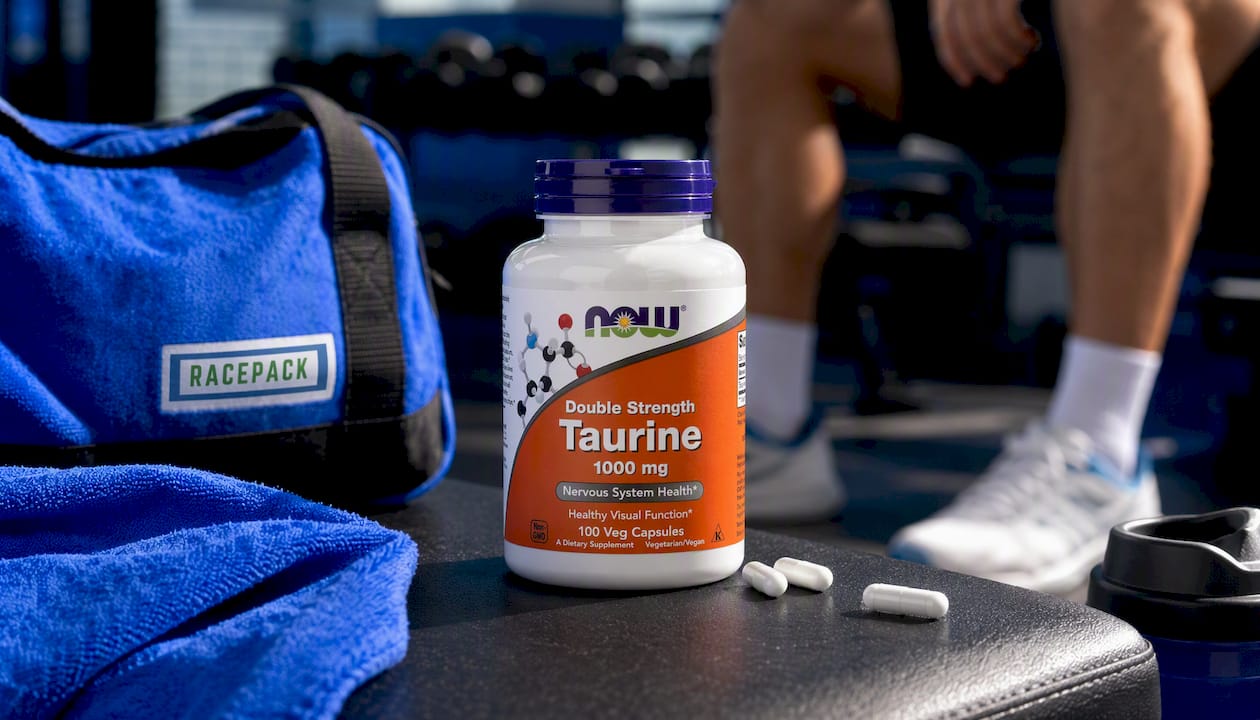
You have done the research. Now the next step is a clean, controlled trial with a product you can trust. RacepackSingapore stocks NOW Taurine 1000mg, a single-ingredient supplement with no proprietary blends, so you know exactly what dose you are taking. Every product on RacepackSingapore ships with guaranteed authenticity and next-day delivery, which means you can start your two-week trial block without waiting. Whether you are chasing jump height gains, sprint power maintenance, or faster recovery between sessions, pairing taurine with a solid sports supplement recovery strategy gives you the best shot at a clear result. Check availability and place your order today at RacepackSingapore.
Sources
- Frontiers in Nutrition (2026) meta-analysis on taurine and performance
- Taurine in Sports: Impact on Athletic Performance, Muscle Recovery and Neurological Function in Athletes – A Narrative Review (Quality in Sport, 2025)
- Taurine supplementation enhances anaerobic power in elite speed skaters (PMC trial)
FAQ
Does taurine actually improve exercise performance?
Yes, with caveats. The strongest evidence is for jump performance and repeated-sprint power, particularly in heat. Time-to-exhaustion improvements appear in multiple trials, while VO2max and peak Wingate power results are inconsistent.
How does taurine improve performance?
Taurine modulates calcium handling in the sarcoplasmic reticulum, supports antioxidant and mitochondrial function, and acts as an osmolyte to maintain cell volume under stress. These mechanisms plausibly explain improvements in force production, fatigue resistance, and recovery.
Why do I feel better after taking taurine?
Taurine reduces exercise-induced oxidative stress and muscle damage markers (CK, LDH) in the 24–48 hour post-exercise window, which likely explains reduced soreness and faster perceived recovery after hard sessions.
What happens if you take taurine every day?
Human trials using daily doses of 1–6 g for up to several weeks report no serious adverse effects in healthy adults. Long-term safety data beyond 4–8 weeks is limited, so extended daily use without periodic reassessment is not well characterized by current research.
What is the main function of taurine in the body?
Taurine is an organic osmolyte and cellular modulator that regulates ion flux (especially calcium), supports antioxidant defenses, and stabilizes cell membranes, particularly in muscle and neural tissue.
What dose of taurine should athletes use?
Most positive trials used 1–6 g acutely, taken 60–120 minutes before exercise, or 1–3 g/day over several days. No clear dose-response relationship has been established, so starting at 1–2 g and assessing response is a practical approach.
Can I combine taurine with caffeine?
With caution. Small trial evidence shows that caffeine status can alter taurine’s acute effect on muscle power, sometimes negating the individual benefit of each compound. Test them together and separately during training blocks to understand your personal response.
Which athletes benefit most from taurine?
Athletes in jump-dependent sports (basketball, volleyball, track and field), repeated-sprint sports (soccer, rugby), and those training in hot or humid environments show the most consistent benefits in the available evidence.
How long does it take for taurine to work?
Acute effects on jump and sprint power can appear within 1–3 hours of a single dose. Recovery benefits (reduced CK and DOMS) are typically observed in the 24–96 hour window after supplemented exercise sessions.
Is taurine a stimulant like caffeine?
No. Taurine is a cellular modulator, not a stimulant. Its presence in energy drinks is often misread as stimulant activity, but its mechanisms involve ion regulation and antioxidant support rather than central nervous system activation.
Where can I buy a reliable taurine supplement?
NOW Taurine 1000mg at RacepackSingapore is a single-ingredient option with guaranteed authenticity and next-day delivery, making dose control straightforward for a structured training trial.
How does taurine compare to other amino acid supplements for recovery?
Taurine’s recovery signal (reduced CK, LDH, DOMS) is more consistent than its acute performance effects, which puts it in a similar category to BCAA supplements for recovery support, though the mechanisms differ. BCAAs primarily support protein synthesis; taurine works through antioxidant and osmotic pathways.