

Why Protein Synthesis Occurs Post Workout: 2026 Guide
TL;DR:
- Post-workout muscle protein synthesis is sustained for 24 to 48 hours, emphasizing total daily protein intake over immediate timing. Consuming 20 to 40 grams of leucine-rich, high-quality protein per meal, spread across four to five servings daily, optimizes muscle repair and growth. Plant-based sources can be effective with increased serving sizes and protein combining strategies, supporting recovery just as well as animal proteins when properly planned.
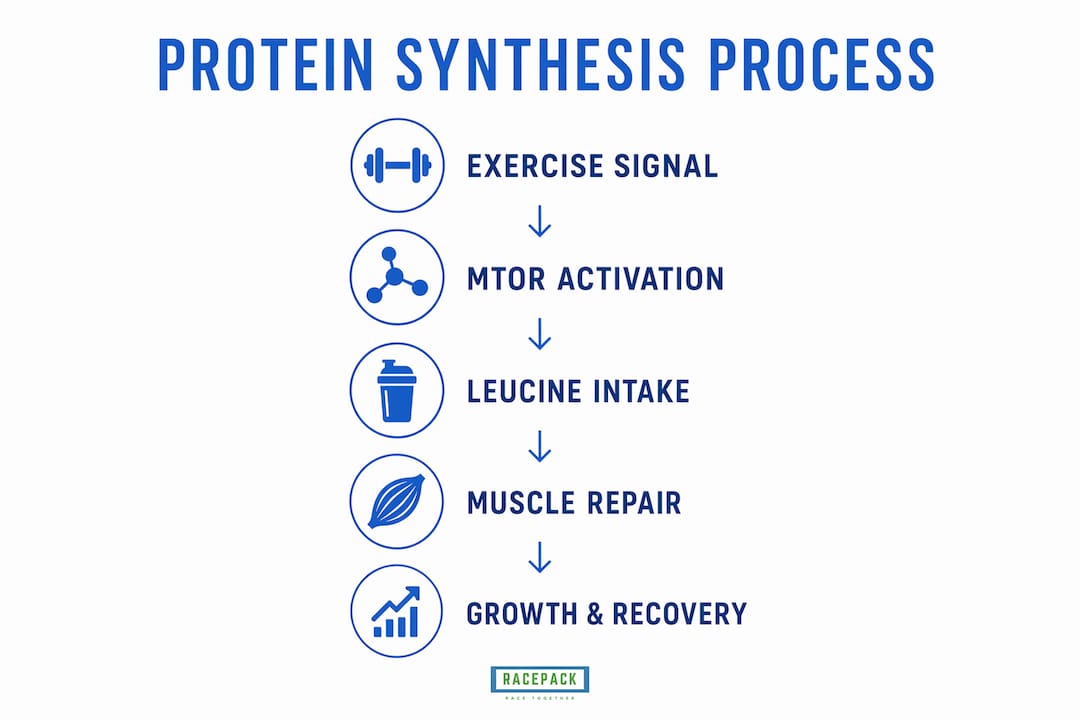
Muscle protein synthesis (MPS) is defined as the biological process where your body rebuilds and strengthens muscle fibers damaged during exercise, triggered by mechanical tension and amino acid availability immediately after training. This is why protein synthesis occurs post workout at a measurably higher rate than at rest. Resistance exercise activates the mTOR (mechanistic target of rapamycin) pathway, which acts as the master switch for muscle repair and growth. Understanding this mechanism tells you exactly when to eat, how much to consume, and which protein sources deliver the best results for recovery and performance.
Why protein synthesis occurs post workout: the cellular mechanism
Resistance training creates microscopic tears in muscle fibers through mechanical tension. That tension activates integrin proteins embedded in the muscle cell membrane, which send signals inward to trigger the mTORC1 complex. According to mTOR pathway research, leucine acts as the critical molecular trigger for translation initiation, meaning mTORC1 integrates both the mechanical signal from your workout and the nutritional signal from amino acids to initiate ribosome formation and protein production.
The result is an elevated MPS window that lasts 24 to 48 hours in trained individuals. This is not a brief 30-minute spike. Your muscles remain primed to absorb and use protein for repair and growth across nearly two full days after a hard session. That window matters more than any single post-workout shake.
Here is what happens at the cellular level in sequence:
- Mechanical tension from lifting or high-intensity effort damages sarcomere structures inside muscle fibers.
- Satellite cells (muscle stem cells) activate and migrate to the damaged site.
- mTORC1 signaling integrates the mechanical damage signal with leucine availability to initiate protein translation.
- Ribosomes assemble new contractile proteins, primarily actin and myosin, to replace and reinforce damaged tissue.
- Net muscle gain occurs only when protein synthesis exceeds protein breakdown over the full recovery period.
One critical concept here is the “repair tax.” When you first start resistance training, a large portion of new protein synthesis goes toward repairing damage rather than building new muscle. As repeated training reduces muscle damage, the repair tax shrinks and a greater share of MPS shifts toward hypertrophy. This explains why beginners often feel more soreness but see slower visible gains, while experienced athletes recover faster and grow more efficiently.
Pro Tip: If you are new to resistance training, prioritize consistent protein intake across all meals rather than obsessing over post-workout timing. Your repair tax is high, and your muscles need a steady amino acid supply throughout the entire 48-hour recovery window.
How much protein do you actually need after training?
The research on protein dosing is specific. Athletes should consume 20 to 40g of high-quality protein per meal, with a leucine content of 2.5 to 3g, to maximize MPS. Consuming more than this in a single sitting produces diminishing returns due to the “muscle full” effect, where the anabolic signaling pathway becomes temporarily saturated and excess amino acids are oxidized for energy rather than used for muscle repair.
| Body Weight | Recommended Protein Per Meal | Leucine Target |
|---|---|---|
| 60 kg | 20 to 24g | 2.5g |
| 75 kg | 25 to 30g | 2.5 to 3g |
| 90 kg | 30 to 36g | 3g |
| 100 kg+ | 35 to 40g | 3g |
The anabolic window is real but widely misunderstood. Total daily protein intake predicts strength and lean mass gains more reliably than the exact timing of your post-workout shake. Consuming a protein-rich meal within 2 to 3 hours of training is sufficient to capture the post-exercise MPS response. You do not need to sprint to your shaker the moment you rack the bar.
Here is what the evidence actually supports for post-workout protein strategy:
- Eat a protein-containing meal within 2 to 3 hours before or after your session.
- Target 0.4g of protein per kilogram of body mass per meal as a practical ceiling.
- Spread protein intake across 4 to 5 meals throughout the day rather than front-loading it.
- Prioritize leucine-rich sources at each feeding to repeatedly trigger mTORC1 signaling.
Pro Tip: If your training session falls more than 3 hours after your last meal, a post-workout protein source becomes more time-sensitive. In that scenario, MyProtein Whey Protein delivers a fast-absorbing, leucine-dense option that fits the 20 to 40g target without excess calories.
Animal vs. plant protein: which drives better muscle recovery?
The protein source debate has a nuanced answer in 2026. Animal-based proteins show a slight advantage over plant-based proteins in stimulating MPS, particularly in older adults, but the effect sizes are small and carry meaningful uncertainty. The primary reason for the difference is leucine concentration. Whey protein delivers roughly 10 to 11% leucine by weight, while most plant proteins deliver 6 to 8%, meaning you need a larger serving of plant protein to hit the same anabolic threshold.
| Protein Source | Leucine Content (%) | Typical Serving to Hit 3g Leucine | Digestibility |
|---|---|---|---|
| Whey isolate | 10 to 11% | 27 to 30g | Very high |
| Egg white | 8 to 9% | 33 to 37g | High |
| Soy isolate | 7 to 8% | 37 to 43g | Moderate to high |
| Pea isolate | 6 to 8% | 37 to 50g | Moderate |
| Brown rice | 6 to 7% | 43 to 50g | Moderate |
Well-planned plant-based diets00080-8/abstract) with sufficient leucine can effectively stimulate muscle synthesis. The practical fix for plant-based athletes is straightforward: increase serving size, combine complementary proteins (pea plus rice covers a complete amino acid profile), and consider leucine supplementation if total intake falls short. For a deeper breakdown of which protein types suit endurance and strength training, the 2026 performance guide from RacepackSingapore covers the full comparison with sport-specific recommendations.
For plant-based athletes in Singapore, MyProtein Pea Protein Isolate provides a practical, high-volume option that pairs well with a rice protein blend to complete the essential amino acid profile.
Practical strategies to boost protein synthesis and speed recovery
Translating the science into daily practice comes down to four consistent habits. Distributing moderate protein doses evenly across meals produces better sustained MPS than eating one large protein meal. Your body responds in pulses to protein feedings, meaning each leucine-rich meal triggers a fresh wave of mTORC1 signaling. Front-loading 80g of protein at dinner while eating minimal protein at breakfast and lunch wastes your anabolic potential for most of the day.
Post-workout protein consumption also reduces excessive muscle soreness and fatigue by supplying amino acids for repair, which supports your ability to train hard again sooner. Athletic trainer Sarah Wardlaw at Mass General Brigham notes that post-workout nutrition is vital primarily for recovery speed, soreness reduction, and injury prevention, not just hypertrophy. That framing matters: protein after training is a recovery tool, not just a muscle-building one.
Practical habits that consistently improve MPS outcomes:
- Eat 4 to 5 protein-containing meals per day, each with 20 to 40g of protein, rather than 2 large meals.
- Prioritize leucine-rich foods at each meal: eggs, Greek yogurt, cottage cheese, whey, soy, or pea protein.
- Time one protein meal within 2 to 3 hours of your workout, either before or after, to align with peak mTOR sensitivity.
- Add a recovery supplement like MuscleUp Glycine to support sleep quality and overnight muscle repair, when deep sleep is when the majority of growth hormone-driven protein synthesis occurs.
- Track total daily protein, targeting 1.6 to 2.2g per kilogram of body weight for athletes in active training blocks.
Pro Tip: Use MyProtein EAA Powder during or after training sessions where a full meal is not practical. Essential amino acids, especially leucine, isoleucine, and valine, directly activate mTORC1 without requiring full protein digestion.
Key takeaways
Post-workout protein synthesis is driven by mTOR activation from mechanical tension and leucine availability, and the elevated MPS window lasts 24 to 48 hours, making total daily protein intake more important than any single post-workout shake.
| Point | Details |
|---|---|
| mTOR is the master switch | Mechanical tension and leucine together activate mTORC1, initiating muscle repair and growth. |
| MPS window lasts 24 to 48 hours | Protein intake throughout the full recovery period matters more than immediate post-workout timing. |
| 20 to 40g per meal is the target | Exceeding this in one sitting triggers the muscle full effect and reduces synthesis efficiency. |
| Plant proteins work with adjustments | Increase serving size and combine sources to hit the 2.5 to 3g leucine threshold per meal. |
| Distribute protein across the day | Four to five evenly spaced protein meals produce better sustained MPS than one or two large feedings. |
The myth of the 30-minute window: what I have actually learned
I have worked with athletes across endurance and strength disciplines long enough to watch the “anabolic window” myth cause real behavioral problems. Athletes rush through cool-downs, skip stretching, and stress over protein timing to the point where it becomes a distraction from the habits that actually move the needle. The science is clear now: a meal within 2 to 3 hours of training captures the post-exercise MPS response just as effectively as a shake consumed within 10 minutes of finishing.
What I have found actually matters is consistency over weeks, not precision over minutes. Athletes who eat 1.8 to 2.2g of protein per kilogram of body weight daily, spread across four or five meals, outperform athletes who nail their post-workout shake but eat poorly the rest of the day. The repair tax concept changed how I think about beginner programming too. New athletes should not expect the same hypertrophy rate as experienced lifters because their protein synthesis is largely consumed by damage repair, not growth. That is not a failure. It is biology doing its job.
The most underrated recovery tool I keep recommending is sleep-targeted protein support. Glycine before bed improves sleep quality, and deep sleep is when growth hormone peaks and drives the overnight MPS response. If you are training hard and sleeping poorly, you are leaving gains on the table regardless of how precise your daytime protein timing is.
— Jason John
Support your recovery with RacepackSingapore
RacepackSingapore stocks the protein and recovery products that align directly with what the science recommends: leucine-rich whey, high-volume plant proteins, and sleep-support recovery formulas, all from verified international brands with next-day delivery across Singapore.
Whether you are building a post-workout nutrition stack or looking for a plant-based protein that actually hits the leucine threshold, RacepackSingapore has you covered. Explore MyProtein Pea Protein Isolate for plant-based recovery, MyProtein Whey Protein for fast-absorbing post-workout support, and MuscleUp Glycine for overnight muscle repair. Every product is authentic, competitively priced, and ready to ship. Buy Now and build your recovery stack today.
FAQ
What triggers protein synthesis after a workout?
Mechanical tension from resistance exercise activates the mTOR pathway, and leucine from dietary protein acts as the molecular trigger that initiates muscle protein production at the ribosomal level.
How long does elevated protein synthesis last after exercise?
MPS remains elevated for 24 to 48 hours after resistance training in trained individuals, which is why consistent protein intake across the full recovery period matters more than immediate post-workout timing.
How much protein should I eat after a workout?
Consume 20 to 40g of high-quality protein containing 2.5 to 3g of leucine per meal. Eating more than this in a single sitting produces diminishing returns due to the muscle full effect.
Does it matter if I eat protein immediately after training?
No. Total daily protein intake predicts muscle gains more reliably than immediate post-workout timing. A protein-rich meal within 2 to 3 hours of training is sufficient to capture the post-exercise anabolic response.
Is plant protein as effective as whey for muscle recovery?
Animal proteins have a slight edge due to higher leucine concentration, but well-planned plant-based diets00080-8/abstract) with sufficient leucine are equally effective. Plant-based athletes should increase serving sizes or combine pea and rice proteins to hit the leucine threshold.
What is the muscle full effect?
The muscle full effect occurs when mTORC1 signaling becomes temporarily saturated after a protein meal, meaning excess amino acids beyond the 20 to 40g threshold are oxidized rather than used for muscle synthesis.
Why do beginners feel more soreness but see slower muscle growth?
Beginners carry a high “repair tax,” where most post-workout protein synthesis goes toward repairing damage rather than building new muscle. As training adaptation reduces damage, the repair tax decreases and a greater share of MPS shifts toward hypertrophy.
Does sleep affect post-workout protein synthesis?
Yes. Growth hormone peaks during deep sleep and drives a significant portion of overnight MPS. Glycine supplementation, such as MuscleUp Glycine Sachets, supports sleep quality and enhances the overnight recovery response.
How should I distribute protein throughout the day?
Spread protein across 4 to 5 meals with 20 to 40g per feeding rather than concentrating intake in one or two large meals. This approach triggers repeated mTORC1 signaling pulses throughout the day for sustained MPS.
What products does RacepackSingapore recommend for post-workout recovery?
RacepackSingapore recommends MyProtein Whey Protein for fast-absorbing leucine-rich recovery, MyProtein Pea Protein Isolate for plant-based athletes, and MyProtein EAA Powder for intra or post-workout amino acid support.