

What Is VO2 Max? Your 2026 Athlete's Guide
TL;DR:
- VO2 max measures the maximum oxygen an individual’s body can utilize during intense exercise, indicating aerobic and cardiovascular fitness levels. Improving VO2 max through consistent training, HIIT, and weight management enhances performance and promotes longer, healthier lives. Wearable estimates track trends effectively, but lab tests provide the most accurate assessment of true VO2 max.
VO2 max is defined as the maximum rate at which your body can consume oxygen during intense exercise, expressed in milliliters of oxygen per kilogram of body weight per minute (mL/kg/min). It is the single most recognized measure of aerobic capacity and cardiovascular fitness. A higher VO2 max means your muscles can produce more ATP, the fuel that powers every stride, pedal, and stroke. Whether you are a competitive runner chasing a personal record or a fitness enthusiast building a healthier life, understanding this number gives you a concrete target to train toward.
What is VO2 max and why does it matter for fitness?
VO2 max is the ceiling of your aerobic engine. When exercise intensity rises, your body demands more oxygen to keep muscles working. The point at which oxygen consumption plateaus, no matter how hard you push, is your true VO2 max. Typical values range from the low 20s (mL/kg/min) for sedentary individuals to above 70 for elite endurance athletes. That gap represents years of training, genetics, and deliberate lifestyle choices.
The number matters beyond race-day performance. The American Medical Association recognizes VO2 max as a predictor of longevity, with clinicians using it to monitor patients managing cardiovascular and respiratory conditions. A higher score reflects not just athletic potential but the efficiency of your heart, lungs, and circulatory system working together. For endurance athletes in Singapore training through heat and humidity, that efficiency is the difference between finishing strong and fading in the final kilometers.
VO2 max is reported in two forms. Absolute VO2 max, measured in liters per minute (L/min), reflects total oxygen consumption and favors larger athletes. Relative VO2 max, measured in mL/kg/min, accounts for body weight and is the standard used to compare performance across individuals. Relative values are what Garmin, Polar, and most sports science labs report when they give you a fitness score.
How is VO2 max measured and tested?
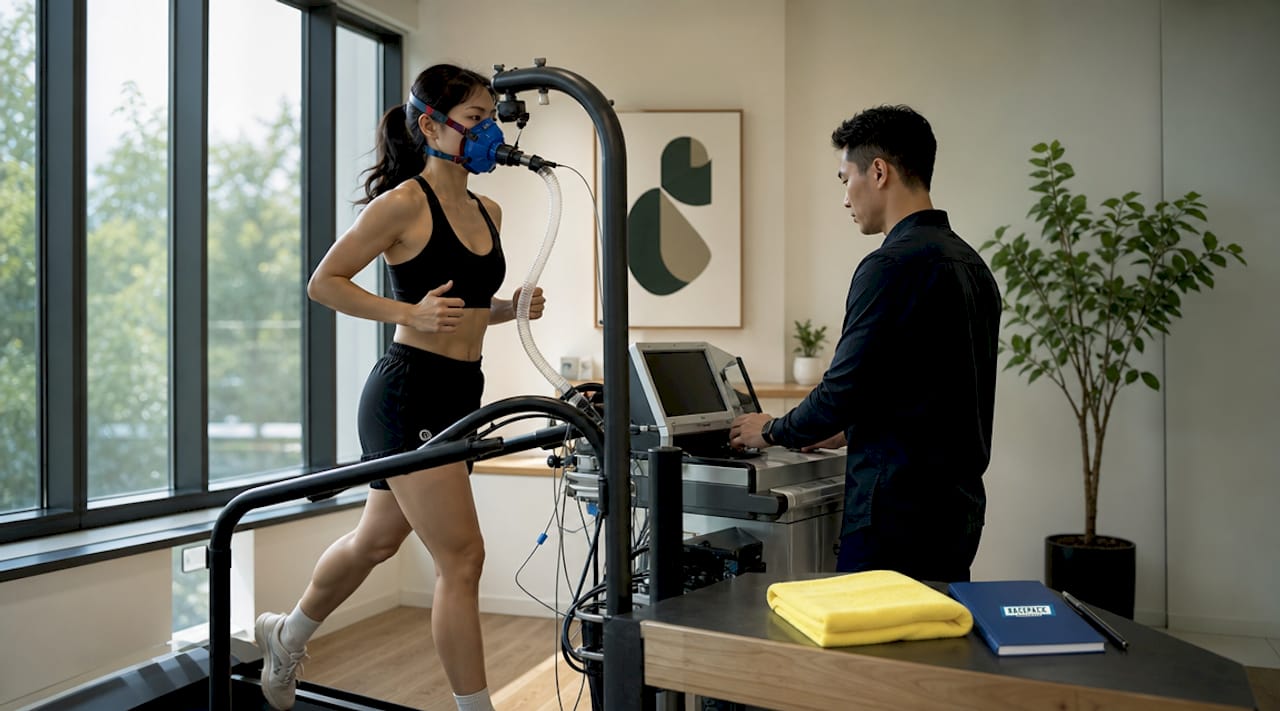
The gold standard is a graded exercise test conducted in a lab using a treadmill or cycle ergometer paired with a metabolic cart and a breathing mask. The protocol increases workload every few minutes until you reach maximal effort. The metabolic cart analyzes the air you exhale, calculating exactly how much oxygen your body is consuming at each stage. A clinical VO2 max test typically costs between $150 and $300, and insurance coverage varies widely depending on your provider and the reason for testing.
Not everyone has access to a sports science lab. Here are the most practical options across the testing spectrum:
- Clinical lab test: Most accurate. Uses a metabolic cart, treadmill or cycle ergometer, and a trained technician. Confirms true VO2 max with physiological markers.
- Wearable device estimate: Garmin, Apple Watch, and Polar devices use heart rate and pace algorithms to estimate VO2 max. Useful for trend tracking, not precise diagnosis.
- One-mile walk test: A practical field estimate for those without lab access. Less precise but accessible for general fitness tracking.
- Cooper 12-minute run test: A widely used field protocol that estimates aerobic capacity from the distance covered in 12 minutes.
Pro Tip: Before a clinical VO2 max test, avoid intense training for 24 hours, stay well hydrated, skip caffeine on test day, and wear your usual training shoes. The test requires maximal effort, so arriving rested gives you the most accurate result.
What do VO2 max scores mean across age, sex, and fitness level?
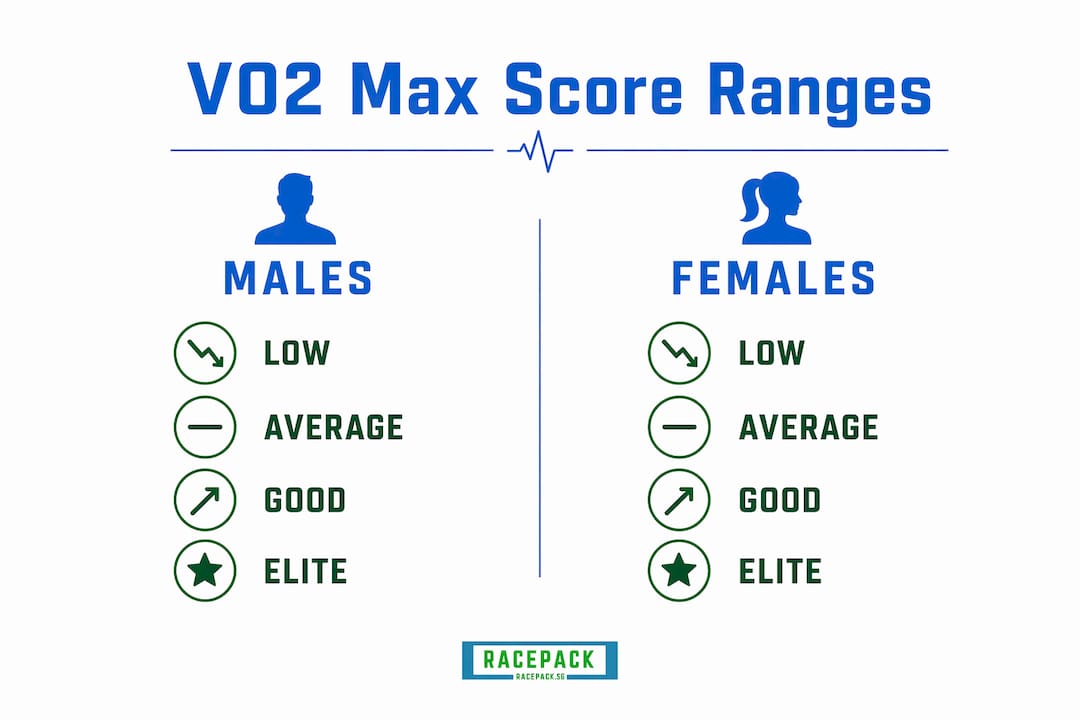
Interpreting your score requires context. A 45 mL/kg/min reading means something very different for a 25-year-old male than for a 55-year-old female. Age, sex, heredity, and body weight all influence where your number lands. VO2 max declines with age, but regular exercise substantially slows that decline, meaning an active 50-year-old can outperform a sedentary 30-year-old by a significant margin.
The table below provides general reference ranges. These are population averages, not personal targets.
| Group | Low (mL/kg/min) | Average (mL/kg/min) | Good (mL/kg/min) | Elite (mL/kg/min) |
|---|---|---|---|---|
| Males 20–29 | Below 38 | 38–48 | 49–56 | 57+ |
| Females 20–29 | Below 29 | 29–38 | 39–47 | 48+ |
| Males 40–49 | Below 30 | 30–40 | 41–50 | 51+ |
| Females 40–49 | Below 24 | 24–34 | 35–43 | 44+ |
| Elite male endurance athletes | — | — | — | 70–85+ |
Sex differences in VO2 max are real and physiological. Males typically score 15–20% higher than females of the same age and fitness level, largely due to differences in hemoglobin concentration, heart size, and muscle mass. These are not performance judgments. They are biological baselines.
Heredity sets the upper limit of your potential. Research consistently shows that roughly 50% of VO2 max variation between individuals is genetically determined. Training can unlock your genetic ceiling, but it cannot move that ceiling. This is why comparing your score to elite marathon runners like Eliud Kipchoge, who reportedly tested above 92 mL/kg/min, is less useful than comparing your score to your own baseline from three months ago. Your trend is your most meaningful data point.
How can you improve your VO2 max through training?
Improving aerobic capacity requires consistent cardiovascular stress applied over weeks and months. The body adapts by increasing cardiac output, improving oxygen delivery to muscles, and enhancing the muscles’ ability to extract and use that oxygen. Here is a structured approach that works for most fitness levels:
- Build a consistent aerobic base. Train at least 3 to 5 days per week with sustained cardio sessions at moderate intensity. Running, cycling, rowing, and swimming all qualify. Consistency over 8 to 12 weeks creates the foundation for higher-intensity work.
- Add high-intensity interval training (HIIT). HIIT is the most time-efficient method for raising VO2 max. A standard protocol: 4 to 6 intervals of 3 to 4 minutes at 90–95% of maximum heart rate, with equal recovery periods. HIIT can improve VO2 max by 20–30% over 3 to 6 months with regular training. For previously inactive individuals, initial gains of 10–15% can appear within the first few months.
- Mix long slow distance (LSD) with intensity. Long aerobic sessions at 60–70% of max heart rate build mitochondrial density and fat oxidation efficiency. Combining LSD with HIIT produces better results than either method alone, according to Harvard Health training guidance.
- Manage body weight. Because relative VO2 max divides oxygen consumption by body weight, reducing excess body fat directly raises your score without any change in fitness. Even modest weight loss of 5–10% can produce a measurable improvement in mL/kg/min.
- Prioritize recovery. Adaptation happens during rest, not during the workout itself. Sleep, nutrition, and active recovery days are not optional extras. They are where the gains are built.
Pro Tip: Expect meaningful VO2 max improvements to take 8 to 16 weeks of consistent training. Chasing week-to-week changes on a wearable creates frustration. Assess your progress monthly and focus on training quality rather than daily score fluctuations.
The benefits of a higher VO2 max extend well beyond race performance. Improved aerobic capacity is linked to better blood pressure regulation, reduced risk of type 2 diabetes, and stronger cognitive function. Training for a better number is training for a longer, healthier life.
Common misconceptions about VO2 max testing and data
Several widely held beliefs about VO2 max lead athletes to misinterpret their data or set unrealistic expectations. Clearing these up saves time and prevents discouragement.
- Wearables give you a precise VO2 max score. They do not. Devices like Garmin Forerunner and Apple Watch use algorithmic estimates based on heart rate and pace. These estimates can be off by 10–20% compared to lab values. Use wearable data to track your personal trend, not as a diagnostic number.
- VO2 max and VO2 peak are the same thing. They are not. True VO2 max requires reaching a physiological plateau in oxygen consumption. Without achieving specific markers, including a respiratory exchange ratio above 1.10 and a near-maximum heart rate, the result is classified as VO2 peak. VO2 peak is still useful data, but it may underestimate your true ceiling.
- Training alone determines your VO2 max potential. Genetics set the upper boundary. Training determines how close you get to it. Two athletes following identical programs for a year will not necessarily reach the same score.
- A single VO2 max number tells the full fitness story. It does not. Lactate threshold, running economy, strength, and mental resilience all contribute to performance. VO2 max is one powerful indicator among several.
Key takeaways
VO2 max is the most reliable single measure of aerobic fitness, and improving it through consistent training, HIIT, and weight management produces measurable gains in both performance and long-term health.
| Point | Details |
|---|---|
| Core definition | VO2 max measures maximum oxygen consumption in mL/kg/min during peak exercise. |
| Gold-standard testing | Clinical lab tests using a metabolic cart cost $150–$300 and confirm true VO2 max. |
| Score interpretation | Compare your score to your own baseline, not elite athlete norms, for meaningful progress. |
| Most effective training | Combining HIIT with steady aerobic work produces 20–30% improvement over 3–6 months. |
| Wearable limitations | Garmin and Apple Watch estimates are useful for trend tracking, not precise diagnosis. |
Why I think most athletes misuse their VO2 max data
I have worked with enough endurance athletes to notice a consistent pattern. They obsess over the number their Garmin shows after a run, compare it to professional cyclists, and either feel falsely confident or unnecessarily discouraged. Neither reaction is useful.
The athletes who make the most progress treat VO2 max as a directional signal, not a verdict. One runner I followed went from a wearable estimate of 42 to 51 mL/kg/min over eight months. He did not achieve that by chasing the number. He achieved it by training consistently, adding two HIIT sessions per week, and dropping about 6 kilograms of body weight. The score followed the behavior.
What I find most underappreciated is the health dimension. Many people in their 40s and 50s dismiss VO2 max as a metric for competitive athletes. That is a mistake. The research connecting aerobic capacity to cardiovascular health and longevity is strong enough that I think everyone should have at least a baseline measurement by their mid-30s. You do not need a lab to start. A wearable estimate gives you a starting point, and a heart health strategy built around consistent cardio does the rest.
My honest advice: stop comparing your score to anyone else’s. Set a 12-week training block, measure at the start and end, and let the trend tell you whether your program is working. That is the only comparison that matters.
— Jason John
Fuel your training with the right nutrition from RacepackSingapore
Improving your aerobic capacity takes consistent training, and consistent training demands proper fuel. At RacepackSingapore, we stock the nutrition products that keep endurance athletes performing and recovering at their best. GU Energy Gels deliver fast-acting carbohydrates to sustain your HIIT sessions and long runs without GI distress. For athletes who want to support recovery and overall health alongside their cardio training, MyProtein Green Superfoods provides a nutrient-dense blend that complements any endurance program. We offer guaranteed authentic products with next-day delivery across Singapore, so your nutrition is always ready when your training demands it.
FAQ
What is VO2 max in simple terms?
VO2 max is the maximum amount of oxygen your body can use during intense exercise, measured in mL/kg/min. It is the most widely used indicator of aerobic fitness and cardiovascular health.
How accurate are wearable VO2 max estimates?
Wearable devices like Garmin and Apple Watch use heart rate and pace algorithms to estimate VO2 max, and their readings can differ from lab values by 10–20%. They are best used for tracking personal trends over time rather than as precise diagnostic measurements.
What is a good VO2 max score for my age?
A good score depends on your age and sex. For males aged 20–29, a score above 49 mL/kg/min is considered good. For females in the same age group, above 39 mL/kg/min qualifies. Comparing your score to your own baseline over time is more useful than chasing population averages.
How long does it take to improve VO2 max?
With consistent training that includes HIIT, most people see meaningful improvement in 3 to 6 months. Previously inactive individuals can gain 10–15% within the first few months of regular cardio exercise.
Does VO2 max decline with age?
Yes, aerobic capacity naturally declines with age. Regular exercise substantially slows this decline, meaning active individuals maintain significantly higher VO2 max scores than sedentary peers of the same age.