

What Is the Post Workout Anabolic Window? 2026 Guide
TL;DR:
- The post-workout anabolic window lasts up to 24 hours, making total daily protein intake more important than precise timing. Consuming 20–40g of protein every three to four hours supports muscle protein synthesis better than focusing on immediate post-exercise nutrition. Building consistent habits around adequate protein, sleep, and overall caloric intake promotes effective recovery and muscle growth.
The post-workout anabolic window is defined as the period after exercise when your muscles are primed to absorb nutrients for repair and growth. For decades, athletes believed this window lasted only 30–60 minutes, making the post-workout shake a near-religious ritual. Current science tells a different story. Research now confirms that muscle protein synthesis stays elevated for at least 24 hours after resistance training, meaning the real recovery opportunity is far broader than the supplement industry ever suggested. Understanding this changes how you plan every meal, not just the one right after your workout.
What is the post workout anabolic window, really?
The anabolic window, formally called the “nutrient timing window” in sports science literature, refers to the post-exercise period when skeletal muscle is sensitized to protein and carbohydrates for repair and hypertrophy. The traditional view placed this window at 30–60 minutes post-exercise. That belief shaped an entire generation of gym culture and supplement marketing.

The 2025 meta-analysis published in Nutrients found no significant effect of narrow protein timing on strength or hypertrophy when total daily protein intake was controlled. That finding matters because it shifts the entire conversation from “when did you eat?” to “how much did you eat today?” Dr. Allan Bacon, a well-cited exercise scientist, describes the anabolic window as an “anabolic barn door,” wide open and forgiving rather than a narrow slot that slams shut.
The International Society of Sports Nutrition (ISSN) supports this position. Their guidelines consistently point to total daily protein intake as the primary driver of muscle adaptation. The window exists, but it is measured in hours, not minutes.
What does current science say about protein timing and muscle growth?
The science on muscle protein synthesis (MPS) is clear. MPS remains elevated for 24 hours or more after a resistance training session, which means your muscles continue responding to protein intake well beyond the gym parking lot.
A landmark 2013 study by Schoenfeld, Aragon, and Krieger confirmed that protein timing has no independent effect on hypertrophy once total protein intake is equated between groups. That finding has been replicated in multiple reviews since. The groups that gained more muscle were simply eating more total protein, not timing it more precisely.
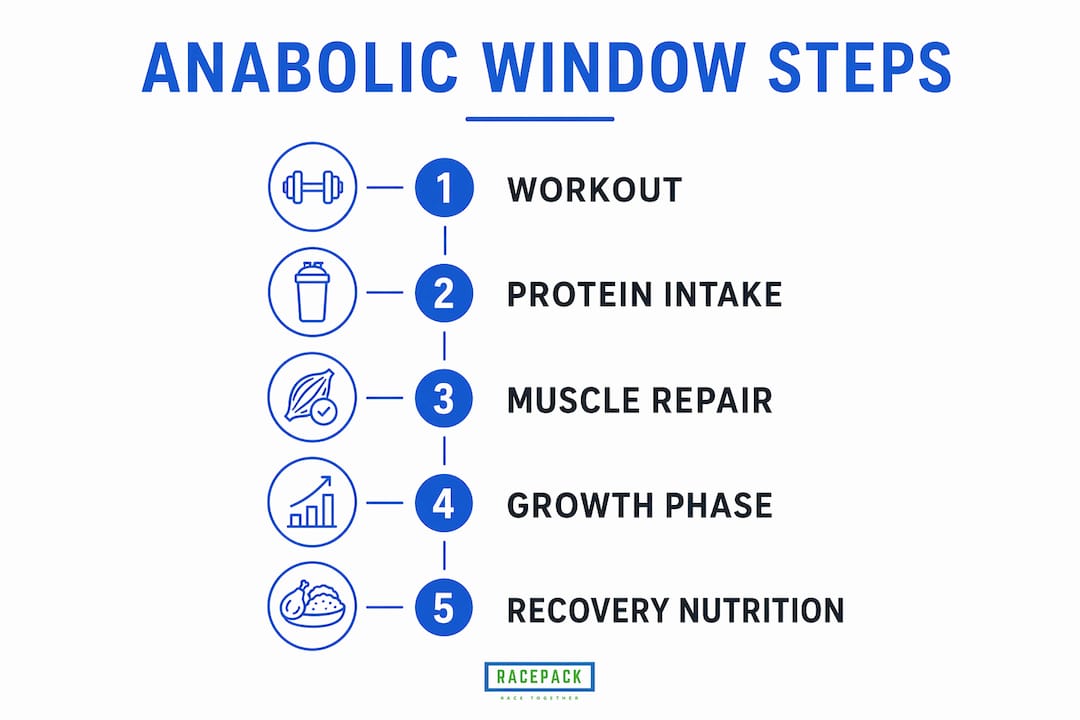
Pro Tip: Distribute 20–40g of protein every 3–4 hours throughout the day. This pattern sustains MPS more effectively than clustering protein around a single post-workout feeding.
The ISSN recommends a daily protein target of 1.4–2.0 g/kg of body weight for athletes engaged in regular resistance training. For a 75 kg athlete, that is 105–150g of protein per day. Hitting that number consistently matters far more than whether you consumed it at 6:15 PM or 7:00 PM.
| Nutrition Factor | Impact on Muscle Growth |
|---|---|
| Total daily protein (1.4–2.0 g/kg) | Primary driver of hypertrophy and repair |
| Protein distribution (every 3–4 hours) | Sustains MPS across the full day |
| Post-workout timing (30–60 min) | Minimal independent effect when total intake is met |
| Sleep quality (7.5–9 hours) | Critical for overnight muscle repair and hormonal recovery |
| Calorie balance | Supports or limits muscle protein accretion regardless of timing |
Understanding sport nutrition timing in this broader context helps you build habits that actually stick, rather than habits built on anxiety about a ticking clock.
Common myths vs. facts about the anabolic window
The most persistent myth is this: “If you don’t consume protein within 30 minutes of training, you lose your gains.” This belief is not supported by controlled research. It originated from early studies that failed to account for total protein intake, and it was amplified by supplement marketing that had a financial interest in urgency.
“Marketing often confuses athletes by attributing muscle gains to precise timing rather than to the increased total protein intake and consistent nutrition that actually drove the results.”
Here is how the myths stack up against the evidence:
- Myth: The anabolic window closes after 30–60 minutes. Fact: MPS remains elevated for at least 24 hours post-exercise.
- Myth: Missing the window means wasted training. Fact: Higher gains in studies were tied to greater total protein intake, not better timing.
- Myth: You need a protein shake immediately after every session. Fact: A whole-food meal within a few hours produces the same result when daily targets are met.
- Myth: Timing is irrelevant in every situation. Fact: Timing becomes more relevant when you train fasted or complete multiple sessions in a single day.
The nuance matters. If you train at 5:00 AM without eating beforehand, getting protein in soon after your session is genuinely useful. Your body has been in a fasted state, and replenishing amino acids addresses a real deficit. But for athletes who train after a meal, the urgency drops considerably.
How to maximize muscle recovery with flexible post-workout nutrition
Maximizing the muscle recovery window does not require a rigid schedule. It requires consistent habits built around proven targets. Here is a practical framework:
- Hit your daily protein target. Aim for 1.4–2.0 g/kg of body weight every day. For most athletes, this means 3–5 protein-containing meals spread across the day.
- Distribute protein evenly. Consuming 20–40g of protein every 3–4 hours keeps MPS elevated throughout the day. Breakfast, lunch, a post-workout meal, and dinner cover this well.
- Eat within 2 hours of training. This is not a strict cutoff, but eating a balanced meal containing protein and carbohydrates within 2 hours of your session is a practical and comfortable target.
- Prioritize sleep. Research shows that 7.5–9 hours of quality sleep is critical for muscle repair. Growth hormone release peaks during deep sleep, making overnight recovery as important as any supplement.
- Balance your calories. Protein alone does not build muscle. Adequate total calories provide the energy substrate for repair. Athletes in a significant calorie deficit will see blunted recovery regardless of protein timing.
Pro Tip: If you train fasted or have two sessions in one day, prioritize protein intake within 60 minutes of your session. In all other situations, focus on hitting your daily total rather than watching the clock.
Quality protein sources include whole eggs, Greek yogurt, lean meats, legumes, and protein supplements. Supplements like MyProtein Pea Protein Isolate are a convenient tool for athletes who struggle to hit daily targets through food alone. They are not a replacement for a balanced diet, but they fill real gaps efficiently.
The role of nutrition in athletic performance extends well beyond the post-workout window. Carbohydrate intake, hydration, and micronutrient status all influence how well your body recovers and adapts.
How training habits and recovery practices shape the anabolic window
The anabolic window does not operate in isolation. It is one piece of a larger recovery system that includes training volume, sleep, stress, and active recovery. Understanding how these factors interact helps you get more from every session.
- Progressive overload drives adaptation. Muscles grow in response to increasing training stress. Without consistent progressive overload, no amount of protein timing will produce meaningful hypertrophy.
- Training volume must be managed. Too much volume without adequate recovery suppresses MPS and increases injury risk. Periodization and planned deload weeks protect long-term progress.
- Sleep is non-negotiable. The 7.5–9 hour sleep target is not a suggestion. Chronic sleep restriction reduces testosterone, elevates cortisol, and directly impairs muscle protein synthesis.
- Active recovery accelerates repair. Light, low-intensity exercise on rest days promotes blood flow to muscle tissue, clearing metabolic byproducts and delivering nutrients without adding fatigue.
- Stress management protects gains. Chronic psychological stress elevates cortisol, which is catabolic. Athletes who manage stress through structured rest, social connection, and mindfulness protect their recovery environment.
Understanding why protein synthesis occurs post-workout helps you connect these habits to the underlying biology. Recovery is a system, and the anabolic window is just one input into that system.
Key Takeaways
The post-workout anabolic window lasts up to 24 hours, and total daily protein intake of 1.4–2.0 g/kg matters far more than consuming protein within any narrow post-exercise timeframe.
| Point | Details |
|---|---|
| Window duration | MPS stays elevated for at least 24 hours after resistance training, not just 30–60 minutes. |
| Total protein wins | Daily intake of 1.4–2.0 g/kg drives hypertrophy; timing is secondary when totals are met. |
| Protein distribution | Consuming 20–40g every 3–4 hours sustains MPS better than a single post-workout dose. |
| Sleep is critical | Quality sleep of 7.5–9 hours per night is as important as nutrition for muscle repair. |
| Timing exceptions | Fasted training or multiple daily sessions make post-workout timing more relevant. |
Why I stopped watching the clock after every workout
I spent years treating the post-workout shake as a non-negotiable. I would cut conversations short, rush to my gym bag, and feel genuine anxiety if I was 45 minutes past my session without protein in hand. Looking back, that anxiety produced zero extra muscle and a lot of unnecessary stress.
The research on this is not ambiguous. The anabolic barn door concept resonated with me because it matches what I have observed in athletes who train consistently and eat well without obsessing over clocks. They grow. They recover. They perform.
What I have found actually works is building a nutrition routine you can sustain. That means eating enough protein across the day, sleeping well, training with intent, and using supplements as tools rather than safety nets. The athletes I have seen struggle most are the ones who nail their post-workout shake but skip breakfast, sleep six hours, and train without a plan.
Personal preference should guide your post-workout eating window. If you are hungry right after training, eat. If you prefer to shower and cook a real meal, do that. The benefits of anabolic window flexibility mean you have room to build habits that fit your life, not the other way around.
— Jason John
Recovery nutrition products worth having in your kit
RacepackSingapore stocks the recovery tools that fit a flexible, evidence-based approach to post-workout nutrition. Whether you need fast carbohydrates after a long run or a quality protein source to close out your daily target, the right products make consistency easier.
GU Energy Gels deliver fast-acting carbohydrates that replenish glycogen stores after endurance sessions, supporting the recovery process from the moment you finish. For hydration and electrolyte replenishment, HIGH5 Zero+ electrolyte sachets cover the micronutrient side of recovery. Athletes looking to hit their daily protein targets conveniently can rely on MyProtein EAA Powder for a complete essential amino acid profile. All products ship with next-day delivery across Singapore. Buy now at RacepackSingapore and build your recovery kit today.
FAQ
What is the post workout anabolic window?
The post-workout anabolic window is the period after exercise when muscles are sensitized to nutrients for repair and growth. Current research shows this window lasts up to 24 hours, not just 30–60 minutes as once believed.
Does the anabolic window actually matter for muscle growth?
Total daily protein intake matters far more than timing. A 2025 meta-analysis in Nutrients found no significant effect of narrow protein timing on hypertrophy when total protein intake was controlled.
What should I eat after a workout to support recovery?
Consume a meal containing 20–40g of protein and adequate carbohydrates within 2 hours of training. Hitting your daily protein target of 1.4–2.0 g/kg of body weight is more important than the exact post-workout timing.
When does post-workout protein timing actually matter?
Timing becomes more relevant when you train fasted or complete multiple sessions in a single day. In those situations, consuming protein within 60 minutes of your session helps resolve nutrient depletion more effectively.
How long does muscle protein synthesis last after a workout?
Muscle protein synthesis remains elevated for at least 24 hours after resistance training. This means protein consumed throughout the day, not just immediately post-workout, contributes to muscle repair and growth.
How much protein do athletes need per day?
The ISSN recommends 1.4–2.0 g/kg of body weight per day for athletes in regular resistance training. For a 75 kg athlete, that equals 105–150g of protein daily.
Is a post-workout protein shake necessary?
A protein shake is not necessary if you can meet your daily protein targets through whole foods. Shakes are a convenient tool for athletes who struggle to hit their targets through meals alone, not a mandatory recovery ritual.
Does sleep affect the anabolic window?
Quality sleep of 7.5–9 hours per night is critical for muscle repair and sustained MPS. Growth hormone release peaks during deep sleep, making overnight recovery as important as post-workout nutrition.
Can I build muscle without timing my protein perfectly?
Yes. Research consistently shows that athletes who hit their total daily protein targets build muscle effectively regardless of precise timing. Consistency in daily intake outweighs any benefit from narrow timing windows.
What role do energy gels play in post-workout recovery?
Energy gels like GU Energy Gels replenish glycogen stores depleted during endurance training. Restoring carbohydrate levels post-exercise supports the hormonal environment needed for muscle repair and reduces recovery time.