

Vitamin B Complex Vitamins: Your 2026 Health Guide
TL;DR:
- Vitamin B complex comprises eight essential water-soluble vitamins necessary for energy, nerve, and blood cell functions that must be replenished regularly through diet or supplements. Each B vitamin plays a unique role in metabolism, and deficiencies can cause fatigue, neuropathy, or anemia, especially in high-risk groups like vegans and older adults. Proper supplementation involves choosing methylated forms when needed, monitoring doses to avoid toxicity, and combining dietary sources with targeted support for optimal health.
Vitamin B complex vitamins are defined as a group of eight essential water-soluble nutrients that the body requires daily for energy metabolism, red blood cell production, and nerve function. Unlike fat-soluble vitamins, B vitamins aren’t stored in meaningful amounts, so your body depends on consistent intake from food or supplements. Whether you’re an endurance athlete pushing through long training blocks or simply trying to stay sharp and energized, understanding how these vitamins work together gives you a real edge in managing your health.
What are the vitamin b complex vitamins and their roles?
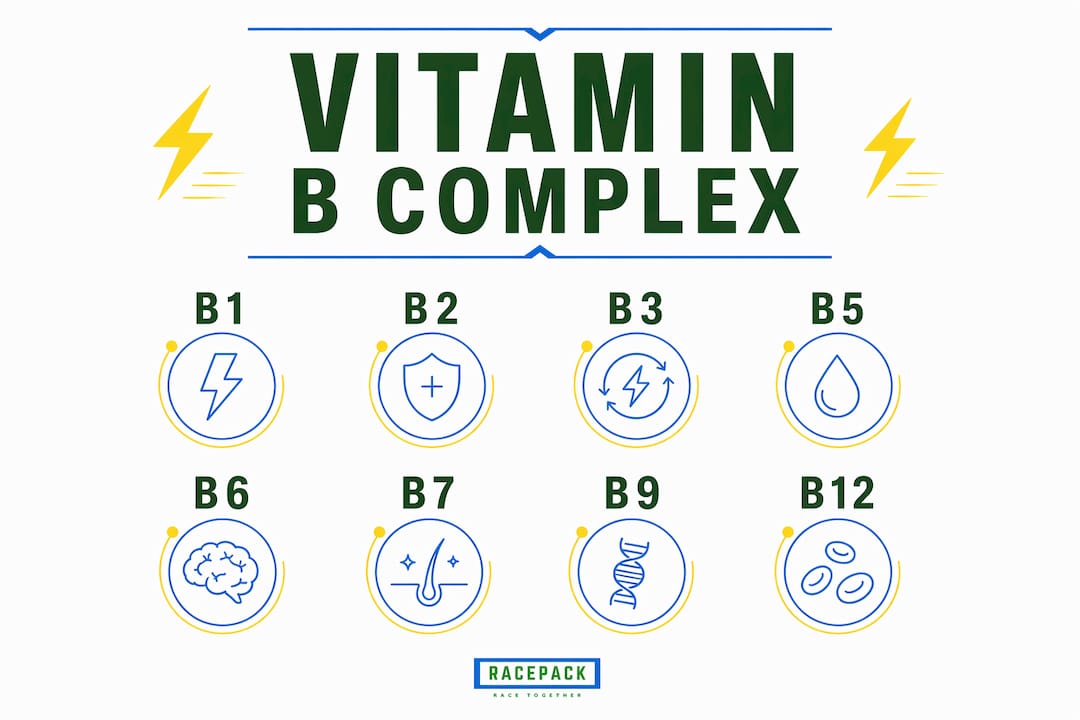
The eight essential B vitamins each carry a distinct chemical name and a specific job inside your body. Together, they form the foundation of cellular energy production, DNA repair, and neurological health.
- B1 (Thiamine): Converts carbohydrates into usable energy. Supports nerve signaling and heart muscle function. Found in whole grains, pork, and legumes.
- B2 (Riboflavin): Acts as a cofactor in the electron transport chain, helping cells produce ATP. Also supports antioxidant activity via glutathione recycling.
- B3 (Niacin): Drives over 400 enzymatic reactions. Supports DNA repair and is used clinically to manage cholesterol levels.
- B5 (Pantothenic Acid): Required to synthesize coenzyme A, which is central to fat and carbohydrate metabolism. Present in nearly every whole food.
- B6 (Pyridoxine): Involved in over 100 enzyme reactions, including amino acid metabolism and neurotransmitter synthesis. Supports immune function and hemoglobin production.
- B7 (Biotin): Supports fatty acid synthesis and glucose metabolism. Also plays a role in gene expression. Available as a standalone biotin supplement for hair, skin, and nail support.
- B9 (Folate): Critical for DNA synthesis and cell division. Especially important during pregnancy to prevent neural tube defects.
- B12 (Cobalamin): Maintains the myelin sheath around nerves and supports red blood cell formation. Deficiency causes irreversible neurological damage if left untreated.
Each vitamin functions as an enzyme cofactor. That means they don’t do the work themselves. They activate the proteins that do. When even one is low, the entire metabolic chain slows down.
What are the best food sources and supplement options?

Natural sources of B vitamins span a wide range of everyday foods, but no single food delivers all eight in optimal amounts.
Top dietary sources by vitamin:
- B1: Brown rice, sunflower seeds, black beans
- B2: Beef liver, dairy products, almonds
- B3: Chicken breast, tuna, peanuts
- B5: Avocado, mushrooms, sweet potato
- B6: Salmon, chickpeas, banana
- B7: Eggs (especially yolks), walnuts, oats
- B9: Spinach, lentils, asparagus, fortified cereals
- B12: Beef, clams, dairy, fortified plant milks
Vegans face the highest risk of B12 shortfall because this vitamin exists almost exclusively in animal products. Fortified foods like nutritional yeast and plant milks help, but supplementation is often necessary.
When choosing B complex supplements, the form matters as much as the dose. Methylated forms like methylcobalamin (B12) and methylfolate (B9) offer superior absorption for people with MTHFR gene variants, which affect how the body processes synthetic folic acid. Standard cyanocobalamin and folic acid work for most people but may fall short for those with impaired methylation.
| Form | Best For | Absorption |
|---|---|---|
| Methylcobalamin (B12) | MTHFR variants, vegans, older adults | High |
| Cyanocobalamin (B12) | General population | Moderate |
| Methylfolate (B9) | Pregnancy, MTHFR variants | High |
| Folic Acid (B9) | General fortification | Moderate |
| Pyridoxal-5-Phosphate (B6) | Active individuals, seniors | High |
The Orzax Vitamin B Complex is one option that delivers the full spectrum of B vitamins in a vegetarian capsule format, making it practical for athletes and health-conscious individuals alike.
Pro Tip: When reading supplement labels, look for “methylcobalamin” and “methylfolate” rather than “cyanocobalamin” and “folic acid.” These methylated forms are ready for your body to use without conversion, which matters most if you have any history of fatigue or neurological symptoms.
What are the signs of vitamin b deficiency and who is at risk?
Common deficiency symptoms include fatigue, peripheral neuropathy, cognitive changes, and anemia. These symptoms are often dismissed as general tiredness or stress, which means B vitamin shortfalls frequently go undetected for months.
The groups most vulnerable to deficiency include:
- Vegans and vegetarians: At high risk for B12 and riboflavin deficiency due to limited animal product intake.
- Adults over 50: Reduced stomach acid production impairs B12 absorption from food. Intrinsic factor production also declines with age.
- Pregnant women: Folate and B6 demands increase significantly. Low folate during early pregnancy raises the risk of neural tube defects.
- Metformin users: This common diabetes medication depletes B12 over time. Metformin users and acid-reducer users require clinical monitoring of B12 status.
- Long-term proton pump inhibitor (PPI) users: Reduced stomach acid impairs B12 absorption from food sources.
One important clinical note: serum B12 levels can appear normal even when functional deficiency exists. Functional assays like erythrocyte transketolase for thiamine provide more accurate deficiency assessment than standard blood panels alone. If you’re in a high-risk group and experiencing symptoms, ask your doctor for a more complete workup rather than relying on a single serum test.
The body’s inability to store most B vitamins in meaningful amounts means that even a few weeks of poor intake can push you into a functional deficit. Athletes training at high volume are particularly exposed because sweat and increased metabolic demand accelerate depletion.
How do you safely use b complex supplements?
B vitamins support enzymes that convert food into energy, but they are not stimulants. This distinction matters because many supplement brands market B complex products with energy-boosting language that implies a caffeine-like effect. The reality is that you will only notice a meaningful energy improvement if you were deficient to begin with.
Safe supplementation follows a few clear principles:
- Match the dose to your need. A standard B complex providing 100% of the daily value for each vitamin is sufficient for most healthy adults. Megadose formulas are not more effective for general wellness.
- Watch B6 closely. High doses of B6 at 50–100 mg carry risks with long-term daily use, including sensory neuropathy. Many over-the-counter supplements exceed this threshold without clear justification.
- Check folate before loading B12. High folate intake can mask the anemia of B12 deficiency while neurological damage continues silently. Always assess B12 status before starting high-dose folate.
- Take with food. B vitamins are water-soluble and absorb well with meals. Taking them on an empty stomach can cause mild nausea in some people.
- Choose methylated forms when appropriate. For individuals with MTHFR variants or absorption issues, methylcobalamin and methylfolate offer better functional outcomes than synthetic alternatives.
Pro Tip: Avoid supplements that list B6 as pyridoxine hydrochloride at doses above 25 mg per serving. Instead, look for pyridoxal-5-phosphate (P5P), the active coenzyme form, at physiological doses. This reduces neuropathy risk while delivering the same metabolic support.
For athletes focused on recovery, pairing a B complex with a structured recovery routine helps the body repair tissue and restore energy stores more efficiently after hard sessions.
What health conditions benefit most from b complex supplementation?
Clinical evidence from 2026 supports several specific therapeutic applications for B vitamins beyond general wellness.
- Migraine prevention: Riboflavin at 400 mg per day reduces migraine frequency in clinical trials. This is one of the strongest evidence-based uses for a single B vitamin at a therapeutic dose.
- Pregnancy nausea: Pyridoxine (B6) at doses of 10–25 mg is a first-line recommendation for managing nausea and vomiting in early pregnancy.
- Cardiovascular risk reduction: B complex supplementation lowers elevated homocysteine, an amino acid linked to increased cardiovascular disease risk when levels are high.
- Nerve and cognitive health: B12 and folate together support myelin sheath integrity and reduce the risk of cognitive decline in older adults with documented deficiency.
- Athletic recovery: B vitamins support the role of recovery tools in rebuilding muscle and restoring metabolic function after intense training. Athletes with high training loads benefit most from consistent daily intake.
Supplementation is most strongly recommended for individuals with confirmed deficiency, those in high-risk groups, and people with specific clinical conditions like the ones listed above. For healthy adults eating a varied diet, a standard B complex serves as a reliable nutritional safety net rather than a performance accelerator.
Key takeaways
B complex vitamins deliver measurable health benefits primarily by correcting deficiencies, not by stimulating energy production beyond your body’s normal capacity.
| Point | Details |
|---|---|
| Eight distinct vitamins | B1 through B12 (excluding B4, B8, B10, B11) each serve unique metabolic roles. |
| Methylated forms matter | Choose methylcobalamin and methylfolate for better absorption, especially with MTHFR variants. |
| Deficiency is underdiagnosed | Fatigue and neuropathy often trace to B vitamin shortfalls that respond well to targeted supplementation. |
| High doses carry risks | B6 above 50 mg daily and unmonitored high-dose folate can cause harm with long-term use. |
| Diet is the foundation | Supplements fill gaps but cannot replace the full nutritional matrix of whole foods. |
What i’ve learned after years of watching athletes supplement blindly
By Jason John
The most common mistake I see among athletes and fitness enthusiasts is treating B complex supplements like a performance switch. They buy the highest-dose formula on the shelf, take it daily, and wonder why they don’t feel different. The answer is straightforward. If you’re not deficient, adding more B vitamins doesn’t accelerate your metabolism or sharpen your focus. Your body simply excretes the excess.
What I’ve found actually works is starting with an honest look at your diet and lifestyle. Vegans, heavy trainers, and anyone over 50 almost always benefit from a well-formulated B complex. Everyone else should focus on food quality first and use supplements to fill specific, identified gaps.
The formulation conversation is where most people get lost. Methylated forms are genuinely better for a meaningful portion of the population, particularly those with MTHFR variants. But they’re not magic for everyone. The key is matching the product to your actual biology, not to the marketing copy on the label.
My strongest recommendation is this: if you’re experiencing persistent fatigue, brain fog, or tingling in your extremities, get a proper blood panel before self-supplementing. Many of these symptoms resolve quickly with targeted B vitamin support once you know what you’re actually correcting. A methylated B12 lozenge or a full-spectrum B complex can make a real difference when used with intention.
— Jason John
Get your b vitamins right with RacepackSingapore
RacepackSingapore stocks a curated selection of B vitamin supplements designed for athletes and active individuals who need reliable, high-quality nutrition support.

The Orzax Vitamin B Complex 120 Veg Caps delivers the full spectrum of all eight essential B vitamins plus choline in a single daily vegetarian capsule. It’s formulated for bioavailability and consistent daily use, making it a practical choice for endurance athletes, busy professionals, and anyone managing a high-demand training schedule. RacepackSingapore guarantees product authenticity and offers next-day delivery across Singapore, so you never have to compromise on quality or timing.
Buy Now and give your body the nutritional foundation it needs to perform and recover at its best.
FAQ
What does vitamin b complex include?
Vitamin B complex includes eight water-soluble vitamins: B1 (thiamine), B2 (riboflavin), B3 (niacin), B5 (pantothenic acid), B6 (pyridoxine), B7 (biotin), B9 (folate), and B12 (cobalamin). Each plays a distinct role in energy metabolism, nerve function, and cell production.
What are the main signs of b vitamin deficiency?
The most common signs include fatigue, peripheral neuropathy, cognitive changes, and anemia. These symptoms are often reversible with targeted supplementation once deficiency is confirmed through clinical assessment.
Who needs a b complex supplement most?
Vegans, adults over 50, pregnant women, and users of metformin or long-term acid-reducing medications face the highest deficiency risk. These groups often have impaired absorption or increased B vitamin demands.
Is methylcobalamin better than cyanocobalamin for b12?
Methylcobalamin is the active, coenzyme form of B12 and offers superior absorption for individuals with MTHFR gene variants or absorption issues. Cyanocobalamin works adequately for most healthy adults but requires conversion before the body can use it.
Can you take too much vitamin b complex?
Yes, particularly with B6 and niacin. High daily doses of B6 at 50–100 mg carry a risk of sensory neuropathy with long-term use. Standard B complex formulas providing 100% of the daily value are safe for most adults and sufficient for general health support.
Do b vitamins actually boost energy?
B vitamins support the enzymes that convert food into ATP, but they are not stimulants. You will notice an energy improvement only if you were deficient. Taking extra B vitamins when your levels are already adequate produces no additional energy effect.
What foods are highest in b12?
Beef, clams, dairy products, and eggs are the richest natural sources of B12. Vegans rely on fortified plant milks, nutritional yeast, and supplements like Orzax B12 5000 mcg to meet daily requirements.
How should athletes take b complex supplements?
Athletes benefit most from taking a B complex with a meal to improve absorption and reduce the chance of nausea. Consistent daily intake matters more than timing relative to training. High-volume trainers should prioritize methylated forms to support the increased metabolic demand from regular exercise.
Is folate the same as folic acid?
Folate is the natural form found in food, while folic acid is the synthetic form used in most supplements and fortified foods. Methylfolate is the active, bioavailable form that bypasses the conversion step required by folic acid, making it the preferred choice for individuals with MTHFR variants.
What is the difference between b complex and individual b vitamin supplements?
A B complex provides all eight B vitamins in one formula, supporting the synergistic functions they perform together. Individual B vitamin supplements like standalone B12 or biotin are used when a specific deficiency or therapeutic goal requires a targeted dose beyond what a standard complex provides.