

The Role of Glycogen in Running: Your 2026 Performance Guide
TL;DR:
- Glycogen stored in muscles and the liver fuels running efforts; depletion impairs performance and causes fatigue. Proper carbohydrate intake before, during, and after running refuels these stores, delaying fatigue and optimizing recovery; training the gut enhances tolerance for high carbohydrate consumption. Managing glycogen levels is crucial for endurance athletes to sustain pace and recover effectively in long-distance events.
Glycogen is defined as the stored form of carbohydrate found in your muscles and liver, and it serves as the primary fuel source for sustained running performance. The role of glycogen in running is direct: without adequate glycogen stores, your muscles cannot generate the rapid energy needed to maintain pace, especially at moderate to high intensities. Sports medicine research confirms that glycogen depletion is one of the leading causes of fatigue and performance decline in endurance events. Understanding how glycogen works, how it depletes, and how to replenish it gives you a real edge in training and on race day.
How does glycogen fuel energy production during running?
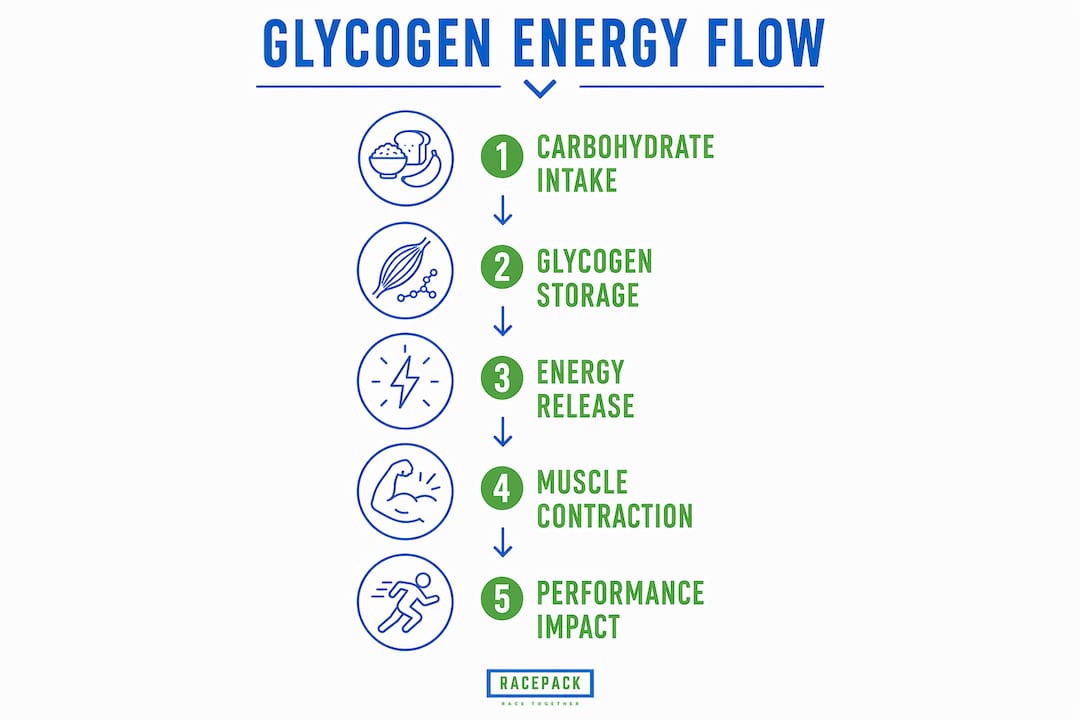
Glycogen powers running through two energy systems: aerobic and anaerobic. During high-intensity efforts, your muscles break down glycogen through glycolysis to produce glucose, which then generates ATP, the molecule your muscles use to contract. This process happens faster than fat oxidation, which is why glycogen is the preferred fuel when pace increases.
At lower intensities, fat oxidation contributes more to energy supply. But as intensity climbs above roughly 70% of your maximum effort, your body shifts heavily toward glycogen. The faster you run, the more glycogen you burn per minute.
The speed of glycogen depletion during intense efforts is striking. Just 30 seconds of maximal running can reduce muscle glycogen stores by 25%. That single data point explains why sprinters and interval runners feel fatigue so quickly without proper fueling.
Here is how glycogen use changes across running intensities:
- Easy pace (below 60% max effort): Fat provides most energy; glycogen use is low and sustainable for hours.
- Moderate pace (60–75% max effort): Both fat and glycogen contribute; glycogen burn rate increases noticeably.
- Threshold pace (75–85% max effort): Glycogen becomes the dominant fuel; stores deplete within 60–90 minutes.
- Race pace and above (85%+ max effort): Glycogen is the near-exclusive fuel; depletion risk is high within 30–45 minutes without fueling.
Liver glycogen also plays a separate but critical role. It regulates blood glucose levels, which feed the brain and working muscles throughout your run. When liver glycogen drops, blood glucose falls, and your brain begins to sense danger.
What happens when glycogen stores deplete during running?
Glycogen depletion produces both physical and neurological effects that directly limit your performance. Physically, depleted muscle glycogen reduces the force your muscle fibers can generate. Neurologically, your brain monitors blood glucose levels and reduces your power output as a protective response. This is known as the central governor effect, and it explains why you slow down even when you feel mentally willing to push harder.
A 30–40% depletion in muscle glycogen results in an 8–15% drop in high-intensity physical performance. For a runner averaging a 5-minute kilometer, that translates to a meaningful pace loss in the final miles of a race.
Runners commonly call this “hitting the wall,” a phenomenon most associated with marathon racing. The wall is not just a feeling of tiredness. It is a measurable physiological event where glycogen stores fall critically low and the body cannot sustain race pace through fat oxidation alone.
Watch for these warning signs of glycogen depletion during a run:
- Sudden, heavy leg fatigue that feels different from normal tiredness
- Loss of pace despite the same perceived effort
- Difficulty concentrating or making decisions mid-run
- Lightheadedness or shakiness, signaling low blood glucose
- Intense carbohydrate cravings, a direct signal from your brain
Brain sensing of low glucose triggers a protective fatigue response that reduces power output before damage occurs. This is not a weakness. It is your nervous system doing its job. The problem is that it ends your race performance well before your muscles are truly exhausted.
How can runners optimize glycogen storage and availability?
Maximizing glycogen before and during a run requires a structured approach to carbohydrate intake. The concept of carbohydrate loading, sometimes called glycogen loading, involves increasing carbohydrate consumption in the days before a long race to top up muscle and liver stores. Modern guidance has moved away from the old extreme depletion-then-loading protocols. Current practice focuses on consistent high carbohydrate intake for 24–48 hours before a key event.

One nuance worth knowing: glycogen is stored with water in a 1:3 ratio, meaning full glycogen loading can add 1–2 kilograms of body mass. For shorter races where power-to-weight matters, aggressive loading may not be worth the trade-off. For marathons and ultramarathons, the extra fuel outweighs the added weight.
Here is a practical fueling framework for runners:
- Pre-run meal (3–4 hours before): Consume a carbohydrate-rich meal of 2–3 grams per kilogram of body weight. Rice, oats, bread, and pasta are reliable choices.
- Pre-run top-up (30–60 minutes before): Take a smaller carbohydrate snack of 30–60 grams to top up blood glucose. An energy gel works well here for convenience and fast absorption.
- During the run (runs over 60 minutes): Carbohydrate intake during running ranges from 30 to 90 grams per hour, with elite athletes tolerating up to 120 grams per hour through gut training.
- Carbohydrate blends: Products using glucose and fructose together absorb faster than glucose alone. This is because they use different intestinal transporters, allowing higher total absorption rates.
- Gut training: Practicing high carbohydrate intake during training runs prepares your digestive system for race-day demands. High carbohydrate doses increase the risk of gastrointestinal distress without prior adaptation.
Pro Tip: Start with 30–45 grams of carbohydrate per hour on your long training runs and increase gradually over several weeks. Your gut adapts just like your muscles do.
For a deeper look at race-week carbohydrate strategy, the carbohydrate loading guide from RacepackSingapore covers the full protocol in detail.
What are best practices for glycogen replenishment after a run?
Post-run glycogen replenishment is where many runners lose ground. Skipping or delaying carbohydrate intake after a hard session slows recovery and leaves you under-fueled for the next workout.
The timing window matters. Optimal glycogen resynthesis requires 1 to 1.2 grams of carbohydrates per kilogram of body weight within 30–60 minutes after finishing your run. For a 70-kilogram runner, that means 70–84 grams of carbohydrate in that first hour. A sports drink, recovery bar, or energy gel taken immediately after finishing covers this window effectively.
Full recovery takes longer than most runners expect. Complete muscle glycogen restoration after heavy depletion takes 12–24 hours or more. That means one post-run meal is not enough. Consistent carbohydrate intake across the full day and into the next is what actually rebuilds your stores.
Key recovery fueling practices:
- Immediate refuel (0–30 minutes): A fast-digesting carbohydrate source like a gel, banana, or sports drink starts glycogen synthesis quickly.
- Recovery meal (1–2 hours post-run): A balanced meal with carbohydrates and protein supports both glycogen resynthesis and muscle repair. Check out the post-workout protein guide for pairing strategies.
- Sustained intake over 24 hours: Spread carbohydrate intake across meals and snacks throughout the day. Do not rely on a single large meal to do all the work.
- Hydration: Since glycogen binds water, rehydrating after a run also supports glycogen storage. Electrolyte drinks help replace sodium and other minerals lost in sweat.
Pro Tip: If you train twice a day or on back-to-back days, treat the post-run refuel as your first meal of the next session, not the last meal of the current one. That mindset shift changes how consistently you refuel.
Training with intentional glycogen depletion on some long runs can also build running economy and improve muscle fiber recruitment. This technique, used by experienced runners, prepares your body for the demands of the final miles in a race. It is not a daily practice, but a deliberate tool in a structured training block.
Key takeaways
Glycogen is the single most important fuel variable a runner can control through nutrition, and managing it before, during, and after every run determines how well you perform and recover.
| Point | Details |
|---|---|
| Glycogen depletes fast | Just 30 seconds of maximal effort reduces muscle glycogen by 25%. |
| Depletion hurts performance | A 30–40% glycogen drop causes an 8–15% decline in high-intensity output. |
| Fuel during long runs | Consume 30–90 grams of carbohydrate per hour for runs exceeding 60 minutes. |
| Refuel within 30–60 minutes | Take 1–1.2 grams of carbs per kilogram of body weight immediately post-run. |
| Full recovery takes 12–24 hours | Consistent carbohydrate intake across the full day rebuilds glycogen stores completely. |
What I’ve learned about glycogen that most runners get wrong
Runners tend to treat glycogen as a simple tank to fill before a race. The reality is more nuanced, and getting it wrong costs you more than just a slow finish time.
The biggest mistake I see is over-relying on a single pre-race carbohydrate meal without building a consistent daily carbohydrate habit. Your glycogen stores reflect your nutrition over the past 24–48 hours, not just the pasta dinner the night before. Runners who eat low-carbohydrate diets during the training week and then try to load the day before a race are fighting their own physiology.
The second mistake is ignoring gut training. The research is clear that higher carbohydrate doses during running increase gastrointestinal distress without prior adaptation. I have seen runners take 90 grams per hour on race day after never practicing it in training. The result is predictable and unpleasant. Your gut is trainable. Use your long runs to practice your race-day fueling plan, not just your legs.
The third thing worth knowing is that glycogen loading adds real body weight through water retention. For a 5K or 10K, aggressive loading may actually slow you down. Save the full loading protocol for events lasting 90 minutes or more, where the fuel benefit clearly outweighs the added mass.
Individual variation is real. Some runners tolerate 120 grams of carbohydrate per hour with no issues. Others struggle at 60 grams. The only way to find your personal ceiling is to test it systematically in training, not on race day.
— Jason John
Fuel your runs with RacepackSingapore
Knowing the science behind glycogen is one thing. Having the right products to act on it is another.

RacepackSingapore carries a full range of carbohydrate fueling products designed for endurance athletes. GU Energy Gels deliver fast-absorbing carbohydrates in a convenient format, making them ideal for mid-run fueling and post-run recovery windows. The GU Energy Gel 24-pack gives you a full training block of reliable fuel in one order. For hydration support alongside your carbohydrate strategy, HIGH5 Isotonic and electrolyte products help you stay on top of fluid and mineral balance. Browse the full energy gels collection at RacepackSingapore and find the right fuel for your next race. Buy now and get next-day delivery across Singapore.
FAQ
What is the role of glycogen in running performance?
Glycogen is the primary carbohydrate fuel stored in muscles and the liver that powers muscle contractions during running. Its availability directly determines how long and how fast you can run before fatigue sets in.
How quickly does glycogen deplete during a run?
Glycogen depletes rapidly at high intensities. Just 30 seconds of maximal running reduces muscle glycogen by 25%, and stores can fall critically low within 60–90 minutes at threshold pace without mid-run fueling.
What does glycogen depletion feel like during a run?
Glycogen depletion causes sudden heavy leg fatigue, pace loss, difficulty concentrating, lightheadedness, and intense carbohydrate cravings. Runners often describe this as “hitting the wall” in marathon racing.
How much carbohydrate should I take during a long run?
Current guidelines recommend 30–90 grams of carbohydrate per hour for runs over 60 minutes. Trained athletes who have practiced gut adaptation can tolerate up to 120 grams per hour.
How long does it take to fully restore glycogen after a run?
Full muscle glycogen restoration after heavy depletion takes 12–24 hours or more. Taking 1–1.2 grams of carbohydrate per kilogram of body weight within 30–60 minutes post-run starts the process, but consistent intake throughout the day is required for complete recovery.
Does carbohydrate loading before a race actually work?
Carbohydrate loading raises muscle glycogen stores above normal levels and delays depletion during long events. The benefit is most significant for races lasting 90 minutes or more. Shorter races may not justify the 1–2 kilogram weight gain from water stored alongside glycogen.
What carbohydrate sources work best for mid-run fueling?
Products combining glucose and fructose, such as GU Energy Gels and HIGH5 Energy Drink 2:1 Fructose, absorb faster than glucose-only sources. They use separate intestinal transporters, allowing higher total carbohydrate uptake per hour.
Can I train my gut to handle more carbohydrates during running?
Yes. Practicing high carbohydrate intake on long training runs adapts your digestive system to absorb more without distress. Start at 30–45 grams per hour and increase gradually over several weeks before your target race.
Should I combine protein with carbohydrates for post-run recovery?
Pairing carbohydrates with protein after a run supports both glycogen resynthesis and muscle repair. A recovery meal within 1–2 hours of finishing, combining both macronutrients, produces better overall recovery than carbohydrates alone.
How does hydration affect glycogen storage?
Glycogen binds water at a 1:3 ratio, so adequate hydration directly supports glycogen storage capacity. Rehydrating with electrolyte drinks after a run helps restore both fluid balance and the conditions needed for glycogen resynthesis.