

How Long Would It Take to Train for a Half Marathon?
TL;DR:
- Training for a half marathon takes between 8 and 20 weeks, depending on your current fitness level. Runners build mileage gradually and taper properly before race day to prevent injuries and optimize performance. Most plans recommend practicing fueling and hydration strategies during long runs to ensure race-day success.
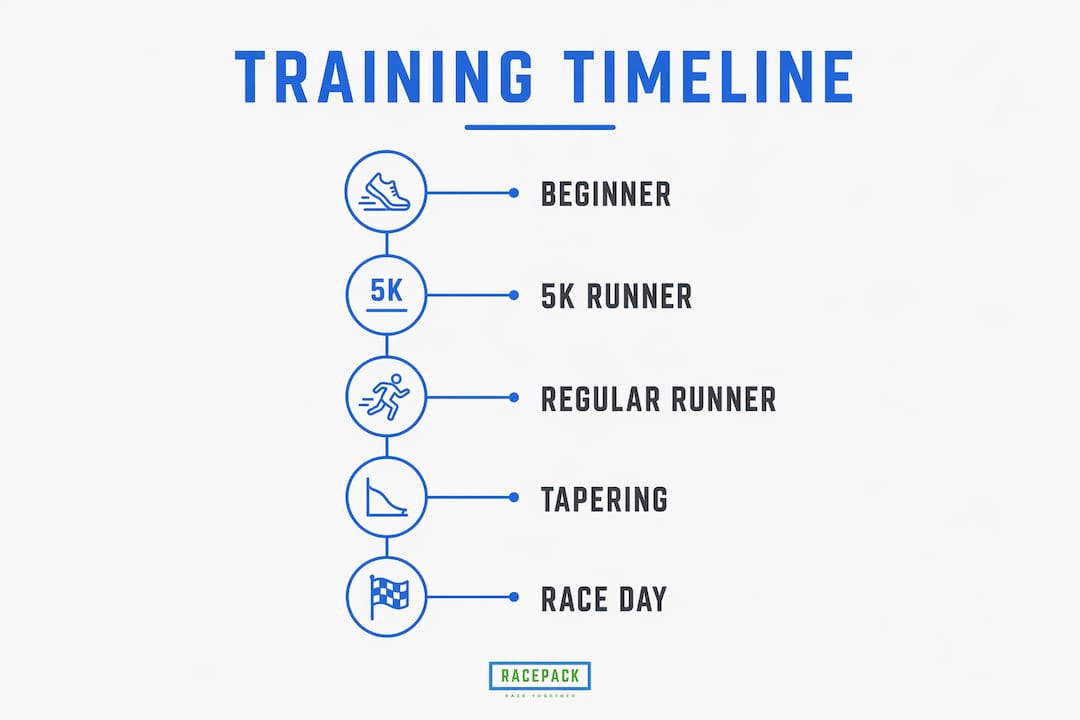
Training for a half marathon takes between 8 and 20 weeks, depending on your current fitness level and running experience. The 13.1-mile distance is demanding enough to require a structured approach, yet accessible enough that most runners can reach the start line healthy and confident. Training timelines depend on baseline fitness: complete beginners need 16–20 weeks, runners comfortable at 5K need 12–14 weeks, and regular runners can prepare in 8–10 weeks. Getting the timeline right protects you from injury and sets you up for a finish you’ll be proud of.
How long does it take to train for a half marathon as a complete beginner?
Complete beginners need 16–20 weeks of structured preparation before toeing the start line. That timeline exists for a good reason. Rapid mileage increases raise injury risk significantly, and your tendons, ligaments, and bones adapt more slowly than your cardiovascular system. Giving yourself more time means your body can absorb the training load safely.
Before you even start a formal half marathon training plan, you need a running base. Beginners who cannot yet run 5K comfortably should spend 4–6 weeks building that foundation first. Skipping this step is the single most common mistake new runners make. A walk-run method, alternating one minute of running with one minute of walking, works well for building that base without overloading your joints.
Once your 5K base is solid, a beginner half marathon training plan typically looks like this:
- Running days: 3–4 sessions per week, including one long run on the weekend
- Cross-training days: 1–2 sessions of cycling, swimming, or strength work to build fitness without pounding the pavement
- Rest days: at least 1–2 full rest days per week for recovery
- Weekly mileage: peak weekly mileage of 20–25 miles in the final weeks before tapering begins
- Long run progression: increase your long run by no more than 10% per week
The goal during easy runs is to stay at a pace where you can hold a full conversation. Running easy sessions too fast is one of the most common errors beginners make, and it leads to burnout and injury. Slow down, build your aerobic base, and trust the process.
Pro Tip: If you miss a run during the week, skip it and move on. Trying to make up missed long runs is a leading cause of overuse injuries in beginner runners. Consistency over weeks matters far more than any single session.
For a structured week-by-week approach, the 12-week beginner training plan from RacepackSingapore gives you a clear roadmap to follow.
How long to prepare if you already run 5K or 10K?
Runners with an existing running base can prepare for a half marathon in a shorter window. If you run 5K comfortably two or three times a week, a 12–14 week plan gives you enough time to build the distance safely. If you already run 10K regularly, 10–12 weeks is a realistic and achievable timeline.

The key difference at this stage is that your aerobic system is already developed. Your training focus shifts from building basic fitness to extending your long run distance week by week. You are not starting from zero. You are teaching your body to sustain effort over a longer distance.
A typical weekly structure for this group includes:
- Three to four runs per week: one long run, one or two easy runs, and one slightly faster tempo run
- Long run targets: building from your current comfortable distance up to 10–12 miles by the final weeks of the plan
- Cross-training: one session per week to support recovery and reduce repetitive strain
- Consistency: missing occasional runs is not detrimental, but cramming missed sessions into a single week creates injury risk
Avoid the trap of running every session at race pace. Easy runs should feel genuinely easy. Tempo runs should feel comfortably hard. That contrast is what drives improvement. Runners who ignore this and push hard every day tend to plateau or get hurt before race day.
Training for regular runners and experienced athletes
Regular runners who already log consistent weekly mileage can prepare for a half marathon in 8–10 weeks. The foundation is already there. What changes is the structure and specificity of training.
At this level, quality workouts become more important. Tempo runs, where you sustain a comfortably hard effort for 20–40 minutes, build race-specific fitness. Interval sessions, alternating hard efforts with recovery jogs, sharpen your speed and raise your lactate threshold. These sessions replace some of the purely easy mileage that beginners rely on.
Tapering is non-negotiable at every level, but experienced runners often resist it. Tapering is a structured volume reduction starting two weeks before race day. It allows your muscles to recover fully, your glycogen stores to top up, and your body to arrive at the start line fresh. Skipping the taper or cutting it short reduces performance and raises injury risk.
Pro Tip: Track your weekly mileage with a Garmin GPS watch to monitor training load accurately. Knowing your exact pace and distance helps you avoid overtraining in the final weeks before your race.
Even at higher training loads, injury prevention stays the priority. Strength training for your hips and glutes, combined with regular mobility work, protects you from the overuse injuries that sideline runners at this stage. Strength training for endurance runners reduces injury risk and improves running economy, regardless of your experience level.
What are the key components of a half marathon training plan?
A training plan is more than a schedule of runs. Four components determine whether your preparation translates into a strong race day performance: mileage buildup, pacing, tapering, and nutrition.
Mileage buildup
Your longest training run does not need to reach 13.1 miles. Long runs peak at 10–12 miles in most well-designed plans. Race-day adrenaline, crowd energy, and the effects of tapering carry you through the final miles. Running the full distance in training adds fatigue without adding meaningful fitness.
Pacing
Zone 2 effort, also called conversational pace, is the foundation of half marathon training. You should be able to speak in full sentences during easy runs. Proper pacing protects your legs and builds the aerobic endurance you need to sustain effort over 13.1 miles. Most runners improve dramatically simply by slowing down their easy days.
Tapering
Tapering starts two weeks before race day. You reduce your weekly mileage by roughly 20–30% in the first taper week and another 20–30% in the final week. Your body uses that time to repair micro-damage from training and store energy for race day. Runners who taper correctly feel sharper, faster, and more energized on race morning.
Nutrition and hydration
Fueling strategies must be tested during long runs, not introduced for the first time on race day. Energy gels and hydration products that cause digestive issues in training will cause the same problems at mile 9 of your race. Practice your fueling plan every time you run longer than 60 minutes.
The table below summarizes recommended training timelines by experience level:
| Runner type | Recommended training duration | Peak weekly mileage |
|---|---|---|
| Complete beginner | 16–20 weeks | 20–25 miles |
| 5K runner | 12–14 weeks | 25–30 miles |
| 10K runner | 10–12 weeks | 30–35 miles |
| Regular runner | 8–10 weeks | 35–40 miles |
Pro Tip: Practice your race-day fueling by using energy gels during training runs that exceed 60 minutes. Your gut needs training just as much as your legs do.
For a deeper look at what to eat and drink on race morning and during the event, the race day nutrition guide from RacepackSingapore covers the full picture.
Key Takeaways
Half marathon preparation takes 8–20 weeks based on your fitness level, and the runners who finish strong are those who build mileage gradually, pace their easy runs correctly, and taper fully before race day.
| Point | Details |
|---|---|
| Timeline depends on fitness | Beginners need 16–20 weeks; 5K runners need 12–14 weeks; regular runners need 8–10 weeks. |
| Build your base first | Runners who cannot yet complete 5K should spend 4–6 weeks on base-building before starting a half marathon plan. |
| Long runs cap at 10–12 miles | You do not need to run 13.1 miles in training; race-day adrenaline and tapering cover the rest. |
| Taper two weeks out | Reduce weekly mileage for two weeks before race day to arrive fresh and fully recovered. |
| Test your fueling in training | Practice energy gels and hydration on every long run to avoid digestive issues on race day. |
The timeline mistake I see most often
The most common error I see runners make is choosing a plan that is too short for their current fitness level. A 10-week plan looks appealing because it gets you to the finish line faster. But if you are starting from scratch, that timeline compresses your mileage buildup into a window your body simply cannot absorb safely.
I have seen runners with genuine potential sideline themselves with stress fractures and IT band injuries because they rushed the process. The injury did not happen because they were not fit enough. It happened because they did not give their connective tissue enough time to adapt. Cardiovascular fitness improves in weeks. Tendons and bones take months.
The other thing I want to push back on is the idea that consistency in training means never missing a run. It does not. Missing one easy run during the week changes nothing. What matters is showing up week after week, month after month, and letting the cumulative effect of training do its work. Perfection in any single week is irrelevant. The pattern across 12 or 16 weeks is everything.
My honest recommendation: add two weeks to whatever plan you think you need. If you think you need 12 weeks, use 14. That buffer absorbs a sick week, a busy work period, or a minor niggle without derailing your preparation. You will arrive at the start line healthier and more confident for it.
— Jason John
Fuel your half marathon training with RacepackSingapore
Completing 13.1 miles takes more than a good training plan. Your body needs consistent fuel to perform in training and recover between sessions.

RacepackSingapore stocks a full range of endurance nutrition products built for runners at every level. GU Energy Gels deliver fast-acting carbohydrates to keep you moving through long runs, and they come in a wide range of flavors so you can find what works for your stomach. For hydration, HIGH5 ZERO+ electrolyte sachets replace the sodium and minerals you lose through sweat. Every product ships with next-day delivery across Singapore and comes with guaranteed authenticity. Shop energy gels now and build your race-day fueling kit today.
FAQ
How many weeks do beginners need to train for a half marathon?
Complete beginners need 16–20 weeks of training. Runners who cannot yet complete 5K comfortably should add 4–6 weeks of base-building before starting a formal half marathon plan.
Do I need to run 13.1 miles before race day?
No. Most training plans cap long runs at 10–12 miles. Race-day adrenaline, crowd support, and the effects of tapering carry you through the final miles safely.
What is tapering and when should I start?
Tapering is a planned reduction in weekly mileage that begins two weeks before race day. It allows your body to recover fully and arrive at the start line fresh and ready to perform.
How often should I run each week during half marathon training?
Most plans call for 3–4 running days per week, with one long run, one or two easy runs, and one cross-training or rest day. Running more than five days per week increases injury risk for most runners.
What should I eat and drink during long training runs?
Test energy gels and electrolyte drinks on every run longer than 60 minutes. Products like GU Energy Gels and HIGH5 Isotonic Hydration Drink are designed for endurance efforts and help prevent fatigue and cramping during training and on race day.
Can I walk during a half marathon?
Yes. Walk breaks are a legitimate race strategy, especially for first-time runners. Alternating running and walking from the start can help you finish stronger than running too fast early and fading.
How do I know if I am running at the right pace?
Run at a conversational pace on easy days. If you cannot speak in full sentences, you are running too fast. Zone 2 effort builds the aerobic base that carries you through 13.1 miles without burning out.
What cross-training works best alongside running?
Cycling, swimming, and strength training complement running well. Strength work targeting the hips, glutes, and core reduces injury risk and improves your running form over the course of a long training block.
Should I use a GPS watch during training?
A GPS watch helps you track pace, distance, and heart rate accurately. Garmin models like the Garmin Forerunner 265 give you real-time data to keep your easy runs easy and your hard runs productive.
Where can I buy race nutrition products in Singapore?
RacepackSingapore offers a full range of energy gels and hydration drinks with next-day delivery across Singapore. All products are guaranteed authentic and sourced from leading international brands including GU and HIGH5. Buy now and start fueling your training today.