

Glycemic Index for Runners: Fuel Smarter, Run Farther
TL;DR:
- Glycemic index helps runners time carbohydrate intake for energy, fueling, and recovery during training and races.
- Timing meals and snacks by GI categories improves endurance, stability, and glycogen replenishment, especially around runs over 60 minutes.
The glycemic index (GI) is a numeric scale from 0 to 100 that ranks carbohydrate foods by how fast they raise blood glucose. For runners, understanding what is glycemic index for runners means knowing which foods deliver steady energy before a long run, which ones refuel muscles mid-race, and which ones restore glycogen fastest after you cross the finish line. GI is not a diet label. It is a performance tool. Used correctly, it gives you a measurable edge in training and on race day.
What is glycemic index for runners and why does it matter?
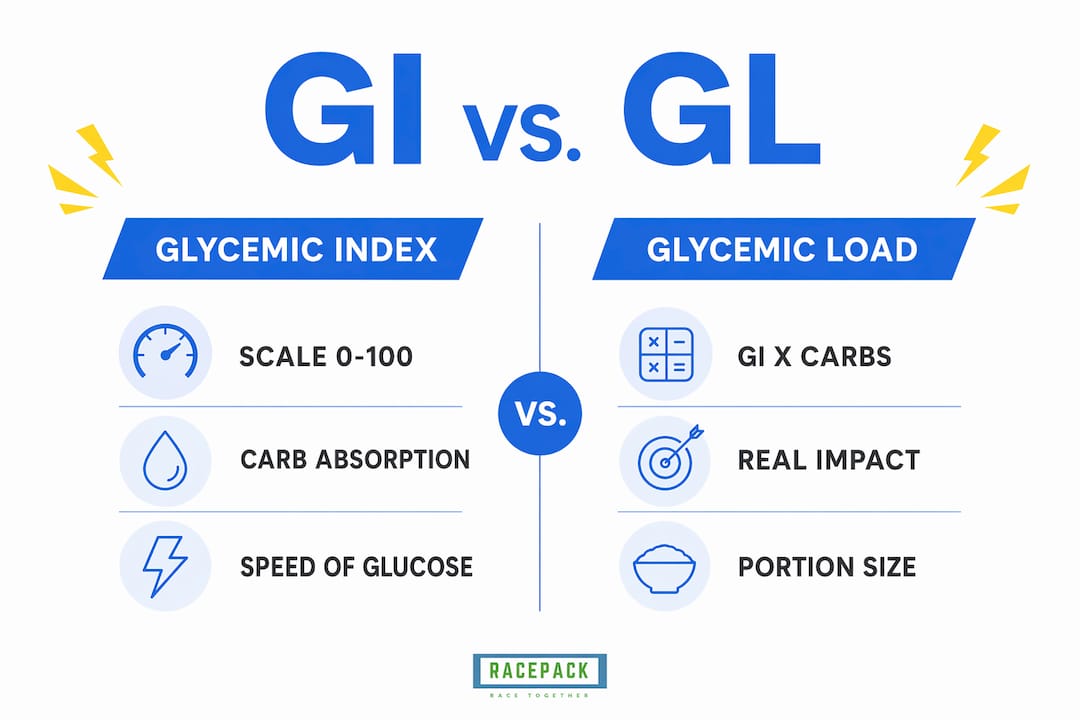
The glycemic index divides carbohydrates into three bands: low GI (below 55), moderate GI (55–70), and high GI (above 70). Each band produces a different blood glucose response. That response directly controls how much fuel your muscles receive and when.
Low-GI foods release glucose slowly. This keeps blood sugar stable for hours, which is exactly what you need before a long training run. High-GI foods spike blood glucose fast. That speed is a liability at the dinner table but an asset at kilometer 25 of a marathon. Moderate-GI foods sit in the middle and work best for recovery meals.
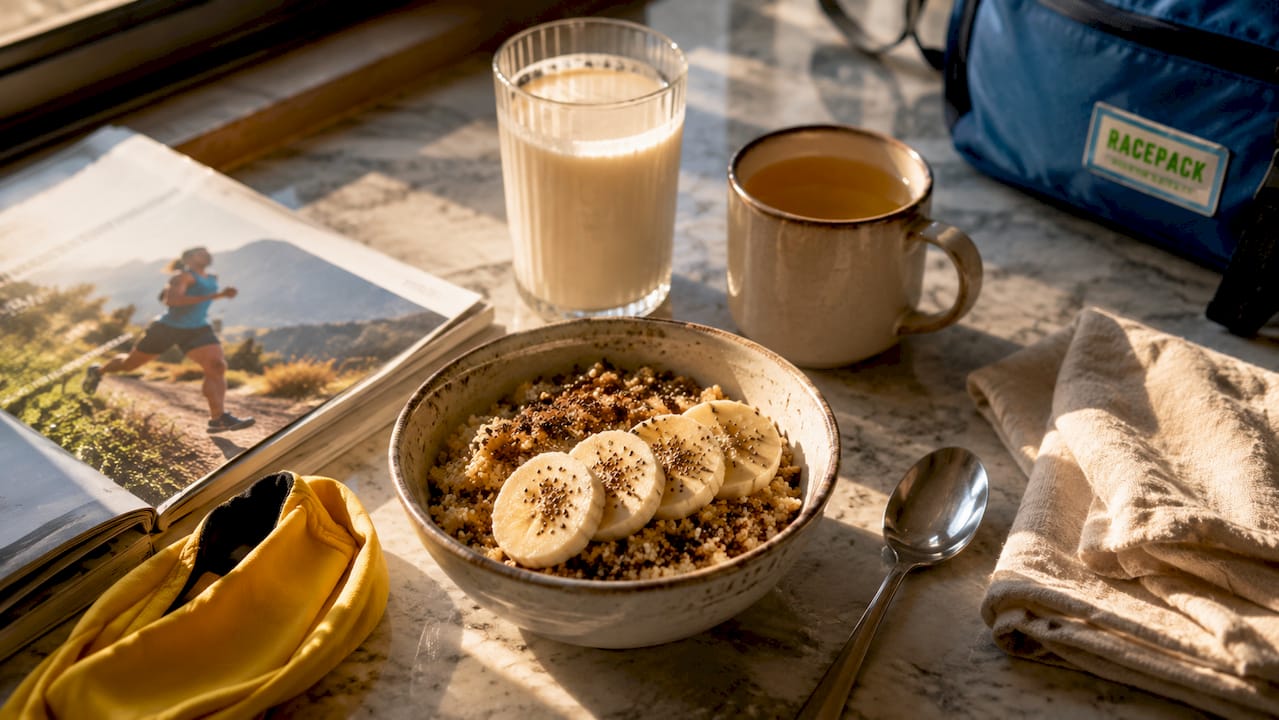
The glycemic index for athletes is most useful when you treat it as a timing tool, not a food quality score. A white rice cake is not “bad food.” It is a high-GI food that belongs at a specific moment in your fueling plan. Oats are not “good food” in every context. They are a low-GI food that serves a specific pre-run purpose.
Pro Tip: Always check the glycemic load (GL) alongside the GI score. GL accounts for the actual carbohydrate content per serving. Watermelon has a GI of roughly 70 but a GL of only about 4 per standard serving. That means it delivers very little rapid fuel despite its high GI score.
GI vs. glycemic load: the distinction that changes everything
Glycemic load equals GI multiplied by grams of carbohydrate per serving, divided by 100. A food can score high on the GI scale but carry so few carbohydrates per serving that its real-world fueling effect is minimal. Manipulating GI type, not just total carbohydrate grams, is what drives meaningful metabolic shifts for endurance athletes. Knowing both numbers lets you choose foods that actually match your energy demands at each phase of training.
| Food | GI Score | Glycemic Load (per serving) | Best timing |
|---|---|---|---|
| Oats | 55 | Low | 2–4 hours pre-run |
| Banana (ripe) | 62 | Moderate | 1 hour pre-run or post-run |
| White bread | 75 | High | During or immediately post-run |
| GU Energy Gel | ~85 | High | Mid-run (60+ min efforts) |
| Watermelon | ~70 | Very low | Not an efficient endurance fuel |
When should runners eat low, moderate, and high GI foods?
Timing is where GI knowledge converts into race-day results. The research is clear on the three windows that matter most for carbohydrate intake for runners.
-
2–4 hours before your run: Eat a low-GI meal. Low-GI pre-exercise meals improve endurance by 8–20% compared to high-GI meals eaten at the same time. The slow glucose release keeps blood sugar stable throughout your warm-up and into the early kilometers. Good choices include oatmeal with berries, whole grain toast with peanut butter, or brown rice with lean protein.
-
30–60 minutes before your run: If you need a small top-up, choose a moderate-GI snack. A ripe banana or a small serving of white rice works well. Research shows that low-GI snack bars consumed 1 hour pre-performance increase endurance capacity by roughly 20% and produce more stable glucose levels (6.2 vs. 7.1 mmol/L) compared to high-GI bars at the same timing.
-
During runs longer than 60–90 minutes: Switch to high-GI fuels. Your muscles need glucose fast. Energy gels, sports drinks, and chews with a GI above 70 deliver that glucose quickly. The energy gel absorption process is designed specifically for this window. Aim for 30–60 grams of carbohydrate per hour depending on intensity and duration.
-
Within 2 hours post-run: Shift to moderate-to-high GI foods to restore glycogen fast. White rice, pasta, or a sports recovery drink all work. This is the window where speed of replenishment matters more than blood sugar stability.
Pro Tip: Practice your race-day fueling plan in training. Your gut needs to adapt to taking in high-GI gels at race pace. Testing your half marathon gel strategy in training prevents surprises on race day.
Common misconceptions about glycemic index and running
The biggest mistake runners make is applying GI rules from everyday nutrition directly to exercise physiology. The two contexts are fundamentally different.
GI scores are measured at rest. During exercise, insulin secretion is suppressed. That means your muscles uptake high-GI carbs rapidly without the insulin spike that would occur at rest. High-GI carbs are oxidized quickly at roughly 75–80% VO2max intensity. The “avoid high-GI foods” rule that applies to sedentary health contexts simply does not apply mid-run.
A second common error is treating GI as a binary good-or-bad label. GI is a tactical tool, not a measure of food quality. Rigidly eating only low-GI foods fails you during long runs because it cannot deliver the rapid glucose spikes your muscles need at high intensity. The goal is strategic variation, not a fixed rule.
“Consistent total carbohydrate intake is the foundation. GI manipulation is effective only when total carbohydrate consumption stays the same. Glycemic load is the practical metric that ties both together.” — Sports Performance Bulletin
A third misconception involves whole foods as race fuel. Some runners assume that because a whole food has a high GI, it works as endurance fuel. High GI alone is insufficient if carbohydrate density is low. You would need to eat impractical volumes of some whole foods to match the carbohydrate delivery of a single energy gel. For mid-run fueling, carbohydrate density and GI must both be high.
How to choose GI-based foods and supplements for your runs
Practical food selection starts with matching GI and glycemic load to your training phase. Here is a working framework.
Low-GI foods for pre-run meals (GI below 55):
- Rolled oats or steel-cut oats
- Sweet potato
- Lentils and legumes
- Whole grain bread or pasta
- Low-fat yogurt
Moderate-GI foods for recovery (GI 55–70):
- Ripe banana
- Brown rice
- Whole wheat pita
- Pineapple
High-GI fuels for mid-run and immediate post-run (GI above 70):
- Energy gels (GU, Maurten, SIS)
- Sports drinks and isotonic drinks
- White bread, white rice
- Dates and raisins
For runs under 60 minutes, pre-run low-GI nutrition and post-run recovery are your two priorities. For runs over 90 minutes, mid-run high-GI fueling becomes non-negotiable. Carbohydrate loading in the days before a race uses moderate-to-high GI foods to top up glycogen stores fully.
When selecting commercial products, check both GI and carbohydrate content per serving. A 28-day low-GI diet in ultra-endurance athletes reduced glycemic variability with the coefficient of variation dropping from 18% to 16%, without any loss of endurance performance. That finding confirms that a low-GI base diet supports metabolic stability without costing you speed or stamina.
Pro Tip: High glycemic loads consumed immediately before exercise can lower fat oxidation, which matters for long efforts where fat metabolism contributes significantly to energy. Stick to low-GI foods in the 2–4 hour pre-run window to protect fat-burning capacity.
Key takeaways
The glycemic index is a timing tool for runners: low GI before, high GI during, and moderate-to-high GI after exercise produces the best energy and recovery outcomes.
| Point | Details |
|---|---|
| GI is a timing tool | Match GI to your exercise phase: low pre-run, high mid-run, moderate post-run. |
| Glycemic load matters too | Always check carbohydrate density alongside GI to confirm a food delivers real fuel. |
| GI rules change during exercise | Insulin is suppressed mid-run, so high-GI carbs absorb fast without blood sugar spikes. |
| Low-GI pre-run meals improve endurance | Research shows 8–20% endurance gains from low-GI meals eaten 2–4 hours before exercise. |
| Practice fueling in training | Test your gel and drink strategy in training before committing to it on race day. |
What I’ve learned from years of watching runners get GI wrong
By Jason John
Most runners I work with arrive with one of two problems. Either they eat low-GI foods religiously and wonder why they bonk at kilometer 30, or they eat high-GI foods all day and wonder why their energy crashes before the run even starts. Both groups are applying a real principle at the wrong time.
The research on GI timing is solid. But the nuance that rarely gets communicated is this: GI strategy only works when your total carbohydrate intake is consistent. I have seen athletes switch to low-GI foods and simultaneously reduce their overall carbohydrate intake, then blame GI for their poor performance. The problem was not GI. It was caloric and carbohydrate deficit.
My strongest recommendation is to treat GI as a scheduling tool, not a diet philosophy. Build your pre-run meals around low-GI whole foods. Stock your pockets with high-GI gels for anything over an hour. Eat moderate-to-high GI carbohydrates within two hours of finishing. Then repeat that structure in every training run so your gut, your muscles, and your race-day plan are all aligned.
The athletes who perform best are not the ones who know the most about GI. They are the ones who have practiced their fueling plan enough times that it runs on autopilot. Start simple. Test one variable at a time. And trust the process.
— Jason John
Fuel your runs with the right products from RacepackSingapore
Knowing your GI strategy is only half the equation. Having the right products ready for each phase of your run is the other half.
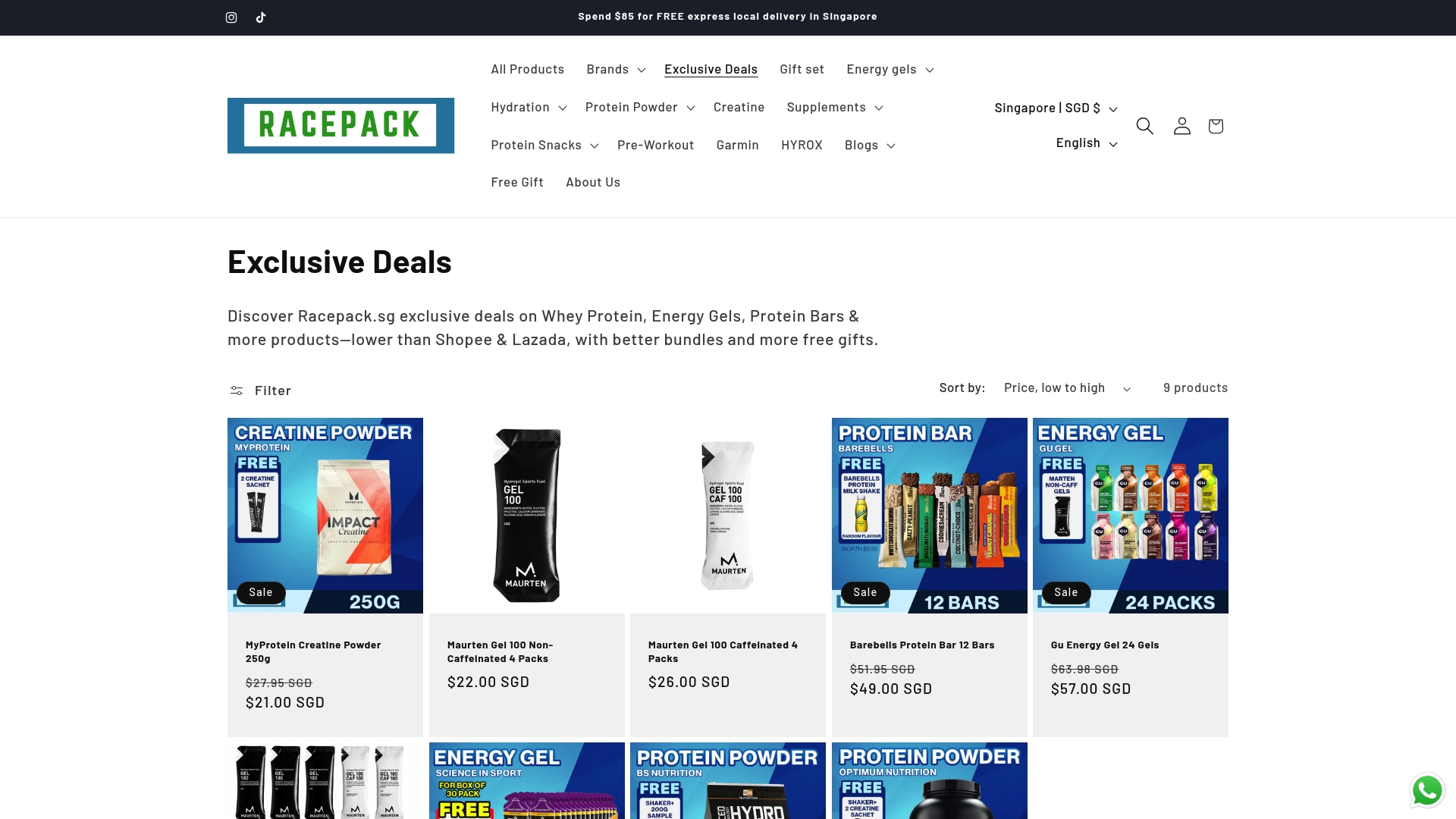
RacepackSingapore stocks a full range of high-GI endurance fuels designed for mid-run glucose delivery. GU Energy Gels are one of the most trusted high-GI options for runners needing fast carbohydrate during efforts over 60 minutes. For hydration and electrolyte replenishment alongside your carbohydrate strategy, the HIGH5 Isotonic Hydration Drink delivers both fluid and fast-absorbing carbohydrates in one serving. Browse the full energy gels collection at RacepackSingapore for options across GI levels, pack sizes, and flavor profiles. All products ship with next-day delivery within Singapore and come with guaranteed authenticity.
Buy Now at RacepackSingapore
FAQ
What is the glycemic index for runners?
The glycemic index is a scale from 0 to 100 that ranks carbohydrate foods by how fast they raise blood glucose. Runners use it to time their carbohydrate intake for sustained energy before runs, rapid fueling during runs, and fast recovery after runs.
What GI foods should runners eat before a race?
Runners should eat low-GI foods (GI below 55) in the 2–4 hours before a race. Research shows this approach improves endurance by 8–20% compared to high-GI pre-race meals eaten at the same time.
What is glycemic load and why does it matter for runners?
Glycemic load accounts for both the GI score and the actual carbohydrate content per serving. A food can have a high GI but a low glycemic load, meaning it delivers little real fuel. Runners need both a high GI and a high glycemic load for effective mid-run fueling.
Should runners eat energy gels during a run?
Runners doing efforts longer than 60–90 minutes should take high-GI energy gels to maintain blood glucose and delay fatigue. Gels are formulated with high GI and high carbohydrate density, making them more practical than most whole foods for mid-run fueling.
Does the glycemic index work the same way during exercise as at rest?
No. GI scores are measured at rest. During exercise, insulin secretion is suppressed, so muscles absorb high-GI carbohydrates rapidly without the insulin spike that occurs at rest. This makes high-GI foods more effective mid-run than the standard GI framework suggests.
How often should runners take in carbohydrates during a long run?
Most endurance guidelines recommend 30–60 grams of carbohydrate per hour during runs lasting longer than 90 minutes. The exact amount depends on body weight, intensity, and individual tolerance developed through training.
Can runners use whole foods instead of energy gels?
Whole foods can work if they have both a high GI and a high glycemic load. Most whole foods require impractical serving sizes to match the carbohydrate density of a single energy gel. Dates and raisins are among the more practical whole-food options for mid-run fueling.
What happens if a runner eats high-GI foods too close to race start?
Eating high-GI foods within 30–60 minutes of race start can trigger a rapid insulin response at rest, potentially causing a blood sugar dip early in the run. High glycemic loads immediately before exercise can also reduce fat oxidation, which matters for long-duration efforts.
How does a low-GI diet affect long-term endurance performance?
A 28-day low-GI diet in ultra-endurance athletes reduced glycemic variability without any loss of endurance performance. It lowered the coefficient of variation in blood glucose from 18% to 16%, supporting more stable energy and fewer hypoglycemia episodes during training.
What are the best high-GI products for runners available in Singapore?
GU Energy Gels, HIGH5 Isotonic Hydration Drink, and HIGH5 ZERO+ electrolyte sachets are all available through RacepackSingapore with next-day delivery. These products are formulated for rapid carbohydrate and electrolyte delivery during endurance exercise.