

Energy Gel Absorption Explained for Endurance Athletes
TL;DR:
- Energy gel absorption involves carbohydrates passing through intestinal transporters into the bloodstream within 10 to 15 minutes, providing rapid fuel for endurance. Proper gel choice, timing, and gut training optimize absorption and reduce GI distress, with dual-carbohydrate formulas boosting capacity. Consistent micro-dosing before energy depletion enhances performance and minimizes digestive issues during race efforts.
Energy gel absorption is the process by which carbohydrates from specialized gels pass through intestinal transporters into the bloodstream, typically within 10 to 15 minutes of ingestion, delivering rapid fuel for sustained athletic performance. This mechanism is what separates a well-timed gel from a wasted one. Brands like Maurten, Science in Sport (SiS), and GU Energy have built their formulations around maximizing this uptake while minimizing gut distress. Understanding how absorption works, what limits it, and how to train for it gives you a direct performance edge in training and on race day.
What is energy gel absorption and how does it work?
Energy gel absorption refers to the uptake of carbohydrates from a gel through the wall of the small intestine and into the bloodstream. The process begins the moment you swallow a gel. It moves from your stomach into the small intestine, where the real work happens.
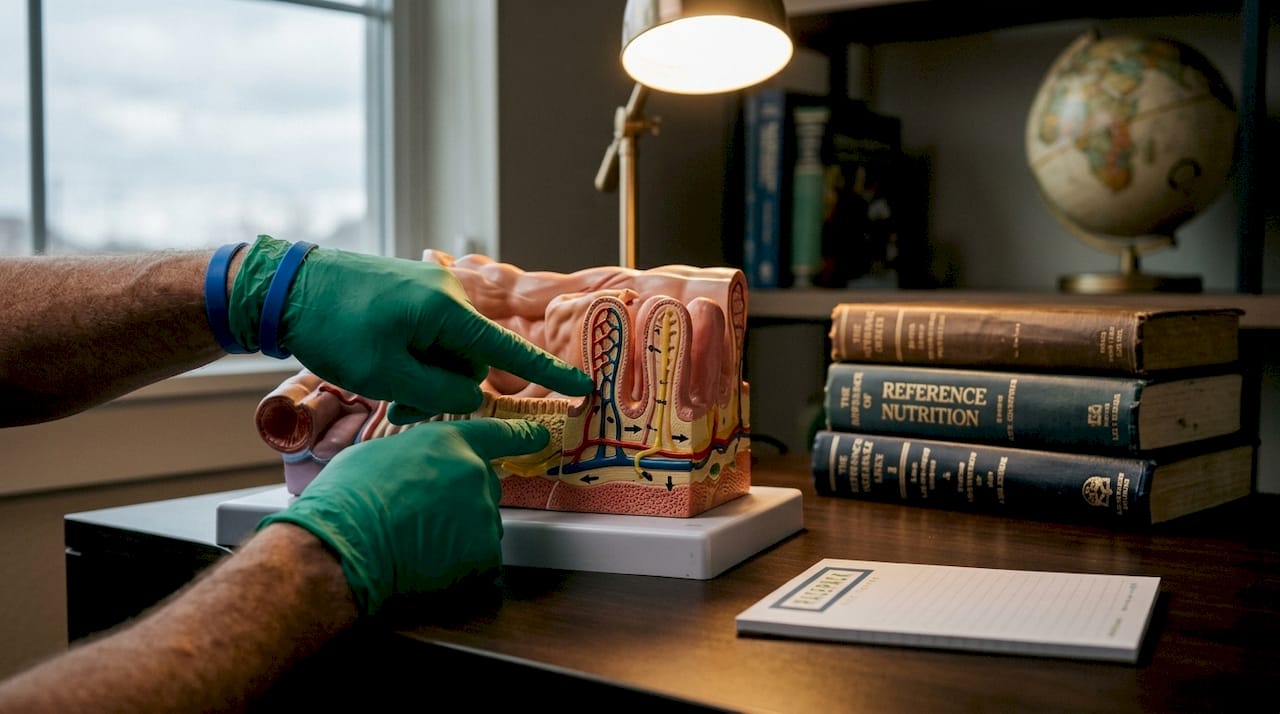
The stomach’s role is primarily transit. Gastric emptying speed determines how quickly the gel reaches the intestine, and viscosity and osmolality directly affect that speed. Thick, high-viscosity gels empty more slowly and can create a heavy, bloated sensation during intense effort. Lower-viscosity, isotonic gels move through faster and cause less discomfort.
Once in the small intestine, two transporter systems do the heavy lifting:
- SGLT1 absorbs glucose and maltodextrin. This transporter is the primary pathway for most gel carbohydrates.
- GLUT5 absorbs fructose. This is a completely separate pathway, which is why combining carbohydrate types matters.
- Bloodstream delivery follows within 10 to 15 minutes of ingestion under normal conditions, giving you a fast but not instant energy response.
The critical insight here is that intestinal transporter saturation, not gastric emptying, is the primary bottleneck for carbohydrate absorption. You can have perfect gut motility, but if your transporters are maxed out, the carbs sit in your gut and cause problems.
Pro Tip: Take your first gel 15 to 20 minutes before you actually need the energy. The absorption window means you are always fueling slightly ahead of demand, not in the moment of depletion.
What factors influence energy gel absorption rate?
Several variables determine how efficiently your body pulls carbohydrates from a gel. Composition, tonicity, dosing frequency, and gut adaptation all interact to set your effective absorption ceiling.
Isotonic vs. hypertonic gels
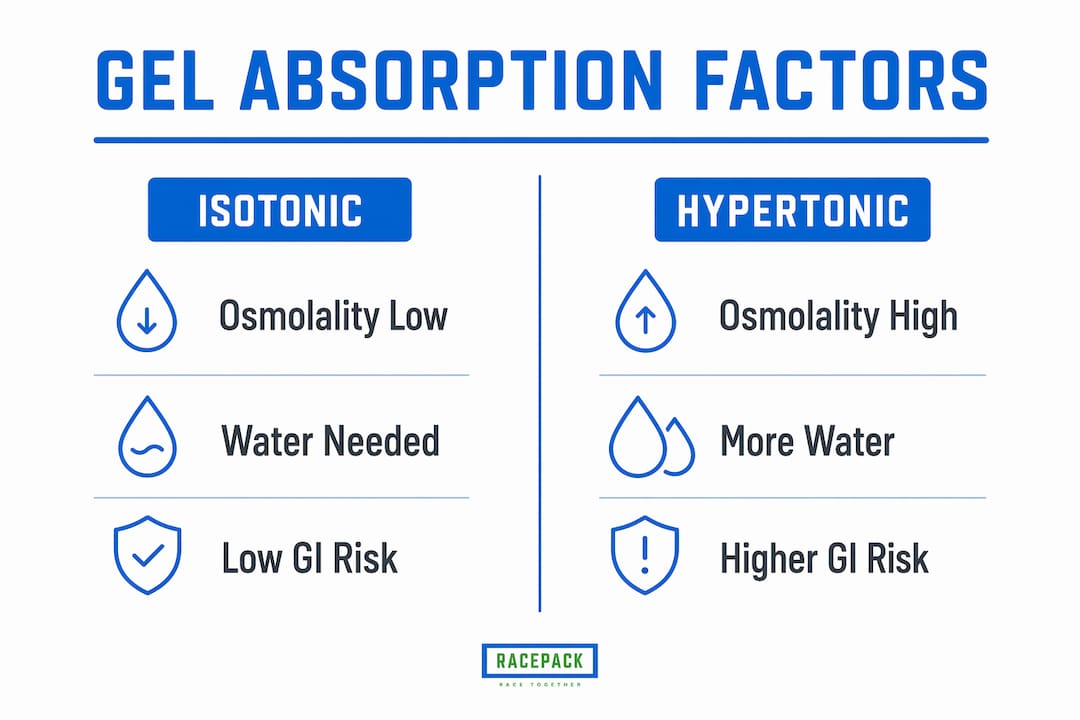
Tonicity is one of the most misunderstood factors in gel selection. Isotonic gels have an osmolality under 290 mmol/kg, matching the body’s own fluid concentration. They absorb without requiring additional water, which reduces bloating and GI distress. SiS GO Isotonic Energy Gels are the most widely cited example of this format.
Hypertonic gels have a higher solute concentration than body fluids. They draw water from the body into the gut to dilute themselves, which can cause dehydration and cramping if you do not drink water alongside them. This is not a flaw in the product. It is a formulation choice that requires a specific hydration strategy.
| Gel type | Osmolality | Water needed | GI distress risk |
|---|---|---|---|
| Isotonic | Under 290 mmol/kg | Minimal | Low |
| Hypertonic | Over 290 mmol/kg | Required | Moderate to high if underfueled |
Dual-transporter carbohydrate blends
Combining glucose and fructose in a gel bypasses the saturation limit of any single transporter. Glucose alone saturates the SGLT1 pathway at around 60g per hour. Adding fructose recruits the GLUT5 pathway, pushing total absorption capacity up to 120g per hour. Maurten gels use a hydrogel matrix with a 0.8:1 maltodextrin-to-fructose ratio specifically to exploit this dual-transporter mechanism.
Pro Tip: If you are racing for longer than 90 minutes, choose a gel with both maltodextrin and fructose. Single-carb gels are fine for shorter efforts, but dual-carb formulas are the standard for marathon and triathlon distances.
Gut training and adaptation
The gut is trainable. Recent 2026 research confirms that consistent carbohydrate intake during training increases transporter density in the intestinal wall, raising your effective absorption ceiling over time. Athletes who never practice fueling during training are not just unprepared nutritionally. They are physiologically less capable of absorbing carbs under race conditions.
How do energy gels compare to other carbohydrate sources?
Energy gels occupy a specific performance niche. They are not universally superior to all carbohydrate sources, but they have clear advantages in specific contexts.
- Speed of absorption. At high exercise intensities, liquid and isotonic carbohydrate forms outperform solid foods because they require less digestive processing and empty from the stomach faster. Solid foods like bananas or bars demand more gastric work, which diverts blood flow from working muscles.
- Precision dosing. Each gel delivers a fixed carbohydrate amount, typically 20 to 30g. This makes it straightforward to track intake against your hourly targets. Solid foods introduce variability in portion size and carbohydrate density.
- Convenience during movement. Gels are designed for one-handed use while running or cycling. That practical advantage is real and underappreciated. Convenience and precise dosing are the primary functional advantages of gels over whole food alternatives.
- Absorption ceiling. Most endurance athletes absorb 30 to 60g of carbohydrate per hour, but trained athletes using multi-transport carbs can reach 90 to 120g per hour. Exceeding your personal ceiling causes GI distress in 10 to 20% of users. Knowing your limit matters more than chasing the maximum.
- GI sensitivity. Gels are not inherently easier on the gut than solid food. Hypertonic gels taken without water, or any gel taken in large boluses, can cause nausea, cramping, and bloating. The format does not eliminate GI risk. It just shifts where the risk comes from.
The practical conclusion: gels are the right tool for sustained, high-intensity efforts where speed of delivery and ease of use outweigh the sensory appeal of real food. For lower-intensity training runs under 60 minutes, solid food or nothing at all is often sufficient.
How to optimize energy gel absorption during training and competition
Getting the most from your gels requires a deliberate strategy, not just tearing one open when you feel tired. Here is a practical framework built around the science of absorption.
- Choose the right gel type for your hydration setup. If you are running a race with reliable aid stations, hypertonic gels paired with water at each station work well. If you are carrying minimal fluid, SiS GO Isotonic gels are the safer choice because they absorb without supplemental water.
- Use dual-carb gels for efforts over 90 minutes. GU Energy Gels and Maurten gels both use maltodextrin-fructose blends. For a marathon or long triathlon, this combination is not optional if you want to sustain carbohydrate delivery at the rates elite performance demands.
- Micro-dose every 15 to 20 minutes. Frequent smaller doses keep gut concentration low and absorption steady. Taking one large gel every 45 minutes creates concentration spikes that slow gastric emptying and can trigger nausea. Experienced athletes split their intake into smaller, more frequent portions.
- Never combine a gel with an isotonic sports drink. Taking a gel alongside an isotonic drink doubles the carbohydrate concentration in your gut simultaneously. This creates a hypertonic environment that draws water into the gut and increases distress risk. Take gels with plain water only.
- Practice your fueling plan in training. Gut adaptation takes weeks of consistent practice. Use your race-day gel brand and timing protocol in your long training sessions. Your gut will become more efficient at absorbing carbohydrates under exertion over time.
Pro Tip: Start your fueling protocol at 30 to 45 minutes into a long effort, before you feel any energy drop. Waiting until you are depleted means the gel arrives too late to prevent the performance dip.
Key takeaways
Energy gel absorption depends on intestinal transporter capacity, gel tonicity, carbohydrate composition, and consistent gut training. Choosing the right gel type and dosing strategy is the difference between sustained performance and a mid-race GI crisis.
| Point | Details |
|---|---|
| Absorption happens in the small intestine | Carbohydrates reach the bloodstream within 10 to 15 minutes via SGLT1 and GLUT5 transporters. |
| Dual-carb gels double your ceiling | Combining glucose and fructose raises absorption capacity from 60g to up to 120g per hour. |
| Isotonic gels reduce GI risk | Gels under 290 mmol/kg osmolality absorb without extra water, lowering bloating and cramping risk. |
| Micro-dosing outperforms bolus intake | Taking small amounts every 15 to 20 minutes keeps gut concentration stable and absorption efficient. |
| Gut training is non-negotiable | Consistent fueling practice during training increases transporter density and raises your absorption ceiling. |
Why most athletes are still getting gel absorption wrong
I have watched athletes at every level, from first-time marathoners to seasoned ultrarunners, make the same core mistake: they treat gels as emergency fuel rather than a scheduled delivery system. They wait until their legs feel heavy or their focus drops, then slam a gel and wonder why it takes another 20 minutes to feel anything. That delay is not a product failure. It is a timing failure.
The second most common mistake I see is ignoring tonicity entirely. Athletes pick a gel based on flavor or brand loyalty, then pair it with an isotonic sports drink at every aid station. They are essentially creating a hypertonic solution in their gut on purpose, without realizing it. The bloating and nausea they blame on “gels not agreeing with me” is almost always a pairing problem, not a product problem.
What genuinely excites me about where gel technology is heading is hydrogel encapsulation. Maurten’s hydrogel matrix was the first mainstream application of this, using pH-responsive polymers to modulate carbohydrate release in the gut. The 2026 research on this technology suggests we are moving toward gels that actively adapt their release rate to gut conditions, which could make the timing and pairing errors far less costly for athletes who are still learning.
My recommendation: treat your fueling protocol like a training block. Build it progressively, test it under race-like conditions, and adjust based on what your gut actually tells you, not what the packaging promises.
— Jason John
Fuel smarter with top-rated gels from RacepackSingapore
RacepackSingapore carries the full range of gels built around the absorption science covered in this article. Whether you need the water-free convenience of SiS GO Isotonic gels for your next long run, the dual-carb delivery of GU Energy Gels for marathon fueling, or the hydrogel technology of Maurten Gel 160 for race day, we stock authentic products with next-day delivery across Singapore. Every product in our catalog is sourced directly from the brand or authorized distributors, so you get exactly what the science recommends, not a substitute.
FAQ
What is energy gel absorption?
Energy gel absorption is the process by which carbohydrates in a gel are transported through the intestinal wall into the bloodstream via SGLT1 and GLUT5 transporters. This typically occurs within 10 to 15 minutes of ingestion.
How does an energy gel work in the body?
A gel moves from the stomach into the small intestine, where glucose and maltodextrin are absorbed via the SGLT1 transporter and fructose via GLUT5. The carbohydrates then enter the bloodstream and are delivered to working muscles as fuel.
What is the energy gel absorption rate for endurance athletes?
Most athletes absorb 30 to 60g of carbohydrate per hour from gels. Trained athletes using dual-carb formulas with both glucose and fructose can reach 90 to 120g per hour with consistent gut training.
Do isotonic energy gels absorb faster than hypertonic gels?
Isotonic gels match the body’s fluid concentration and absorb without requiring extra water, which reduces GI distress and supports efficient uptake. Hypertonic gels require water to dilute them before absorption can proceed efficiently.
Do energy gels help with hydration?
Most energy gels do not provide meaningful hydration on their own. Isotonic gels minimize fluid demand, but hypertonic gels actively draw water into the gut if taken without water. For hydration support, pair gels with plain water or use a dedicated Maurten Drink Mix alongside your gel protocol.
How often should I take energy gels during a race?
Micro-dosing every 15 to 20 minutes is more effective than taking one gel every 45 minutes. Smaller, frequent doses keep gut carbohydrate concentration stable and reduce the risk of nausea and energy crashes.
What are the best energy gels for running in Singapore?
SiS GO Isotonic, GU Energy Gel, and Maurten Gel 160 are the top-performing options available through RacepackSingapore, each optimized for different absorption strategies and race distances.
Can you train your gut to absorb more carbohydrates from gels?
Yes. Consistent carbohydrate intake during training increases intestinal transporter density over time, raising your effective absorption ceiling. Athletes who practice fueling in training absorb carbohydrates more efficiently under race conditions.
What happens if you take too many energy gels at once?
Exceeding your absorption capacity causes carbohydrates to remain in the gut, drawing water in and triggering bloating, cramping, and nausea. GI distress affects 10 to 20% of athletes who exceed their carbohydrate absorption limits.
Should I take energy gels with water or a sports drink?
Take gels with plain water only. Combining a gel with an isotonic sports drink creates a high-carbohydrate concentration in the gut simultaneously, increasing GI distress risk significantly.
What ingredients should I look for in an energy gel?
Look for a maltodextrin-and-fructose blend for dual-transporter absorption, low osmolality for isotonic delivery, and a carbohydrate content of 20 to 30g per serving. Brands like Maurten, SiS, and GU formulate specifically around these criteria.
Where can I buy authentic energy gels in Singapore with fast delivery?
RacepackSingapore offers guaranteed authentic energy gels from Maurten, SiS, and GU with next-day delivery across Singapore. Shop energy gels for race day and get your fueling protocol dialed in before your next event.