

Black Cumin Seeds Nigella Sativa: 2026 Health Guide
TL;DR:
- Black cumin seeds, or Nigella sativa, contain bioactive thymoquinone and are supported by clinical evidence for improving lipids, controlling blood sugar, and providing antioxidant effects. Proper dosing, storage, and selecting the correct plant variety are essential for maximizing therapeutic benefits, which are best achieved over an 8- to 12-week period. It is a supportive supplement that enhances health when used correctly but should not replace conventional medical treatments.
Black cumin seeds Nigella sativa is defined as a flowering plant native to Southwest Asia whose seeds contain thymoquinone, the primary bioactive compound responsible for its clinically documented health effects. Used for centuries in Ayurvedic and Unani medicine, Nigella sativa has earned serious attention from modern researchers for its ability to reduce cholesterol, regulate blood sugar, and fight oxidative stress. The evidence is not anecdotal. Randomized controlled trials, meta-analyses, and pharmacological reviews all point to the same conclusion: this small black seed delivers measurable therapeutic value when used correctly.
What are the health benefits of black cumin seeds nigella sativa?
The most well-documented nigella sativa benefits fall into three categories: lipid improvement, blood glucose control, and antioxidant activity. Each is backed by clinical trial data, not just traditional use.
Lipid Profile Improvement
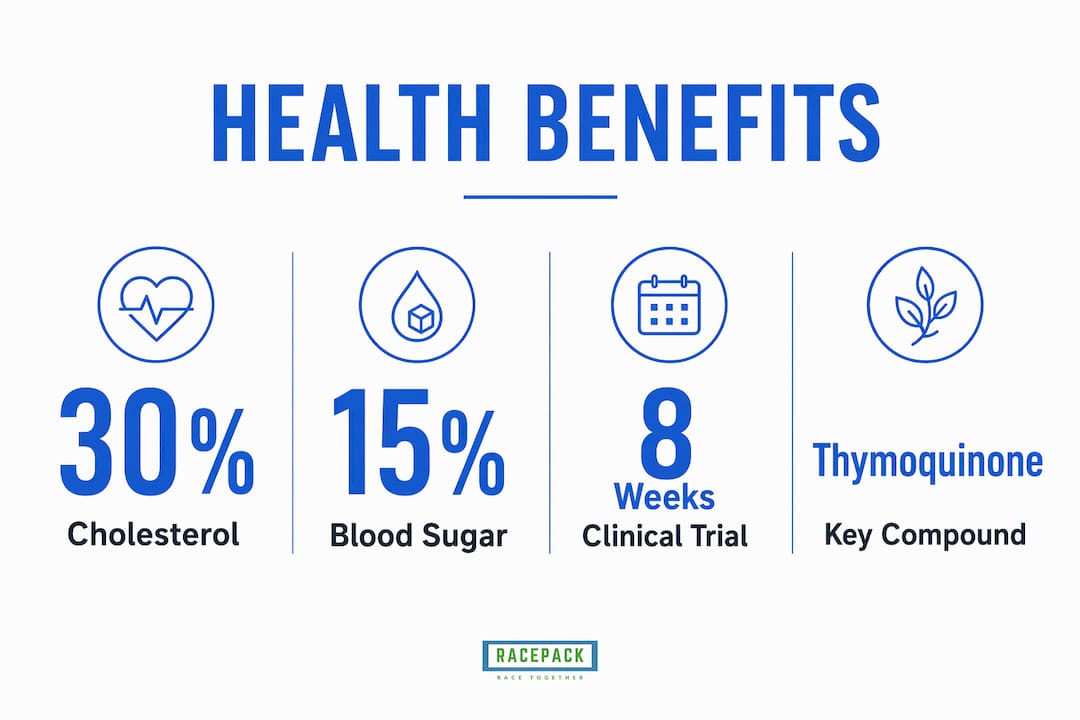
A randomized controlled trial found that 5g daily for 8 weeks significantly lowered total cholesterol, triglycerides, and LDL while raising HDL in adults aged 20–50. That result matters because LDL reduction without pharmaceutical intervention is rare among natural supplements. Most herbal products show modest effects at best. Nigella sativa is an exception.
Blood Sugar Regulation
Meta-analyses covering seven randomized controlled trials report that Nigella sativa supplementation reduces fasting blood glucose by an average of 17.84 mg/dL in type 2 diabetes patients. A reduction of that magnitude is clinically meaningful. For context, many lifestyle interventions struggle to move fasting glucose by more than 10 mg/dL without dietary overhaul.
Antioxidant and Anti-Inflammatory Activity
Black cumin seeds scavenge free radicals and inhibit lipid peroxidation while upregulating key antioxidant enzymes including superoxide dismutase and catalase. The mechanism involves NF-κB inhibition, a pathway linked to chronic inflammation in metabolic diseases. This makes Nigella sativa particularly relevant for anyone managing conditions where oxidative stress plays a central role.
“The therapeutic effectiveness of Nigella sativa is mainly linked to its potent antioxidant capacity, functioning best as supportive therapy in chronic conditions rather than as a standalone cure.” — Bentham Direct, 2024
The Compound Synergy Factor
Thymoquinone does not work alone. Whole seed or cold-pressed oil is more effective than isolated thymoquinone because secondary metabolites like p-cymene and carvacrol amplify its pharmacological effects. This is why whole-food or minimally processed supplement forms consistently outperform synthetic isolates in clinical comparisons.
How to use nigella sativa safely and effectively
Getting the dosage and storage right determines whether you see results or waste your money. Here is what the clinical evidence actually recommends.
-
Start with a clinically supported dose. Clinical guidelines recommend 500 mg to 2.5 g of Nigella sativa daily. Most trials showing significant results used doses in the 1–2 g range over 8–12 weeks.
-
Commit to the full treatment window. Eight to twelve weeks is the minimum duration for measurable lipid or glucose changes. Stopping at two or three weeks will not give you meaningful data on whether it is working.
-
Choose whole seeds, cold-pressed oil, or standardized capsules. Whole seeds retain the full metabolite profile. Cold-pressed oil preserves thymoquinone better than heat-extracted versions. Standardized capsules offer the most consistent dosing for supplementation purposes.
-
Store correctly to protect potency. Thymoquinone is highly sensitive to light and heat. Store seeds and oils in opaque, airtight containers in a cool location. Grind whole seeds fresh before use rather than buying pre-ground powder that has been sitting on a shelf.
-
Do not use it as a medication replacement. Nigella sativa should not replace conventional treatments for diabetes or cardiovascular disease. It may also interact with blood thinners. Always consult your healthcare provider before adding it to your routine if you are on prescription medications.
Pro Tip: Take black seed oil capsules with a meal containing healthy fats. Thymoquinone is fat-soluble, so pairing it with dietary fat improves absorption and reduces the chance of digestive discomfort.
Black cumin vs. true cumin: what is the difference?
This is one of the most common points of confusion in natural health circles, and it has real consequences for both cooking and supplementation.
Nigella sativa is botanically unrelated to true cumin (Cuminum cyminum). They share a common name in some regions, but they are entirely different plants with different chemical profiles and different health effects. A third plant, Bunium bulbocastanum, is also called black cumin in parts of Central Asia, adding another layer of confusion.
| Feature | Nigella sativa | Cuminum cyminum | Bunium bulbocastanum |
|---|---|---|---|
| Common name | Black seed, kalonji | True cumin | Black cumin (Central Asia) |
| Family | Ranunculaceae | Apiaceae | Apiaceae |
| Primary compound | Thymoquinone | Cuminaldehyde | Cuminaldehyde |
| Flavor profile | Peppery, slightly bitter | Warm, earthy | Earthy, nutty |
| Clinical evidence | Extensive (lipids, glucose) | Limited | Very limited |
| Supplement use | Yes, widely studied | Rare | Rare |
The practical takeaway is straightforward. If you are buying a supplement for nigella sativa benefits, verify the Latin name on the label. “Black cumin” alone tells you nothing. Only “Nigella sativa” on the label guarantees you are getting the plant with the documented clinical profile.
How to add black cumin seeds to your daily routine
Incorporating Nigella sativa into your lifestyle does not require a complete overhaul. The options range from traditional culinary use to modern supplement formats.
Culinary Uses
Nigella sativa seeds are a staple in South Asian and Middle Eastern cuisines, sprinkled on naan bread, stirred into lentil dishes, and used in pickles. The seeds add a peppery, slightly onion-like flavor. If you cook regularly with these cuisines, you may already be consuming small amounts without realizing it.
Supplement Formats
- Cold-pressed oil: The most bioavailable form. Use 1 teaspoon daily, taken directly or mixed into a smoothie or salad dressing.
- Softgel capsules: The most convenient option for consistent dosing. Products like Orzax Black Seed Oil 500 mg provide organic, cold-pressed oil in a standardized format.
- Whole seeds: Best for culinary use or fresh grinding. Grind just before consumption to preserve thymoquinone activity.
- Seed powder: Practical for adding to smoothies or yogurt, but only effective if freshly ground and stored properly.
Pairing with Active Lifestyles
For fitness-focused individuals, Nigella sativa fits naturally alongside other recovery and performance nutrition strategies. Its anti-inflammatory properties support post-workout recovery, and its metabolic effects complement structured training programs. If you are already using protein supplements for endurance performance, adding a black seed oil capsule to your post-workout routine is a low-effort, evidence-backed addition. You can also explore how natural supplement synergy works across different plant-based performance enhancers.
Pro Tip: If you are new to black seed oil, start with 500 mg daily for the first two weeks before moving to 1,000 mg. This lets your digestive system adjust and helps you identify any sensitivity before committing to a full therapeutic dose.
Key takeaways
Nigella sativa delivers its strongest results when used as a standardized supplement at clinical doses for a minimum of 8 weeks, combined with proper storage and realistic expectations about its role as a supportive therapy.
| Point | Details |
|---|---|
| Clinical dosage matters | Use 500 mg to 2.5 g daily for 8–12 weeks to see measurable lipid and glucose changes. |
| Whole seed beats isolates | Cold-pressed oil and whole seeds outperform isolated thymoquinone due to compound synergy. |
| Storage protects potency | Store in opaque, airtight containers away from heat and light to preserve thymoquinone. |
| Verify the Latin name | Only “Nigella sativa” on a label guarantees the clinically studied plant, not true cumin. |
| Adjuvant role only | Nigella sativa supports conventional treatment but does not replace prescribed medications. |
Why i think most people use black seed wrong
I have watched the natural health supplement space long enough to see the same pattern repeat with every trending ingredient. Black cumin seeds are no different. The moment clinical studies get picked up by wellness blogs, the nuance disappears and the overclaiming begins.
Here is what I have actually observed: most people who try Nigella sativa either underdose it, stop too early, or buy a product that has been sitting in a warm warehouse long enough to degrade most of the thymoquinone. Then they conclude it does not work. The problem is not the seed. The problem is execution.
The research is genuinely compelling. A complex pharmacological profile built on thymoquinone plus secondary metabolites is not something you can replicate with a cheap powder in a plastic bag. Quality sourcing and proper storage are not optional details. They are the difference between a supplement that performs and one that does nothing.
My honest recommendation: treat Nigella sativa the way you would treat any evidence-based supplement. Use a standardized product, follow clinical dosing, give it a full 8-week trial, and keep your doctor in the loop if you are managing a chronic condition. It is a genuinely useful tool in a natural health routine. Just do not expect it to do the work that lifestyle, diet, and medical care need to do.
— Jason John
Get quality black seed oil from RacepackSingapore
RacepackSingapore stocks ORZAX Black Seed Oil in two potency options, both organic and cold-pressed to preserve the full thymoquinone profile.
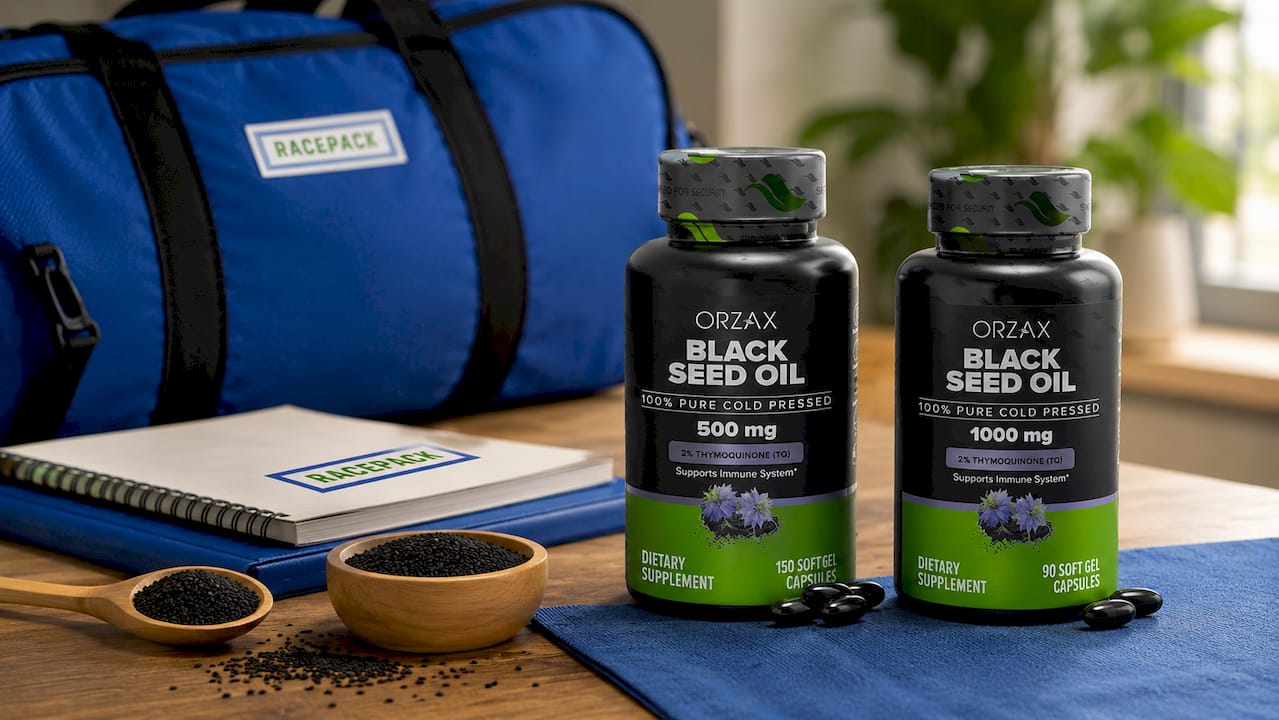
If you are starting out or prefer a higher daily capsule count with flexible dosing, the Orzax 500 mg softgels (150 capsules) give you a full 5-month supply at the entry-level clinical dose. For those ready to move to a stronger daily dose, the Orzax 1000 mg capsules deliver twice the concentration per softgel. Both products ship next day within Singapore with guaranteed authenticity. Buy Now and start your 8-week trial with a product you can trust.
FAQ
What is nigella sativa and what is it used for?
Nigella sativa, commonly called black seed or kalonji, is a flowering plant whose seeds are used in traditional medicine and modern supplementation for cholesterol reduction, blood sugar control, and antioxidant support. Clinical trials confirm measurable benefits at doses of 500 mg to 2.5 g daily.
How long does it take for black cumin seeds to work?
Most clinical trials showing significant lipid and glucose improvements run for 8–12 weeks. Expect to commit to at least two months of consistent daily use before evaluating results.
What is the difference between black cumin and regular cumin?
Nigella sativa and Cuminum cyminum (true cumin) are botanically unrelated plants from different families. They have different active compounds, different flavors, and different health effects. Always check the Latin name on any supplement label.
Can i take black seed oil if i am on medication?
Nigella sativa may interact with blood thinners and other medications. Consult your healthcare provider before starting supplementation, especially if you are managing diabetes or cardiovascular disease.
Is cold-pressed black seed oil better than seed powder?
Cold-pressed oil preserves thymoquinone and its synergistic metabolites better than most powder forms. Whole seeds freshly ground at home are also effective. Pre-ground powders stored in warm or bright conditions lose potency quickly.
What dose of nigella sativa is clinically effective?
The evidence-supported range is 500 mg to 2.5 g per day. Most trials demonstrating cholesterol and blood glucose improvements used doses between 1 g and 2 g daily over 8–12 weeks.
Can athletes benefit from black cumin seeds?
Yes. The anti-inflammatory and antioxidant properties of Nigella sativa support post-workout recovery and metabolic health. Pairing it with a structured nutrition plan that includes protein for endurance can complement overall performance goals.
How should i store black cumin seeds or oil?
Store in opaque, airtight containers in a cool location away from direct light. Heat and light degrade thymoquinone rapidly. Grind whole seeds fresh immediately before use for maximum bioactivity.
Is nigella sativa safe for daily use?
Clinical trials report it is well tolerated at doses up to 2.5 g daily for up to 12 weeks. Long-term safety data beyond 12 weeks is limited, so cycling use and consulting a healthcare provider for extended supplementation is advisable.
Where can i buy authentic nigella sativa supplements in singapore?
RacepackSingapore carries ORZAX Black Seed Oil in 500 mg and 1000 mg cold-pressed softgel formats with next-day delivery and guaranteed product authenticity. Buy Now to get started.