

1000 Mg Vitamin C: Benefits, Dosage, and Safe Use
TL;DR:
- A 1000 mg vitamin C supplement provides a high dose of ascorbic acid, mainly used for immune support and antioxidant protection. Its absorption peaks at around 200 mg per dose, with excess rapidly excreted, making split dosing more effective. While beneficial for certain groups like athletes and smokers, most healthy adults meet their needs with lower intakes from diet.
A 1000 mg vitamin C supplement delivers ascorbic acid at a dose more than ten times the standard adult Recommended Dietary Allowance, making it one of the most popular high-dose vitamin C products on the market. Brands like Orzax, Nature’s Lab, and Emergen-C have built entire product lines around this dose, available in tablets, capsules, and effervescent formats. The appeal is clear: immune support, antioxidant protection, and faster recovery. But the science behind 1000 mg vitamin C supplementation is more nuanced than most labels suggest. This guide breaks down what the research actually says, who benefits most, and how to use it without wasting a single milligram.
What is the right vitamin c dosage vs. 1000 mg?
The official Recommended Dietary Allowance (RDA) for vitamin C sits at 75 mg per day for adult women and 90 mg per day for adult men. The 1000 mg dose found in popular supplements is roughly 11 times that amount. Understanding the gap between the RDA and common supplement doses is the first step to using vitamin C intelligently.
The upper tolerable intake level is set at 2,000 mg per day for adults. Staying below that ceiling keeps side effects at bay. Certain groups have higher needs than the standard adult RDA:
- Smokers require an additional 35 mg per day above the standard RDA due to increased oxidative stress from tobacco.
- Pregnant women need 85 mg per day; breastfeeding women need 120 mg per day.
- Athletes and individuals under chronic stress often have elevated needs due to higher oxidative load.
- People with limited fruit and vegetable intake may struggle to meet even the baseline RDA through food alone.
So why do supplement labels default to 1,000 mg when the RDA is so much lower? The answer is partly marketing and partly a misreading of the research. Studies showing immune and antioxidant benefits often used doses in the 200–500 mg range. The 1,000 mg dose became a consumer shorthand for “more is better,” even though most health benefits saturate at around 200–250 mg per day.
| Group | RDA (mg/day) | Common Supplement Dose |
|---|---|---|
| Adult men | 90 mg | 500–1,000 mg |
| Adult women | 75 mg | 500–1,000 mg |
| Smokers (add-on) | +35 mg | Often 1,000 mg |
| Pregnant women | 85 mg | 500–1,000 mg |
| Breastfeeding women | 120 mg | 500–1,000 mg |
Pro Tip: If you eat two to three servings of citrus fruit, bell peppers, or broccoli daily, you likely meet your RDA without supplementation. A 1,000 mg supplement makes the most sense when your diet is consistently low in fresh produce or your physical demands are high.
How does your body absorb 1000 mg of vitamin c?
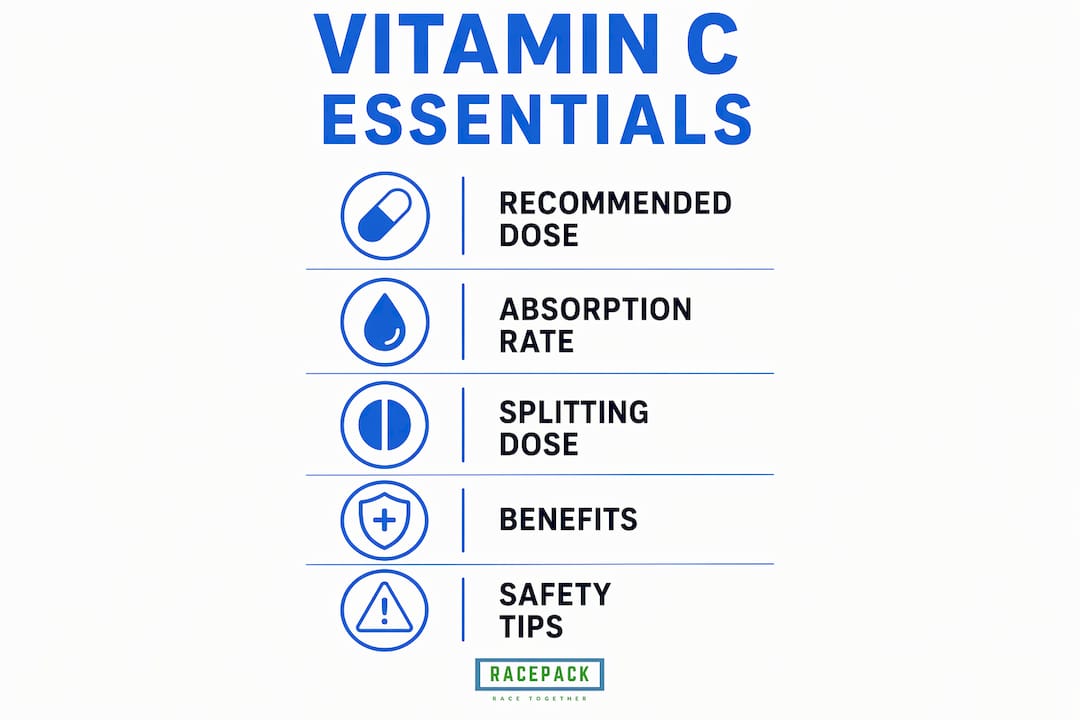
Vitamin C absorption is not linear. Your body absorbs nearly 100% of a 30 mg dose, but absorption efficiency drops to roughly 50% at a 1,250 mg dose. That means half of a 1,000 mg tablet may pass through your system unused.

The reason is plasma saturation. Plasma vitamin C saturates at approximately 200 mg per dose. Once plasma levels are full, the kidneys excrete the excess through urine. Taking a single large dose does not proportionally raise your blood vitamin C levels. It raises your urine vitamin C levels instead.
This has a direct practical implication. A single 1,000 mg dose produces a quick plasma peak followed by rapid excretion. Splitting the same total daily amount into two or three smaller doses maintains steadier plasma concentrations throughout the day. Timed-release formulations work on the same principle, releasing vitamin C gradually to keep absorption efficient.
Supplement form also matters for digestive tolerability:
- Ascorbic acid is the most common and affordable form, but it can cause stomach upset at high doses.
- Sodium ascorbate and calcium ascorbate are buffered forms that are gentler on the digestive system. Buffered vitamin C is specifically designed for people who experience GI discomfort with standard ascorbic acid.
- Liposomal vitamin C uses fat-based delivery to improve absorption, though research on its superiority over standard forms remains limited.
- Effervescent tablets dissolve in water before ingestion, which may improve absorption speed and reduce stomach irritation.
Pro Tip: Split your daily 1,000 mg dose into two 500 mg servings taken with meals. This approach maintains steadier plasma levels and reduces the risk of GI discomfort compared to taking the full gram at once.
What does research say about 1000 mg vitamin c benefits?
The evidence on high-dose vitamin C supplementation is more measured than most supplement marketing suggests. Here is what the research actually supports:
-
Cold duration, not prevention. A meta-analysis of 11,306 participants found that prophylactic vitamin C supplementation reduced cold duration by approximately 8% in adults. It did not reduce the incidence of colds in the general population. That is a modest but real benefit, and it requires consistent daily use before illness strikes.
-
Antioxidant protection. Vitamin C is a water-soluble antioxidant that neutralizes free radicals in plasma and tissues. This role is well established. The antioxidant function supports cellular defense, particularly during periods of high oxidative stress like intense training or illness recovery. Athletes focused on exercise recovery often use vitamin C for this reason.
-
Collagen synthesis. Vitamin C is a required cofactor for collagen production. Without adequate vitamin C, the body cannot properly form connective tissue, skin, and blood vessels. This is the mechanism behind scurvy and the reason skin health claims around vitamin C supplementation have a legitimate scientific basis.
-
Iron absorption. Vitamin C at doses above 200 mg enhances non-heme iron absorption by 2–3 fold when consumed with meals. This is particularly valuable for people following plant-based diets, where non-heme iron from legumes and grains is the primary source. Pairing a vitamin C supplement with an iron supplement or an iron-rich meal maximizes this benefit.
-
Chronic disease risk. Vitamin C supplementation is unlikely to reduce the risk of chronic diseases like cancer or cardiovascular disease. The antioxidant hypothesis for chronic disease prevention has not held up in large-scale clinical trials.
“Vitamin C supplementation has well-defined roles in collagen synthesis and antioxidant defense, but it is unlikely to reduce risk of chronic diseases.” — The Conversation
The safety picture is equally clear. High doses above 2,000 mg per day commonly cause diarrhea, nausea, and abdominal cramps. People with a history of kidney stones should be cautious, as excess vitamin C is metabolized into oxalate, which contributes to stone formation.
Who should take 1000 mg vitamin c and how to use it safely?
The 1,000 mg dose is not universally necessary, but it is genuinely useful for specific groups. Experts note that this dose primarily benefits high-demand scenarios rather than the average healthy adult eating a balanced diet.
Groups most likely to benefit:
- Endurance athletes and competitive swimmers dealing with high oxidative stress from training. Research on recovery for high-performance athletes consistently highlights antioxidant support as a key recovery tool.
- Smokers, who face elevated oxidative stress and have measurably lower plasma vitamin C levels.
- Individuals with consistently poor fruit and vegetable intake.
- People recovering from surgery or illness, where collagen synthesis and immune function are under greater demand.
Timing and approach matter more than dose size. Prophylactic use means taking vitamin C consistently every day, not just when you feel a cold coming on. Starting supplementation at symptom onset provides little benefit. The immune-supporting effect builds over time with regular daily intake.
| Form | Pros | Best For |
|---|---|---|
| Ascorbic acid tablets | Affordable, widely available | General use, budget-conscious |
| Buffered (calcium ascorbate) | Gentler on the stomach | Sensitive digestive systems |
| Effervescent tablets | Fast absorption, easy to take | Athletes, on-the-go users |
| Timed-release capsules | Steady plasma levels | Split-dose convenience |
| Liposomal | Enhanced absorption claimed | High-dose therapeutic use |
Side effects to monitor:
- Loose stools or diarrhea at doses approaching 2,000 mg per day
- Nausea or stomach cramps, especially on an empty stomach
- Increased kidney stone risk in predisposed individuals
Pro Tip: Always take vitamin C supplements with food. This reduces GI irritation and, if your meal contains iron-rich foods, you get the added benefit of enhanced iron absorption at the same time.
Key takeaways
A 1000 mg vitamin C supplement is most effective when used consistently as a daily preventive measure, not as a reactive dose at the first sign of illness.
| Point | Details |
|---|---|
| RDA vs. supplement dose | The adult RDA is 75–90 mg/day; 1,000 mg is roughly 11 times higher than the standard requirement. |
| Absorption has a ceiling | Plasma vitamin C saturates near 200 mg per dose; excess is excreted, not stored. |
| Split your dose | Two 500 mg doses taken with meals maintain steadier plasma levels than one large dose. |
| Cold duration benefit | Daily prophylactic use reduces cold duration by about 8% but does not prevent colds. |
| Best candidates | Smokers, endurance athletes, and people with low dietary vitamin C benefit most from 1,000 mg supplementation. |
My take on the 1000 mg vitamin c trend
The 1,000 mg vitamin C dose has become a default in supplement culture, and I understand the appeal. When something is safe, affordable, and widely available, the instinct is to take more rather than less. But after years of working with athletes and fitness-focused individuals, I have seen this logic cause more confusion than clarity.
The honest truth is that most healthy adults eating a reasonable diet do not need 1,000 mg per day. The research is clear that immune and antioxidant benefits plateau well below that dose. What I do think is genuinely useful is consistent, daily supplementation at a moderate dose for people under real physiological stress: hard-training athletes, smokers, and anyone whose diet is consistently short on fresh produce.
Where I push back against conventional wisdom is on the “take it when you feel sick” habit. That approach is nearly useless. The benefit comes from building and maintaining plasma levels over weeks, not from flooding your system at the first sniffle. If you are going to supplement, commit to it daily and split the dose.
The effervescent format is worth considering for athletes specifically. It absorbs quickly, is easy to take post-training, and the hydration from dissolving it in water is a small but real bonus during recovery. For most people, though, the form matters less than the consistency.
— Jason John
Get your daily vitamin c support from RacepackSingapore
RacepackSingapore stocks the Orzax Vitamin C 1000 mg effervescent tablets for athletes and health-conscious individuals who want a clean, convenient daily dose. Each tablet delivers 1,000 mg of vitamin C in an orange-flavored effervescent format that dissolves fast and absorbs well, making it a practical choice for post-training recovery or daily immune support.
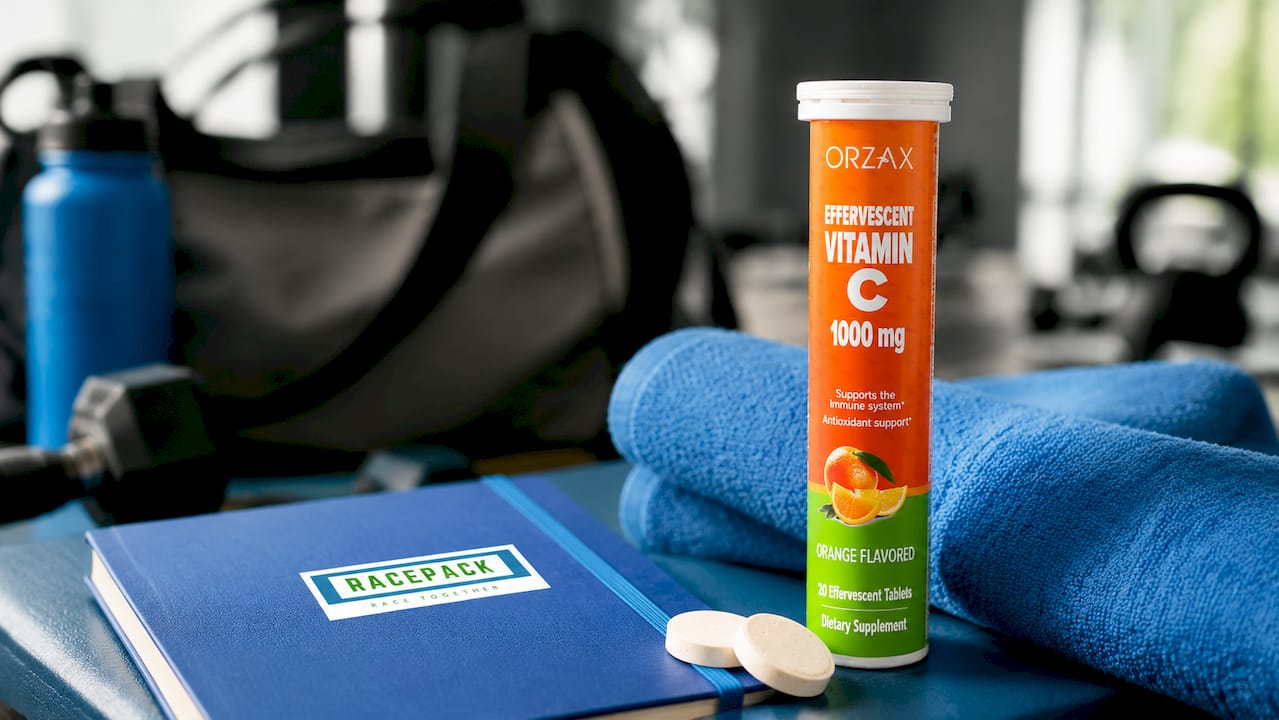
RacepackSingapore guarantees product authenticity and offers next-day delivery across Singapore. Whether you train daily or simply want reliable immune and antioxidant support, this is a product built for people who take their health seriously. Pair it with our vitamin B complex guide for a complete micronutrient foundation.
Buy Now: Orzax Vitamin C 1000 mg Effervescent Tablets
FAQ
What does 1000 mg vitamin c do for your body?
A 1,000 mg vitamin C dose supports antioxidant defense, collagen synthesis, and immune function. Research shows consistent daily use reduces cold duration by about 8% but does not prevent colds from occurring.
Is 1000 mg of vitamin c safe to take every day?
Yes, 1,000 mg per day is well below the upper tolerable intake limit of 2,000 mg per day for adults. Side effects like diarrhea and nausea typically appear only above that 2,000 mg threshold.
When is the best time to take a 1000 mg vitamin c supplement?
Take it with a meal to reduce stomach irritation and improve iron absorption from food. Splitting the dose into two 500 mg servings taken at different meals maintains steadier plasma levels throughout the day.
Does vitamin c at 1000 mg actually prevent colds?
No. A meta-analysis of 11,306 participants found that prophylactic vitamin C supplementation does not reduce cold incidence in the general population. It does modestly reduce cold duration by approximately 8% when taken consistently before illness.
Who benefits most from taking 1000 mg vitamin c daily?
Smokers, endurance athletes, and individuals with consistently low fruit and vegetable intake benefit most. For healthy adults eating a balanced diet, lower doses around 200–500 mg are sufficient to meet physiological needs.
What is the difference between ascorbic acid and buffered vitamin c?
Ascorbic acid is the standard form and is most affordable. Buffered forms like calcium ascorbate are designed to reduce GI discomfort, making them a better choice for people with sensitive stomachs.
Can vitamin c help with iron absorption?
Yes. Vitamin C at doses above 200 mg enhances non-heme iron absorption by 2–3 fold when taken with iron-rich meals. This benefit is especially relevant for people following plant-based diets who rely on non-heme iron sources.
Does vitamin c supplementation improve skin health?
Vitamin C is a required cofactor for collagen synthesis, which directly supports skin structure and repair. Most skin benefits appear at daily intakes around 200–250 mg, not necessarily at the full 1,000 mg dose.
Is effervescent vitamin c better than tablets or capsules?
Effervescent vitamin C dissolves in water before ingestion, which may improve absorption speed and reduce stomach irritation compared to standard tablets. For athletes taking supplements post-training, the effervescent format offers a convenient and fast-absorbing option.
Can i take vitamin c with other supplements?
Yes. Vitamin C pairs well with iron supplements to enhance absorption, and it complements a broader micronutrient stack including B vitamins. Always check with a healthcare provider if you are taking medications, as high-dose vitamin C can interact with certain drugs.