

Whey Protein for Muscle Repair: 2026 Athlete Guide
TL;DR:
- Whey protein is a fast-absorbing, complete protein that supplies leucine, activating muscle growth through the mTOR pathway. Proper dosing and timing, especially post-workout within 30 to 60 minutes, optimize muscle repair, with older athletes requiring higher doses. It outperforms other proteins for recovery, especially when chosen with third-party certifications and paired with resistance training and whole foods.
Whey protein is defined as a fast-absorbing, complete protein derived from milk that delivers all nine essential amino acids directly to muscle tissue after exercise. The role of whey protein in muscle repair centers on one key amino acid: leucine. Leucine triggers muscle protein synthesis (MPS) by activating the mTOR signaling pathway, the primary regulator of muscle cell growth and repair. Products like Optimum Nutrition Gold Standard Whey and BS Hydro Whey Protein are built around this science, delivering high leucine concentrations that accelerate recovery after hard training sessions. If you train consistently and want to recover faster, whey protein is the most research-backed tool available.
How whey protein drives muscle repair at the cellular level
Muscle protein synthesis is the biological process your body uses to rebuild damaged muscle fibers after exercise. Whey protein accelerates this process faster than any other protein source because of its amino acid profile and absorption speed.
The key players are branched-chain amino acids (BCAAs), specifically leucine, isoleucine, and valine. Leucine acts as the critical trigger that activates the mTOR pathway, signaling muscle cells to begin repair and growth. Without adequate leucine, MPS stalls regardless of how hard you trained. Whey protein delivers leucine in concentrations that few other protein sources can match.
Here is what makes whey biochemically superior for recovery:
- Absorption speed: Whey reaches peak blood amino acid levels within 60–90 minutes of ingestion, faster than casein or most plant proteins.
- Leucine content: Whey contains roughly 10–11% leucine by weight, compared to 6–8% in soy protein.
- Complete amino acid profile: Whey supplies all nine essential amino acids in ratios that match human muscle tissue closely.
- Glutathione support: Whey’s high cysteine content helps produce glutathione synthesis, the body’s primary antioxidant, which reduces oxidative stress from intense training.
Whey protein stimulates muscle protein synthesis up to 25% faster than other protein sources. That speed advantage is what makes the post-workout window so valuable for whey specifically.
Pro Tip: Pair your whey shake with a small amount of fast-digesting carbohydrates like a banana or rice cakes. Carbohydrates spike insulin, which amplifies leucine’s mTOR activation and speeds amino acid uptake into muscle cells.

Understanding why protein synthesis occurs post-workout gives you a clearer picture of why timing and protein quality both matter for your recovery results.
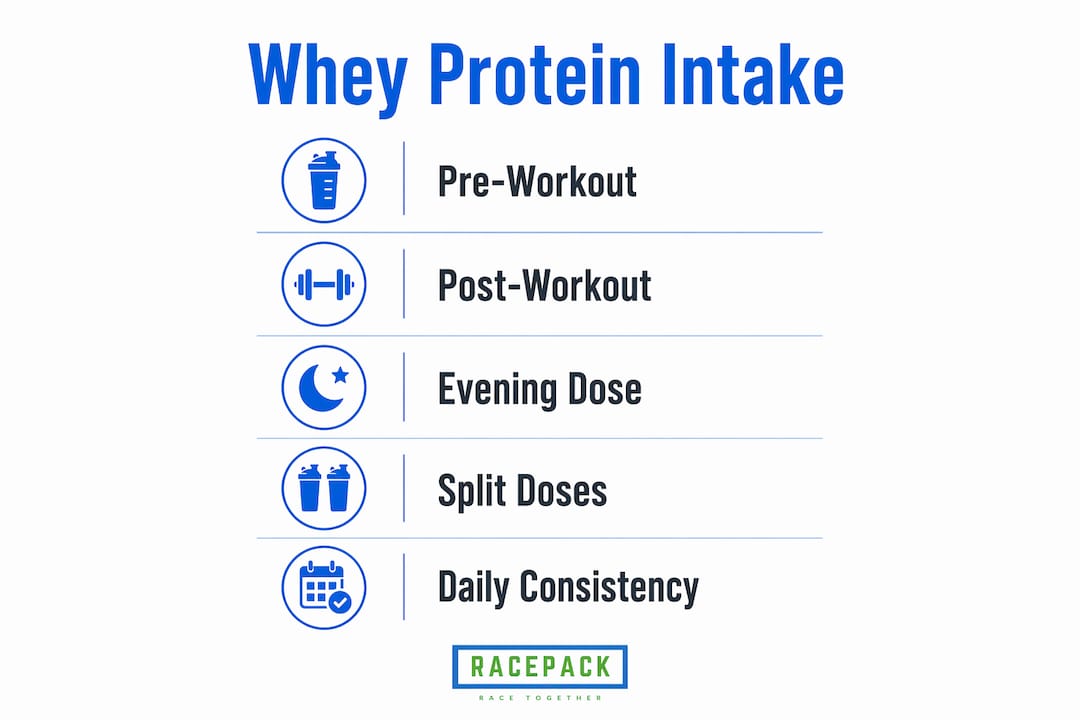
What is the right whey protein dose and timing?
Dosing whey protein correctly separates athletes who recover well from those who plateau. The research is clear on general targets, but age changes the equation significantly.
Follow these evidence-based steps to structure your whey intake:
- Consume 20–30g post-workout if you are under 50. This dose maximizes muscle synthesis in most adults without exceeding the body’s per-meal processing capacity.
- Increase to 30–40g if you are over 50. Older adults experience anabolic resistance, meaning muscle tissue responds less efficiently to amino acid signals. A higher dose compensates for this blunted response.
- Drink your shake within 30–60 minutes after training. Absorption begins quickly, and the post-exercise window is when muscle cells are most receptive to amino acid uptake.
- Distribute protein across 3–4 meals daily. Total daily protein intake of approximately 1.6g per kilogram of body weight has more long-term impact on muscle repair than any single timing window.
- Choose your whey form based on digestive tolerance. Whey concentrate works for most people. Whey isolate suits those with mild lactose sensitivity. Whey hydrolysate, which is pre-digested, is the best option for athletes with significant digestive issues or those who need the fastest possible absorption.
Pro Tip: If you train twice a day or compete in endurance events, consider splitting your whey intake into two smaller doses of 20g each rather than one large serving. This keeps amino acid levels elevated across a longer recovery window.
The dose-timing framework above applies to most training scenarios. The key insight is that consistency across the full day matters more than obsessing over the exact minute you drink your shake.
Whey vs. casein vs. plant protein: which wins for recovery?
Not all proteins repair muscle equally. The differences in absorption rate, amino acid profile, and anabolic effect are significant enough to affect your recovery outcomes.
| Protein Source | Absorption Speed | Leucine Content | Best Use Case | Digestive Tolerance |
|---|---|---|---|---|
| Whey | Fast (60–90 min peak) | High (10–11%) | Post-workout recovery | Good for most; isolate for sensitive users |
| Casein | Slow (5–7 hours) | Moderate (8–9%) | Overnight muscle repair | Generally well tolerated |
| Soy Protein | Moderate | Moderate (6–8%) | Plant-based alternative | Good for most |
| Pea Protein | Moderate | Lower (5–6%) | Plant-based alternative | Excellent |
| Rice Protein | Moderate to slow | Low | Plant-based alternative | Excellent |
Whey outperforms casein and plant proteins for post-workout muscle repair in most adults. The gap between animal and plant proteins narrows in older adults, where total protein quantity becomes more important than source. This means a 60-year-old athlete who consistently hits 1.6g/kg daily with a mix of whey and plant proteins will likely recover as well as one relying solely on whey.
For runners and endurance athletes, the protein type comparison extends beyond muscle repair to include fueling needs and gut comfort during training blocks.
A network meta-analysis of 235 randomized controlled trials with 20,980 participants found that whey combined with resistance training produced the strongest improvements in muscle mass and leg strength. That is the most comprehensive evidence base available on this question.
Pro Tip: Look for whey products carrying NSF Certified for Sport or Informed Sport certification. Many whey products on the market carry inaccurate label claims. Third-party certification guarantees the protein content is accurate and the product is free from banned substances.
How to use whey protein effectively in your training routine
Science is only useful when you apply it consistently. Here is how to build whey protein into your training and nutrition routine for real recovery results.
What to do:
- Take 20–40g of whey within 60 minutes after resistance training or a hard endurance session.
- Pair whey with resistance training. Leucine activates muscle synthesis, but whey must be combined with training stimulus to produce meaningful muscle gain.
- Use whey to fill protein gaps in your diet, not to replace whole food sources like eggs, chicken, or fish.
- Consider adding magnesium support to your recovery stack. Magnesium supports muscle relaxation and reduces cramping, which complements whey’s repair function.
- Select products with third-party certification, especially if you compete in tested sports.
What to avoid:
- Do not rely on whey alone without meeting your total daily protein target from whole foods.
- Do not ignore digestive signals. Bloating and discomfort are common early on but can be resolved by switching to whey isolate or hydrolysate and adding digestive enzymes.
- Do not assume more protein means faster recovery. Doses above 40g per serving do not produce proportionally greater MPS in most adults.
- Do not skip sleep. Whey protein supports MPS, but the majority of muscle repair happens during deep sleep stages.
For athletes managing lactose sensitivity, hydrolyzed whey protein is the practical solution. Pre-digested peptides absorb faster and cause fewer digestive side effects than standard concentrate. Recovery peptides explored in this performance guide offer additional context on how peptide-based nutrition fits into broader recovery strategies.
Key takeaways
Whey protein accelerates muscle repair by delivering leucine rapidly to muscle tissue, activating the mTOR pathway and driving protein synthesis faster than any other protein source.
| Point | Details |
|---|---|
| Leucine triggers repair | Whey’s high leucine content activates the mTOR pathway, the primary signal for muscle cell growth. |
| Dose by age | Adults under 50 need 20–30g post-workout; adults over 50 need 30–40g to overcome anabolic resistance. |
| Total intake wins | Hitting 1.6g/kg of protein daily matters more than obsessing over exact post-workout timing. |
| Choose certified products | NSF Certified for Sport or Informed Sport labels confirm accurate protein content and purity. |
| Isolate for sensitive athletes | Whey isolate and hydrolysate reduce digestive side effects and absorb faster than concentrate. |
Why i think most athletes are using whey protein wrong
After years of working with athletes across endurance and strength sports, the most common mistake I see is treating whey protein as a recovery shortcut. Athletes buy a premium tub, shake it post-workout, and expect results. Then they wonder why progress stalls.
The truth is that whey protein is a delivery mechanism, not a magic solution. It gets leucine and essential amino acids to your muscles quickly. But if your total daily protein intake is sitting at 0.8g/kg because you only eat two real meals a day, one shake will not fix that deficit. The research is unambiguous: consistent daily protein intake is the foundation. Timing is a refinement, not a replacement.
The second mistake is ignoring product quality. I have seen athletes buy uncertified whey from discount retailers and wonder why they feel bloated or see no results. Label accuracy in the whey market is a real problem. Spending a little more on a certified product from a trusted source is not optional if you are serious about performance.
My honest recommendation is to build your protein base from whole foods first, use whey to fill the gaps efficiently, and never skip the resistance training that gives leucine something to work with. Whey is a powerful tool. Use it as part of a complete system, not as the system itself.
— Jason John
Get your whey protein from RacepackSingapore
RacepackSingapore stocks the whey protein products that serious athletes in Singapore actually use, with guaranteed authenticity and next-day delivery.
The ON Gold Standard Whey is the most trusted whey concentrate and isolate blend on the market, delivering 24g of protein per serving with a strong leucine profile. For athletes with lactose sensitivity or those who want faster absorption, the BS Hydro Whey Protein offers a hydrolyzed formula that is Halal certified and built for rapid uptake. Both products meet the quality standards your training demands. Shop now and get your recovery nutrition delivered to your door tomorrow.
FAQ
What does whey protein do for muscle repair?
Whey protein supplies essential amino acids, especially leucine, that activate the mTOR signaling pathway and trigger muscle protein synthesis. This process repairs exercise-induced muscle fiber damage and supports strength gains over time.
How much whey protein should i take after a workout?
Most adults need 20–30g of whey protein post-workout. Adults over 50 should increase this to 30–40g to compensate for reduced anabolic sensitivity in older muscle tissue.
When should i drink whey protein for the best recovery?
Consume whey protein within 30–60 minutes after training. This window aligns with peak muscle cell receptivity to amino acids, though total daily protein intake remains the most important factor overall.
Is whey protein better than plant protein for muscle recovery?
Whey outperforms plant proteins for post-workout recovery in most adults due to its higher leucine content and faster absorption rate. The performance gap narrows in older adults, where total protein quantity becomes the dominant factor.
Can whey protein cause digestive problems?
Mild bloating is common when starting whey supplementation. Switching to whey isolate or hydrolysate and pairing with digestive enzymes resolves most digestive issues, particularly for athletes with lactose sensitivity.
Does whey protein work without resistance training?
Whey protein stimulates muscle protein synthesis, but the gains are minimal without a training stimulus. Resistance training creates the muscle damage that leucine and mTOR signaling then repair and strengthen.
What certifications should i look for in a whey protein product?
Look for NSF Certified for Sport or Informed Sport certification. These independent labels confirm that the protein content matches label claims and that the product is free from banned substances.
How does whey protein compare to casein for overnight recovery?
Whey absorbs quickly and peaks within 90 minutes, making it ideal post-workout. Casein digests slowly over 5–7 hours, making it better suited for overnight muscle repair when taken before sleep.
Is whey protein safe for daily use?
Yes, whey protein is safe for daily use at recommended doses for healthy adults. Staying within 20–40g per serving and meeting total daily protein targets from a mix of whole foods and whey is the most effective and sustainable approach.
What is the difference between whey concentrate, isolate, and hydrolysate?
Whey concentrate contains 70–80% protein with some lactose. Whey isolate is filtered to 90%+ protein with minimal lactose. Whey hydrolysate is pre-digested for the fastest absorption and lowest digestive burden, making it the best choice for sensitive athletes.
Buy Now: Shop Whey Protein at RacepackSingapore