

What Is Carbohydrate Loading? Your Race-Week Guide
TL;DR:
- Carbohydrate loading increases muscle glycogen stores by 50-100%, enhancing endurance performance in events over 90 minutes. The modern approach involves consuming 10-12 grams of carbs per kilogram of body weight for 24-36 hours before the race, avoiding the outdated depletion phase. High-glycemic foods like white rice, pasta, and bread are preferred, with proper tapering and hydration to maximize glycogen storage and minimize gastrointestinal discomfort.
Carbohydrate loading is defined as a dietary strategy that systematically elevates muscle glycogen stores above normal resting levels to delay fatigue and improve endurance performance. Research shows this approach boosts performance by 2-3% in events lasting longer than 90 minutes, making it one of the most evidence-backed tools available to endurance athletes. Whether you are preparing for a marathon, triathlon, or long-distance cycling event, understanding the carbohydrate loading diet and applying it correctly can be the difference between hitting the wall and crossing the finish line strong.
What is carbohydrate loading and how does it work?
Carbohydrate loading, also called glycogen supercompensation, works by flooding your muscles with stored carbohydrate energy before a prolonged effort. The human body stores 400-500 grams of glycogen in muscle tissue and an additional 80-100 grams in the liver. That combined reserve powers sustained high-intensity exercise, but it depletes faster than most athletes expect during a race.
When you strategically increase carbohydrate intake in the days before an event, your muscles absorb and store more glycogen than they would under normal eating conditions. This process can increase glycogen stores by 50-100% above baseline. That means your muscles arrive at the start line with significantly more fuel available, which directly delays the onset of fatigue during prolonged effort.
One physiological side effect worth knowing: glycogen binds approximately 3 grams of water per gram stored. This causes a temporary weight gain of 2-4 pounds during loading. That number on the scale is not fat. It is a positive indicator that your muscles are fully fueled and hydrated for race day.
Key physiological benefits of effective carbohydrate loading include:
- Delayed glycogen depletion during sustained effort
- Reduced reliance on fat oxidation, which is a slower energy pathway
- Maintained pace and power output in the final miles of a race
- Indirect support for muscle protein preservation, since adequate glycogen stores limit muscle protein breakdown during prolonged exercise
Modern protocols vs. outdated methods
The carbohydrate loading protocols most athletes learned about a decade ago are no longer the standard. The old 6-7 day method required athletes to first deplete glycogen through exhaustive training and a low-carb diet, then flood the body with carbohydrates. Research now confirms this depletion phase is obsolete, causing unnecessary physiological stress and interfering with recovery right before a key event.
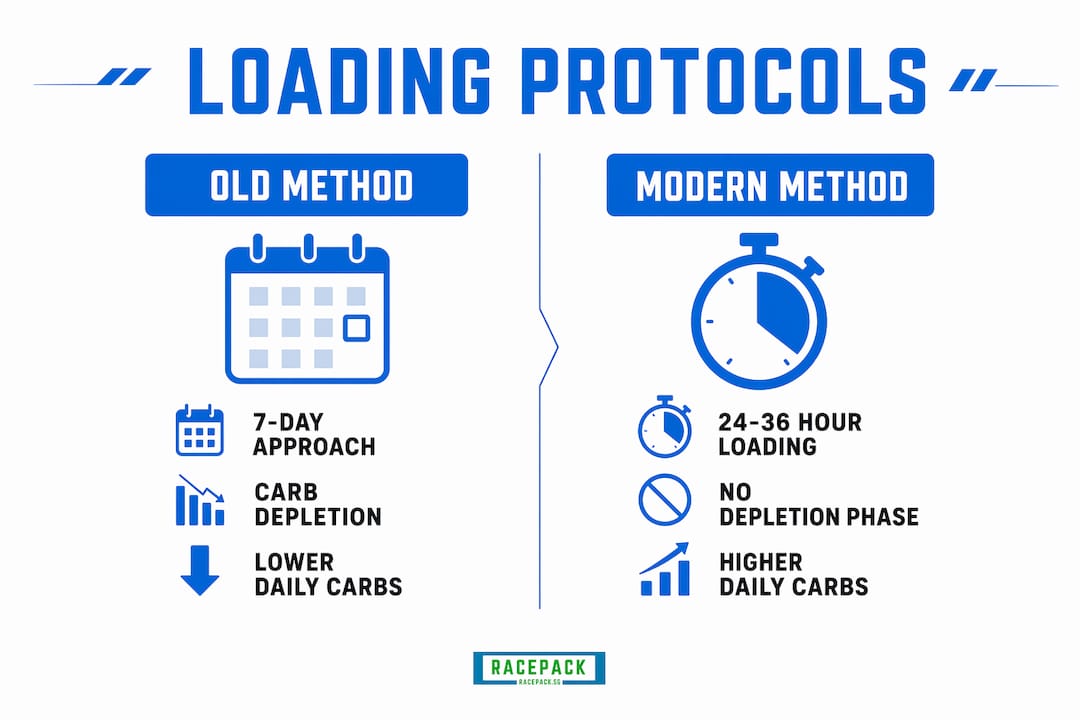
Modern science recommends a far simpler approach. The current protocol calls for consuming 10-12 grams of carbohydrates per kilogram of body weight daily for 24-36 hours before your event. A 70-kilogram runner, for example, targets 700-840 grams of carbohydrates across that loading window. This achieves the same glycogen supercompensation without the physical and psychological toll of the depletion phase.
| Protocol | Duration | Carb Target | Depletion Phase | Recommended |
|---|---|---|---|---|
| Old 7-day method | 6-7 days | Variable | Yes (exhaustive) | No |
| Modern loading | 24-36 hours | 10-12 g/kg/day | No | Yes |
Tapering training volume is a non-negotiable part of the modern approach. Reducing your mileage in the final 2-3 days before the event allows your muscles to absorb and retain the carbohydrates you consume rather than burning through them during hard sessions.
Pro Tip: Avoid starting your carbohydrate increase more than 36 hours before race start. Front-loading beyond this window does not increase glycogen stores further and commonly causes bloating, lethargy, and GI discomfort during your taper days.
Best carbohydrate sources and timing for loading
Choosing the right carbohydrates matters as much as the quantity. During the loading phase, high-glycemic index carbs like white rice, white pasta, white bread, and sports drinks are the preferred choices. These digest quickly, absorb efficiently, and minimize the fiber and fat content that can cause gastrointestinal distress on race day.

Avoid whole grains, legumes, cruciferous vegetables, and high-fat foods during this window. These are excellent everyday nutrition choices, but their fiber and fat content slows digestion and can leave you feeling heavy and uncomfortable when you need to feel light and ready.
Here is a practical one-day loading meal structure for a 70 kg athlete targeting 750 grams of carbohydrates:
- Breakfast (7:00 AM): Large bowl of white rice porridge with banana and honey (approximately 120 g carbs)
- Mid-morning snack (9:30 AM): White bread with jam and a sports drink (approximately 90 g carbs)
- Lunch (12:00 PM): Large white pasta with tomato-based sauce and white bread roll (approximately 180 g carbs)
- Afternoon snack (2:30 PM): Rice cakes with peanut butter (minimal) and fruit juice (approximately 90 g carbs)
- Dinner (5:30 PM): Large serving of white rice with lean protein and minimal vegetables (approximately 180 g carbs)
- Evening snack (8:00 PM): Sports drink or banana with white crackers (approximately 90 g carbs)
Distributing intake every 2-3 hours maximizes glycogen synthesis rates. Your muscles can only absorb and store carbohydrates at a finite rate, so spacing meals prevents waste and keeps synthesis running at full capacity throughout the loading window.
Pro Tip: Stick to foods you have eaten before during training. Race week is not the time to experiment with new meals or cuisines. Familiar foods reduce the risk of unexpected GI reactions.
Common mistakes and how to avoid them
Most carbohydrate loading errors fall into a few predictable categories. Recognizing them before race week saves you from avoidable performance losses.
- Loading too early. Starting your high-carb phase three or more days before the event does not produce greater glycogen storage. It produces bloating, sluggishness, and disrupted sleep. The 24-36 hour window is the evidence-based sweet spot.
- Eating high-fiber and high-fat foods. High-fiber and high-fat foods during the loading phase cause GI discomfort that can carry into race day. Bran cereals, salads, and fried foods have no place in your loading meals.
- Not tapering training volume. Athletes who continue high-intensity training while trying to load are burning through the glycogen they are trying to store. Reduce training volume significantly in the 48-72 hours before your event.
- Panicking about weight gain. A 2-4 pound increase on the scale during loading is expected and beneficial. It reflects water bound to stored glycogen, not fat accumulation. Athletes who restrict carbs to avoid this weight gain undermine the entire strategy.
- Neglecting hydration. Glycogen storage requires water. Drinking adequate fluids throughout the loading phase supports the process and reduces the risk of cramping during the event.
Pro Tip: If you experience significant bloating or GI discomfort during loading, reduce portion sizes and increase meal frequency. Smaller, more frequent carbohydrate doses are easier to digest and equally effective for glycogen synthesis.
Practical application: how to carbohydrate load for race week
A structured race-week timeline removes guesswork and keeps your loading on track. Here is how to apply the carbohydrate loading diet across the final days before a major endurance event.
- 4-5 days before the race: Eat your normal balanced diet with moderate carbohydrate intake. Train at reduced volume. This is not yet the loading phase.
- 2-3 days before the race: Begin tapering training to very light activity or complete rest. Shift carbohydrate intake upward gradually, targeting around 7-8 g/kg/day. Focus on low-fiber, easily digestible sources.
- 24-36 hours before the race: Enter full loading mode at 10-12 g/kg/day. Space meals every 2-3 hours. Avoid high-fat and high-fiber foods entirely. Hydrate consistently throughout the day.
- Race morning (3-4 hours before start): Eat a carbohydrate-rich breakfast of 1-2 g/kg body weight. White rice, oatmeal, or toast with banana are reliable choices. This tops off liver glycogen depleted overnight.
- During the race: Carbohydrate loading maximizes your starting fuel, but in-race fueling with energy gels or sports drinks remains critical for events exceeding two hours.
| Body weight | Daily carb target (10 g/kg) | Daily carb target (12 g/kg) |
|---|---|---|
| 60 kg | 600 g | 720 g |
| 70 kg | 700 g | 840 g |
| 80 kg | 800 g | 960 g |
| 90 kg | 900 g | 1,080 g |
Every athlete responds slightly differently to carbohydrate loading. Practice this protocol during a long training block before your target race. Testing it in a low-stakes environment lets you identify your personal tolerance and refine meal timing without race-day consequences. For more guidance on race-week nutrition planning, the nutrition and supplements blog at RacepackSingapore covers practical strategies across all endurance disciplines.
Key takeaways
Carbohydrate loading is effective for endurance events over 90 minutes when athletes follow the modern 24-36 hour protocol at 10-12 g/kg/day using high-GI, low-fiber carbohydrate sources.
| Point | Details |
|---|---|
| Core definition | Carbohydrate loading elevates muscle glycogen 50-100% above normal to delay fatigue. |
| Modern protocol | Consume 10-12 g/kg/day of carbohydrates for 24-36 hours before your event. |
| Best food choices | Prioritize white rice, pasta, and bread; avoid high-fiber and high-fat foods during loading. |
| Expected weight gain | A 2-4 lb increase during loading is normal and confirms effective glycogen storage. |
| In-race fueling still needed | Loading maximizes starting fuel, but energy gels and sports drinks remain necessary for events over two hours. |
Why carbohydrate loading changed how I think about race prep
I have worked with enough endurance athletes to know that carbohydrate loading is one of the most misunderstood tools in race preparation. The athletes who get it wrong almost always make the same mistake: they treat it as a license to eat anything in large quantities for three or four days straight. That approach produces bloating, disrupted sleep, and a sluggish feeling at the start line.
What carbohydrate loading actually does is maximize the physical capacity you have already built through months of training. It does not add fitness. It does not make a poorly prepared athlete competitive. What it does is let a well-trained athlete perform closer to their true ceiling on race day. That distinction matters because athletes sometimes expect carb loading to compensate for undertrained legs, and it simply cannot.
The psychological side of loading is underappreciated too. Seeing the scale go up 2-3 pounds two days before a race triggers anxiety in athletes who have spent months monitoring their weight. I always tell athletes to weigh themselves before loading begins, then put the scale away until after the race. That temporary number is fuel, not fat, and treating it as a problem creates unnecessary stress during a period when mental calm is a performance asset.
My honest recommendation: practice your loading protocol at least once during a training cycle before your goal race. Use a long training weekend as a test run. You will learn your personal carbohydrate tolerance, identify which foods sit well, and arrive at race week with confidence rather than uncertainty.
— Jason John
Fuel your race with RacepackSingapore

At RacepackSingapore, we stock the carbohydrate and energy products endurance athletes in Singapore rely on for race-week fueling and in-event performance. Our GU Energy Gels deliver fast-absorbing carbohydrates designed for gut-friendly fueling during your event, complementing the glycogen stores you built through loading. We also carry recovery and micronutrient supplements like MyProtein Green Superfoods to support your overall nutrition alongside a carbohydrate-focused race-week diet. Every product ships with next-day delivery across Singapore and guaranteed authenticity from leading international brands.
Buy Now
FAQ
What is carbohydrate loading used for?
Carbohydrate loading is used to maximize muscle glycogen stores before endurance events lasting longer than 90 minutes, such as marathons, triathlons, and long-distance cycling races. It improves performance by approximately 2-3% by delaying the onset of fatigue.
How many carbs should I eat when loading?
The modern protocol recommends 10-12 grams of carbohydrates per kilogram of body weight per day for 24-36 hours before your event. A 70 kg athlete targets 700-840 grams of carbohydrates across that loading window.
Is carbohydrate loading effective for shorter races?
Carbohydrate loading is not effective for events under 90 minutes because glycogen stores are sufficient for shorter efforts without deliberate loading. For races under that threshold, a standard pre-race meal with adequate carbohydrates is sufficient.
Why do I gain weight during carbohydrate loading?
Weight gain of 2-4 pounds during loading is caused by glycogen binding approximately 3 grams of water per gram stored in muscle tissue. This is a positive sign that loading is working, not a cause for concern.
What foods should I avoid during carbohydrate loading?
Avoid high-fiber foods like whole grains, legumes, and raw vegetables, as well as high-fat foods like fried items and heavy sauces. These slow digestion and increase the risk of gastrointestinal distress on race day.