

The Role of Vitamin B12 in Energy: Explained for 2026
TL;DR:
- Vitamin B12 supports cellular energy production through mitochondrial enzyme function and red blood cell formation. Its deficiency leads to fatigue by impairing oxygen delivery and mitochondrial function, affecting athletes and the general population differently. Supplementing only benefits those with a deficiency, while functional markers like MMA and homocysteine provide better deficiency detection.
Vitamin B12 is defined as a water-soluble nutrient that enables your body to convert food into usable cellular energy by supporting critical metabolic enzymes. The role of vitamin B12 in energy explained correctly is not about stimulation. B12 does not act like caffeine or a stimulant. Instead, it functions as a cofactor for enzymes that feed directly into the biochemical pathways your cells use to produce ATP, the molecule your body runs on. Without adequate B12, those pathways stall, and fatigue follows. Understanding this distinction helps you make smarter decisions about nutrition, supplementation, and performance.
How does vitamin B12 support cellular energy production?

Vitamin B12 works at the mitochondrial level, where your cells actually generate energy. The enzyme methylmalonyl-CoA mutase requires vitamin B12 to convert L-methylmalonyl-CoA into succinyl-CoA, a compound that feeds directly into the Krebs cycle. The Krebs cycle is the central engine of ATP production in every cell. When B12 is low, this conversion fails, methylmalonic acid accumulates, and mitochondrial energy metabolism is impaired.
B12 also plays a role in one-carbon metabolism, a set of reactions critical for DNA synthesis and the recycling of homocysteine. Elevated homocysteine signals a breakdown in this cycle. That breakdown affects not just cardiovascular health but also the cellular machinery that keeps energy production running efficiently.
Here is what B12 actually does in your energy system:
- Activates methylmalonyl-CoA mutase to feed the Krebs cycle with succinyl-CoA
- Supports methionine synthase to recycle homocysteine and maintain one-carbon metabolism
- Protects mitochondrial function in skeletal muscle cells, where energy demand is highest during exercise
- Enables red blood cell formation, which determines how much oxygen your muscles receive during effort
As Verywell Health explains, B12 provides the tools for energy release rather than acting as an energy booster itself. That framing matters. You are not adding fuel. You are keeping the engine functional.
Pro Tip: If you train regularly and feel persistently tired despite adequate sleep and nutrition, ask your doctor to test methylmalonic acid alongside serum B12. Serum B12 alone can miss functional deficiency.
What impact does B12 deficiency have on energy and fatigue?
B12 deficiency causes fatigue through two distinct mechanisms: impaired oxygen delivery and mitochondrial dysfunction. Both can occur before a clinical diagnosis of anemia appears.
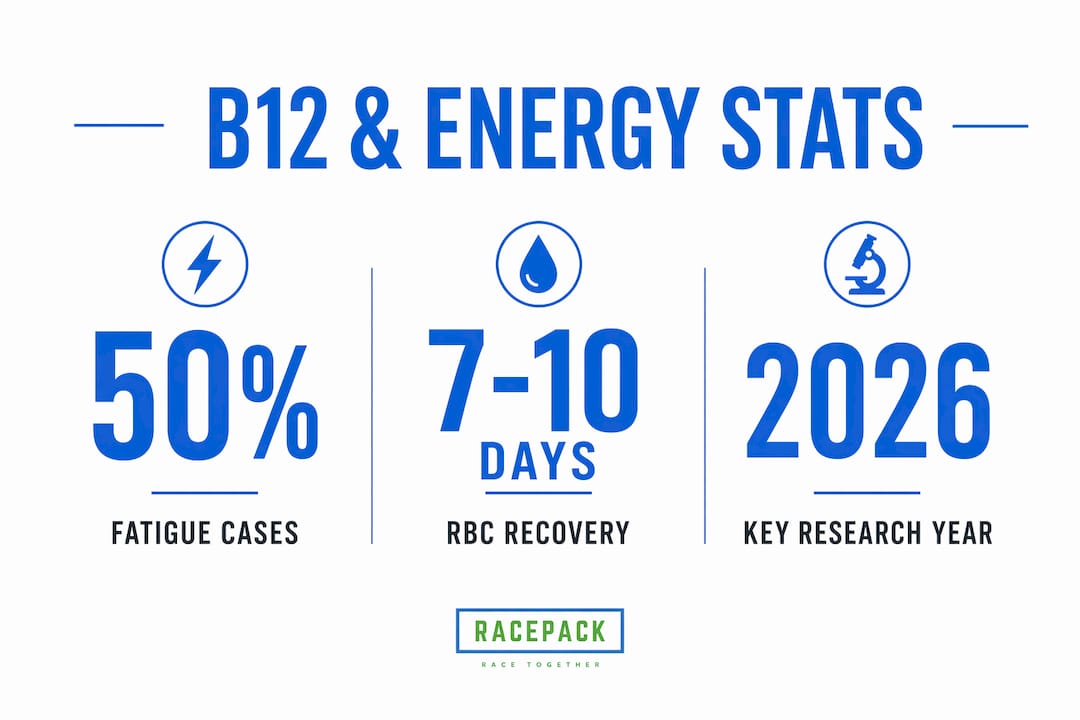
A 2026 study of 600 Japanese adults found that higher homocysteine with lower B12 and folate levels associated with increased physical fatigue and reduced motivation scores. The finding matters because it shows fatigue is not just a late-stage symptom. It can appear at subclinical B12 levels, well before your blood count looks abnormal.
Recent 2026 research also highlights that mitochondrial dysfunction in skeletal muscle cells is a fatigue cause linked to low B12, independent of anemia. For athletes and active individuals, this is the more relevant pathway. Your muscles may be starved of efficient energy production even when your hemoglobin looks fine.
| Fatigue mechanism | Cause | Who it affects most |
|---|---|---|
| Impaired oxygen transport | Fewer, larger red blood cells carry less oxygen | General population, older adults |
| Mitochondrial dysfunction | Methylmalonyl-CoA buildup impairs ATP production | Athletes, active individuals |
| Elevated homocysteine | Disrupts one-carbon metabolism and motivation | Adults with low B12 and folate |
| Neurological fatigue | Demyelination from prolonged deficiency | Long-term deficiency cases |
“Fatigue linked to B12 deficiency stems more from impaired nutrient processing and oxygen delivery than from lack of energy input.” — Verywell Health
Sex differences appear in research findings as well. Studies suggest women may report higher subjective fatigue scores at equivalent B12 levels compared to men, though the biochemical mechanisms remain consistent across sexes.
How long does recovery from B12 deficiency take?
Recovery from B12 deficiency follows a predictable but staged timeline. Knowing what to expect prevents frustration and helps you monitor progress accurately.
Clinical evidence shows these recovery milestones during B12 repletion:
- Days 7–10: Reticulocytosis begins. Your bone marrow starts producing new red blood cells. This is the first measurable sign that treatment is working.
- Weeks 6–8: Hemoglobin levels normalize. Oxygen delivery to muscles and organs improves, and energy levels typically begin recovering noticeably.
- Months 3–4: Mean corpuscular volume (MCV) returns to normal range. The abnormally large red blood cells characteristic of B12 deficiency are replaced.
- Months 6 and beyond: Neurological recovery begins, but it is slower and may be incomplete in long-standing cases. Nerve damage from prolonged deficiency does not always fully reverse.
Neurologic recovery is the most unpredictable part of the process. Serum B12 and functional markers like methylmalonic acid provide the best monitoring tools during this phase. Do not rely on symptoms alone to judge progress.
Pro Tip: Track methylmalonic acid levels at your 3-month follow-up appointment. MMA normalizes faster than neurological symptoms and gives your doctor a reliable signal that repletion is working.
Can B12 supplements boost energy if your levels are already normal?
No. B12 supplementation does not boost energy in people with normal B12 levels. A 2026 report confirms that B12 injections do not improve energy or performance when levels are already adequate. The body excretes excess water-soluble B12 through urine. There is no reservoir effect.
Athletes often misunderstand this. Supplementation helps only when deficiency is limiting metabolism, not as a performance booster in replete individuals. If your B12 is normal and you still feel fatigued, the cause lies elsewhere.
Common non-B12 causes of fatigue in active individuals include:
- Iron deficiency or low ferritin (affects oxygen transport similarly to B12 deficiency)
- Vitamin D insufficiency, which affects muscle function and mood
- Poor sleep quality or overtraining syndrome
- Thyroid dysfunction, particularly subclinical hypothyroidism
- Inadequate caloric intake relative to training load
Chasing B12 supplements when your levels are fine wastes money and delays finding the real problem. Get a full panel, not just a single marker.
How to optimize your B12 intake for energy and wellness
Getting B12 right starts with knowing your sources, your risk factors, and which tests actually tell you something useful.
Dietary sources and when to supplement
Animal products are the primary dietary source of B12. Beef liver, clams, salmon, tuna, eggs, and dairy all provide meaningful amounts. Fortified foods like certain breakfast cereals and plant-based milks offer B12 for people who avoid animal products, but absorption from fortified sources varies.
Supplementation is advisable when dietary intake is insufficient or absorption is impaired. Vegetarians, vegans, adults over 50, people taking metformin for diabetes, and those on long-term proton pump inhibitors all face elevated deficiency risk. For these groups, methylcobalamin is the preferred supplement form. It is the active coenzyme form of B12, meaning the body uses it directly without conversion. The Orzax Vitamin B12 5000 mcg supplement uses methylcobalamin specifically for this reason.
Testing: what to measure and why
| Test | What it measures | Limitation |
|---|---|---|
| Serum B12 | Total B12 in blood | Can miss functional deficiency |
| Methylmalonic acid (MMA) | Functional B12 at cellular level | Elevated in kidney disease |
| Homocysteine | One-carbon metabolism efficiency | Affected by folate and B6 too |
| Complete blood count | Red blood cell size and count | Late-stage indicator only |
Functional markers like MMA and homocysteine provide better detection of B12 deficiency than serum B12 alone. Clinical guidelines recommend MMA for specificity and sensitivity, particularly when serum B12 falls in the borderline range of 150–300 pmol/L.
Pro Tip: If you are a vegan athlete training for endurance events, test serum B12 and MMA every 6 months. Deficiency develops slowly but impairs performance before symptoms become obvious.
For a broader look at how B12 fits into your overall micronutrient strategy, the vitamin B complex guide from RacepackSingapore covers the full family of B vitamins and their interactions with energy metabolism.
Key Takeaways
Vitamin B12 supports energy production by enabling mitochondrial enzyme function and red blood cell oxygen delivery, not by acting as a stimulant.
| Point | Details |
|---|---|
| B12 enables, not creates, energy | It activates enzymes in the Krebs cycle rather than directly producing ATP. |
| Deficiency causes dual fatigue | Both impaired oxygen transport and mitochondrial dysfunction contribute to low energy. |
| Recovery follows a staged timeline | Expect 6–8 weeks for hemoglobin recovery and months for neurological improvement. |
| Supplements only help if deficient | Extra B12 does not boost energy when levels are already normal. |
| Functional testing beats serum B12 alone | MMA and homocysteine reveal deficiency that serum B12 can miss. |
My take on B12 and energy: what the research actually means for you
The biggest mistake I see active people make is treating B12 like a performance supplement. It is not. The energy effects are real, but they are corrective, not additive. When B12 is low, fixing it restores function. When B12 is normal, adding more does nothing for your output.
What I find genuinely interesting is the mitochondrial angle. The fact that B12 affects mitochondrial health before anemia appears means athletes can be underperforming at a cellular level without any red flag on a standard blood test. That is a real blind spot in how most people approach fatigue.
My practical advice: if you are plant-based, over 50, or on any medication that affects stomach acid, get tested now. Do not wait for symptoms. Subclinical deficiency is slow and quiet, and by the time fatigue becomes obvious, you may have months of recovery ahead of you. Use methylcobalamin, test MMA, and work with a healthcare provider who understands functional markers. That combination gives you the clearest picture of where you actually stand.
— Jason John
Support your energy with the right B12 supplement
Athletes and active individuals who have confirmed low B12 or elevated absorption risk need a form their body can actually use.
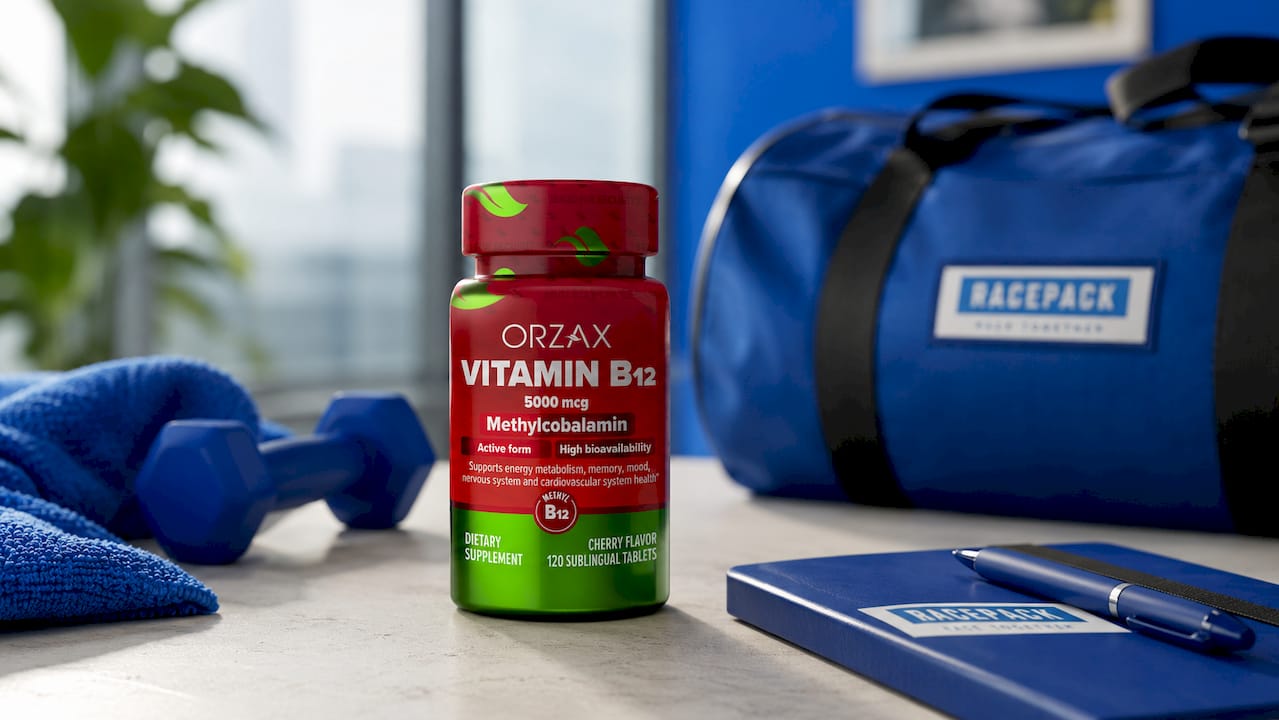
The Orzax Vitamin B12 5000 mcg Cherry Flavoured 120 Tabs available at RacepackSingapore delivers methylcobalamin, the active coenzyme form that bypasses the conversion step most synthetic B12 supplements require. At 5,000 mcg per tablet, it suits people with absorption challenges, including vegans, older adults, and those on metformin. RacepackSingapore ships next day within Singapore with guaranteed product authenticity. If you want to support your energy metabolism with a clinically relevant form of B12, this is the product to reach for. Buy now and get it delivered tomorrow.
FAQ
What does vitamin B12 actually do for energy?
Vitamin B12 activates enzymes like methylmalonyl-CoA mutase that feed the Krebs cycle, enabling ATP production in your cells. It also supports red blood cell formation, which determines how much oxygen your muscles receive during exercise.
What are the main symptoms of B12 deficiency?
The most common symptoms include persistent fatigue, reduced motivation, shortness of breath during exercise, and tingling in the hands or feet. Fatigue can appear at subclinical B12 levels before anemia is detectable on a standard blood test.
Does taking B12 supplements give you more energy?
Only if you are deficient. B12 supplementation restores normal energy metabolism in people with low levels, but it does not increase energy output in people whose B12 is already adequate.
Which form of B12 supplement is best for absorption?
Methylcobalamin is the preferred form because it is the active coenzyme version your body uses directly. Cyanocobalamin, the most common synthetic form, requires conversion before use, which can be less efficient in people with absorption issues.
How long does it take to feel better after starting B12 treatment?
Initial red blood cell production improves within 7–10 days. Hemoglobin and energy levels typically normalize within 6–8 weeks. Neurological symptoms take longer and may take 6 months or more to fully resolve.
Who is most at risk of B12 deficiency?
Vegans, vegetarians, adults over 50, people taking metformin or proton pump inhibitors long-term, and individuals with conditions like Crohn’s disease or pernicious anemia face the highest risk of deficiency.
Is serum B12 testing enough to diagnose deficiency?
Serum B12 alone can miss functional deficiency. Clinical guidelines recommend combining serum B12 with methylmalonic acid and homocysteine testing for the most accurate picture, particularly when serum B12 falls in the borderline range.
Can B12 deficiency affect athletic performance before causing anemia?
Yes. Recent 2026 research shows that mitochondrial dysfunction in skeletal muscle cells can impair energy production at low B12 levels before any change in red blood cell count appears on a standard blood panel.
What foods are highest in vitamin B12?
Beef liver, clams, salmon, tuna, eggs, and dairy products are the richest dietary sources. Fortified plant-based milks and breakfast cereals provide B12 for people who avoid animal products, though absorption from fortified sources varies.
Should endurance athletes supplement with B12?
Endurance athletes who follow plant-based diets or have confirmed low B12 levels benefit from supplementation. Athletes with normal B12 levels do not gain any performance advantage from additional B12. For a broader view on energy supplements for sport, functional testing should guide any supplementation decision.