

Selenium for Athletes: Health Benefits and Safe Intake Guide
TL;DR:
- Selenium is a vital trace mineral that supports antioxidant defense, immune function, and thyroid health. Most people meet their needs through diet, but excess intake can cause toxicity, making targeted supplementation appropriate only under specific conditions. Routine high-dose supplements are unnecessary and risky for healthy adults; careful management ensures safety and effectiveness.
Selenium is an essential trace mineral your body cannot produce on its own, yet it drives some of your most critical biological functions. It powers antioxidant defense through selenoproteins, regulates immune responses, and supports thyroid hormone production. For endurance athletes and fitness enthusiasts, understanding selenium’s real role separates smart supplementation from wasted money or, worse, toxicity. This guide covers what the 2026 science actually says about selenium, how much you need, and how to supplement safely.
What are the health benefits of selenium for immunity and antioxidant function?

Selenium works through a family of proteins called selenoproteins. These proteins include glutathione peroxidases, which neutralize reactive oxygen species before they damage cells. Without adequate selenium, your antioxidant defense weakens at a structural level, not just at the margins.
The immune benefits are real but indirect. A 2026 review links selenium to supporting T lymphocyte activity and natural killer cell function. That means your body’s ability to identify and destroy infected or abnormal cells depends partly on selenium status. The same review identifies gut microbiome interactions as a key factor in how well your body absorbs and uses selenium from food and supplements.
Here is what the research currently supports:
- Antioxidant defense: Glutathione peroxidases reduce oxidative damage in muscle tissue, red blood cells, and the liver.
- Immune modulation: Selenium influences T lymphocyte proliferation and NK cell activity, both central to fighting infections.
- Thyroid support: Selenoproteins convert inactive thyroid hormone (T4) into active T3, making selenium critical for metabolic regulation.
- Gut health connection: Selenium bioavailability depends on gut microbiome composition, meaning digestive health affects how much selenium you actually absorb.
“Selenium’s immune effects are largely mediated through redox regulation and gut microbiome interactions, not through direct immune stimulation.” — Selenium: From redox signaling to interactions with the gut microbiome
One clinical example stands out. A randomized trial found that selenium supplementation in hospitalized COVID-19 patients shortened hospital stay significantly compared to a control group, though it did not change mortality or ICU admission rates. That result shows selenium can support immune function under stress, but it is not a cure-all.
Pro Tip: If you train hard and eat a varied diet, your selenium needs are likely met through food. Brazil nuts, tuna, sardines, and eggs are all high-selenium sources. One Brazil nut delivers roughly 70–90 mcg of selenium, which already exceeds the adult RDA on its own.
What are the recommended selenium intake levels and risks of deficiency or excess?
The NIH Office of Dietary Supplements sets the adult RDA at 55 mcg per day. The tolerable upper intake level (UL) sits at 400 mcg per day. That gap between 55 and 400 mcg looks wide, but many supplements deliver 200 mcg per capsule, and multivitamins often add another 55–100 mcg on top.
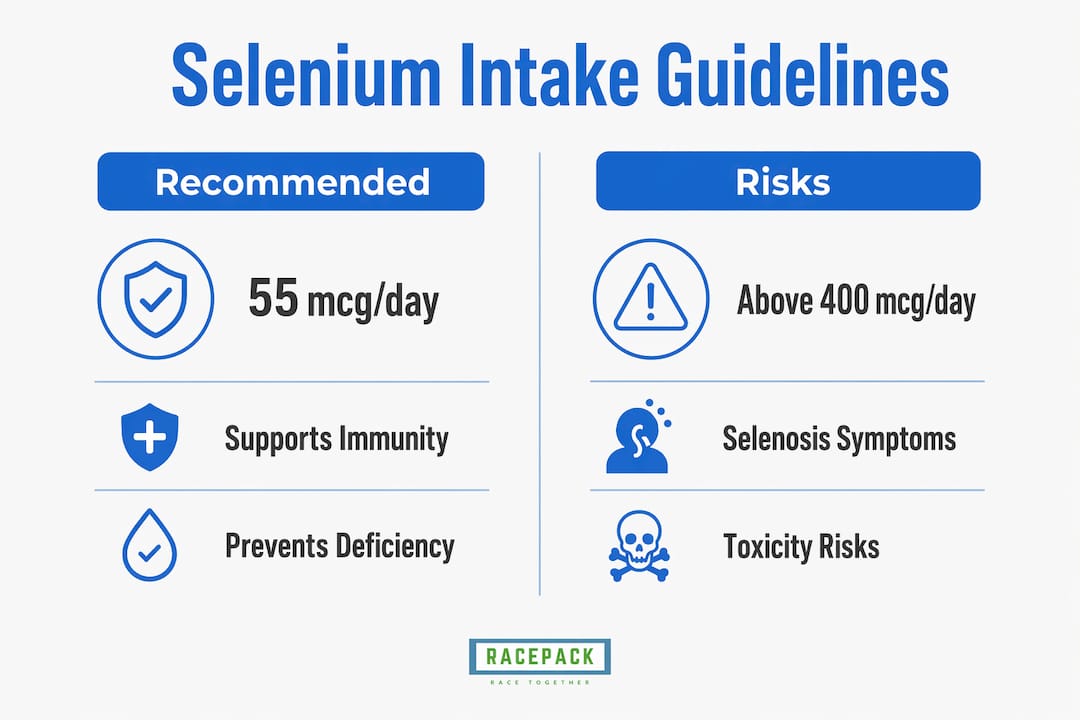
| Intake Level | Amount | Health Implication |
|---|---|---|
| Recommended Daily Allowance (RDA) | 55 mcg/day | Supports normal antioxidant and thyroid function |
| Typical supplement dose | 200 mcg/day | Appropriate for medical or targeted use; not routine wellness |
| Tolerable Upper Intake Level (UL) | 400 mcg/day | Maximum safe daily intake from all sources combined |
| Selenosis threshold | Above 400 mcg/day | Risk of hair loss, nail brittleness, nerve damage, and fatigue |
Deficiency causes real harm. Impaired immunity and thyroid dysfunction are the two most documented consequences of low selenium status. Keshan disease, a form of heart muscle damage, is directly linked to severe selenium deficiency in populations with low soil selenium levels.
Excess selenium causes selenosis. Symptoms include hair loss, brittle nails, a garlic odor on the breath, and neurological effects. The risk curve is U-shaped. Too little causes disease. Too much causes toxicity. The sweet spot is narrow, which is exactly why routine high-dose supplementation without medical guidance is a bad idea.
Pro Tip: Before adding a standalone selenium supplement, check your multivitamin label. Many multivitamins already contain 55–100 mcg of selenium. Adding a 200 mcg capsule on top could push your daily total close to or above the 400 mcg upper limit.
Does selenium supplementation improve athletic performance and recovery?
Selenium’s antioxidant role makes it appealing to athletes dealing with exercise-induced oxidative stress. Hard training generates reactive oxygen species, and selenoproteins help clear them. The logic is sound. The clinical evidence is not yet strong enough to make firm performance claims.
A 2026 systematic review notes that selenium is commonly cited as an antioxidant cofactor in exercise research, but direct performance or recovery benefits lack strong randomized controlled trial support. That is a meaningful distinction. Mechanistic plausibility is not the same as proven benefit.
Here is an honest breakdown of what selenium does and does not do for athletes:
- What it does: Acts as a cofactor for selenoproteins that reduce oxidative damage during and after exercise.
- What it does not do: Directly increase strength, speed, VO2 max, or measurable recovery speed in healthy, selenium-sufficient athletes.
- Where it helps most: Athletes with confirmed selenium deficiency or those training in high-stress conditions may see immune and recovery benefits from correcting their status.
- Comparison with stronger evidence: Creatine, beta-alanine, and caffeine all have far more RCT support for direct performance enhancement than selenium does.
The mechanistic evidence supports selenium as a background cofactor, not a front-line performance supplement. Think of it like engine oil. Your car needs it to run. Adding extra oil beyond the required level does not make the car faster.
For athletes interested in muscle recovery strategies, selenium fits best as part of a complete micronutrient foundation, not as a standalone performance booster.
How to safely incorporate selenium supplements into your regimen
Safe selenium supplementation follows a clear process. Start with your total daily intake from all sources before adding anything new.
- Audit your current intake. Add up selenium from your multivitamin, any standalone supplements, and your regular diet. Brazil nuts, seafood, and organ meats are the highest dietary sources.
- Check your multivitamin first. Ignoring selenium in multivitamins is the most common way athletes accidentally exceed the 400 mcg upper limit. Read the label before stacking supplements.
- Choose the right form. Selenomethionine is the most bioavailable organic form and the most common in quality supplements. Sodium selenite is an inorganic form used in some products and is absorbed differently.
- Match dose to purpose. The RDA of 55 mcg covers daily maintenance. Doses of 200 mcg per day are used in clinical settings for targeted immune support. Doses above 200 mcg per day should only be used under medical supervision.
- Reassess regularly. If you are supplementing at 200 mcg per day for more than a few months, a blood selenium test gives you objective data on your status.
Selenium supplementation makes the most sense during periods of elevated immune stress, such as heavy training blocks, travel, or illness recovery. The clinical trial data on COVID-19 patients supports this targeted approach over year-round high-dose use.
Pro Tip: If you are already eating two to three Brazil nuts per day, you likely do not need a standalone selenium supplement at all. Track your food sources for one week before buying anything.
Key Takeaways
Selenium is an essential trace mineral with a narrow safe range, and getting the dose right matters more than simply taking more of it.
| Point | Details |
|---|---|
| Selenium works through selenoproteins | Glutathione peroxidases and other selenoproteins drive antioxidant and immune function. |
| RDA is 55 mcg/day for adults | The upper safe limit is 400 mcg/day; most athletes meet needs through diet alone. |
| Athletic performance evidence is limited | Selenium supports oxidative stress management but lacks strong RCT proof for direct performance gains. |
| Double-counting is a real risk | Always check multivitamin labels before adding a standalone selenium supplement. |
| Targeted use beats routine high-dose | Supplementing at 200 mcg/day makes most sense during immune stress, not as everyday practice. |
My take on selenium: stop expecting miracles, start getting the basics right
I have watched athletes spend serious money on high-dose selenium supplements expecting faster recovery and stronger immunity, only to find no measurable difference. The science explains why. Selenium’s benefits are most pronounced when you are deficient or under significant oxidative stress. If your baseline status is already adequate, adding more does not stack the benefits. It just moves you closer to the toxicity threshold.
The U-shaped risk curve is the most important concept in selenium nutrition. Most micronutrients follow a simple “more is better up to a point” pattern. Selenium is genuinely dangerous at excess. Large supplementation trials have consistently failed to show broad protective effects in selenium-sufficient populations, and the NPC trial found no significant cardiovascular benefit from 200 mcg/day supplementation over 7.6 years.
My practical advice: fix your diet first. If you eat varied whole foods including seafood, eggs, and some nuts, you are almost certainly meeting your selenium needs. Reserve supplementation for specific situations, confirmed deficiency, heavy immune stress, or medical guidance. And always check what is already in your multivitamin before adding another capsule.
— Jason John
Selenium supplements available at RacepackSingapore
Athletes who have confirmed a need for selenium supplementation deserve a product they can trust for purity and accurate dosing.
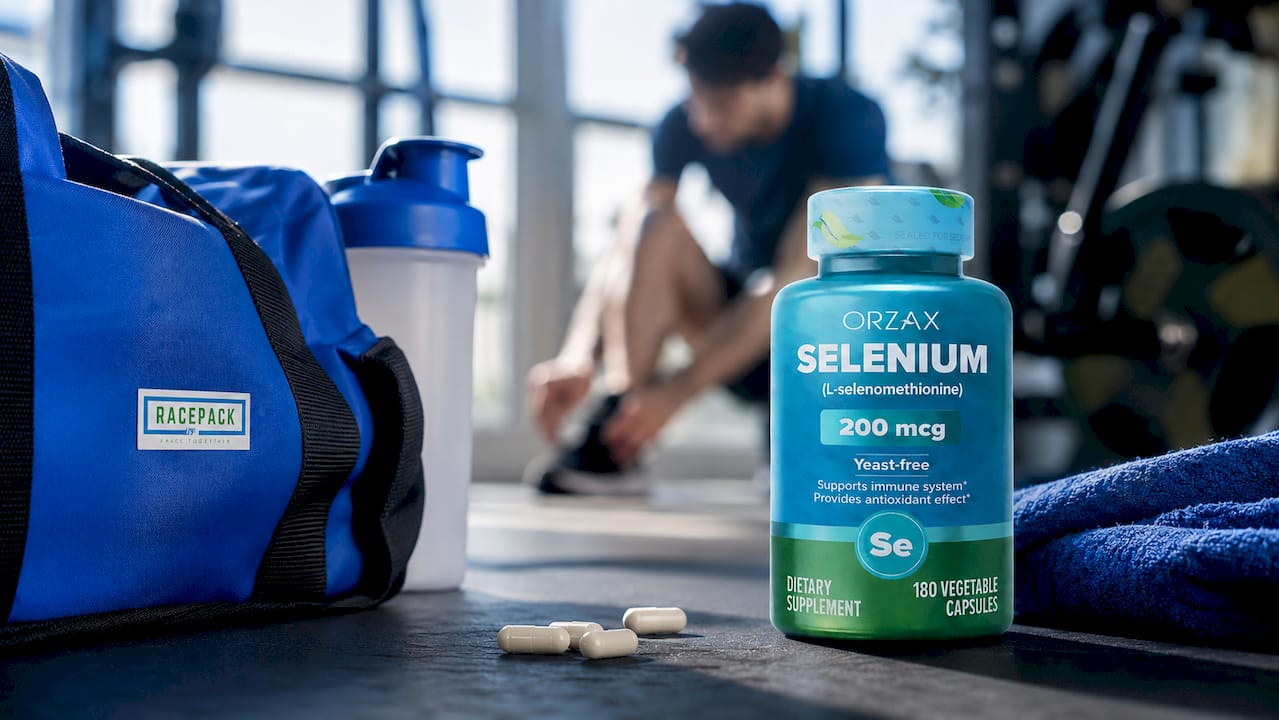
RacepackSingapore carries the Orzax Selenium 200 mcg capsules, a popular choice for athletes seeking targeted antioxidant and immune support within safe intake guidelines. For those who prefer a combination approach, the Life Extension Super Selenium Complex pairs selenium with vitamin E for broader antioxidant coverage. We also carry NOW Selenium for athletes who want a straightforward, single-ingredient option. All products ship with next-day delivery across Singapore and come with guaranteed authenticity.
FAQ
What is selenium and why does the body need it?
Selenium is an essential trace mineral that the human body incorporates into selenoproteins, which drive antioxidant defense, immune regulation, and thyroid hormone conversion. Without adequate selenium, these functions are impaired at a structural level.
How much selenium should an adult take per day?
The NIH recommends 55 mcg per day for adults as the RDA. The tolerable upper intake level is 400 mcg per day from all sources combined, including food and supplements.
Can selenium improve athletic performance?
Current evidence does not support selenium as a direct performance enhancer. It acts as an antioxidant cofactor that helps manage oxidative stress from exercise, but high-quality RCTs have not confirmed measurable gains in strength, speed, or recovery time.
What are the symptoms of too much selenium?
Excess selenium causes selenosis, with symptoms including hair loss, brittle nails, a garlic-like breath odor, fatigue, and in severe cases, nerve damage. Intake above 400 mcg per day from all sources carries this risk.
What foods are highest in selenium?
Brazil nuts, tuna, sardines, shrimp, eggs, and chicken are among the richest dietary sources. A single Brazil nut can deliver 70–90 mcg of selenium, already exceeding the adult RDA.
Should athletes take selenium supplements?
Most athletes who eat a varied diet do not need standalone selenium supplements. Supplementation is most justified during confirmed deficiency, heavy immune stress, or illness recovery, and should account for selenium already present in multivitamins.
What is the difference between selenomethionine and sodium selenite?
Selenomethionine is an organic form of selenium with higher bioavailability, meaning the body absorbs and retains it more efficiently. Sodium selenite is an inorganic form used in some supplements and is absorbed differently, with slightly lower retention.
Does selenium support immune health during illness?
Clinical evidence shows selenium supplementation shortened hospital stays in COVID-19 patients, suggesting a supportive role during acute immune stress. It did not change mortality or ICU admission rates, so its benefit is supportive rather than curative.
Is it safe to take selenium every day?
Daily supplementation at or near the RDA of 55 mcg is safe for most adults. Doses of 200 mcg per day are used in clinical contexts but should not be treated as a routine wellness dose without medical guidance, given the narrow margin before the 400 mcg upper limit.
Where can I buy selenium supplements in Singapore?
RacepackSingapore stocks the Orzax Selenium 200 mcg and other antioxidant supplements with next-day delivery across Singapore and guaranteed product authenticity. Buy now and get your order delivered tomorrow.