

Liposomal Iron: Absorption Benefits and How to Use It
TL;DR:
- Liposomal iron is a highly bioavailable form of iron pyrophosphate encapsulated in phospholipid bilayers, improving absorption and tolerability. It bypasses traditional absorption pathways, reduces gastrointestinal side effects, and benefits individuals with intolerance or inflammation. Quality products with verified particle size and encapsulation offer a safe, meal-flexible, and effective iron supplement option.
Liposomal iron is iron pyrophosphate encapsulated within phospholipid bilayers, designed to deliver iron directly into intestinal cells while bypassing the digestive barriers that block conventional iron salts. Standard ferrous sulfate achieves bioavailability of only 10–15%, while liposomal formulations exceed 80%. That gap matters enormously for anyone who has struggled with iron deficiency anemia, chronic fatigue, or the nausea and constipation that come with traditional iron supplements. Clinical data from 2026 confirms this form raises hemoglobin effectively while cutting gastrointestinal side effects from up to 50% down to roughly 3%. For athletes, pregnant women, and anyone with a sensitive stomach, that difference is the reason liposomal iron has become the most discussed iron supplement form in sports nutrition and clinical practice.
How does liposomal iron absorption work differently?
Liposomal iron uses a phospholipid shell, approximately 220 nm in particle size, to protect iron from gastric acid and dietary inhibitors before it reaches the intestinal wall. Traditional iron supplements lose 40–60% of their absorption potential when taken with calcium, coffee, tea, or polyphenol-rich foods. Liposomal iron sidesteps that problem entirely.

The absorption pathway is the key distinction. Conventional iron enters cells through the DMT1 transporter, a channel regulated by hepcidin, the hormone that shuts down iron uptake during inflammation. Liposomal iron bypasses DMT1 and hepcidin through an endocytosis-like process, where intestinal cells engulf the lipid particle directly. This means the supplement works even when inflammation is present, a critical advantage for athletes in heavy training blocks or patients with chronic disease.
Here is what that means practically for you:
- Meal flexibility: You can take liposomal iron with or near meals in many cases, unlike ferrous sulfate which requires an empty stomach for best absorption.
- Fewer food conflicts: Calcium supplements, dairy, and coffee do not significantly reduce uptake.
- Inflammation resistance: Hepcidin elevation from intense training or illness does not block absorption the way it does with standard iron salts.
- Consistent delivery: The phospholipid shell protects iron from oxidation and gastric degradation before it reaches the small intestine.
Pro Tip: If you train twice a day or follow a high-dairy diet, liposomal iron is worth considering specifically because your dietary pattern would otherwise suppress conventional iron absorption significantly.
What are the clinical benefits and tolerability of liposomal iron?
The clinical case for liposomal iron rests on two pillars: it raises hemoglobin and ferritin effectively, and it does so without the side effects that cause most people to quit conventional iron therapy.
A 2026 controlled study found that liposomal iron raised hemoglobin by 1 g/dL or more in 48% of pediatric patients with iron deficiency anemia, compared to 51.5% for iron polymaltose. The difference was not statistically significant, confirming non-inferiority. What was significant was the tolerability gap. Iron polymaltose produced adverse effects in 36% of patients, while liposomal iron produced them in only 3%.
The benefits of liposomal supplements in this context go beyond numbers. Patients who experience less nausea, constipation, and heartburn are far more likely to complete a full course of supplementation. Adherence is the single biggest predictor of treatment success in iron deficiency management.
Key clinical benefits include:
- Faster ferritin recovery with better patient compliance compared to ferrous sulfate
- Improved palatability, particularly relevant for children who reject metallic-tasting iron syrups
- Reduced constipation and heartburn, the two most common reasons patients stop iron therapy
- GRAS (Generally Recognized as Safe) status, supporting its use across age groups including pregnant women
“The main clinical advantage of liposomal iron is improved tolerability and palatability rather than markedly superior efficacy compared to gentle standard forms.” — SABM Clinical Iron Summaries 2026
This is an honest framing that matters. Liposomal iron is not a miracle upgrade in raw efficacy. It is a better-tolerated delivery system that keeps patients on track, and that is where its real clinical value lies.
Liposomal vs regular iron: a comparison of key supplement forms
Choosing the right iron supplement depends on your tolerance, budget, and specific health context. The table below compares the four most common oral iron forms.
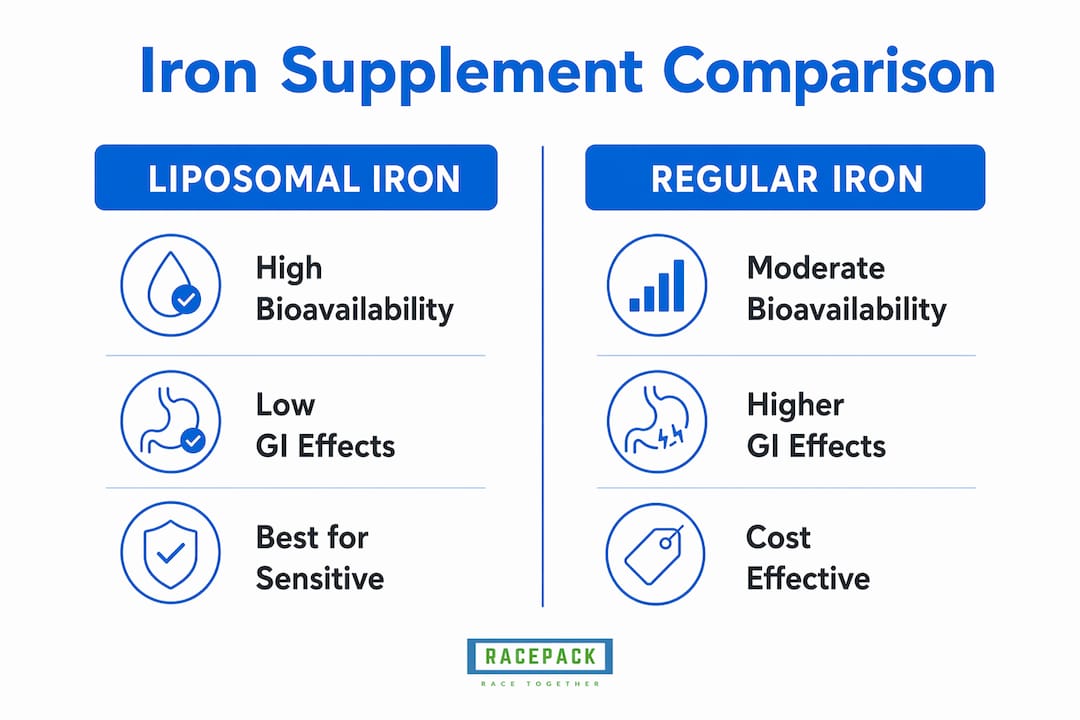
| Iron Form | Bioavailability | GI Side Effects | Best For | Cost |
|---|---|---|---|---|
| Ferrous sulfate | 10–15% | 40–50% of users | First-line, budget-conscious | Low |
| Ferrous bisglycinate | 25–35% | 10–15% of users | Gentle first-line option | Moderate |
| Iron polymaltose | 20–30% | 36% in pediatric data | Children, slow-release needs | Moderate |
| Liposomal iron | Above 80% | ~3% of users | GI-sensitive, athletes, pregnant women | Higher |
Ferrous bisglycinate is the standard recommendation for patients who need a gentler option before stepping up to liposomal forms. Liposomal iron is best positioned as a second-line choice when bisglycinate still causes discomfort, or as a first choice for athletes who need meal-flexible dosing.
One critical warning: product quality varies significantly across liposomal iron brands. Particle size must be below 220 nm and encapsulation efficiency must be verified for the product to deliver its claimed bioavailability. A poorly manufactured liposomal product may offer no advantage over standard iron at a much higher price.
Pro Tip: When evaluating a liposomal iron product, look for the manufacturer’s specification of particle size and encapsulation efficiency on the label or product documentation. If those figures are absent, treat the product with skepticism.
Who should take liposomal iron and how to take it correctly?
Liposomal iron is not the right starting point for everyone. It is most appropriate for specific groups where conventional iron therapy has failed or is likely to cause problems.
The populations who benefit most include:
- People intolerant to ferrous sulfate or bisglycinate who experience persistent nausea, constipation, or heartburn on standard forms
- Pregnant women who need consistent iron intake without GI disruption during a period when digestive sensitivity is already elevated
- Children who reject metallic-tasting syrups and need a palatable, effective alternative
- Endurance athletes in heavy training who face elevated hepcidin from exercise-induced inflammation and need absorption that works regardless of meal timing
- Individuals with chronic inflammatory conditions where hepcidin regulation blocks standard iron uptake
Before starting any iron supplement, verify iron deficiency via a ferritin blood test. The optimal ferritin range is 50–150 ng/mL. Iron toxicity is a real risk because the body has no active mechanism to excrete excess iron. Supplementing without confirmed deficiency is not safe.
Practical usage guidelines:
- Follow the dosage on the product label. For most adults, 25 mg of elemental iron per day is a standard starting dose.
- Liposomal iron can often be taken with food, but check your specific product’s instructions.
- Retest ferritin levels after 8–12 weeks to confirm your levels are improving.
- Do not combine iron supplements with magnesium or calcium supplements in the same dose window, as competition for absorption pathways still applies to some degree.
- For athletes, consider timing your dose on rest days or lower-intensity training days when inflammation is lower, to further support uptake.
Pro Tip: Pair your iron supplement with a small amount of vitamin C, even in liposomal form. Vitamin C supports iron’s conversion to its most absorbable state and is a low-cost way to support your supplementation protocol. Check out our sports nutrition blog for more on supplement timing strategies.
Key Takeaways
Liposomal iron delivers superior absorption and dramatically better tolerability compared to conventional iron salts, making it the preferred choice for GI-sensitive individuals and athletes who need meal-flexible iron supplementation.
| Point | Details |
|---|---|
| Bioavailability advantage | Liposomal iron exceeds 80% bioavailability versus 10–15% for ferrous sulfate. |
| Tolerability is the real win | Only 3% of users report GI side effects, compared to 40–50% on ferrous sulfate. |
| Test before you supplement | Confirm iron deficiency with a ferritin blood test before starting any iron protocol. |
| Product quality matters | Verify particle size below 220 nm and encapsulation efficiency before buying. |
| Best for specific groups | GI-sensitive individuals, pregnant women, children, and endurance athletes benefit most. |
Why I think most people are choosing iron supplements in the wrong order
I have reviewed a lot of clinical literature on iron supplementation, and the pattern I keep seeing is this: people jump straight to liposomal iron because the marketing sounds compelling, without first trying ferrous bisglycinate. That is a mistake in most cases, not because liposomal iron is ineffective, but because bisglycinate is gentler than ferrous sulfate, costs less than liposomal forms, and works well for the majority of people with mild to moderate deficiency.
The honest clinical picture, as the SABM 2026 data confirms, is that liposomal iron’s edge is tolerability, not raw efficacy. If you can tolerate bisglycinate, you are probably getting comparable results at a lower cost. Where liposomal iron genuinely earns its price premium is for patients who have already failed standard gentle forms, athletes who cannot avoid training-induced inflammation, and anyone whose diet or lifestyle makes meal-timed dosing impractical.
The other thing I want to be direct about: not all liposomal products are equal. The supplement market has products labeled “liposomal” that do not meet the particle size or encapsulation standards required to deliver the bioavailability claims on the label. That is not a minor concern. It means you could be paying a premium for a product that performs no better than a standard iron tablet. Always buy from a supplier you trust, one that stocks verified, quality-controlled products.
More iron is not always better. I have seen athletes self-prescribe iron supplements based on fatigue alone, without bloodwork, and end up with elevated ferritin that creates its own health risks. Get tested. Supplement based on data. Then choose the form that fits your tolerance and lifestyle.
— Jason John
Get quality liposomal iron delivered to your door
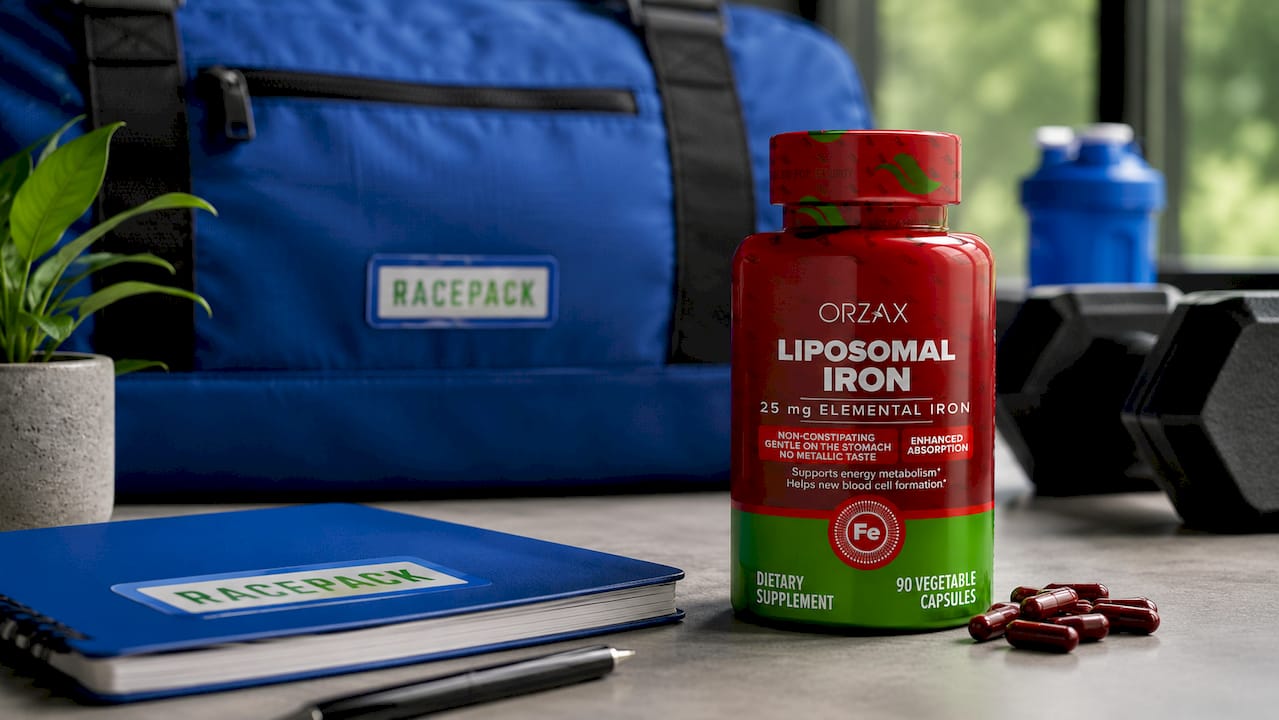
RacepackSingapore stocks the Orzax Liposomal Iron 25 mg in 90 vegetable capsules, a well-reviewed product that meets the particle size and encapsulation standards discussed in this article. Each capsule delivers 25 mg of elemental iron in liposomal form, designed for high bioavailability and minimal GI impact. It is a strong choice for athletes, pregnant women, and anyone who has struggled with conventional iron supplements. RacepackSingapore guarantees product authenticity and offers next-day delivery across Singapore, so you can start your supplementation protocol without delay.
Buy Now: Orzax Liposomal Iron 25 mg
FAQ
What is liposomal iron and how does it work?
Liposomal iron is iron pyrophosphate enclosed in a phospholipid bilayer shell approximately 220 nm in size. It is absorbed through an endocytosis-like pathway that bypasses the DMT1 transporter and hepcidin regulation, giving it bioavailability above 80% compared to 10–15% for ferrous sulfate.
Who should take liposomal iron supplements?
Liposomal iron is best suited for individuals who are intolerant to ferrous sulfate or bisglycinate, pregnant women, children who need a palatable option, and endurance athletes whose training-induced inflammation suppresses standard iron absorption.
How does liposomal iron compare to ferrous sulfate?
Liposomal iron produces GI side effects in only 3% of users versus 40–50% for ferrous sulfate, and its bioavailability exceeds 80% versus 10–15%. Ferrous sulfate remains a cost-effective first-line option for those who tolerate it well.
How do I take liposomal iron for best results?
Follow the product label dosage, typically 25 mg of elemental iron per day for adults. Liposomal iron can often be taken with food, unlike ferrous sulfate. Retest your ferritin levels after 8–12 weeks to confirm progress, and always confirm deficiency with bloodwork before starting.
Is liposomal iron safe to take long term?
Liposomal iron carries GRAS status and is considered safe when taken at recommended doses. The body cannot actively excrete excess iron, so confirm deficiency via ferritin testing before supplementing and avoid exceeding label dosage without medical guidance.
Does liposomal iron cause constipation?
Liposomal iron is significantly less likely to cause constipation than ferrous sulfate. Clinical data shows adverse GI events in approximately 3% of liposomal iron users, compared to 40–50% for conventional ferrous salts, making it one of the most tolerable oral iron options available.
Can athletes benefit from liposomal iron supplements?
Yes. Endurance athletes often experience elevated hepcidin from training-induced inflammation, which blocks standard iron absorption. Liposomal iron bypasses hepcidin regulation, making it effective even during heavy training periods. It also offers meal-flexible dosing, which suits athletes with structured nutrition plans. For more on sports nutrition, visit the RacepackSingapore nutrition blog.
What should I look for when buying a liposomal iron product?
Look for products that specify particle size below 220 nm and provide encapsulation efficiency data. Products that omit these specifications may not deliver the bioavailability benefits associated with true liposomal delivery. The Orzax Liposomal Iron 25 mg available at RacepackSingapore meets these quality standards.
Can I take liposomal iron with food?
In most cases, yes. The phospholipid encapsulation protects iron from dietary inhibitors like calcium and polyphenols that reduce conventional iron absorption by 40–60%. Always check your specific product’s instructions, as formulations can vary.
How long does it take for liposomal iron to raise ferritin levels?
Most clinical protocols show meaningful increases in hemoglobin and ferritin within 8–12 weeks of consistent supplementation. A 2026 pediatric study found that hemoglobin increased by 1 g/dL or more in 48% of liposomal iron users within the study period.
Is liposomal iron better than ferrous bisglycinate?
Liposomal iron offers higher bioavailability and fewer GI side effects than ferrous bisglycinate, but bisglycinate is a gentler and more affordable option that works well for most people with mild to moderate deficiency. Liposomal iron is best reserved for those who do not respond adequately to bisglycinate or who need meal-flexible dosing.
Where can I buy liposomal iron in Singapore?
RacepackSingapore stocks the Orzax Liposomal Iron 25 mg 90 Capsules with guaranteed authenticity and next-day delivery across Singapore. Order liposomal iron here and start your supplementation protocol with a verified, quality-controlled product.