

Benefits of Carb Loading Marathon: Your 2026 Race Guide
TL;DR:
- Carbohydrate loading enhances endurance by nearly doubling muscle glycogen stores before a marathon.
- Proper timing, food choices, and hydration are essential to maximize its benefits and avoid digestive issues.
Carbohydrate loading is a pre-race nutrition strategy that maximizes muscle glycogen stores to improve endurance and delay fatigue during a marathon. The core benefits of carb loading for marathon runners are well established: up to 3% performance improvement in events lasting over 90 minutes, sustained race pace, and a significantly reduced risk of hitting the wall. The protocol, recommended by the American College of Sports Medicine (ACSM), calls for 10–12 grams of carbohydrate per kilogram of body weight daily over 36–48 hours before race day. Done right, carb loading nearly doubles your available muscle glycogen. Done wrong, it causes bloating, GI distress, and sluggish legs on the start line.
1. Why carb loading benefits marathon runners more than regular nutrition
Muscle glycogen is the primary fuel source at marathon race intensity. Your body burns through it faster than fat, and a standard diet does not fill your muscles to capacity before a race.
Carb loading nearly doubles glycogen stores compared to a normal training diet. That extra reserve is what keeps you running at goal pace past mile 18 instead of shuffling through the final 10 kilometers.
The key distinction is this: carb loading does not make you faster. It lets you sustain your best pace longer and avoid the glycogen crash that causes the wall. Without it, your body shifts to fat metabolism, which is slower and less efficient at race intensity.
Hydration plays a direct role here too. Glycogen binds roughly 3 grams of water per gram stored. If you do not drink enough during your loading window, your muscles cannot store carbohydrates to full capacity. Electrolyte balance during this phase is worth understanding, and RacepackSingapore’s guide on sodium during marathon running covers that in detail.
Key benefits at a glance:
- Delays glycogen depletion and the wall past the 30-kilometer mark
- Allows sustained race pace without shifting to slow fat metabolism
- Supports better hydration through water bound with glycogen
- Reduces mid-race energy crashes and pace drops
- Gives you a measurable, science-backed edge on race day
Pro Tip: Increase your fluid intake by at least 500ml per day during your carb loading window. Your muscles need water to store glycogen effectively.
2. How to carb load: timing, quantities, and meal planning

The ACSM protocol calls for 10–12g of carbohydrate per kilogram of body weight daily, starting 36–48 hours before your race. For a 70-kilogram runner, that means 700–840 grams of carbohydrates per day. That is a significant volume, and spreading it across multiple meals is the only practical way to hit those numbers without GI distress.
Research shows no ceiling effect up to 10g/kg, meaning more carbohydrates generally produce more glycogen storage if your gut can handle it. This is why testing the protocol in training matters so much.
Here is a practical daily structure for a 70-kilogram runner:
- Breakfast: Large bowl of white rice or oatmeal with banana and honey (approximately 150g carbs)
- Mid-morning snack: White bagel with jam or a sports drink (approximately 80g carbs)
- Lunch: White pasta with a light tomato sauce and white bread roll (approximately 200g carbs)
- Afternoon snack: Banana, white rice crackers, or a sports energy bar (approximately 80g carbs)
- Dinner: Large serving of white rice or white pasta with lean protein and no high-fiber vegetables (approximately 200g carbs)
- Evening snack: White toast with honey or a low-fiber cereal (approximately 80g carbs)
That structure reaches approximately 790 grams of carbohydrates across six eating occasions. Each meal stays low in fiber to protect your digestive system. Spreading intake over 4–5 smaller meals is the standard approach. A single large pasta dinner the night before does not work and is one of the most common mistakes runners make.
Pro Tip: Reduce training volume in the 48 hours before your race. Lower mileage combined with high carbohydrate intake is what triggers glycogen supercompensation.
3. Best foods for carb loading before a marathon
Low-fiber, high-carbohydrate foods are the foundation of an effective carb loading strategy. The goal is maximum carbohydrate density with minimum digestive burden.
Optimal carb loading foods:
- White rice
- White pasta
- White bread and bagels
- Bananas
- Honey and jam
- Sports drinks and energy gels
- White potatoes (boiled or baked, no skin)
- Low-fiber cereals like cornflakes or rice puffs
- Fruit juice (apple or grape, not high-pulp)
Foods to avoid during the loading window:
- Whole grain bread, pasta, or brown rice (high fiber)
- Raw vegetables and salads (high fiber, slow digestion)
- Beans and legumes (gas-producing)
- High-fat foods like fried items or heavy sauces
- Unfamiliar foods you have never eaten before a long run
| Food | Carbs per 100g | Fiber | Loading Verdict |
|---|---|---|---|
| White rice (cooked) | ~28g | Low | Excellent choice |
| White pasta (cooked) | ~25g | Low | Excellent choice |
| Brown rice (cooked) | ~23g | High | Avoid during loading |
| Banana | ~23g | Low | Excellent choice |
| Whole wheat bread | ~41g | High | Avoid during loading |
| White bread | ~49g | Low | Good choice |
One detail runners often miss: the 1–2 kilogram weight gain you see on the scale during carb loading is not fat. Each gram of glycogen binds approximately 3 grams of water. That extra weight disappears during the race as your body burns through its glycogen stores. It is a sign the protocol is working, not a reason to cut carbohydrates.
For a deeper breakdown of race-week food choices, RacepackSingapore’s carbohydrate loading race-week guide is worth reading before you plan your meals.
4. Common carb loading mistakes and how to avoid them
Most carb loading failures come down to four predictable errors. Knowing them in advance protects your race.
Mistake 1: Loading in a single meal. A single large carb meal the night before does not fill glycogen stores to capacity. Your muscles need 36–48 hours of sustained carbohydrate intake to reach full saturation. One pasta dinner is a tradition, not a strategy.
Mistake 2: Choosing high-fiber foods. Whole grains, raw vegetables, and legumes are excellent training foods. During the 48-hour loading window, they cause bloating, gas, and unpredictable digestion. Stick to low-fiber carbohydrate sources exclusively.
Mistake 3: Neglecting hydration. Glycogen cannot be stored without water. Runners who eat correctly but drink too little end up with partially loaded muscles. Increase fluid intake throughout the loading window and monitor urine color as a simple hydration check.
Mistake 4: Never practicing in training. Testing your carb loading strategy during training is the only way to know which foods your gut tolerates and how your body responds to the volume. Race day is not the time to experiment.
Mistake 5: Panicking about weight gain. The 1–2kg gained during carb loading is water stored alongside glycogen. It is temporary and beneficial. Cutting carbohydrates to avoid this weight gain defeats the entire purpose of the protocol.
Pro Tip: Run your carb loading protocol at least once during a long training week, ideally before a 30-kilometer training run. You will learn exactly how your body responds before it matters.
Key Takeaways
Carb loading works because it fills muscle glycogen stores to maximum capacity, giving marathon runners the sustained energy to hold race pace and avoid the wall.
| Point | Details |
|---|---|
| Performance benefit | Carb loading delivers up to 3% improvement in endurance events over 90 minutes. |
| Correct protocol | Consume 10–12g of carbohydrate per kilogram of body weight daily for 36–48 hours pre-race. |
| Food selection | Choose low-fiber, high-carb foods like white rice, pasta, bagels, and bananas to minimize GI distress. |
| Hydration matters | Glycogen binds 3g of water per gram stored; drink more fluids throughout the loading window. |
| Practice first | Test your full carb loading strategy during training before applying it on race day. |
My take on carb loading after years of watching runners get it wrong
Most runners I talk to either skip carb loading entirely or do it halfway. They eat a big pasta dinner the night before and call it done. That is not carb loading. That is just dinner.
The runners who benefit most from this strategy treat it like a two-day training block. They plan their meals, track their carbohydrate intake, and increase their fluid consumption deliberately. They have also tested the protocol at least once during training, so they know exactly how their body responds.
The weight gain is the part that trips people up the most. I have seen experienced runners cut their carbohydrate intake on race morning because the scale showed an extra kilogram. That extra kilogram is stored energy. Dropping it before the race means leaving fuel on the table.
Carb loading is one piece of a complete pre-marathon nutrition plan. It works best alongside a solid taper, consistent hydration, and a race-day fueling strategy that includes energy gels for runners at regular intervals. If you want personalized guidance on building a nutrition plan around your training, working with a nutrition coaching specialist can help you dial in the details specific to your body weight, pace, and race goals.
The science on this is clear. The execution is where most runners fall short. Plan it, practice it, and trust the process.
— Jason John
Fuel your race with the right products from RacepackSingapore
Carb loading fills your glycogen tank before the start line. What you take on during the race keeps it from running dry.
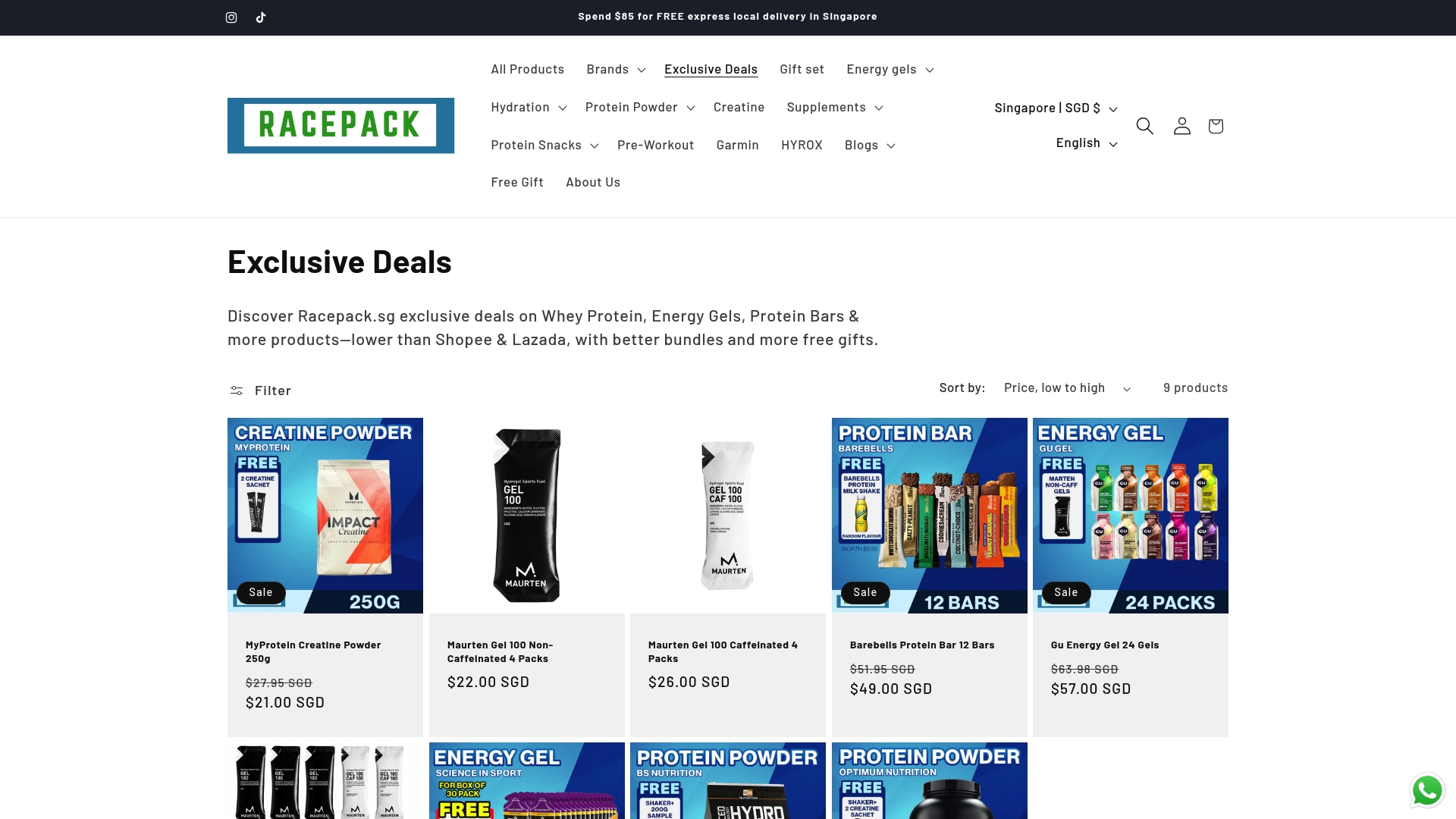
RacepackSingapore stocks the GU Energy Gel 24-pack and the GU Energy Gel 6/12/24 pack, both designed to deliver fast-absorbing carbohydrates at regular intervals during your marathon. Pair them with the HIGH5 Isotonic Hydration Drink to maintain the fluid balance your glycogen stores depend on. All products ship with next-day delivery across Singapore and come with guaranteed authenticity. Buy now and have your race-day nutrition sorted before your taper begins.
FAQ
What are the main benefits of carb loading for a marathon?
Carb loading maximizes muscle glycogen stores, which improves endurance performance by up to 3% in events over 90 minutes. It allows you to sustain race pace longer and significantly reduces the risk of hitting the wall.
When should you start carb loading before a marathon?
Start carb loading 36–48 hours before your race. This window gives your muscles enough time to reach full glycogen saturation using the 10–12g carbohydrate per kilogram of body weight daily protocol.
What foods are best for carb loading before a marathon?
White rice, white pasta, bagels, bananas, white bread, and honey are the top choices. These low-fiber, high-carb foods maximize glycogen storage while minimizing the risk of GI distress on race day.
Is weight gain during carb loading normal?
Yes. A gain of 1–2 kilograms is expected and beneficial. Each gram of glycogen stores approximately 3 grams of water, so the extra weight is stored energy that your body will use during the race.
Should you carb load for a half marathon?
Carb loading is most effective for events lasting over 90 minutes. A half marathon may qualify depending on your pace, but the full protocol is most clearly supported for marathon-distance racing. Lighter carbohydrate increases in the 24 hours before a half marathon are a practical middle ground.
How much water should you drink while carb loading?
Increase your daily fluid intake by at least 500ml during the loading window. Glycogen binds roughly 3 grams of water per gram stored, so adequate hydration is required for full glycogen supercompensation.
Can you carb load with energy gels?
Energy gels like GU Energy Gel contribute fast-absorbing carbohydrates and are useful for topping up glycogen during the race itself. For the pre-race loading phase, whole food sources like white rice and pasta provide the volume needed to hit 10–12g per kilogram of body weight.
What happens if you carb load incorrectly?
Incorrect carb loading, such as eating a single large meal or choosing high-fiber foods, results in incomplete glycogen stores, GI distress, or both. Spreading intake over 4–5 smaller meals across 36–48 hours is the correct approach.
Does carb loading work for beginner marathon runners?
Yes. The physiological benefit of maximizing glycogen stores applies to all marathon runners regardless of experience level. Beginners benefit especially because their pacing is less efficient, meaning they burn through glycogen faster. RacepackSingapore’s marathon training plan for beginners integrates nutrition guidance alongside training structure.
What is the difference between carb loading and a high-carb diet?
A high-carb diet maintains normal glycogen levels day to day. Carb loading is a short-term, high-volume protocol designed to push glycogen stores above normal capacity. The no ceiling effect up to 10g/kg finding confirms that higher intake during the loading window produces greater glycogen storage than a standard diet can achieve.